What Is DOMS? Why Your Muscles Are Sore After Exercise
If your muscles feel fine immediately after a workout but become stiff, tender and painful the next day, you are probably experiencing delayed onset muscle soreness, or DOMS. It is one of the most common responses to unfamiliar or demanding exercise, yet it is frequently misunderstood. DOMS is often blamed on lactic acid, treated as proof of a good workout or described simply as muscle damage, none of which provides an accurate explanation on its own.
For most people, DOMS is temporary and resolves as the body recovers and adapts. It becomes particularly noticeable after a new exercise, a sudden increase in training volume, a return to exercise after a break or training that involves substantial eccentric loading. Understanding why DOMS happens makes it easier to decide what to do about it, whether you can train while sore and when soreness may be something other than normal post-exercise discomfort.
For personal trainers, the subject is particularly relevant because clients commonly ask why they are sore after exercise, whether soreness means their workout worked and how they can recover more quickly. A good understanding of DOMS allows a trainer to answer those questions accurately and programme training without encouraging clients to chase unnecessary soreness.
What Is DOMS?
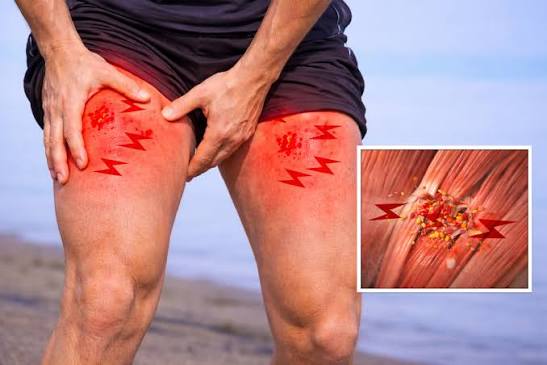
DOMS stands for delayed onset muscle soreness. It describes muscle soreness, tenderness and stiffness that develops after exercise rather than reaching its greatest intensity during the exercise itself. The symptoms usually become noticeable several hours after training and commonly peak between 24 and 72 hours after an unfamiliar or demanding workout.
The American College of Sports Medicine’s guidance on delayed onset muscle soreness describes DOMS as a normal response to unfamiliar physical activity. It can affect beginners who are new to exercise, experienced lifters who introduce a new movement and anyone who suddenly increases the amount or type of exercise they are performing.
The important point is that DOMS is defined by its delayed pattern. A burning sensation during a hard set, fatigue immediately after exercise and sharp pain that appears during a particular repetition are not automatically DOMS. The timing and character of the symptoms provide useful clues about what is happening.
What Does DOMS Stand For?
DOMS stands for delayed onset muscle soreness, with “delayed onset” referring to the fact that the soreness develops after the exercise session rather than being at its greatest while you are exercising. You might finish a demanding workout feeling relatively normal and then notice increasing stiffness later that evening or the following morning.
That delayed response is one of the reasons DOMS can catch people off guard. A workout may not initially feel excessive, yet the muscles can become substantially more uncomfortable over the following two days. This is particularly common when an exercise or training volume is unfamiliar.
Why Do You Get DOMS After Exercise?
DOMS develops when exercise places a mechanical and physiological demand on muscles and surrounding tissues that they are not fully accustomed to handling. The response is particularly common after unfamiliar exercise, increases in training volume, changes in intensity and movements involving substantial eccentric muscle action.
Eccentric exercise is especially associated with DOMS because the muscle produces force while lengthening. Lowering yourself during a squat, controlling the downward phase of a bench press, descending stairs or running downhill all involve eccentric loading. When that type of loading is unfamiliar or performed at a much higher volume than normal, the resulting stress can contribute to substantial soreness.
DOMS is sometimes described simply as the result of “microtears” in the muscle. Although unfamiliar exercise can cause microscopic structural disruption, that explanation is incomplete. DOMS involves a combination of mechanical stress, changes in muscle function, inflammatory signalling and sensitisation of pain receptors, and the amount of soreness does not directly correspond to the amount of measurable muscle damage.
This is why DOMS can vary dramatically between people completing the same workout. Training history, exercise selection, volume, range of motion and individual response all influence how sore somebody becomes.
Why Are My Muscles Sore After Exercise?
If you are wondering why your muscles are sore after exercise, the most likely explanation is that you exposed them to a training stimulus they were not fully accustomed to. That does not necessarily mean the workout was exceptionally difficult. Novelty itself can produce substantial soreness.
For example, someone who regularly squats may experience little DOMS from their normal squat programme but become extremely sore after a high-volume lunge session. Their general fitness has not disappeared; the muscles have simply been exposed to a different movement pattern, range of motion and loading demand.
The same principle applies outside the gym. A regular cyclist might develop significant soreness after a long hike, while an experienced runner can become sore after an unfamiliar downhill route. General fitness provides useful capacity, but adaptations remain relatively specific to the demands repeatedly placed on the body.
Muscle soreness after exercise therefore tells you that your body has responded to a particular stimulus. It does not, by itself, tell you whether the workout was effective, whether you have damaged the muscle or whether you will make greater training progress as a result.

Why Are My Muscles Sore After The Gym?
Muscle soreness after the gym is particularly common when resistance training involves exercises, volumes or loading patterns that are unfamiliar. A new programme can therefore produce considerably more DOMS than a familiar programme even when the actual workout does not feel dramatically harder.
Increasing volume is one common trigger. Moving from three sets of an exercise to six sets, adding several new movements or substantially increasing training frequency can expose the muscles to considerably more work than they have recently experienced. Changing range of motion, tempo or exercise selection can have a similar effect.
This is why somebody can train for years without experiencing much soreness from their normal programme and then become extremely sore after one unfamiliar session. The body adapts to repeated exposure, but it does not become equally adapted to every possible exercise.
Severe muscle soreness after the gym is therefore often a programming issue rather than a sign that the workout was exceptionally productive. If soreness repeatedly interferes with movement, work or subsequent training, the training stimulus may need to be progressed more gradually.
Is DOMS Caused By Lactic Acid?
No. DOMS is not caused by lactic acid remaining in your muscles after exercise. This is one of the most persistent explanations for muscle soreness after training, but it does not fit the timing of DOMS.
During demanding exercise, lactate production can increase substantially as part of normal energy metabolism. Lactate concentrations then fall relatively quickly once exercise stops, whereas DOMS commonly develops 12 to 24 hours later and can peak one to three days after the workout.
The ACSM’s guidance on DOMS specifically addresses the misconception that lactic acid causes delayed soreness. The burning sensation experienced during a hard set and the stiffness experienced two days later are different physiological responses.
This also means that strategies marketed as ways of “flushing lactic acid out” are not treatments for DOMS. Recovery should instead focus on sensible training progression, adequate rest, sleep, nutrition and practical strategies that may help manage soreness.
When Does DOMS Start And How Long Does It Last?
DOMS usually develops several hours after exercise rather than immediately after the session. It commonly becomes noticeable around 12 to 24 hours after unfamiliar exercise and can become more pronounced during the following day.
The greatest soreness is often experienced between 24 and 72 hours after training. This means that the second day after a new workout can sometimes be worse than the morning immediately following it. The exact timeline varies according to the exercise, training history, workload and individual response.
For most people, DOMS then gradually improves over several days. Cleveland Clinic’s guidance on DOMS notes that the symptoms generally resolve within a few days, although particularly demanding or unfamiliar exercise can produce soreness that lasts longer.
The direction of the symptoms matters. Normal DOMS should gradually become less severe as recovery progresses. Pain that continues to intensify, remains severe for an unusually long period or develops alongside other concerning symptoms should not automatically be attributed to DOMS.
Is DOMS A Sign Of A Good Workout?
DOMS is not a reliable measure of workout quality. It can occur after an effective training session, but severe soreness is not evidence that a workout was more productive than a session that produced little or no soreness.
The biggest problem with using DOMS as a measure of training quality is that soreness is strongly influenced by novelty. A new exercise can produce severe DOMS even when the overall training stimulus is relatively modest, while a highly demanding familiar exercise may produce almost no soreness in an experienced trainee.
Chasing DOMS can therefore encourage poor training decisions. Constantly changing exercises simply to create soreness makes it harder to establish consistent movement patterns and progressively overload the exercises that are actually producing useful adaptations.
Strength, endurance, workload, technique, recovery and measurable performance changes are much more useful indicators of whether training is working. DOMS is a response to exercise, not a score for the quality of the workout.
Does DOMS Mean Your Muscles Are Growing?
DOMS does not mean that your muscles are necessarily growing. Muscle soreness can occur alongside hypertrophy, but soreness itself is not the mechanism responsible for muscle growth and is not required for it.
Resistance training stimulates a range of adaptations involving mechanical tension, muscle protein turnover, nervous-system changes and tissue remodelling. The amount of soreness experienced after a workout does not provide a direct measurement of how much muscle growth has occurred.
This becomes particularly obvious as people gain training experience. A beginner may become extremely sore after a relatively modest workout because the stimulus is completely unfamiliar, while an experienced lifter may perform a demanding hypertrophy session with little soreness because the exercises are well established.
If muscle growth is the objective, training should therefore be structured around appropriate resistance, progressive overload, sufficient recovery and adequate nutrition rather than deliberately creating as much DOMS as possible.
Can You Train With DOMS?
Mild DOMS does not automatically mean you need to stop exercising. If the soreness is manageable and does not significantly affect movement, range of motion or technique, you may be able to train normally or make a modest adjustment to the planned session.
The situation changes when soreness is severe. If your legs are so sore that you cannot squat, lunge or walk normally, another heavy lower-body session may not be appropriate. You could reduce the intensity, choose different exercises, train another body region or use a low-intensity recovery session instead.
Cleveland Clinic’s guidance on exercising while sore recommends reducing intensity and avoiding hard exercise involving severely sore muscles. Gentle movement can often be tolerated, but there is little value in deliberately adding another demanding training stimulus when the muscles are struggling to perform normally.
For personal trainers, the decision should be based on the client’s presentation rather than a blanket rule. Mild DOMS may require little intervention, while severe soreness that changes movement quality is a reason to modify the session and reassess the training load.
What Helps DOMS And How Can You Reduce It?
There is no single treatment that instantly removes DOMS. The body needs time to recover from the training stimulus, so the main objective of DOMS recovery is to manage discomfort while allowing normal adaptation to take place.
Gentle movement can be useful when muscles are stiff. Walking, easy cycling and other low-intensity activities can help someone feel less restricted without imposing another substantial training load. Research into recovery methods suggests that active recovery can produce modest improvements in perceived soreness, although it should not be presented as a cure.
Sleep and nutrition are also important because recovery requires adequate resources. Sufficient protein supports normal muscle protein turnover, while sufficient energy intake helps the body deal with the demands of training. Hydration is important for normal physiological function and exercise performance, but drinking excessive amounts of water will not flush DOMS out of the muscles.
Massage and foam rolling may provide additional relief. A systematic review and meta-analysis of foam rolling found evidence that it can reduce perceived exercise-induced muscle soreness, although the effects are generally modest. A broader systematic review of recovery techniques has also examined several approaches to post-exercise recovery.
The most useful long-term strategy, however, is to manage the training stimulus itself. If every workout produces severe DOMS, repeatedly treating the soreness without changing the programme misses the underlying issue.
Does Foam Rolling Help DOMS?
Foam rolling can reduce the perception of DOMS for some people and may make stiff muscles feel more comfortable. Research supports some benefit for post-exercise soreness, but the effect is generally modest and should not be confused with eliminating the physiological response itself.
A 2024 systematic review and meta-analysis found evidence that foam rolling can reduce exercise-induced muscle soreness at different stages of recovery. The findings support foam rolling as a reasonable optional recovery technique, particularly when an individual finds it useful.
There is no requirement to make foam rolling painful. Aggressively pressing into already sore tissue does not automatically produce better recovery, and there is little reason to treat discomfort during foam rolling as evidence that the technique is working. Foam rolling should therefore be viewed as a symptom-management tool rather than a replacement for sensible programming and recovery. If someone repeatedly develops severe DOMS, changing the training stimulus is likely to be more useful than simply increasing the amount of foam rolling.

https://www.menshealth.com/uk/fitness/a66037754/how-long-does-doms-last/
Does Stretching Prevent DOMS?
Stretching does not reliably prevent DOMS. It may temporarily improve how a stiff muscle feels or form part of a broader mobility programme, but evidence does not support the idea that stretching before or after exercise can reliably stop delayed muscle soreness.
A systematic review and meta-analysis examining stretching and DOMS found no meaningful reduction in soreness at 24, 48 or 72 hours when stretching was compared with passive recovery. That makes stretching a poor choice if the sole objective is preventing DOMS.
Stretching can still have a legitimate role in exercise programming when flexibility is a specific training goal. It simply should not be marketed as a reliable DOMS treatment or as a way to remove lactic acid from muscles after training.
The distinction is useful for personal trainers because clients are often given recovery advice that sounds plausible without being supported by evidence. A trainer should explain what a recovery technique can realistically achieve rather than promising that it will prevent soreness.
How Can You Prevent Severe DOMS?
The most effective way to reduce the likelihood of severe DOMS is to introduce new training stimuli progressively. Large jumps in volume, intensity or exercise difficulty can produce considerably more soreness than a gradual progression towards the same workload.
This is particularly important for beginners and people returning to exercise after a break. Someone may have the cardiovascular fitness to complete a demanding workout but lack recent exposure to the specific muscular loading involved. Their general fitness therefore does not necessarily protect them from severe DOMS.
Experienced trainees need to apply the same principle when changing programmes. A new exercise can create substantial soreness even when the person is highly trained, particularly if it involves unfamiliar eccentric loading or a large range of motion.
Repeated exposure usually reduces soreness from the same exercise. This adaptation is commonly referred to as the repeated bout effect and is one reason the first session of a new exercise can produce much more DOMS than later sessions.
The objective should not be to eliminate DOMS entirely. Occasional soreness is a normal consequence of changing training, but severe soreness that repeatedly disrupts daily life or prevents productive training is a sign that the progression may need to be better controlled.
DOMS Vs Injury: How Can You Tell The Difference?
Normal DOMS generally develops gradually after exercise and produces relatively diffuse soreness, tenderness and stiffness in the muscles that were trained. It should normally begin to improve as recovery progresses, even if the symptoms are quite uncomfortable during the first couple of days.
An injury can behave differently. Sharp or highly localised pain that appears during a particular repetition, substantial swelling, bruising, significant loss of strength or pain that becomes progressively worse should not automatically be dismissed as DOMS.
The timeline is useful but not definitive. DOMS can be uncomfortable and can temporarily reduce strength, while some injuries may initially seem relatively minor. What matters is the overall pattern of symptoms and whether they behave like normal post-exercise soreness.
Cleveland Clinic advises medical assessment when muscle pain is severe, persists for more than a week, feels sharp and constant or is accompanied by significant swelling. Severe muscle pain combined with marked weakness, substantial swelling or unusually dark urine can also indicate rhabdomyolysis, which requires urgent medical attention rather than being treated as ordinary DOMS.
Personal trainers should recognise these warning signs without attempting to diagnose them. A trainer can stop or modify exercise, document what has happened and recommend appropriate medical assessment when symptoms fall outside the expected pattern of DOMS.
Why Does DOMS Decrease As You Get Fitter?
DOMS often decreases when an exercise becomes familiar because the body adapts to repeated exposure to that particular training stimulus. The first few sessions of a new exercise can produce considerable soreness, while later sessions may produce very little despite continuing to provide an effective training stimulus.
This is sometimes misunderstood as evidence that the exercise has stopped working. It has not. Reduced soreness generally reflects adaptation rather than a loss of training effect, and experienced trainees can make substantial progress without regularly experiencing significant DOMS.
The adaptation is also specific to the exercise. Someone who has trained for years can still become extremely sore after introducing an unfamiliar movement or changing the training volume substantially. Fitness reduces the response to familiar demands; it does not make the body universally resistant to soreness.
This is another reason why deliberately chasing DOMS is poor programming. If every session is changed purely to create soreness, the programme continually introduces novelty instead of allowing the body to adapt to a consistent training stimulus.
Should You Be Sore After Every Workout?
No. You should not expect to experience DOMS after every workout, and a lack of soreness does not mean that your training has stopped working.
As your body adapts to repeated exercises, the amount of DOMS produced by the same workout often decreases. This is a normal part of training rather than evidence that you need to make every session harder or introduce new exercises simply to create soreness.
Constant soreness can actually interfere with good training. If you are still severely sore when your next session begins, your movement quality, performance and ability to apply progressive overload may all be affected.
A productive training programme should therefore aim for appropriate stimulus and recovery rather than maximum soreness. DOMS is sometimes unavoidable when training changes, but it should not be the target of a well-designed programme.
How Should Personal Trainers Manage DOMS?
Personal trainers should be able to explain DOMS clearly, distinguish it from immediate exercise discomfort and recognise when symptoms do not fit the normal pattern. Clients will commonly ask why their muscles are sore after exercise, whether they should train while sore and whether their soreness proves that the workout was effective.
Good programme design is the first line of DOMS management. New exercises and increases in training volume should be introduced progressively, particularly when working with beginners or clients returning after a period away from exercise. A client may have excellent general fitness while still being completely unaccustomed to a particular movement.
When DOMS occurs, the trainer should consider its effect on movement and performance. Mild soreness may require little modification, whereas severe soreness that changes range of motion, technique or force production may justify reducing the workload, changing the exercise selection or allowing additional recovery.
Trainers should also avoid reinforcing the idea that severe soreness is the objective of successful training. DOMS is not proof of muscle growth, it is not a reliable measure of workout quality and it should not be deliberately maximised simply because a client believes that feeling destroyed means they have trained effectively.
For personal trainers, understanding DOMS is part of a broader exercise-science foundation. Knowing how muscles respond to loading, how training adaptations develop, how recovery affects performance and when symptoms require referral is considerably more useful than memorising a list of recovery techniques. You can read more about the wider knowledge and qualifications involved in entering the profession in our guide to How To Become A Personal Trainer In The UK.
Frequently Asked Questions About DOMS
What Is DOMS?
DOMS is delayed onset muscle soreness, the soreness and stiffness that develops after unfamiliar or demanding exercise rather than appearing at its greatest intensity during the workout itself. It commonly becomes noticeable around 12 to 24 hours after training and can peak between 24 and 72 hours later. The symptoms normally improve over several days as the body recovers and adapts to the training stimulus.
How Long Does DOMS Last?
DOMS usually improves within several days, although the duration depends on the exercise, training volume, familiarity and individual response. Particularly demanding or unfamiliar exercise can produce soreness that lasts longer than a typical session. The important feature is that normal DOMS should generally become less severe as recovery progresses rather than continuing to worsen.
Is DOMS Good?
DOMS is neither a useful target nor a reliable measure of training quality. It can be a normal response to exercise, particularly when a workout is new or substantially different from normal training, but severe soreness does not mean that the workout was more effective. Training progress should be judged using factors such as performance, strength, endurance, workload and recovery rather than the amount of pain experienced afterwards.
Is DOMS A Sign Of Muscle Growth?
DOMS is not a requirement for muscle growth and does not provide a reliable indication of hypertrophy. A beginner can experience severe soreness after a relatively small amount of unfamiliar exercise, while an experienced lifter can stimulate substantial adaptation with very little soreness. Muscle growth depends on the overall training stimulus and recovery process rather than the intensity of post-exercise soreness.
Can You Train With DOMS?
You can often train with mild DOMS if your normal movement and technique are unaffected. Severe soreness that changes range of motion, coordination or force production is a different situation and may justify reducing the workload, changing exercises or allowing more recovery. The appropriate decision depends on how severe the symptoms are and what the planned workout requires.
What Helps DOMS?
DOMS recovery primarily requires time, because the body needs to complete the normal processes associated with recovering from the training stimulus. Gentle activity, adequate sleep, sufficient nutrition and normal hydration can support recovery, while foam rolling, massage and other techniques may make soreness more manageable. None of these approaches should be expected to instantly eliminate DOMS.
How Can You Reduce DOMS?
The most effective way to reduce severe DOMS is to avoid sudden increases in training stress and introduce new exercises or workloads progressively. Once soreness has developed, gentle movement and some recovery techniques may reduce discomfort, but they do not remove the underlying response immediately. Repeated exposure to the same exercise also normally reduces soreness as the body adapts.
Does Foam Rolling Help DOMS?
Foam rolling can reduce perceived muscle soreness for some people, and research supports a modest recovery benefit following demanding exercise. It should be considered an optional strategy for managing symptoms rather than a treatment that removes the cause of DOMS. There is also no reason to assume that more painful foam rolling produces better results.
Does Stretching Prevent DOMS?
Stretching does not reliably prevent DOMS according to current evidence. It can still be useful when flexibility or mobility is a specific training objective, and some people find gentle stretching comfortable when they feel stiff. It should not, however, be presented as a guaranteed way to prevent muscle soreness after exercise.
Does Lactic Acid Cause DOMS?
No. Lactate is produced during demanding exercise and is cleared relatively quickly after exercise, whereas DOMS develops over many hours and commonly peaks one to three days later. The burning sensation experienced during an intense set is therefore not the same physiological process as the delayed soreness experienced afterwards.
What Is IOMS?
IOMS stands for immediate onset muscle soreness and describes discomfort experienced during exercise or immediately afterwards. It differs from DOMS because DOMS develops later and follows a delayed time course. A person can experience immediate discomfort during a workout and then develop DOMS later, but the two responses should not be treated as the same thing.
When Should Muscle Soreness Be A Concern?
Muscle soreness should be treated more cautiously when it is sharp, highly localised, progressively worsening or accompanied by substantial swelling, bruising or marked weakness. Unusually dark urine alongside severe muscle pain or weakness can be a sign of rhabdomyolysis and requires urgent medical attention. If symptoms do not follow the expected pattern of normal DOMS, professional medical assessment is more appropriate than simply assuming that the soreness will resolve.
What Is DOMS? The Key Points To Remember
DOMS is delayed onset muscle soreness that develops after unfamiliar or demanding exercise, usually becoming noticeable several hours after training and reaching its greatest intensity during the following one to three days. It is particularly associated with unfamiliar exercise and eccentric loading, and it normally resolves as the body recovers and adapts.
DOMS is not caused by lactic acid, and it is not a reliable measure of workout quality or muscle growth. You do not need to be sore after every workout for your training to be effective, and deliberately chasing severe soreness can interfere with consistent progression and recovery.
The most effective approach is to manage training load intelligently, introduce new exercises progressively and give the body sufficient time and resources to recover. Recovery strategies such as gentle activity and foam rolling may help manage symptoms, but they should complement good programming rather than replace it.
For personal trainers, understanding DOMS also means knowing when soreness falls outside the normal pattern. Being able to explain common post-exercise responses, modify training appropriately and recognise potential warning signs is part of delivering safe, evidence-informed exercise programming.
Ready To Take Your Personal Training Knowledge Further?
DOMS is one relatively small part of the exercise science knowledge required to work effectively as a personal trainer. A strong trainer needs to understand training principles, exercise selection, recovery, adaptation and how to work with clients whose needs differ from their own.
If you are considering a career in personal training, visit Redefining Fitness to explore the available qualifications and training options. You can also download the Redefining Fitness prospectus from the website to compare the routes available and understand what is covered before choosing your qualification.