A qualification earns its value through what you can do, not just what you can pass. A level 2 and 3 personal training diploma should build sound knowledge and practical coaching ability. Level 2 generally establishes fitness-instruction foundations, while Level 3 develops the knowledge needed for personal-training practice. If you’re unsure how the levels fit together, or whether online study can prepare you to coach in person, get clear answers before you enrol.
This guide explains the purpose and sequence of each level, how to assess course content and practical assessment, and what to look for in learner support. Rather than relying on bold marketing claims, check how the course teaches and tests skills you’ll use in practice.
You’ll also find out what to ask about workshops, tutoring and exam preparation. Redefining Fitness Ltd combines online learning with face-to-face practical workshops, and includes tutoring, learning materials and mock examinations in its provision. Use those details as a starting point, then compare the full course specification and assessment arrangements before choosing your route.
Key Takeaways
- Use the level 2 and 3 personal training diploma as a structured route, then check the exact qualification titles and current specifications before enrolling.
- Compare what each level teaches and how the course progresses from foundational instruction towards personal-training practice.
- Look beyond promotional claims: check syllabus detail, tutor access, assessment methods and opportunities to practise.
- Ask how online learning connects with face-to-face practical sessions, and what you’ll be expected to demonstrate.
- Match your choice to your goals, study preferences and support needs, including any questions about inclusive learning.
Table of Contents
- What does a Level 2 & 3 PT diploma prepare you for?
- How do Level 2 and Level 3 learning fit together?
- How can you judge whether a personal training diploma is worth choosing?
- What should you compare in online and practical course delivery?
- How do you take the next step towards a Level 2 and 3 personal training diploma?
What does a Level 2 & 3 PT diploma prepare you for?
A qualification title alone doesn’t prove you’re ready to coach. Consider what you’ll learn, how you’ll be assessed and whether you’ll have opportunities to apply that learning in practice. A level 2 and 3 personal training diploma describes a route that combines foundational fitness-instruction learning with further study for personal-training practice. Units, assessments and progression depend on the specific qualification, so check its current specification rather than relying on the course name.
Completing a course doesn’t guarantee a job, clients or a particular career outcome. It gives you learning and assessment to build on. For broader context on the profession and personal training qualifications in the UK, consult this overview alongside the provider’s own qualification information.
What is the difference between Level 2 and Level 3?
Level 2 generally provides foundational fitness-instruction learning. Level 3 generally develops knowledge and skills for personal-training practice. Treat these descriptions as a starting point: course content, assessment methods and entry requirements can vary. Ask for the full unit list and assessment details, then check the exact qualification title and awarding organisation.
The distinction matters because foundational instruction can support later client-focused practice, but a course title won’t show you exactly how that progression is taught or assessed. Check how the provider describes the transition between levels and whether you need to meet prerequisites before starting.
Who might choose a combined personal training diploma?
A combined route may suit a new entrant who wants a structured path through both levels rather than piecing together separate study options. It may also appeal to someone changing careers and looking to develop relevant knowledge and practical capability. Your background alone won’t determine whether the route is right for you; consider your goals and intended work setting.
Before enrolling, ask what the qualification prepares you to do, whether further requirements may apply to your intended work, and how practical skills are assessed. If the course includes online learning, find out how it connects with hands-on practice. Redefining Fitness describes its Level 2 and Level 3 personal trainer qualifications as combining online study with face-to-face practical workshops, with tutoring and mock examinations included in its provision. Confirm the current course specification and assessment arrangements directly with the provider.
Check prerequisites, qualification details and available learning support before deciding whether the course structure matches the coach you’re working to become.
How do Level 2 and Level 3 learning fit together?
Think of the two levels as connected stages, not interchangeable labels. Broadly, Level 2 establishes a base in fitness instruction, while Level 3 extends learning towards personal-training practice. That describes the general shape of a level 2 and 3 personal training diploma, not the details of every course. The provider’s current specification sets out what you’ll study and how you’ll be assessed.
| Aspect | Level 2 | Level 3 |
|---|---|---|
| Learning purpose | Build foundational fitness-instruction knowledge. | Develop learning for personal-training practice. |
| Typical focus | Check the syllabus for the instruction skills and knowledge included. | Check whether and how the specification covers client-focused coaching. |
| Progression | May provide a foundation for further study, subject to the qualification’s rules. | Builds on prior learning where the course structure and entry requirements allow. |
Level 2 builds the instructional base; Level 3 develops it towards personal-training practice, with the exact learning shaped by the qualification specification. This is a useful way to understand the relationship, not a promise that providers cover identical units or use the same progression route.
What foundations does Level 2 typically establish?
Level 2 is commonly described as foundational fitness-instruction learning. Depending on the confirmed syllabus, it may include areas such as exercise principles, anatomy, safe exercise support or interaction with participants. Don’t assume every course covers those subjects, or that similarly named units go into the same depth. Ask for the current unit list and assessment methods before enrolling.
What additional capability does Level 3 develop?
Level 3 may extend foundational knowledge towards more individualised personal-training practice. A specification might cover programme planning or adapting sessions, but rely on those topics only if the provider confirms them. Assessment methods can differ too, so ask what you’ll need to demonstrate and how practical ability is evaluated. The CIMSPA Professional Standard for Personal Trainers can provide a reference point when comparing the knowledge and skills a course says it develops.
The levels work best when you can see the learning build from instruction foundations towards personal-training practice. A qualification title alone won’t show differences in units, assessment, entry requirements or progression. Check the exact qualification and awarding organisation, then compare them with the current course specification. Redefining Fitness Ltd describes its Level 2 and Level 3 personal trainer qualifications as combining online learning with face-to-face practical workshops. You can review the Level 2 and Level 3 course details as one point of comparison, then verify current arrangements with the provider.
How can you judge whether a personal training diploma is worth choosing?
A course title, polished website or claim that study is “fast” or “easy” won’t tell you whether the training fits your goals. Ask for evidence: what you’ll study, how you’ll practise, who can support you and what you must demonstrate to complete the qualification.
Use this checklist to compare a level 2 and 3 personal training diploma with other routes:
- Course details: Get the exact qualification titles, awarding organisation, current units and entry requirements in writing.
- Teaching and support: Check which learning materials, portal access and tutor support are included, and how you can ask questions or receive feedback.
- Assessment: Ask how knowledge and practical skills are assessed, what the final certification assessments involve, and whether there are specific requirements to meet.
- Practice: Find out what happens in face-to-face workshops, how they connect to online study, and what assessed practice you’ll complete.
- Preparation: If mock examinations are offered, ask what they cover and how you’ll use feedback to identify gaps.
Verify the qualification, not just the sales copy. Ask the provider for its full specification and the awarding organisation’s details, then confirm current information with the relevant organisation. For regulated qualifications in England, you can search the Ofqual Register of Regulated Qualifications. A course title alone doesn’t prove a qualification’s status, scope or suitability for your intended work.
Which course details should you verify before enrolling?
Get clear answers about entry requirements, units, assessment methods and certification arrangements before you commit. Ask whether learning materials and learning-portal access are included, how tutoring works and whether mock examinations form part of preparation. If a practical assessment has specific requirements, find out what you’ll need to do and how the provider will prepare you.
How much practical teaching and support will you receive?
Online access can support study, but it doesn’t show how you’ll develop or demonstrate practical ability. Ask how workshops complement online learning, what assessed practice involves and how tutors provide clarification or feedback. If you have questions about inclusive learning or support for neurodivergent learners, discuss your needs directly and confirm what arrangements may be available.
Redefining Fitness Ltd describes its provision as including online learning, face-to-face practical workshops, tutoring, learning materials and mock examinations. Use these details to guide your questions, not as a reason to skip your checks. Confirm the current course specification, workshop format, assessment arrangements and learner support with the provider. Look for specific answers rather than broad promises.

What should you compare in online and practical course delivery?
Don’t judge a course by whether it is labelled “online” or “blended”. Ask what you’ll actually do: study theory, practise coaching, receive feedback and demonstrate skills. Online access can make learning materials easier to fit around other commitments, but access to content isn’t the same as practical competence. A strong level 2 and 3 personal training diploma should explain how study connects to practice and assessment.
What can online learning offer a personal training student?
Online learning can let you organise independent study around work, family or other commitments. Before enrolling, check how long you can access the learning portal, what materials are provided, how to contact tutors and what help is available with assessments. Flexibility still requires planning: set aside study time, engage with the material and ask for clarification when something isn’t clear.
Why do face-to-face practical workshops matter?
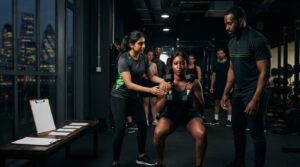
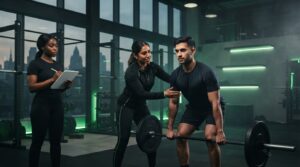
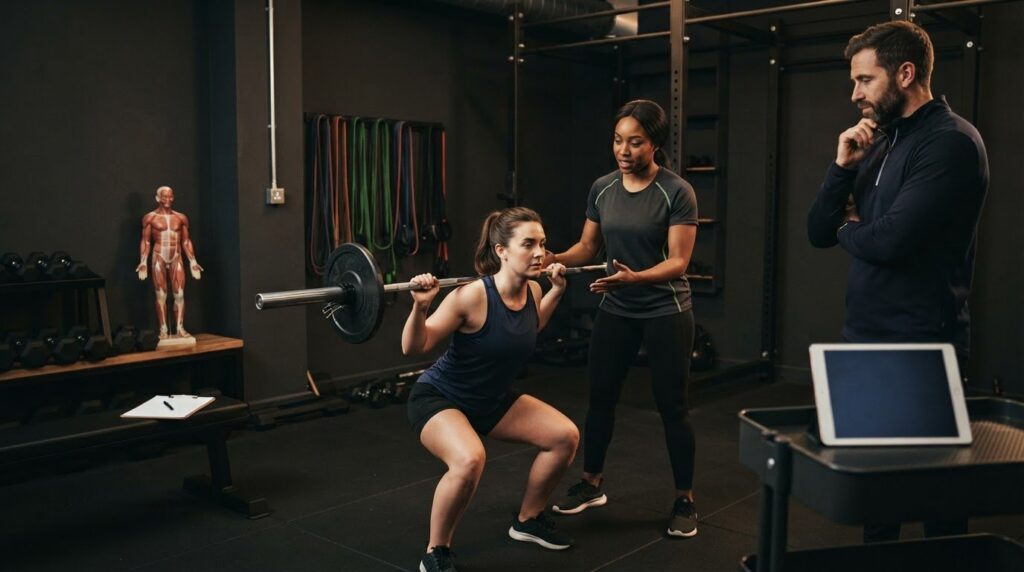
Workshops can give you opportunities to practise coaching skills, try techniques and receive feedback in person. Ask what practical subjects they cover, whether sessions include areas such as kettlebells, indoor cycling or boxing, and how participation relates to the qualification assessment. Don’t assume these topics are part of a particular course simply because a provider offers them separately. Confirm what’s included and how it supports the stated learning outcomes. For a closer look at what to expect, see this guide to choosing a personal trainer course with practical workshops.
Compare the trade-offs with your own needs:
- Online study: Offers flexible access and independent pacing, but requires self-organisation and doesn’t replace hands-on practice.
- Face-to-face workshops: Create opportunities to practise and get direct feedback, but ask how often they take place and which skills they cover.
- Blended delivery: Can connect online learning with in-person practice, but the provider should explain how the parts work together and how practical learning is assessed.
No single format suits everyone. If you learn well through independent study, online materials may help; if you need to practise skills with feedback, find out exactly how workshops support that. Ask about tutor contact between sessions too. If you’re neurodivergent or have other learning support needs, discuss possible adjustments directly and confirm what can be arranged. Redefining Fitness Ltd describes its Level 2 and Level 3 qualifications as combining online study with face-to-face practical workshops, alongside tutoring, learning materials and mock examinations. Check the current delivery and assessment details to decide whether the structure works for you.
To assess the format against your learning needs, review the Level 2 and Level 3 personal training course and confirm the current workshop, support and assessment arrangements with the provider.
How do you take the next step towards a Level 2 and 3 personal training diploma?
Make your decision on evidence, not urgency. A clear process helps you match the course to your goals, study habits and need for practical coaching before you commit.
- 1. Define your goal. Be clear about why you want to study and what kind of work setting you have in mind. This helps you ask whether the qualification’s content and progression fit your plans.
- 2. Choose a learning format that works for you. Consider how you manage independent study, whether you need face-to-face practice and what support helps you learn effectively.
- 3. Check the course details. Request the current syllabus, exact qualification title, awarding organisation, entry requirements and assessment outline. Verify details with the provider and relevant awarding organisation.
- 4. Ask practical questions. Find out what workshops cover, how they connect to assessment, how you can contact tutors, and what learning materials and portal access are included.
- 5. Confirm the arrangements before enrolling. Ask what enrolment involves, what’s included and what learner support may be available. Get answers in writing if anything remains unclear.
These checks matter whether you’re new to the sector or changing careers. Don’t commit until you understand what you’ll study, how you’ll practise and how the provider will support your learning.
How does Redefining Fitness support diploma learners?
Redefining Fitness describes a course structure that combines online learning with face-to-face practical workshops. Its provision includes tutoring, learning materials, learning portal access, mock examinations and final certification assessments. Use those features to guide your questions: confirm the current workshop format, assessment arrangements and how tutor support works for the course you’re considering.
The organisation also highlights inclusive teaching and support for neurodivergent learners. If you have particular learning needs, raise them directly and ask what support or adjustments may be available. Discussing this before enrolment helps you understand the arrangements, but doesn’t guarantee a specific individual outcome.
A level 2 and 3 personal training diploma should fit both your ambitions and the way you learn. Compare the course information against your checklist, ask questions and make your choice once the details are clear.
To review the course structure and support, explore the Level 2 and Level 3 personal training diploma.
Choose a course that builds real capability
The right level 2 and 3 personal training diploma should connect foundational learning with personal-training practice. Look beyond the title: check the current syllabus, assessment methods, practical workshops and support before you enrol. Online study can help you organise your learning, but make sure you understand how the course develops and assesses practical skills.
Redefining Fitness describes a route combining online study with face-to-face practical workshops, course materials, learning portal access, tutoring and mock examinations. The organisation also highlights inclusive teaching and support for neurodivergent learners. Confirm current course details and discuss any support requirements directly so you can make an informed choice.
Compare the course structure with your goals, then use the provider’s course information to check the details and ask any remaining questions.
Frequently Asked Questions
What is a Level 2 and Level 3 personal training diploma?
It’s a course route combining foundational fitness-instruction learning at Level 2 with further study for personal-training practice at Level 3. The exact syllabus, assessments and qualification titles vary by course, so don’t rely on the name alone. Check the current course specification and ask how the two levels connect. Redefining Fitness offers Level 2 and Level 3 personal trainer qualifications through online learning and face-to-face practical workshops.
Do I need Level 2 before taking Level 3 personal training?
Not always. Entry requirements depend on the specific qualification and course structure. Some routes combine both levels, while others may ask you to hold or complete a relevant qualification first. Before applying, check the provider’s current entry requirements and confirm them with the relevant awarding organisation if needed. Don’t assume that a course title tells you whether you can start at Level 3 or must complete Level 2 first.
Can you study a Level 2 and 3 personal training diploma online?
Yes, some courses offer online study, but that doesn’t automatically mean every part can be completed remotely. Check whether practical workshops or face-to-face assessments form part of the course, and how they connect to online learning. Redefining Fitness describes a blended route with online learning and face-to-face practical workshops. Ask the provider how you’ll practise skills, receive feedback and complete each assessment before enrolling.
Is a Level 2 and 3 personal training diploma recognised in the UK?
Recognition depends on the exact qualification and awarding organisation, so the title alone isn’t enough to confirm its status. Ask the provider for the full qualification name and awarding organisation, then verify the details with that organisation and the relevant official register or regulator. Check that the qualification meets the requirements for your intended progression or work setting. Treat broad claims such as “recognised nationwide” with caution unless they’re supported by clear evidence.
How long does a Level 2 and 3 personal training diploma take?
There isn’t one duration that applies to every course. The time needed can depend on the provider’s course structure, your study pace, workshop arrangements and how long assessments take to complete. Ask for the current expected study period and clarify whether it refers to guided learning, the full course or assessment completion. If you’re balancing study with other commitments, check how learning access and practical sessions are scheduled.
Will a personal training diploma guarantee me a job?
No. Completing a qualification doesn’t guarantee employment, clients or a particular career outcome. It can help you develop relevant knowledge and skills, but your next steps depend on factors including the qualification’s suitability for your goals and the opportunities available to you. Before enrolling, check what the course prepares you to do and whether it fits the work setting you have in mind. Treat any guaranteed-job claim with caution.
What support should a personal training course provide?
Look for clear access to learning materials, a learning portal, tutor support and assessment guidance. Ask whether mock examinations are included, how you can get help when you’re unsure and what practical workshops involve. If you have specific learning needs, discuss possible support or adjustments with the provider before enrolling. Redefining Fitness states that its provision includes tutoring, course materials, portal access and mock examinations, and highlights inclusive teaching and support for neurodivergent learners.