
That bargain course may be the most expensive choice you make. The personal trainer course cost UK providers advertise can hide extra charges, limited support or practical training that doesn’t prepare you to work confidently with clients. A low headline fee isn’t proof of value.
If you’re finding course prices hard to compare, look beyond the number. What matters is what your tuition covers, what you may need to pay separately and how the course develops your knowledge and practical skills. This guide shows you how to break down course fees and assess the offer before you enrol.
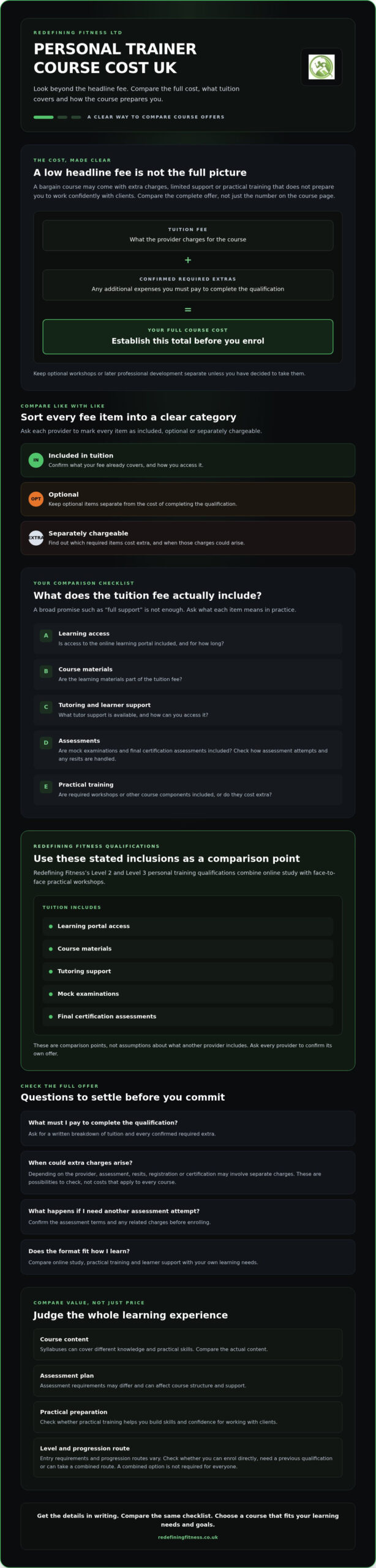
You’ll find a practical checklist for comparing learning materials, tutoring, assessments, practical workshops and learner support. Redefining Fitness’s Level 2 and Level 3 personal training qualifications combine online study with face-to-face practical workshops. Tuition includes course materials, tutoring support, mock examinations and final certification assessments. Use these inclusions as a comparison point, ask every provider what’s covered and choose training that fits your learning needs and goals.
Key Takeaways
- Calculate the full personal trainer course cost UK by separating tuition from any required additional expenses.
- Compare providers using the same checklist, so different fee structures don’t cloud your judgement.
- Ask for a written breakdown of charges and assessment terms before you commit.
- Judge a lower fee against the teaching, practical preparation and support you’ll need to build professional competence.
- Check whether the learning format and learner support suit how you study, including any support you may need.
Personal trainer course cost UK: what does the fee actually cover?
A headline tuition fee isn’t automatically the full amount you’ll pay to complete a qualification. One provider may include learning materials and assessments, while another may charge for some items separately. Compare the complete offer, not just the largest figure on the course page.
The full cost of a course is its tuition fee plus any confirmed, required additional expenses you must pay to complete the qualification. Establish that total before you enrol. Ask the provider for a written breakdown showing what’s included, what’s compulsory and what might apply only in certain circumstances.
The Personal trainer qualifications overview gives background on the profession, but course costs depend on the specific qualification and provider. The syllabus, learning format and assessment arrangements all affect what your fee covers. Start your comparison with those details rather than assumptions about what every course includes.
Which costs may sit outside the advertised tuition fee?
Don’t assume an advertised fee covers every step. Depending on the provider, assessment, resits, registration or certification may involve separate charges. These are possibilities to check, not costs that apply to every course. Ask whether learning materials and access to an online learning portal are included, and confirm whether required workshops or other course components cost extra.
Get clear answers to three questions: what must you pay to complete the qualification, when could extra charges arise, and what happens if you need another assessment attempt? If the provider’s response is vague, you don’t yet have a reliable total.
How do Level 2 and Level 3 course fees differ?
Course level affects what you’re paying to study. Syllabuses can cover different knowledge and practical skills, and assessment requirements may differ too. Those differences can affect the course structure and the teaching or support included in the fee. Compare the actual course content and assessment plan rather than treating every qualification at the same level as identical.
Entry requirements and progression routes vary by qualification and provider. Check whether you can enrol directly, need a previous qualification or can take a combined route. A combined option may suit some learners, but it doesn’t mean everyone must buy Level 2 and Level 3 together. Ask which route fits your current qualifications and what each fee covers.
For a fair personal trainer course cost UK comparison, write down the tuition fee, every confirmed required extra and the included learning and assessment support. Keep optional workshops or later professional development separate unless you’ve decided to take them. That gives you a clear baseline and stops a low headline fee being mistaken for the full cost.
Personal trainer course fees: compare what tuition includes
Two courses can show the same headline fee and still offer different learning experiences. One may provide tutor support and practical workshops, while another may rely more heavily on independent study. Compare what the fee includes, not just the fee itself. That’s how you judge what the personal trainer course cost UK actually buys.
Comparing included support matters as much as comparing fees, because the right learning resources, teaching and assessment preparation can shape how confidently you build your skills. The National Careers Service’s guide to becoming a personal trainer outlines the role and its entry routes. Use it for context, then ask providers how their course structure supports your learning.
What should a personal trainer course fee include?
Ask each provider to mark every item as included, optional or separately chargeable. Don’t settle for a broad claim such as “full support”. Ask what that means in practice.
- Learning access: Is portal access included, and for how long?
- Materials: Are course materials part of the tuition fee?
- Tutoring: What tutor support is available, and how can you access it?
- Assessment: Are mock examinations and final certification assessments included? Ask how assessment attempts and any resits are handled.
Redefining Fitness states that tuition includes learning portal access, course materials, tutoring support, mock examinations and final certification assessments. Use these items as a checklist for your own comparison, rather than assuming other providers include the same things.
What practical training and learner support are provided?
Online study offers a different experience from a course that combines online learning with face-to-face practical workshops. Neither format tells the whole story on its own. Ask what practical learning involves, how the teaching is delivered and how you’ll receive feedback as you develop your knowledge and skills.
Support matters when the content gets challenging. Find out who you can ask for help, how feedback is given and whether support can accommodate different learning needs, including those of neurodivergent learners. Redefining Fitness describes its Level 2 and Level 3 personal training qualifications as combining online study with face-to-face practical workshops, and highlights support for neurodivergent learners. Check each provider’s current arrangements directly.
For a clear comparison, record each provider’s fee, learning access, teaching format, tutor support, practical workshops and assessment inclusions. If you’re considering this blended approach, explore Redefining Fitness’s personal training qualifications and check the current fee breakdown and inclusions before enrolling.
Is a cheaper personal trainer course good value? Judge the full offer
A lower fee doesn’t automatically make a course better value. Less practical preparation, limited tutor access or unclear assessment terms may come with trade-offs that matter to your learning. Judge the whole offer: teaching, practical experience, learner support and transparent costs, as well as the fee.
Course formats and routes into the profession vary. The National Careers Service outlines different pathways, including college, apprenticeships and private courses. Use that context, then compare providers offering the same qualification level. Treat promotional claims as claims to verify, not proof of teaching quality or recognition.
How can you compare course providers fairly?
Put the details side by side. Check each provider’s course outline, tutor access, practical workshops, feedback and assessment arrangements. Then ask who awards the qualification and how its recognition can be confirmed. Don’t compare different qualification levels as if they cover the same content or offer the same progression route.
| What to compare | What to check |
|---|---|
| Qualification and syllabus | Is it the same level, and what does the course cover? |
| Teaching and practice | What teaching is provided, and are practical workshops included? |
| Support and feedback | Who helps you, and how do you receive feedback? |
| Assessment and recognition | What are the assessment arrangements, and who awards the qualification? |
| Full fee | Which costs are included, and could required charges apply separately? |
Use the same questions for every provider. That turns the personal trainer course cost UK from a headline figure into a comparison of what you’ll actually receive.
What questions reveal hidden costs or weak support?
Ask direct questions and request written answers before enrolling. Confirm whether resits, further assessment attempts or certification carry additional charges. Ask for a written list of inclusions, exclusions and any conditions that could affect course completion. If a provider describes support as “full” or “ongoing”, ask what that means in practice.
Find out who you can contact when you’re stuck, how you’ll receive feedback and when you can expect a response. These details help distinguish a clear learning offer from reassuring but vague marketing. A provider that explains its course and charges plainly gives you a stronger basis for deciding whether the fee fits your goals.
How to work out your personal trainer qualification budget
Build your budget from confirmed costs, not an advertised starting fee. Ask each provider for a written breakdown, then add only the expenses you’re required to pay to complete the qualification. Keep optional extras separate. This gives you a more useful figure than guessing what a headline price might leave out.
A practical checklist for calculating the full fee
Use one list for every provider and label each item included, additional, optional or awaiting confirmation. Record:
- Tuition and any required learning materials
- Assessment charges, including any stated resit costs
- Certification costs, if charged separately
- Any other confirmed expense required to complete the course
Ask the provider to confirm assessment terms, payment timing and cancellation conditions in writing. Keep its replies with your comparison notes. If a cost is still unclear, mark it as unconfirmed rather than treating it as included or making up an estimate. Compare the total confirmed commitment for each course, not a figure inferred from an advertised starting fee.
Keep optional workshops and later CPD courses outside your essential course budget unless you’ve decided to take them. They may be relevant to your future development, but they aren’t automatically part of the fee for completing your qualification. Separating required costs from optional choices helps you see what you’re committing to now.
How should work, study time and learning support affect your decision?
A course can fit your budget and still be difficult to fit around your life. Before enrolling, check how online study and any scheduled face-to-face practical workshops would work alongside your job, caring responsibilities and other commitments. Confirm attendance expectations, assessment deadlines and the time available to complete each part of the course.
Ask what happens if your circumstances affect your study plans, and check the provider’s cancellation terms rather than assuming you can change arrangements without cost. Also consider what learning support you may need to stay on track. A useful plan accounts for both the confirmed financial commitment and the time and support required to complete the qualification.
For further planning context, consider how personal training study could fit around work and family responsibilities. To explore a course that combines online study with face-to-face practical workshops, view Redefining Fitness’s personal training qualifications and confirm the current fee breakdown, payment timing and terms directly with the provider.
Choosing a personal trainer course: what Redefining Fitness includes
You now have a framework for comparing course format, practical learning, support, assessments and confirmed additional charges. Apply it to each provider you’re considering. Redefining Fitness offers Level 2 and Level 3 personal training qualifications, combining online learning with face-to-face practical workshops.
The stated tuition inclusions are learning portal access, course materials, tutoring support, mock examinations and final certification assessments. Use those items to compare the offer with other providers, without assuming every course includes the same support. For a personal trainer course cost UK comparison, consider the delivery model too: does online study combined with practical sessions suit the way you learn?
How does blended learning contribute to course value?
Online study gives you a way to work through course content, whilst face-to-face workshops add a practical element to the learning experience. The value depends on how the format fits your needs and what each part involves. Ask what the workshops cover and how they connect with the qualification’s learning and assessment.
Redefining Fitness also offers training in specialisms including kettlebells, indoor cycling and boxing. Ask which workshops, if any, relate to these areas and whether they’re included in the qualification tuition or offered separately. Don’t assume a related course or specialism is part of your Level 2 or Level 3 fee unless the provider confirms it.
What should you confirm before enrolling with Redefining Fitness?
Course details and fees can change, so get the current information directly from the provider before making a decision. Ask for written confirmation of the fee, what it includes and whether any additional charges apply. Confirm the current assessment and certification arrangements, along with the tutoring support available during your study. If you need particular learning support, ask how the provider can support you. Redefining Fitness highlights support for neurodivergent learners.
Be specific. Ask what’s included, what costs extra and what conditions apply to assessments or completion. A clear written answer lets you compare the offer with other providers on equal terms, rather than relying on assumptions.
Explore Redefining Fitness courses, review the course details and ask for a current fee breakdown before you decide. Make your choice with the full picture in front of you.
Choose your course with the full picture
The personal trainer course cost UK providers advertise is useful only once you know what it covers. Compare the complete fee, required extras, assessment terms and support, not just the headline figure. A lower price alone doesn’t prove better value. Look for a course with a clear route to developing your knowledge and practical skills.
Redefining Fitness combines online learning with face-to-face practical workshops. Its stated course inclusions are learning portal access, materials, tutoring support, mock examinations and final certification assessments. Before enrolling, confirm the current fee, what’s included and whether any additional charges apply.
Ready to check the details for yourself? Explore the courses and request a clear fee breakdown. Ask the questions that matter, compare the answers carefully, then choose a learning experience that fits your needs and ambitions. Make an informed start and build your professional capability with confidence.
Frequently Asked Questions
How much does a personal trainer course cost in the UK?
There’s no single fee for a personal trainer qualification. The personal trainer course cost UK learners face varies by qualification level, provider, delivery format and included support. Ask each provider for a current written breakdown covering tuition, materials, assessments and any additional charges. Compare the full confirmed commitment, including required extras, rather than choosing from headline fees alone. An advertised starting fee may not be the total.
What is included in a personal trainer course fee?
Inclusions differ between providers, so check whether the fee covers learning-platform access, course materials, tutor support, practical workshops, mock exams and final assessments. Redefining Fitness states its fees include portal access, course materials, tutoring, mock examinations and final certification assessments. Confirm those details are current, and ask for any exclusions or additional charges in writing before enrolling. A clear breakdown makes comparisons more reliable.
Are Level 2 and Level 3 personal trainer courses priced separately?
Course structures vary: some providers offer Level 2 and Level 3 separately, while others offer a combined route. Confirm exactly which qualification each quoted fee covers, along with entry requirements and progression arrangements. Check whether materials or assessments cost extra at either level. Don’t assume a combined course is automatically cheaper or right for you. Compare its syllabus and inclusions with the separate options.
Why do personal trainer course fees vary between providers?
Fees can reflect differences in qualification level, materials, tutor access, practical teaching, assessment arrangements and learner support. A higher or lower headline fee doesn’t, by itself, prove quality or value. Compare providers offering the same qualification level and check what each course includes. Ask for written confirmation of the full offer, including required extras, so you can judge what the fee covers before deciding.
Can I study for a personal trainer qualification online?
Some qualifications use online learning, whilst practical skills may also involve face-to-face teaching or assessment. The format depends on the provider and qualification. Before enrolling, check workshop requirements, assessment format, tutor access and any related charges. Redefining Fitness offers online learning combined with face-to-face practical workshops. Confirm the current course details directly with the provider, including what the practical element involves and whether it’s included in tuition.
Do personal trainer courses charge extra for exams or resits?
Additional charges depend on the provider’s terms, so don’t assume exams, resits or certification are included. Request a written breakdown that separates included assessments from any repeat or resit fees, and ask whether other conditions apply. Redefining Fitness states its tuition includes mock examinations and final certification assessments. Confirm the current assessment arrangements and any exceptions directly before enrolling, rather than relying on a general course description.
Is a more expensive personal trainer course worth the money?
Not automatically. Judge value by the qualification, teaching, practical preparation, tutor access, assessment support and clear inclusions. Compare courses at the same level, and check qualification recognition and awarding arrangements directly with each provider. A written fee breakdown helps you see whether a higher fee includes support that matters to you or whether important items still cost extra. Choose based on the full offer, not price alone.
Can I get funding or pay for a personal trainer course in instalments?
Funding and payment options depend on the provider and your circumstances, so don’t assume a particular arrangement is available. Ask the provider directly about current payment terms, eligibility and deadlines, and request written confirmation of the total commitment. A payment schedule changes when you pay, not necessarily what the course includes. Check whether any required costs sit outside the stated tuition before agreeing to proceed.