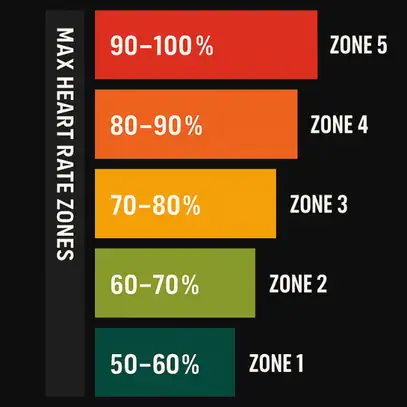
What Is Aerobic Cardio? Benefits, Heart Rate And How To Train
Aerobic cardio is one of the foundations of physical fitness, but the phrase is often used too loosely. People talk about “doing cardio” as though every cardiovascular workout produces the same adaptation, when a 30-minute easy run, a 10-minute all-out interval session and a two-hour bike ride can place very different demands on the body.
Understanding aerobic training properly means looking beyond the exercise itself. Intensity, duration, frequency, energy-system contribution, fitness level, recovery and training objective all matter. A beginner trying to improve general health needs a different approach from a runner preparing for a half marathon, and a strength athlete may use aerobic training primarily to improve conditioning without compromising strength or muscle gain.
This initial guide explains what aerobic cardio actually is, how the body produces energy during aerobic exercise, how to choose an appropriate intensity to improve it, how heart rate can be used, what different forms of cardio are good for, and how to build aerobic fitness progressively over time so that your training is safe, effective and specific to your training needs.
 https://www.pexels.com/photo/man-running-outdoors-2982100/?utm_source=chatgpt.com
What Is Aerobic Cardio?
Aerobic cardio is sustained physical activity in which aerobic metabolism makes a substantial contribution to the energy required to keep working. The word aerobic means “with oxygen”, referring to the important role oxygen plays in energy production.
Typical examples include:
- Walking
- Hiking
- Jogging
- Running
- Cycling
- Rowing
- Swimming
- Cross-training
- Using an elliptical trainer
- Continuous circuit-based activities
The important point is that aerobic cardio is not defined by the exercise alone. Technically a lot of exercise modalities have a cardiovascular element as this is about straining the heart in a way that is sufficient and purposeful to improve performance and/or health however we refer to cardio training as a specific bout of exercise with a desired intensity that produces a physiological effect in a specific training zone.
Consider walking. A sedentary beginner might walk uphill at 5 km/h and reach a genuinely challenging moderate intensity. A highly conditioned endurance athlete could walk at the same speed and experience almost no cardiovascular stress.
Likewise, cycling at 200 watts might be an easy aerobic workload for a highly trained cyclist but an extremely demanding effort for someone who rarely exercises. The physiological response is therefore relative to the individual which is where things like Rate of Perceived Exertion (RPE) is used to measure intensity. This is essentially a scale of 1-10 or 6-20 depending on the source where an individual self reports their current intensity. This means it is subjective, rather than objective and can lead to discrepancies however it is a great tool for developing self awareness. To be more clinical, we can use heart rate monitors to measure a specific intensity as well as things like the observation test or talk test.
This is why prescribing aerobic exercise simply by saying “go for a run” is incomplete. A useful prescription needs to consider how hard the person is working, how long they are working for and what adaptation the programme is trying to produce.
What Does Aerobic Cardio Actually Mean?
Aerobic metabolism involves the use of oxygen in the production of ATP, the energy currency that allows muscle cells to perform work.
During exercise, your muscles continuously require ATP. The body can regenerate ATP through several interacting energy systems, including the phosphagen system, glycolytic pathways and oxidative metabolism. These systems do not operate like three separate switches because they work simultaneously, but their relative contribution changes according to the intensity and duration of the activity.
Imagine three different efforts:
A 5-second maximal sprint: the immediate energy systems make a very large contribution because the required power output is extremely high and the effort is too short to rely predominantly on oxidative metabolism.
A 400-metre running effort: anaerobic glycolysis contributes substantially, but aerobic metabolism is also contributing throughout the effort. This means there is a hybrid of the two with the dominance leaning into the lactate specific energy system.
A 60-minute easy run: oxidative metabolism becomes the dominant source of energy, although anaerobic metabolism never disappears completely.
This distinction matters because “aerobic” and “anaerobic” are best understood as descriptions of the dominant metabolic contribution rather than completely separate types of exercise.
How Does Aerobic Cardio Work?
When you begin exercising, the working muscles immediately require more ATP. Your cardiovascular system responds by increasing cardiac output. Your heart beats faster and, within limits, pumps more blood with each beat. Your breathing rate and depth increase, allowing greater oxygen exchange in the lungs. The oxygen carried in the blood is then delivered to working tissues, where mitochondria use oxygen as part of oxidative energy production. Several adaptations can occur when this system is trained repeatedly.
Your heart can become more effective at pumping blood. Your muscles can develop greater oxidative capacity. The ability to transport and utilise oxygen can improve, and the body can become better at sustaining a particular workload without accumulating fatigue as rapidly.
For example, imagine that you currently run 5 km at 7:00 per kilometre with an average heart rate of 155 bpm. After several months of appropriate aerobic training, you might eventually run the same route at 6:30 per kilometre while producing a similar cardiovascular response.
Alternatively, you might still run at 7:00 per kilometre but find that your heart rate is lower and the effort feels considerably easier. Both represent meaningful improvements.
What Are The Benefits Of Aerobic Cardio?
Aerobic training can improve cardiorespiratory fitness and contribute to a wide range of health benefits.
The WHO recommends that adults accumulate 150–300 minutes of moderate-intensity aerobic activity per week, or 75–150 minutes of vigorous activity, or an equivalent combination. It also recommends muscle-strengthening activity involving the major muscle groups on at least two days per week. (Iris)
Regular physical activity is associated with improvements in cardiovascular health, metabolic health, mental health, sleep and other health outcomes. (Iris) But the benefits of aerobic training are not limited to “burning calories”.
Cardio has a number of benefits that include improving heart and lung health, increasing metabolism, improving energy and sleep, potentially having an indirect improvement on digestion but for most people the benefits are burning calories for fat or weight loss and improving mental health due to endorphins being released. Endorphins are the happy chemicals our brain produces such as serotonin and dopamine.
For many cardio is also a way to switch off mentally and go in the zone with many people who run also expressing a phenomenon called runners high. Some cardio modalities are better for some than others – for example, running could potentially be high stress on the joints for a de-conditioning or susceptible individual so non weight bearing activities such as rowing or cycling may be better however these do not provide any bone building stimulus so it would be recommended to balance this out with the appropriate amount of resistance training.
Improved Cardiorespiratory Fitness
Cardiorespiratory fitness describes the body’s ability to deliver and use oxygen during sustained exercise. A major marker of this is VO? max, which represents the maximum rate at which oxygen can be taken up and utilised during intense exercise. You do not need to train specifically at VO? max to improve your aerobic fitness. A substantial amount of aerobic development can occur through lower-intensity training.
Greater Exercise Endurance
Someone with better aerobic fitness can generally sustain a given workload for longer before fatigue becomes limiting.
For example, a beginner might find that 20 minutes of continuous running is extremely difficult. After appropriate progression, they might be able to run for 45 minutes without needing to stop. The important adaptation is not simply being able to tolerate discomfort. The body becomes better at supporting prolonged work.
Improved Recovery Between Efforts
Aerobic fitness can also matter during sports and training where the activity is intermittent. Consider a footballer who repeatedly sprints, jogs and walks throughout a match. The ability to recover between harder efforts is influenced by multiple factors, including aerobic fitness.
Similarly, a person performing resistance training may recover more effectively between sets when their overall conditioning is good. This does not mean that aerobic cardio magically eliminates fatigue. It means that improving the systems responsible for oxygen delivery and utilisation can contribute to the ability to sustain repeated work.
Better Ability To Handle Training Volume
An athlete who can comfortably perform aerobic work has another tool for developing work capacity without making every session extremely intense.
This becomes particularly important in endurance sport, where the ability to accumulate substantial training volume is a major part of performance development.
What Heart Rate Should You Use For Aerobic Cardio?
This is where many cardio programmes become unnecessarily simplistic.
You will often see advice saying that you should keep your heart rate between two specific numbers to “stay aerobic”. That sounds precise, but human physiology is not quite that neat.
Heart rate is influenced by:
- Age
- Fitness
- Resting heart rate
- Temperature
- Hydration
- Caffeine
- Stress
- Sleep
- Medication
- Altitude
- Exercise modality
- Fatigue
Your heart rate can also gradually increase during prolonged exercise even when your workload remains constant. This phenomenon is commonly referred to as cardiovascular or heart-rate drift. ACSM notes that during prolonged constant-load exercise, heart rate can rise independently of oxygen consumption, making heart rate an imperfect proxy for metabolic intensity. (ACSM)
That means your watch saying “Zone 2” does not automatically mean that your metabolism is operating at some perfectly defined physiological boundary. Being in zone 2 is also not a special or magic zone but a necessary one for building a solid aerobic base whilst mastering the movement patterns themselves, with the latter being an overlooked component of improving your fitness.
Heart rate is useful. It simply needs to be interpreted in context but spending more time in zone 2 does make sense with many expert running coaches referring to the 80/20 split with 80% of your time needing to be in zone 2 to build your massive aerobic base. This is also the only zone barring zone 1, in which you can spend 80% of your time as spending it in a higher zone 3/4/5 would physiologically be impossible if you are training with any substantial amount of volume.
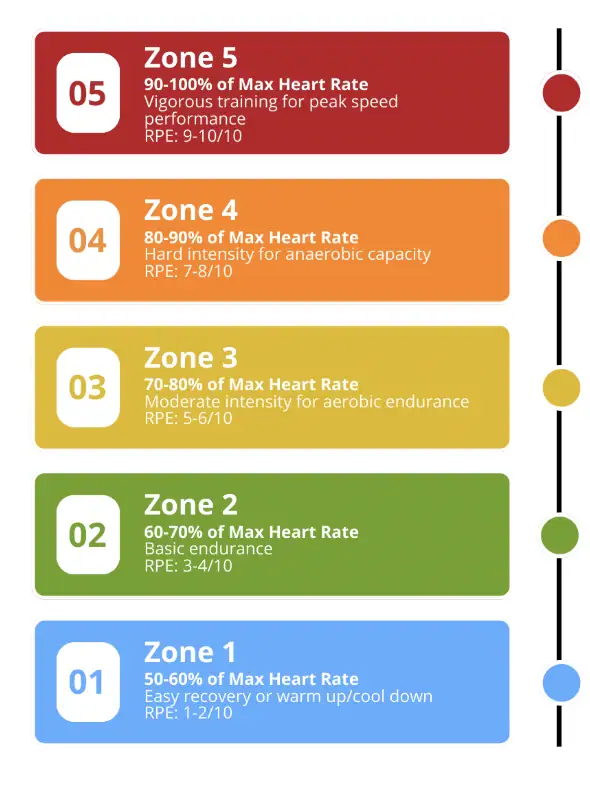 https://trainingbyrobyn.com/blog/the-power-of-zone-2-cardio-mobilitybr
How To Calculate Your Aerobic Training Heart Rate
A commonly used estimate for maximum heart rate is:
220 ? age = estimated maximum heart rate
For a 36-year-old, that would produce:
220 ? 36 = 184 bpm
A simple 60–70% calculation would therefore produce approximately:
110–129 bpm
But there is an important problem. That equation is an estimate, not a measurement of your actual maximum heart rate. One 36-year-old might have a true maximum substantially above 184 bpm, while another might have a maximum substantially below it.
ACSM has specifically highlighted the limitations of estimating cardiorespiratory fitness and exercise intensity using generic heart-rate equations, recommending that heart rate be combined with appropriate testing and perceived exertion where possible. (ACSM) A better approach for serious training is to use multiple pieces of information rather than blindly following one number.
For example, if your watch says 125 bpm but you are struggling to speak, breathing heavily and feel that you could only sustain the pace for another few minutes, the number should not convince you that the session is “easy aerobic”. Conversely, if you are at 140 bpm but can comfortably maintain conversation and the effort feels sustainable, the number alone does not prove that you are training too hard.
What Is Zone 2 Training?
Zone 2 has become one of the most widely used terms in fitness, but it is also one of the most poorly standardised.
Different systems define heart-rate zones differently. Some use percentages of maximum heart rate, others use heart-rate reserve, and more sophisticated approaches can use physiological thresholds.
This means that “Zone 2” on one person’s watch may not represent exactly the same physiological intensity as “Zone 2” on somebody else’s watch.
The practical concept behind low-intensity aerobic training is nevertheless useful. Imagine you can run at 6:00 per kilometre while maintaining controlled breathing and speaking in full sentences. If you need to slow to 6:30/km on another day because you slept badly or the weather is hot, that does not mean the session has failed. The objective is the physiological stimulus, not an arbitrary pace. For general aerobic development, the ability to perform sustained work at a controlled intensity is often more useful than obsessing over whether the watch displays a particular zone.
What Should Aerobic Cardio Feel Like?
One of the simplest ways to regulate aerobic training is through rating of perceived exertion, or RPE. On a 1–10 scale, a genuinely easy aerobic session might feel like approximately 3–4/10. You are working, but you could continue for quite a long time. Moderate aerobic exercise might feel more like 5–6/10.
You are clearly exercising and breathing harder, but the effort remains controlled. Hard intervals might reach 8–10/10, depending on the interval duration. The CDC describes moderate activity as roughly 5–6 out of 10 in terms of relative effort and vigorous activity as approximately 7–8 or above. (World Health Organization)
The talk test is another useful tool. If you can speak comfortably in complete sentences, you are probably not working at an extremely high intensity. If you can only say a few words before needing another breath, you are working considerably harder. This is particularly useful when training clients because it does not require a heart-rate monitor.
How Long Should You Do Aerobic Cardio?
There is no single duration that makes a cardio session “aerobic”. A 20-minute session can be worthwhile but soo can a 40-minute session or a 2 hour Long Slow Duration Session (LSD) because the correct duration depends on the objective.
For example:
Beginner:
20–30 minutes of brisk walking three times per week may be a sensible starting point for health and general baseline conditioning.
General fitness:
30–60 minutes of aerobic exercise several times per week may provide a substantial training stimulus which can be progressed and made specific towards a goal.
Endurance athlete:
Long sessions may extend well beyond an hour because the objective is to develop the ability to sustain exercise for prolonged periods.
The WHO recommends 150–300 minutes of moderate aerobic activity per week for substantial health benefits, with additional activity potentially providing additional benefits. It also recommends gradually increasing frequency, intensity and duration rather than immediately jumping into large volumes. (Iris) The key is that duration cannot be separated from intensity. Thirty minutes of very hard running is not equivalent to 30 minutes of easy walking simply because the stopwatch displays the same number.
How Many Times A Week Should You Do Aerobic Cardio?
Frequency should be determined by the person’s goal and their ability to recover. Someone who currently performs no exercise might start with three 20-minute sessions.
Someone training for a 10 km race might perform four or five running sessions. An endurance athlete could train aerobically much more frequently. Meanwhile, someone whose primary goal is gaining muscle and strength might deliberately keep additional cardio moderate because excessive fatigue could interfere with their resistance training.
There is also an important distinction between formal cardio sessions and general physical activity. Walking to work, cycling to the shops, hiking and climbing stairs all contribute to physical activity. The WHO explicitly recognises activity performed through transport, work, household tasks, recreation and planned exercise. (Iris)
Therefore, somebody who walks 10,000 steps every day and performs two dedicated cardio sessions is not starting from the same activity baseline as someone who spends most of the day sitting.
The Best Types Of Aerobic Cardio
There is no single best aerobic exercise. The best choice depends on the individual. For someone who loves running and has no problem recovering from it, running may be ideal. For someone with a history of impact-related problems, cycling or swimming may provide a more practical way to accumulate cardiovascular work. For someone who hates stationary bikes but enjoys hiking, hiking may be the activity they actually perform consistently. That matters because the theoretically optimal programme is useless if the person will not follow it.
Aerobic Running
Running is extremely effective because it combines cardiovascular demand with a substantial amount of muscular work. It also provides a very convenient way of measuring progression. For example, a runner might progress from:
5 km at 7:00/km ? 5 km at 6:30/km ? 5 km at 6:00/km while attempting to keep the effort controlled.
However, faster is not always better. Say, if every run becomes a race, the athlete can accumulate excessive fatigue and spend too much time at higher intensities. A better programme might contain:
- Easy aerobic running
- Longer aerobic running
- Faster threshold-type work
- Occasional high-intensity intervals
The proportions depend on the athlete and their goals but a mix is good and this is where conjugate or undulating periodisation can be useful, especially for more experienced individuals.
Aerobic Cycling
Cycling allows substantial cardiovascular work with relatively low impact. This makes it particularly useful for:
- Additional conditioning
- Endurance development
- Cross-training
- Recovery-focused exercise
- People who cannot tolerate large amounts of running
Cycling also allows workload to be measured relatively precisely when using a power meter or indoor bike. For example, a cyclist might ride at 150 watts for 60 minutes during an easy aerobic session, whereas a harder workout could involve repeated intervals at 250 watts. The numbers themselves mean little without knowing the individual’s fitness. 150 watts is easy for one cyclist and extremely difficult for another.
Walking And Incline Treadmill Training
Walking is one of the most underrated forms of cardiovascular exercise. A sedentary person can obtain a meaningful cardiovascular stimulus from brisk walking without needing to run. Incline walking can increase the demand substantially.
For example:
Flat walking: relatively low cardiovascular demand.
5% incline: noticeably greater muscular and cardiovascular demand.
10–15% incline: potentially very demanding depending on speed and fitness.
The important consideration is not simply how steep the treadmill is. You need to consider speed, duration, body weight, fitness and whether the person is holding onto the treadmill. Holding the handrails can significantly change the movement and reduce the effective workload, so someone claiming to walk at a steep incline while heavily supporting themselves on the rails is not necessarily performing the same exercise as someone walking hands-free.
Rowing For Aerobic Fitness
Rowing is useful because it involves a large proportion of the body’s musculature. A technically sound rowing stroke involves coordinated contribution from the legs, trunk and upper body. That makes rowing capable of generating a substantial cardiovascular demand without the impact associated with running.
However, rowing is also technically demanding. Someone who has never rowed before may become limited by technique or local muscular fatigue before their cardiovascular system is properly challenged.
For example, a beginner may feel their lower back and forearms burning after several minutes, while an experienced rower can maintain a much more efficient stroke and continue producing power aerobically. This is why exercise selection should consider skill as well as physiology.
Swimming For Aerobic Fitness
Swimming provides a substantial cardiovascular stimulus while placing very little impact on the joints. However, swimming efficiency is heavily influenced by technique. A technically proficient swimmer can travel through the water considerably more efficiently than an inexperienced swimmer who creates excessive drag. Consequently, a beginner might reach a high heart rate after swimming 50 metres, while a trained swimmer can swim much further before reaching the same relative intensity. This makes swimming excellent cardiovascular exercise but also means that swimming performance cannot be interpreted purely through distance.
One drawback with swimming for the average swimmer is that most peoples swimming technique is inefficient and they waste energy. Many people fight the water and this slows them down but also tires them quickly. For swimming to be an effective modality, it needs to be done correctly.
Aerobic Cardio Vs Anaerobic Training
Aerobic and anaerobic metabolism overlap continuously. A common mistake is to imagine that jogging is aerobic while sprinting is anaerobic and that there is a precise point where one system switches off and the other switches on.
That is not what happens. During a sprint, aerobic metabolism is still occurring. During an easy run, anaerobic pathways are still contributing. What changes is the relative contribution. As exercise intensity increases, the body increasingly relies on energy pathways capable of producing ATP rapidly enough to meet the higher demand. This is one reason why a 20-second sprint feels completely different from a 60-minute run. The sprint requires extremely high power output. The longer run requires the ability to produce energy sustainably. Both systems matter.
Aerobic Cardio Vs HIIT
HIIT involves repeated high-intensity efforts separated by periods of recovery. For example:
30 seconds hard + 90 seconds easy × 8 would produce a very different training stimulus from:
45 minutes continuous easy cycling.
HIIT can be extremely useful for improving high-intensity performance and cardiovascular fitness, but it is not automatically superior to lower-intensity aerobic training. One major issue is recovery. Eight hard intervals may only take 16 minutes of actual work, but they can generate considerably more acute fatigue than 45 minutes of easy cycling. If someone is already performing heavy squats, deadlifts and lunges, adding several brutal HIIT sessions could create more interference than they need. Easy aerobic work often has a much lower recovery cost.

Does Aerobic Cardio Burn Fat?
Yes, aerobic exercise can contribute to fat loss, but the popular concept of a special “fat-burning zone” is often misunderstood. During exercise, the body uses a mixture of fat and carbohydrate for energy. At lower intensities, the relative contribution from fat can be higher. As exercise intensity rises, carbohydrate becomes increasingly important because it can support higher rates of energy production. That does not mean that low-intensity cardio automatically produces greater fat loss.
Imagine two people:
Person A: walks for 60 minutes and burns 250 calories. Person B: runs for 30 minutes and burns 400 calories.
Person A may oxidise a greater proportion of fat during the session, but Person B has potentially expended more total energy.
Ultimately, changes in body fat are determined by energy balance over time rather than simply which fuel was being oxidised during one workout. Aerobic exercise can therefore be an extremely useful component of a fat-loss programme, but it should be considered alongside nutrition, resistance training, daily activity and recovery.
What’s important to distinguish is that burning calories doesn’t always equate to burning fat because primarily you are burning energy. The more effective way to burn fat would be to balance and prioritise resistance training because the more lean muscle you have, the more calories you will burn naturally at rest. This is why counting how many calories you burn through steps and watch trackers can be misleading because if you are not increasing lean muscle, you are not being as effective as you think.
Can Aerobic Cardio Build Fitness On Its Own?
Aerobic cardio can dramatically improve cardiovascular fitness, but cardiovascular fitness is only one component of physical fitness. Consider two people. One can run 10 km but struggles to perform a heavy squat. The other can squat 180 kg but becomes exhausted after climbing several flights of stairs. They possess different physical capabilities. A comprehensive fitness programme can therefore include:
- Cardiorespiratory endurance
- Maximal strength
- Muscular endurance
- Power
- Mobility
- Balance
- Coordination
The WHO recommends combining aerobic activity with muscle-strengthening work on at least two days per week for adults. (Iris) Aerobic training is therefore important, but it should not be mistaken for a complete physical preparation system.
How To Combine Aerobic Cardio With Strength Training
Combining cardio and strength training is entirely possible, but the programme needs to be structured intelligently.
Suppose someone performs:
Monday: Heavy lower body
Tuesday: Hard intervals
Wednesday: Heavy upper body
Thursday: Hard intervals
Friday: Heavy lower body
Saturday: Long run
That person is accumulating a large amount of lower-body stress.
The problem is not necessarily that cardio and strength training are incompatible. The problem is that too many demanding sessions are competing for the same recovery resources.
A different approach might be:
Monday: Strength
Tuesday: Easy aerobic cardio
Wednesday: Strength
Thursday: Easy aerobic cardio
Friday: Strength
Saturday: Longer aerobic session
Sunday: Rest
The second structure gives the individual considerably more low-intensity work without turning every cardio session into another hard training day.
Common Aerobic Cardio Training Mistakes
Making Every Session Hard
One of the biggest mistakes is assuming that a successful cardio workout must leave you exhausted. It does not. If you run every session at the fastest pace you can sustain, you may spend too much time training at an intensity that creates substantial fatigue without allowing sufficient recovery. Easy training is not wasted training.
Increasing Volume Too Quickly
Imagine someone currently running 10 km per week who suddenly decides to run 30 km. Their cardiovascular system may tolerate the increase better than their tendons, muscles and connective tissues. This is one reason aerobic progression needs to consider the entire body rather than simply heart and lung capacity.
Ignoring Exercise Technique
Cardiovascular exercise still involves movement skill. Poor running mechanics, inefficient rowing technique or poor swimming technique can increase local fatigue and limit performance. Improving technique can therefore sometimes improve endurance without any direct increase in cardiovascular capacity.
Treating Heart Rate As Absolute
A heart rate of 150 bpm does not mean the same thing for everyone. Likewise, your own heart rate can change from one day to another. Heat, dehydration, caffeine, stress and accumulated fatigue can all influence cardiovascular response. Heart rate should therefore be used alongside pace, workload, breathing and perceived exertion rather than treated as an unquestionable measurement.
How To Know If Your Aerobic Training Is Working
There are several ways to assess progress.
You Can Go Faster At The Same Effort
Suppose you previously ran at 7:00/km with an RPE of 5/10. Several months later, you can run at 6:30/km while experiencing the same perceived effort. That is a useful improvement.
You Can Maintain The Same Pace At A Lower Heart Rate
Suppose you consistently run 5 km at 6:30/km. Initially, your average heart rate might be 160 bpm. After training, it might average 150 bpm under similar conditions. That can indicate improved efficiency.
You Can Exercise For Longer
Perhaps you previously reached significant fatigue after 30 minutes. Now you can continue for 60 minutes while maintaining controlled breathing.That is another meaningful adaptation.
You Recover Faster
If your heart rate and breathing settle more quickly after an effort, or you can repeat efforts with less deterioration in performance, your conditioning may have improved. The important point is to compare similar conditions. Temperature, terrain, sleep, hydration and fatigue can all affect performance.
How To Progress Your Aerobic Cardio
There are several variables you can manipulate:
Frequency: three sessions ? four sessions.
Duration: 30 minutes ? 40 minutes.
Distance: 5 km ? 6 km.
Workload: 150 watts ? 165 watts on a bike.
Pace: 7:00/km ? 6:40/km at a comparable effort.
Intensity: gradually introducing harder aerobic or threshold work.
The mistake is trying to increase everything simultaneously. For example, increasing from three to five runs per week while also increasing every run from 30 to 60 minutes and making them faster represents a massive jump in training load. A more sensible progression might be to increase duration first, allow the body to adapt, and then introduce another change. In Redefining Fitness Level 3 Personal Trainer Course, we encourage two variables per week change as a maximum to provide enough capacity for progressive overload whilst maintaining enough familiarity for stimulus to adapt. The WHO specifically recommends that people who are currently inactive begin with smaller amounts and gradually increase frequency, intensity and duration. (Iris)
How Much Aerobic Cardio Do You Really Need?
There are several different answers depending on the question being asked.
If the question is “How much physical activity is recommended for general health?”, the WHO recommendation for adults is 150–300 minutes of moderate-intensity aerobic activity per week, or 75–150 minutes of vigorous activity, or an equivalent combination. (Iris)
If the question is “How much cardio do I need to improve my 10 km?”, the answer is different.
If the question is “How much cardio should I do while trying to maximise muscle growth?”, the answer is different again.
If the question is “How much aerobic training does an elite endurance athlete need?”, the answer is dramatically different.
There is therefore no meaningful universal prescription such as “everyone needs 30 minutes of cardio five times per week”. The training dose should reflect the desired adaptation. A sedentary beginner may experience substantial benefits from a relatively small increase in activity. A trained endurance athlete needs considerably more stimulus because their body has already adapted to lower workloads. This is one of the most important principles in exercise programming: the appropriate training dose is individual rather than universal.
Aerobic Cardio For Beginners
A beginner does not need to start running five kilometres. In fact, walking may be the better starting point.
For example:
Weeks 1–2:
20–30 minutes brisk walking, three times per week.
Weeks 3–4:
30–35 minutes, three times per week.
Weeks 5–6:
Introduce short jogging intervals if appropriate.
For example:
2 minutes walking + 1 minute jogging × 10
That gives the person exposure to running without immediately asking their tissues to tolerate continuous running.
Progression can then occur by gradually increasing the jogging periods.
This approach is often more sensible than taking someone from no exercise straight into continuous high-impact running simply because running is considered “better cardio”.
Aerobic Cardio For Fat Loss
Someone using cardio primarily to support fat loss does not necessarily need large amounts of intense exercise.
A practical programme could include:
Monday: 40-minute brisk walk
Tuesday: Resistance training
Wednesday: 30-minute cycling
Thursday: Resistance training
Friday: 45-minute incline walk
Saturday: Resistance training
Sunday: Longer walk or hike
This person is accumulating meaningful physical activity without turning every session into an exhausting workout. The advantage is that the programme can potentially be sustained for months rather than being followed for two weeks before fatigue and lack of motivation take over.
Incline walks can also be highly effective for the masses due to the simplicity and low risk of injury. It is also a highly effective method that does not overly stress the joints. The above split is a very basic example for a recreational user and the key to any coach worth their salt is to find creative and enjoyable but effective ways that get the work done whilst keeping your client stimulated. A solid personal trainer will have an arsenal of methods to be able to achieve this beyond the cookie clutter example above.
Aerobic Cardio For Endurance Performance
An endurance athlete needs a more sophisticated approach. A recreational runner preparing for a 10 km race might include:
Easy running: lower-intensity aerobic development.
Long run: increasing the ability to sustain prolonged exercise.
Threshold-type work: improving the ability to maintain a demanding but controlled pace.
Intervals: developing high-intensity aerobic capacity and running performance.
The important distinction is that these sessions have different purposes. A long easy run is not simply a slower version of an interval session. It develops different aspects of endurance and allows a different amount of training volume to be accumulated. This is why effective endurance programmes are not simply collections of “cardio workouts”. They are structured around different physiological and performance objectives.
Aerobic Cardio For Strength Athletes
Strength athletes can also benefit from aerobic training, particularly when it improves general conditioning without creating excessive fatigue. For example, a powerlifter who performs three or four resistance sessions per week might use two 20–30-minute easy cycling sessions. The objective is not to become a competitive cyclist.
The objective might instead be to maintain cardiovascular fitness and improve general work capacity while keeping the additional training stress manageable. Exercise selection matters here. Low-impact cycling, walking or similar modalities may be easier to recover from than repeatedly adding high-impact running.
Final Thoughts
Aerobic cardio is not simply “anything that gets your heart rate up”.
It is a broad category of sustained physical activity in which aerobic metabolism makes a substantial contribution to energy production. The actual training effect depends on intensity, duration, frequency, exercise selection, fitness level and the individual’s wider programme.
A beginner may improve dramatically through brisk walking. A recreational runner may need several different forms of running to continue progressing. A strength athlete may use low-intensity cycling to improve conditioning without adding unnecessary fatigue. An endurance athlete may perform several hours of aerobic work each week because their performance depends heavily on their ability to sustain prolonged exercise.
Heart rate can help regulate intensity, but it should not be treated as an absolute physiological truth. Generic maximum-heart-rate equations are estimates, different zone systems use different definitions, and factors such as heat, dehydration and fatigue can alter heart-rate responses. ACSM therefore recommends considering heart-rate measurement alongside other methods such as appropriate testing and perceived exertion. (ACSM)
For general health, the current WHO recommendation of 150–300 minutes of moderate aerobic activity or 75–150 minutes of vigorous activity per week, combined with muscle-strengthening work on at least two days, provides a useful baseline. (Iris) But that recommendation is a health guideline, not a universal training programme.
The right amount of aerobic cardio depends on what you are trying to achieve. The key is to choose an appropriate stimulus, apply it consistently, monitor how you respond and progressively increase the demand as your fitness improves. That is how aerobic cardio stops being something you simply “do” and becomes a properly programmed component of fitness.