A qualification opens the door, but it doesn’t automatically make you a coach clients trust. If you’re searching “how to become a personal trainer UK”, you need more than a certificate checklist: the right training, sound judgement and the confidence to coach different people.
The route can feel muddled because gym instruction and personal training are related but distinct steps. Choosing a course on price or speed alone may leave gaps in your preparation. A common pathway starts with a Level 2 Certificate in Gym Instructing, followed by a Level 3 Personal Trainer qualification. Before enrolling, check the qualification’s current status and requirements, then compare the practical training and tutor support included.
This guide covers the route from choosing qualifications to building coaching skills, gaining experience and pursuing your first opportunities. You’ll also learn what to look for in blended learning, which combines online study with face-to-face workshops. The certificate matters. So does how you apply what you learn.
Key Takeaways
- Understand how gym instruction differs from personal training, and what each role involves.
- Map the usual Level 2-to-Level 3 qualification route, while checking current entry and assessment requirements.
- Compare courses by practical learning, tutor access and learner support, not just by format or sales claims.
- Learn how to become a personal trainer UK clients can trust by practising and developing your coaching skills.
- Use practical next steps to plan your learning and prepare for early career opportunities.
What does becoming a personal trainer in the UK actually involve?
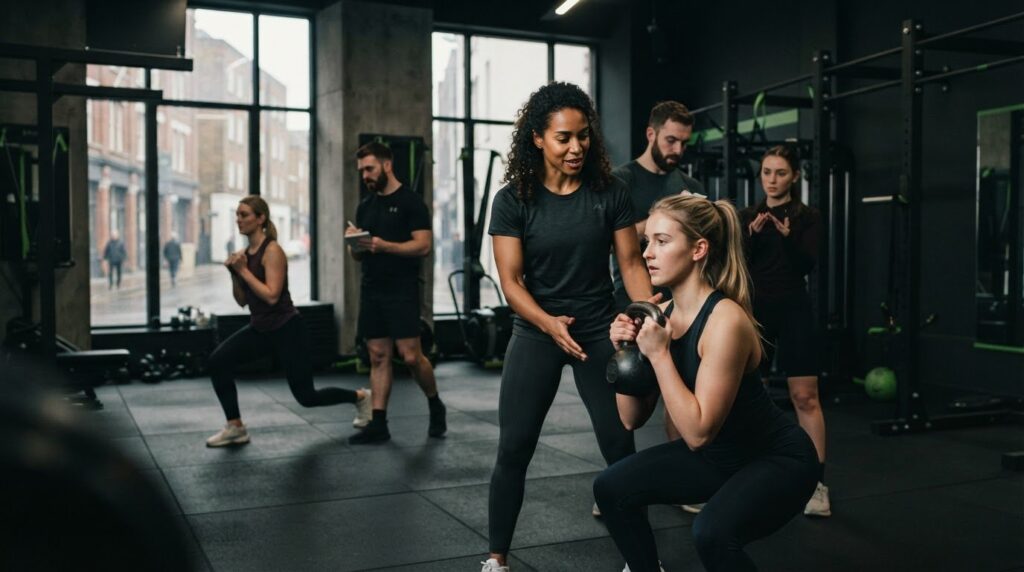
A personal trainer does more than count repetitions or hand out a generic plan. You learn about a client’s goals and experience, plan suitable exercise, explain movements and adapt your coaching to their needs and ability. For a neutral overview of the profession, see What is a personal trainer?
A qualification shows that you’ve met an assessment standard; coaching competence is your ability to apply what you’ve learnt thoughtfully and safely with real people. That distinction matters. The route involves checking the requirements for the work you want to do, gaining relevant qualifications and practising your coaching before pursuing suitable opportunities.
What does a personal trainer do day to day?
Start by listening. A consultation helps you understand a client’s goals, exercise experience, preferences and any factors that may affect their activity. You use that information to plan sessions, explain movements, coach technique and adapt exercises when someone’s confidence, ability or circumstances call for it. Progress reviews help you discuss what is working and agree sensible next steps.
Exercise knowledge matters, but so does communication. Give clear cues, ask useful questions and respond to feedback rather than putting every client through the same routine. You also need to recognise the limits of your competence. If a client’s needs fall outside your training and scope, don’t guess or attempt to diagnose. Seek appropriate guidance or refer them to a suitably qualified professional.
Do you need qualifications to work as a personal trainer in the UK?
There isn’t one universal legal licence that guarantees you can work in every setting. Requirements can differ between employers, insurers and professional pathways, and employers may set their own recruitment criteria. Gym instruction and personal training are related, but they aren’t interchangeable: gym instructors commonly support people using a facility, while personal trainers develop and coach more individualised programmes. Roles can overlap, so the distinction may vary between workplaces.
A common progression is to gain a Level 2 gym instruction qualification before moving on to Level 3 personal training. Before enrolling, check the qualification title, level, awarding arrangements and prerequisites, then confirm that the qualification fits the employers or pathway you have in mind. A certificate is a starting point, not proof that you can coach every person or address every need. Build the practical judgement to apply your knowledge, and your first qualification becomes a foundation rather than a finish line.
Which qualifications do you need as a personal trainer?
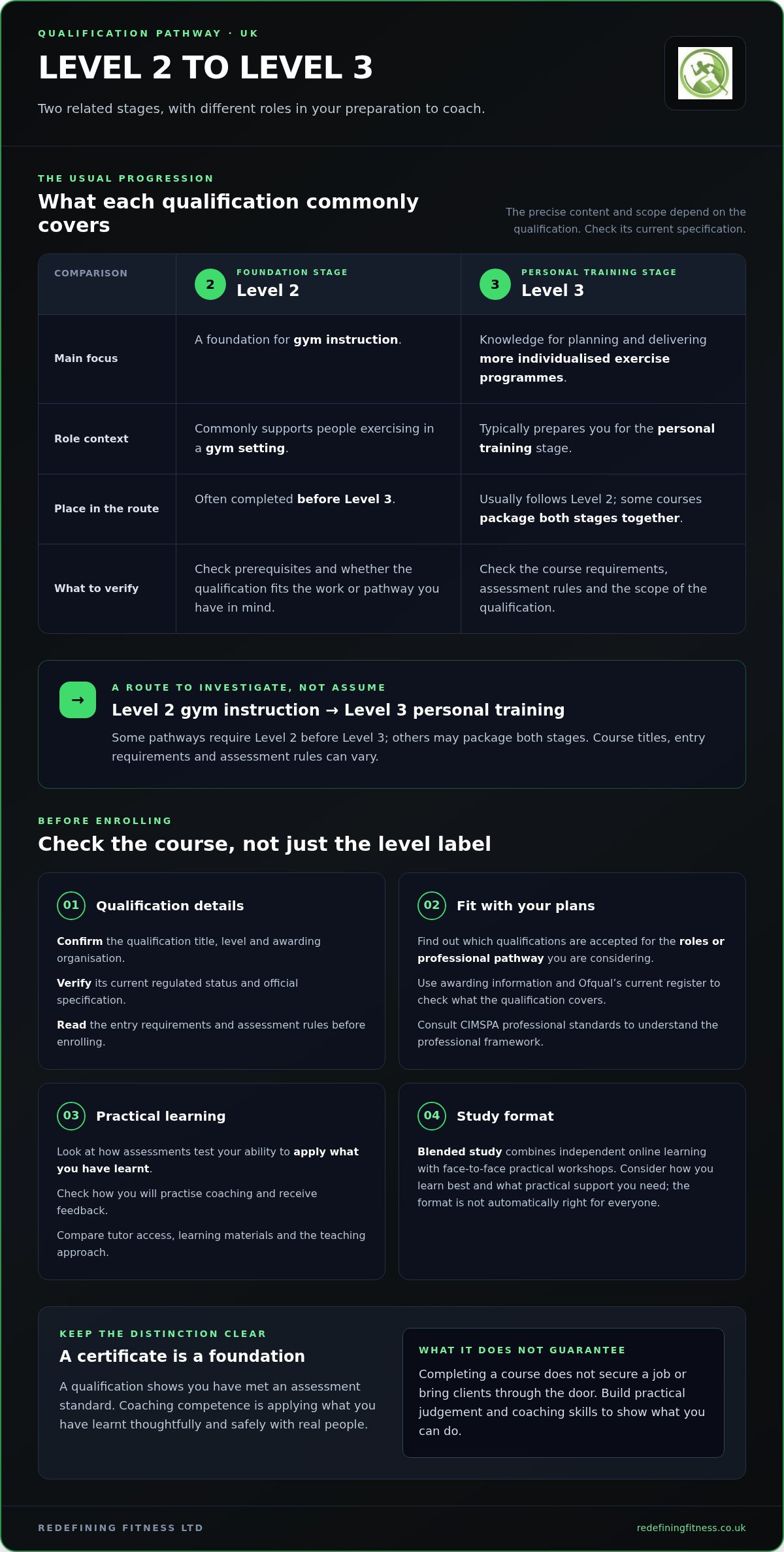
The usual qualification pathway moves from Level 2 gym instruction to Level 3 personal training. Treat this as a route to investigate, not a reason to skip the detail: course titles, entry requirements and assessment rules can vary. Read the current specification before you enrol and make sure it matches the kind of work you want to pursue.
What is the difference between Level 2 and Level 3?
A Level 2 qualification commonly provides a foundation for gym instruction, including supporting people who exercise in a gym setting. Level 3 is typically the personal training stage, developing the knowledge needed to plan and deliver more individualised exercise programmes. The precise content and scope depend on the qualification, so read its specification rather than relying on the level label alone.
Check prerequisites as well. Some pathways require you to complete Level 2 before starting Level 3, while others may package both stages together. A Level 2 and Level 3 personal training course can provide a route through both stages. Compare its learning structure and assessments with your needs and plans.
How can you check that a qualification fits your career plans?
Check the awarding organisation, the qualification’s current regulated status and its official specification. Use the relevant awarding information and Ofqual’s current register to verify what the qualification covers. You can also consult CIMSPA professional standards to understand the professional framework. Don’t assume that a course title alone proves endorsement or acceptance.
Then find out which qualifications are accepted for the roles or professional pathway you’re considering. Criteria can differ. Taking this step before enrolling can help you avoid investing time in a course that doesn’t fit your intended route.
- Look beyond marketing: compare assessment methods and how they test your ability to apply what you’ve learnt.
- Check the practical element: find out how you’ll practise coaching and receive feedback, not just study theory.
- Review the support: consider tutor access, learning materials and whether the teaching approach suits you.
Blended study combines independent online learning with face-to-face practical workshops. It can help you connect theory with coaching practice, but the format isn’t automatically right for everyone. Consider how you learn best and what practical support you need. Completing a course doesn’t secure a job or bring clients through the door. It gives you a foundation to build on, then you need to show employers and clients what you can do.
How do you choose a personal training course without relying on hype?
A polished advert can’t tell you whether a course will prepare you to coach. Compare what you’ll study, how you’ll be assessed, how you’ll practise and what support you can access. If you’re researching how to become a personal trainer UK, base your decision on clear course information rather than pressure to enrol quickly.
Before enrolling, check the qualification specification, awarding details, learning content, assessment methods, practical coaching opportunities and learner support. Confirm the qualification’s current regulated status and consider whether its requirements fit the career route you have in mind. If an advert promises a job, describes a qualification as “recognised” without explaining the basis, or leaves assessment requirements unclear, pause and look for precise information.
What should a credible personal trainer course include?
You should be able to understand what the course teaches, what you need to complete and how you’ll demonstrate your learning. Look for clear details about assessments and opportunities to practise coaching, receive feedback and prepare for final assessment. Broad slogans don’t tell you what you’ll actually learn to do.
Support matters too. Check what learning materials are provided, how tutoring works and whether mock examinations help you identify gaps before final assessments. Redefining Fitness Ltd combines online learning with in-person practical workshops, learning materials, tutoring support, mock examinations and final certification assessments. Its inclusive teaching and support for neurodivergent learners are also worth considering when comparing course structures.
Will online or blended study prepare you for practical coaching?
Online study can give you flexibility to work through theory, but reading about coaching isn’t the same as practising it. Practical sessions and feedback help you apply what you’ve learnt, build confidence and improve how you communicate. Blended learning combines independent study with face-to-face workshops. Classroom-based and online formats organise learning differently, and neither is automatically best for everyone.
Look for specific information: how are practical sessions and assessments arranged, when can you practise coaching, and how can you access tutor support? Consider whether the format and support suit your needs instead of choosing simply because a route seems quick.
- Read the qualification specification and confirm the awarding details.
- Check the assessment process and the practical coaching it involves.
- Understand the tutoring, learning materials and assessment preparation support included.
- Be sceptical of job guarantees: completing a course doesn’t secure employment or clients.
Finally, compare the course with the work you hope to do. The National Careers Service job profile can help you consider the role and career pathway alongside your training choice. Look for a clear learning structure and opportunities to develop, not just a persuasive sales pitch.
How to build experience and prepare to coach clients?
Passing an assessment proves you’ve met its requirements. It doesn’t automatically make you fluent at coaching. Skill grows through practice: giving clear cues, listening to responses, adapting an exercise when it isn’t working and explaining why you’ve chosen a particular approach. Build those habits as you train, before relying on them in a professional setting.
How can you gain practical experience before taking on clients?
Use practice scenarios and peer coaching within your course’s rules. Ask a partner to try an exercise, practise describing the movement and invite feedback on whether your instructions were clear. In supervised practice, notice how you respond when someone struggles, loses confidence or needs an alternative. Practice is not permission to work beyond your qualification or competence.
You can also explore observation or entry-level opportunities with gyms and other relevant employers. These opportunities aren’t guaranteed, so treat them as options to pursue. After each practice session, make brief notes: which cues worked, what you changed, how the other person responded and what you need to learn next. Reflection turns experience into a practical plan for improvement.
What professional skills matter beyond exercise programming?
Clients need more than a set of exercises. They need a coach who listens, agrees realistic goals with them, arrives prepared and behaves reliably. Inclusive coaching means adapting how you communicate and recognising that people bring different abilities, preferences and experiences. Keep personal information private, agree clear professional boundaries and avoid promising results you can’t control.
Your interests may help shape a future specialism, but let competence lead. You might be drawn to a particular type of training or group, then build relevant knowledge through further learning and experience. Specialist or clinical work is a separate step: supporting people with health conditions or complex needs may require additional training and competence. Don’t diagnose, offer treatment or take on work beyond your scope. Seek appropriate guidance or refer someone when their needs exceed what you’re qualified to handle.
Keep learning as your practice develops. Additional courses can support new interests, but they don’t replace the core qualification pathway or practical coaching skills. Start with the foundations, then expand deliberately.
- Practise explaining and adapting exercises, not just demonstrating them.
- Ask for feedback and record what you’ll improve next time.
- Explore appropriate observation or supervised opportunities where available.
- Build specialisms only when your training and experience support them.
The Level 2 and Level 3 personal training course combines structured learning with practical development as you work towards your qualifications.
What are your next steps towards a personal training career?
Turn your research into a decision, not another open browser tab. If you’re working out how to become a personal trainer UK, start by defining the work you want to pursue and the type of learning that will help you prepare. Then check the qualification requirements for that route, plan how you’ll practise coaching and compare course support before you commit.
What should you do before enrolling?
Write down your preferred work settings, study constraints and the qualifications relevant to the roles you’re considering. If you’re unsure about the job itself, the National Careers Service job profile is a useful starting point for exploring the role and career options.
Use this checklist to guide your decision:
- Qualification: Do the current course specification and awarding details match your intended pathway?
- Assessment: Do you understand what you’ll need to complete and how your knowledge and practical skills will be assessed?
- Learning support: Are tutoring, learning materials and assessment preparation explained clearly?
- Practical development: Does the course include structured opportunities to practise coaching and receive feedback?
- Accessibility: Does the teaching approach and learner support suit your needs?
Don’t mistake a confident sales claim for evidence of a job or clients at the end. A course can provide a qualification and a structure for learning, but you’ll still need to develop your coaching, gain appropriate experience and pursue opportunities that fit your skills.
How can Redefining Fitness Ltd support your qualification journey?
Redefining Fitness Ltd offers Level 2 and Level 3 personal training qualifications through online learning combined with in-person practical workshops. The course provision includes learning materials, tutoring support, mock examinations and final assessments, giving you structured study alongside practical development. Inclusive teaching and support for neurodivergent learners are also part of its approach.
When comparing your learning needs with course structure and support, consider how the qualification stages fit your plans and how you’ll build practice into your route. A considered start gives you a stronger foundation for the work ahead.
Explore the Level 2 and Level 3 personal training course to see how its learning options could fit your qualification plans.
Build the foundations for your coaching career
Knowing how to become a personal trainer UK is about more than earning a certificate. The usual route begins with gym instruction and progresses to personal training, but check course titles and requirements against your goals and intended work. Choose learning that develops practical coaching skills, not just assessment readiness.
Keep the bigger standard in view: listen well, adapt your coaching, practise deliberately and work within your competence. A qualification opens the door; your judgement and experience help shape what comes next. No course can guarantee a job or clients, but structured learning and support can help you build a foundation.
Redefining Fitness Ltd offers Level 2 and Level 3 qualifications with blended online learning, face-to-face practical workshops, tutoring support and mock examinations. Its inclusive teaching also includes support for neurodivergent learners.
Explore Redefining Fitness Ltd’s Level 2 and Level 3 personal training qualifications and take the next step in planning your training.
Frequently Asked Questions
Do you need a degree to become a personal trainer in the UK?
No, a university degree is not generally the standard route into personal training. Employers usually focus on relevant fitness qualifications, practical competence and whether you meet their role requirements. A degree in a related subject may add knowledge, but it doesn’t replace checking what qualifications a particular employer accepts. Focus first on the course pathway that fits your goals, then build coaching experience and professional skills.
What qualifications do you need to become a personal trainer in the UK?
The common route is to complete a Level 2 gym instruction qualification followed by a Level 3 personal training qualification. Titles, prerequisites and assessment requirements can vary, so check the current qualification specification and awarding details before enrolling. Also find out which qualifications are relevant to the roles you’re considering. Passing a course gives you a foundation, not a guaranteed job or client base.
Can you become a personal trainer without a Level 2 qualification?
Level 2 gym instruction is often the usual foundation before Level 3 personal training, but course entry rules can differ. Some courses may offer both stages in a combined pathway, while others may require you to complete Level 2 first. Check the Level 3 course’s current prerequisites and assessment requirements, then make sure the route fits the roles or professional pathway you’re aiming for.
How long does it take to become a personal trainer in the UK?
There isn’t one fixed timeframe. The total depends on the course structure, your study pace, whether you complete Level 2 and Level 3 separately or together, and how practical assessments are scheduled. Review the course timetable and allow time to practise skills, prepare for assessments and complete the required learning. Don’t choose a course on speed alone; make sure you’ll have the support and practical development to learn thoroughly.
Is an online personal training qualification recognised in the UK?
Online delivery alone doesn’t establish whether a qualification will suit your career plans. Check the qualification’s awarding details, current regulated status and specification, then find out whether it is accepted for the roles or pathway you’re considering. Also examine how practical coaching is taught and assessed. A course that combines online theory with face-to-face workshops is one way to include practical learning, but review the arrangements rather than relying on the format label.
Can you become a personal trainer with no experience?
Yes, you can begin training towards a personal training qualification without previous professional experience. You’ll still need to develop practical coaching ability, not just pass assessments. Practise cueing, listening and adapting exercises through course activities or peer coaching, and explore appropriate observation or supervised experience where available. Follow your course rules and stay within your competence. Treat feedback and reflection as part of your preparation, not an optional extra.
What should you do after qualifying as a personal trainer?
First, check the requirements for the roles or professional pathway you want to pursue, including which qualifications are accepted. Then look for suitable entry-level work, observation or supervised opportunities to build experience, and keep developing your coaching skills through ongoing learning. Consider a specialism only when your training and competence support it. A qualification opens a door; your judgement, reliability and continued development help you make the most of the opportunity.