What Is Rate Of Force Development?
Rate of force development (RFD) describes how quickly a person can increase force during a rapid voluntary muscle contraction. It is commonly derived from the slope of a force-time or torque-time curve, so it is fundamentally concerned with the relationship between force and time rather than simply the maximum amount of force that can eventually be produced. In practical terms, RFD helps describe an individual’s ability to produce useful force quickly, which is a major component of explosive strength.
That distinction matters because many movements do not provide enough time to express maximal force. A person may be capable of producing very high force during a maximal strength test, but a sprint step, jump take-off, rapid change of direction or sudden balance correction may occur before that maximum can be reached. RFD therefore provides a different perspective on neuromuscular performance from conventional measures such as a one-repetition maximum.
Research describes RFD as an important characteristic of explosive performance in athletes, older adults and clinical populations. It is influenced by neural activation, muscle characteristics and the mechanical properties of the musculotendinous system, and it can be modified through training. However, RFD is also technically difficult to measure reliably, so the method used to assess it needs to be considered when interpreting results. [Research basis: Maffiuletti et al., 2016.]
What Is Rate Of Force Development And Why Does Rate Of Force Development Matter?
The central reason RFD matters is simple: movement happens on a clock. During many explosive actions, the muscles and nervous system have only a fraction of a second to increase force. If force rises slowly, the athlete may finish the available movement window before they have expressed enough force to produce the desired outcome. If force rises rapidly, more of the person’s available force capacity can be expressed while the movement is still taking place.
This is particularly relevant to sprinting, jumping and changes of direction, but the principle is not limited to sport. A rapid balance correction after a stumble, a fast step onto an unexpected obstacle or the ability to push the body upward during a quick transition can all involve rapid force production. The literature therefore considers RFD relevant to both athletic performance and aspects of physical function.
RFD should not, however, be treated as a universal replacement for maximal strength. Strength remains an important foundation because the ceiling for force production still matters. A useful way to think about the two qualities is that maximal strength describes how much force is available, while RFD describes how rapidly that force can be expressed. Effective training can develop both rather than forcing a choice between them.
 https://link.springer.com/article/10.1007/s00421-025-05769-3
Rate Of Force Development Versus Maximal Strength
Maximal strength and RFD overlap, but they are not identical. A maximal voluntary contraction allows the individual substantially more time to build force, whereas an explosive contraction requires force to rise rapidly from a low or resting level. The physiological factors contributing to these tasks therefore overlap but are not exactly the same.
The distinction becomes particularly important when comparing an athlete who has become much stronger with an athlete who has become more explosive. Increasing maximal force can improve the later portion of a rapid contraction because a stronger muscle has greater force-producing capacity. However, early force production is strongly influenced by how quickly the nervous system can activate the relevant motor units.
This is one reason that a programme focused exclusively on heavy, slow resistance training may not produce the same adaptations as a programme that also includes high-velocity or explosive work. The research does not suggest that heavy strength training is useless for RFD; rather, it indicates that different training methods can influence different aspects of rapid force production.
How Is Rate Of Force Development Calculated?
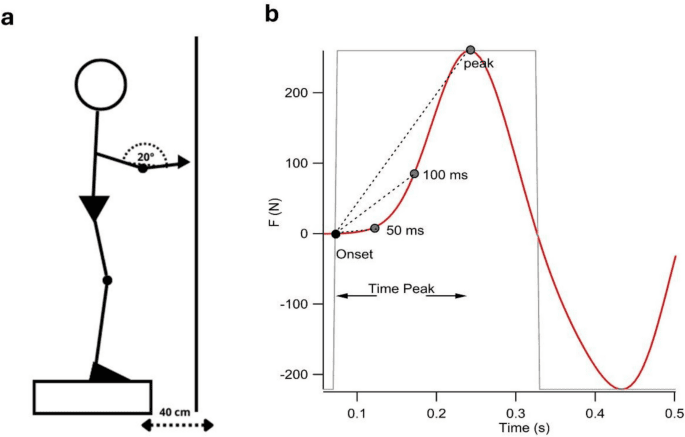
RFD can be expressed mathematically as the change in force divided by the change in time. On a force-time curve, it is represented by the slope of the rising portion of the curve. If force increases rapidly over a given time interval, the slope is steeper and the calculated RFD is higher.
Researchers may calculate RFD across defined time windows after the onset of contraction, such as early and later intervals. The exact window matters because the physiological contribution to force production changes as the contraction continues. Early RFD is particularly sensitive to rapid neural activation, whereas later RFD is more strongly influenced by the person’s capacity to produce high force.
RFD is generally expressed in newtons per second when force is measured in newtons. Torque-based measurements can be expressed in newton-metres per second. These numbers should not be compared casually across different tests because the equipment, joint position, contraction type, onset-detection method and analysis window can all affect the result.
One of the most useful concepts when discussing RFD is that rapid force production is not physiologically uniform throughout the contraction. The first few tens of milliseconds are heavily dependent on rapid neural activation. As more time becomes available, muscle contractile properties, maximal strength and the mechanical characteristics of the muscle-tendon system make a larger contribution.
The 2016 review by Maffiuletti and colleagues highlights the importance of maximal voluntary activation during the early phase of an explosive contraction, particularly during approximately the first 50–75 milliseconds. Motor-unit discharge rate is a major contributor during this early period. This helps explain why training that emphasises rapid intent and explosive movement can be particularly relevant when the objective is to improve early RFD.
Later portions of the force-time curve give the athlete more opportunity to express their underlying strength. This does not mean that late RFD is simply another measurement of maximal strength, but the two are more closely related than they are during the earliest phase of a contraction. Coaches should therefore avoid treating ‘RFD’ as one completely uniform quality.
The Nervous System And Rate Of Force Development
The nervous system plays a central role in rapid force production because skeletal muscle cannot produce force without neural activation. To create a rapid contraction, the nervous system must activate an appropriate population of motor units quickly and drive them at an appropriate discharge rate.
A motor unit consists of a motor neuron and the muscle fibres it controls. During a voluntary contraction, force can be increased by recruiting additional motor units and by changing the rate at which active motor units discharge. Research examining the neural mechanisms of RFD identifies both the speed of motor-unit recruitment and discharge rate as important determinants of how quickly force rises.
This is one reason explosive training can produce improvements without requiring dramatic changes in muscle size. Neuromuscular adaptation can alter how quickly the existing muscle tissue is activated and coordinated. It also explains why a person’s ability to express strength should not be judged purely from measurements of muscle mass.
Muscle Size, Muscle Fibres And RFD
The nervous system is not the only factor involved. The contractile characteristics of the muscle itself influence how quickly force can rise. Muscle cross-sectional area, fibre-type characteristics, muscle architecture and the ability of the muscle to generate force all contribute to the mechanical output of a rapid contraction.
Fast-twitch, or type II, muscle fibres are generally capable of producing force rapidly, although fibre behaviour cannot be reduced to a simple fast-versus-slow classification. The overall RFD response emerges from the interaction between neural drive, the properties of the active muscle fibres, tendon behaviour and the mechanics of the task.
This is another reason why hypertrophy, maximal strength and explosive training can complement one another. Increasing muscle capacity can increase the potential force available, while neural and high-velocity training can improve the ability to express that capacity quickly.
The Role Of The Tendons And Musculotendinous System
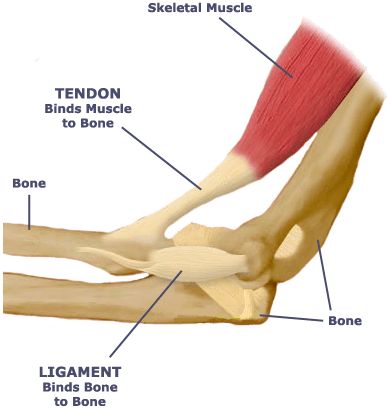
Force produced by muscle has to be transmitted through the musculotendinous system to influence movement. Tendon and muscle-tendon properties therefore contribute to the way force is transferred and expressed. Tendon stiffness is one of the characteristics that has been discussed in relation to explosive performance and RFD.
A stiffer tendon can transmit force rapidly, while the overall behaviour of the muscle-tendon unit depends on the interaction between contractile tissue and connective tissue. This does not mean that ‘stiffer is always better’. Tendon behaviour is task-specific, and the ideal mechanical properties depend on the movement and the role of the tendon within it.
For coaches, the practical implication is that explosive performance is not simply a property of the muscle. It emerges from the whole neuromuscular system, including the nervous system, muscle, tendon and coordination of the movement.
 https://homework.study.com/explanation/describe-and-diagram-the-contributions-of-tendons-and-ligaments-to-the-function-of-musculoskeletal-systems.html
What Is The Explosive Strength Deficit?
The concept of an explosive strength deficit helps explain why two people with similar maximal strength can display different levels of explosive performance. If an athlete can produce a large amount of force when given plenty of time but produces much less force during a very short movement window, there is a substantial difference between their available maximal force and the force they can express rapidly.
This does not mean that every athlete should attempt to eliminate that difference completely. The size and relevance of the gap depend on the sport, movement and training status. It is better viewed as a useful framework for deciding whether a programme needs more emphasis on building force capacity, improving rapid activation, or developing the ability to express force in a specific movement.
Can Strength Training Improve Rate Of Force Development?
Yes. Heavy resistance training can improve RFD, and the research does not support the idea that explosive training is the only way to develop rapid force production. The major review of RFD literature reports improvements following both heavy-resistance strength training and explosive-type training.
A systematic review and meta-analysis of 54 studies found that resistance training increased early RFD, later RFD and maximum RFD. For maximum RFD, the analysis found significant improvements following high-speed training, slower training performed with the intention to produce force quickly, and movement-pattern-specific training. The researchers did not find the same clear effect for slow training performed without an explicit intention for fast force production. [James et al., 2020.]
This is practically important because it means a heavy lift does not have to move quickly in absolute terms for the athlete to train rapid force production. If the load is heavy enough that the bar moves slowly, the athlete can still be instructed to accelerate it with maximal intent. That intention appears to be relevant to the neuromuscular stimulus.
Does Heavy Strength Training Make You Explosive?
It can contribute to explosiveness, but heavy strength training and explosive training should not be treated as interchangeable. Heavy training can increase maximal force capacity and can also improve RFD, particularly when the programme is well designed. However, the movement velocity and intent associated with explosive training provide a different stimulus.
A recent 2026 study comparing maximal strength, hypertrophy and explosive strength training in moderately trained adults found that maximal-strength and hypertrophy training improved several measures of squat-jump RFD, while explosive training improved jump height and other high-velocity performance measures. The findings reinforce the idea that different forms of training can produce overlapping but distinct adaptations.
Whilst heavy strength work does not directly make you explosive it provides you with the platform to become explosive because you are training the same Type 2B fast twitch muscle fibres that you also need for explosive power work. The difference between strength and power is that strength is slow and power is quick so the key is in the load of the exercise. Strength work typically sits in the 85-100% 1RM range where as power sits in the 30-50% range which an emphasis on moving as fast as you can with the latter. If you think of a pyramid of priorities with endurance work at the bottom, then hypertrophy/muscle building then strength then power, this continuum provides the basis for clear, safe and effective progression.
 https://www.fitandwell.com/how-to/how-to-lift-heavier-on-your-deadlifts
Can Explosive Training Improve RFD?
Yes. Explosive training is specifically designed to produce high force rapidly and can be performed using jumps, bounds, throws, ballistic resistance exercises and selected weightlifting derivatives. The defining feature is not simply that the exercise looks athletic; it is that the athlete is required to produce force rapidly and with high intent.
Plyometric exercises add another dimension because they involve rapid transitions between eccentric and concentric actions. Depending on the exercise, the athlete has to absorb force, stabilise the body and then redirect force quickly. This can be particularly useful for athletes whose sports involve sprinting, jumping or rapid changes of direction.
The amount and intensity of explosive work should be appropriate to the individual. A novice who cannot land, decelerate or control a basic jump does not need advanced depth jumps simply because they are considered highly explosive. The exercise must provide an appropriate stimulus without overwhelming the person’s current capacity.
Why Explosive Intent Matters
One of the most useful findings for ordinary resistance training is that the intention to move a load quickly can matter even when the load itself is too heavy to move rapidly. A heavy squat cannot be accelerated at the same absolute speed as an unloaded jump, but the nervous system can still be instructed to produce force as rapidly as possible.
This gives coaches a simple way to introduce an element of explosive intent without turning every training session into a plyometric workout. A conventional squat, press or deadlift can be performed with controlled technique while the concentric phase is performed with maximal safe acceleration intent.
That does not mean every repetition of every exercise should be performed explosively. Exercise selection, load, technique, fatigue and the individual’s goals still determine how a movement should be performed. Explosive intent is a programming tool, not a substitute for good programme design.
How To Train Rate Of Force Development
Training rate of force development is not simply a matter of adding a few jumps to the end of a workout. The most effective approach is to build the ability to produce force, teach the athlete to express that force rapidly, and then progressively expose them to movements that require high rates of force production. The balance between strength work, high-velocity work and plyometric or ballistic exercise should reflect the individual’s training status and goals.
A useful programme therefore has several layers. The first is an adequate strength base. The second is the ability to produce force with high intent during conventional resistance exercises. The third is exposure to movements where speed is the limiting factor, such as jumps, throws and ballistic exercises. The fourth is progression: the athlete should gradually move from simple, controlled exercises towards more demanding expressions of force and velocity without allowing fatigue or poor technique to dominate the session.
1. Establish The Strength Base First
Maximal strength provides the raw force-producing capacity from which rapid force can be expressed. This does not mean that every person needs to become exceptionally strong before beginning explosive training. It means that strength should be developed to an appropriate level for the individual’s needs, because explosive movements still require the muscles to produce meaningful amounts of force.
For a general gym client, this might mean developing consistent technique and strength in movements such as squats, split squats, deadlift variations, presses, rows and loaded carries. For an experienced athlete, the strength component may involve heavier and more specific exercises. The important point is that the programme should develop a foundation without allowing strength work to consume all of the training time that could otherwise be used for speed and power development.
Strength work can also be useful because it gives the athlete greater force capacity at any given movement velocity. If two athletes can produce the same proportion of their maximal force during a rapid movement, the stronger athlete may have a greater absolute amount of force available. Strength and RFD therefore interact rather than existing as completely separate qualities.
2. Use Maximal Intent During Resistance Training
One of the simplest ways to introduce an RFD emphasis into ordinary resistance training is to change the intention of the concentric phase. When the load is safe and appropriate, the athlete can be instructed to attempt to move it as quickly as possible while maintaining technique.
A heavy squat will still move relatively slowly because the external load limits its actual velocity. The important factor is that the athlete attempts to accelerate the load aggressively. This creates a different neural demand from deliberately moving the same load slowly. Research examining resistance-training movement velocity has found that training with high-speed intent can improve aspects of RFD.
This approach is particularly useful because it does not require every programme to become a plyometric programme. A client can continue developing strength while also practising rapid force production through the intent used during selected repetitions.
3. Introduce High-Velocity Resistance Exercises
Once an appropriate strength and movement foundation is present, higher-velocity resistance exercises can provide a more direct stimulus for rapid force production. The load is generally lower than during maximal-strength work so that the person can move the resistance rapidly.
Examples include jump squats, lighter loaded jumps, kettlebell swings, medicine-ball throws and selected weightlifting derivatives. The exact exercise is less important than whether it allows the athlete to produce high intent and appropriate movement velocity.
Velocity should not be pursued at the expense of technique. A lighter load that can be accelerated cleanly is usually more useful for this purpose than a load so heavy that the movement becomes slow, unstable or technically compromised.
4. Use Plyometrics To Train Rapid Force Production
Plyometric training introduces rapid eccentric-to-concentric actions. A jump, bound or hop requires the athlete to absorb force and then produce force again quickly. This makes plyometrics particularly relevant to sports and activities involving sprinting, jumping and rapid changes of direction.
Plyometric training should be progressed carefully. A beginner might start with low-level bilateral jumps, landing drills or small hops before progressing towards larger jumps, repeated bounds or more demanding unilateral exercises. More advanced athletes may eventually use depth jumps or other high-intensity reactive drills, but those exercises are not automatically superior for every client.
The quality of the landing is also part of the exercise. The athlete needs to control the body during the braking phase before attempting to produce force rapidly again. This makes plyometric training relevant not only to RFD but also to eccentric strength, coordination and movement control.
5. Train The Specific Direction Of Force
RFD is task-specific to a degree. Producing force rapidly upward during a vertical jump is not identical to producing force horizontally during acceleration or laterally during a change of direction. Exercise selection should therefore reflect the direction and movement pattern that matters to the person.
Vertical jumps can be useful when vertical force production is the objective. Broad jumps and bounds provide more horizontal or diagonal force demands. Lateral bounds and lateral jumps introduce frontal-plane force production. Medicine-ball rotational throws provide another example in which the direction and sequencing of force matter.
This does not mean that every training exercise must exactly reproduce the sport. General strength and power exercises can provide broad adaptations, while selected specific movements can bridge the gap between general physical qualities and the actual task.
6. Use Appropriate Repetition Ranges
Explosive training is generally performed with relatively low repetition counts because the objective is to preserve movement quality and velocity. Once the athlete becomes substantially fatigued, the exercise may stop providing the intended high-speed stimulus.
For jumps and throws, this often means short sets with generous recovery rather than long circuits. A coach may stop a set when jump height, throw distance, movement speed or technical quality visibly deteriorates. This is fundamentally different from training where the primary objective is metabolic fatigue.
The appropriate amount of volume depends on the person. A trained athlete may tolerate considerably more explosive work than a novice, but even advanced athletes need enough recovery to preserve the quality of the movement. An appropriate rep range for power is 1-10 reps at 30-50% 1RM.
7. Allow Enough Recovery Between Explosive Sets
Rapid force production is highly dependent on neuromuscular readiness. If rest periods are so short that every subsequent set is performed under substantial fatigue, movement velocity and coordination can decline.
For that reason, explosive work is commonly given more recovery than ordinary conditioning circuits. The exact rest period depends on the exercise, intensity and athlete, but the practical rule is simple: recover enough that the next set can again be performed with high intent and good technique. Generally speaking the rule for 3-5 min rest per set for power work rings true here. This gives your Creatine Phosphate reserves enough time to partially replenish to a sufficient level for you to achieve progress on your next set.
8. Put Explosive Training In The Right Place In The Session
If explosive performance is a priority, high-velocity work is usually placed after the warm-up and before large amounts of fatigue accumulate. This allows the athlete to perform jumps, throws or ballistic movements while relatively fresh.
Strength work can follow the explosive component. In some programmes, heavy strength work may come first because maximal strength is the primary goal, but this can reduce the quality of subsequent high-speed work. The order should therefore reflect the most important adaptation being targeted during that session.
9. Progress The Training Gradually
Progression in RFD training is not simply a matter of adding more weight. A movement can become more demanding through increased velocity, load, range of motion, complexity, unilateral loading, landing demand or movement specificity.
For example, a progression might move from a controlled squat to a fast bodyweight squat, then to a squat jump, and later to a loaded jump if the individual demonstrates the required control and strength. A medicine-ball exercise might progress from a simple chest pass to a rotational throw as the person’s ability and objective develop.
Progression should always be constrained by movement quality. If increasing intensity causes the person to lose control, the exercise has progressed faster than the individual’s capacity.
10. Combine Strength And Power Rather Than Treating Them As Opposites
A common programming mistake is to assume that a person must choose between getting stronger and becoming more explosive. For most gym clients and many athletes, the two qualities can be developed together.
A weekly programme might therefore include heavy resistance training on some days, explosive movements on others, or both qualities within the same session. The precise structure depends on training frequency, recovery and the individual’s goals.
The important principle is that each quality receives enough specific exposure. If every session consists only of heavy slow lifting, there may be limited opportunity to practise rapid force production. If every session consists only of explosive work, the programme may fail to develop the strength capacity required to support it.
11. Choose The Right RFD Training For The Client
A competitive athlete may need sprinting, jumping, bounding and sport-specific power work. A recreational lifter may simply benefit from explosive intent during selected strength exercises and a small amount of low-risk jumping or medicine-ball work. An older adult may benefit from rapidly performed but controlled sit-to-stand exercises, step-ups or low-impact power movements.
The principle is therefore not ‘everyone needs plyometrics’. The principle is that the training stimulus should reflect the person’s ability and the physical quality that needs to improve.
12. Monitor Quality Rather Than Chasing Fatigue
RFD training is one of the clearest examples of why more fatigue is not necessarily a better training stimulus. The objective is to produce force rapidly, so a session that leaves the athlete exhausted but unable to move quickly may have missed the point.
Coaches can monitor simple indicators such as jump height, throw distance, movement speed and technical quality. If performance falls substantially across sets, it may be time to increase recovery or end the explosive component of the session.
Examples Of Exercises That Can Develop Explosive Strength
Exercise selection should reflect the individual and the goal rather than relying on a single universal list. Common options include countermovement jumps, squat jumps, broad jumps, lateral bounds, medicine-ball throws, explosive push-ups, loaded jumps and selected weightlifting derivatives. Each exercise changes the force, velocity, coordination and impact demands placed on the person.
Countermovement jumps for rapid lower-body force production
Squat jumps for concentric explosive strength
Broad jumps for horizontal force production
Lateral bounds for multiplanar power
Pogo hops for rapid ankle-foot actions
Medicine-ball chest throws for upper-body explosive force
Medicine-ball rotational throws for trunk and rotational power
Medicine-ball slams for rapid whole-body force expression
Explosive push-ups for upper-body ballistic strength
Jump squats for high-velocity lower-body force production
Olympic-lifting derivatives where appropriate technical skill is present
 https://www.theguardian.com/sport/2021/jul/28/cj-cummings-weightlifting-olympics-tokyo-2020
RFD and Jumping/Sprinting
Sprinting is a clear example of why rapid force production matters. Each ground contact gives the athlete a limited opportunity to apply force, so the ability to generate useful force rapidly contributes to acceleration and running performance.
RFD is not the only determinant of sprint performance. Sprint mechanics, horizontal force orientation, technique, body position, maximal velocity, tendon behaviour, strength and coordination all contribute. Therefore, improving RFD should be viewed as one part of a broader performance programme rather than a standalone solution.
Jumping also requires rapid force production because the athlete must generate enough upward impulse during a relatively short take-off period. Research has found associations between measures of RFD and vertical jump performance, although the reliability of some RFD measurements can be lower than more established jump measures such as jump height.
This distinction is important for coaches. If the goal is simply to monitor whether an athlete is jumping higher, jump height may be easier to measure consistently than RFD. If the goal is to understand the underlying force-time characteristics, a force plate can provide additional information.
 https://compedgept.com/blog/four-phases-of-sprinting-mechanics/
RFD And Change Of Direction
Changing direction requires an athlete to absorb force, control their centre of mass and then produce force in a new direction. Rapid force production therefore interacts with eccentric strength, braking ability, coordination and technique.
A strong athlete who cannot redirect force quickly may not express their strength effectively during a sharp change of direction. Conversely, an athlete with excellent reactive qualities but inadequate strength may lack the force capacity required to brake and reaccelerate effectively. This is why multidimensional programming is usually more useful than treating RFD as an isolated quality.
Rapid force production also matters outside conventional sports performance. If someone loses balance, the body may need to create a rapid corrective movement before the centre of mass moves too far outside the available base of support. The ability to produce force quickly can therefore contribute to functional movement and balance recovery.
This is particularly relevant to older adults. A systematic review and meta-analysis of resistance training in healthy adults aged 60 and over found beneficial effects on both muscle strength and RFD. Another systematic review found strong evidence that strength training increases maximal force production, RFD and muscle activation in older adults.
Rate Of Force Development And Ageing
Ageing is associated with changes in neuromuscular function, including reductions in the ability to produce force rapidly. The loss of rapid force capacity can have practical consequences because many functional movements require force to be generated quickly rather than gradually.
Resistance training provides a useful intervention because it can improve both strength and RFD in older adults. Importantly, this does not mean every older client should immediately perform high-impact plyometrics. The training method needs to match the person’s strength, balance, joint tolerance, training history and ability to control the movement.
For an older beginner, rapid intent can be trained through appropriately selected resistance exercises, fast but controlled sit-to-stand movements, low-impact step-ups or carefully progressed medicine-ball exercises. More advanced clients may tolerate higher-velocity or impact-based exercises. The principle is to train rapid force production without exceeding the individual’s current capacity.
How Quickly Can RFD Improve?
Training studies have reported improvements in RFD over relatively short periods, sometimes within several weeks. The systematic review of resistance-training movement pattern and velocity found that RFD improvements were particularly evident during the early weeks of training, although the magnitude and persistence of adaptation varied between programmes.
It is therefore reasonable to expect RFD to respond to a well-designed training stimulus, but it would be misleading to promise a fixed percentage improvement or a universal time frame. Training status, age, exercise selection, testing method, recovery and the specific RFD measure all influence the response.
How Should RFD Be Tested?
A force plate or laboratory-grade dynamometer can provide a direct force-time signal and allow researchers or practitioners to calculate RFD over defined time windows. These systems can be valuable when precise neuromuscular monitoring is required.
However, RFD testing is technically demanding. The onset of contraction has to be identified consistently, the participant needs to understand the task, and the equipment needs sufficient sampling and calibration. Small differences in onset detection can have large effects on early RFD calculations because the measurement is based on a very short period of time.
For ordinary gym settings, coaches may prefer simpler performance measures such as jump height, jump distance, medicine-ball throw distance or movement velocity. These are not interchangeable with a laboratory RFD measurement, but they can provide practical information about explosive performance when tested consistently.
Why RFD Testing Can Be Unreliable
RFD is more sensitive to testing conditions than many conventional strength measures. Small changes in contraction onset, body position, motivation, warm-up, familiarisation and measurement equipment can affect the calculated value.
Research on vertical jumping has also reported lower test-retest reliability for some RFD measures compared with variables such as jump height and peak power. This does not make RFD useless, but it means that practitioners should be cautious about interpreting a single score in isolation.
The most useful approach is usually to standardise the test and examine trends over time. If the same athlete is tested under the same conditions, with the same equipment, instructions and warm-up, repeated measurements can become more informative than one isolated number.
Common Mistakes When Training RFD
When it comes to the question “what is rate of force development?” there are many pitfalls that can arise so we need to be aware of them when applying this to our training. Below is a non exhaustive list:
- Turning power training into conditioning
- Performing too many repetitions with short rest can create fatigue that reduces movement velocity and technical quality. Explosive work should preserve the quality of the movement rather than simply maximise exhaustion.
- Using advanced plyometrics too early
- Depth jumps and other high-impact exercises are not automatically better than simpler jumps. Exercise difficulty should reflect the individual’s current strength, landing control and training experience.
- Ignoring maximal strength
- Explosive ability still depends on the capacity to produce force. A programme that never develops strength can leave the athlete with insufficient force capacity to express quickly.
- Ignoring movement specificity
- An improvement in one explosive task does not guarantee an equal improvement in another. Training should resemble the force direction, joint actions and movement demands that matter to the goal.
- Testing without standardisation
- Changing the equipment, warm-up, technique or instructions between tests can make apparent changes in RFD difficult to interpret.
- Training explosive work while exhausted
- High-quality rapid force production is difficult when the athlete is already substantially fatigued. The timing of explosive work within the session therefore matters.
Not knowing how to periodise exercises is probably the biggest pitfall and this is where programming can go wrong. It is not enough to know a bunch of random exercises that theoretically improve rate of force development but knowing when and how to apply them with nuance and context as this is the skill of a competent coach. This is why youtube and instagram can provide sources of inspiration however they are not enough to just copy without understanding the mechanisms behind doing what you do. So the question is not just “what is rate of force development?” but also how and when can I implement elements of this into my programming?
Does Every Gym Client Need RFD Training?
Not necessarily in the same form. The ability to produce force rapidly is relevant to human movement, but the training method should be proportional to the person’s goals and capabilities. A competitive athlete may need highly specific plyometric and ballistic work, while a general fitness client may benefit from simply maintaining the ability to move quickly and confidently.
For many clients, the simplest approach is to maintain a foundation of resistance training and introduce controlled, appropriately progressed movements that require faster force production. This can be as straightforward as a fast concentric phase during a safe resistance exercise or a low-impact medicine-ball movement.
The Bottom Line
Rate of force development describes how quickly force can be produced and provides a useful way to understand explosive strength. It is influenced by neural activation, motor-unit behaviour, muscle characteristics, tendon and musculotendinous properties, strength and movement coordination. Early RFD is particularly influenced by rapid neural activation, while later force production has a stronger relationship with the person’s overall force-producing capacity.
The practical implication is that strength and explosiveness should be trained as related but distinct qualities. Heavy resistance training can improve RFD, while high-velocity and explosive training can provide a more direct stimulus for rapid force production. A well-designed programme can combine both, using the appropriate exercises, loads, movement speeds and recovery periods for the person being trained.
For fitness professionals, RFD is most useful when it is treated as part of a wider picture of physical performance rather than as a magic metric. The goal is not simply to produce a higher laboratory number. The goal is to improve the person’s ability to produce and control force rapidly when that ability is relevant to the movement, sport or physical task they are training for.
Further Reading And Research
Maffiuletti et al. — Rate of force development: physiological and methodological considerations
James et al. — Effects of Resistance Training Movement Pattern and Velocity on Isometric Muscular Rate of Force Development: A Systematic Review with Meta-analysis and Meta-regression
Behrens et al. — How motor unit recruitment speed and discharge rates determine the rate of force development
Steib et al. — Effect of resistance training on muscle strength and rate of force development in healthy older adults
McLellan et al. — The role of rate of force development on vertical jump performance
Further Reading And Research
Rate of force development: physiological and methodological considerations
How motor unit recruitment speed and discharge rates determine the rate of force development
The role of rate of force development on vertical jump performance
Want to learn more about Rate of Force Development? Take a look at our Level 3 Personal Trainer course at www.redefiningfitness.co.uk by downloading a prospectus today and speaking with one of the team.