How to Improve Proprioception With Gym Clients
Proprioception is your body’s ability to sense where it is, how it is moving and how much force it is producing without having to rely entirely on vision.
It is the reason you can touch your nose with your eyes closed, walk without watching every step, adjust your foot when you land awkwardly and control a weight without constantly looking at your limbs.
Sometimes described as the body’s “sixth sense”, proprioception is fundamental to movement. It allows the nervous system to gather information from muscles, tendons, joints and other tissues, combine that information with input from vision and the vestibular system, and continually adjust movement.
For anyone interested in strength training, sport, rehabilitation or simply moving well, understanding proprioception is useful because it explains part of what sits behind coordination, body awareness, balance and movement control.
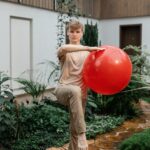
https://www.pexels.com/photo/a-man-holding-a-red-balloon-7222496/
What Is Proprioception?
Proprioception is your body’s ability to sense where it is, how it is moving and how much force it is producing without having to rely entirely on vision.
It is the reason you can touch your nose with your eyes closed, walk without watching every step, adjust your foot when you land awkwardly and control a weight without constantly looking at your limbs.
Sometimes described as the body’s “sixth sense”, proprioception is fundamental to movement. It allows the nervous system to gather information from muscles, tendons, joints and other tissues, combine that information with input from vision and the vestibular system, and continually adjust movement.
For anyone interested in strength training, sport, rehabilitation or simply moving well, understanding proprioception is useful because it explains part of what sits behind coordination, body awareness, balance and movement control.
Why Is Proprioception Important?
Proprioception contributes to almost every coordinated movement you perform.
When you walk, your nervous system constantly receives information about the position of your feet, ankles, knees and hips. When you lift a weight, sensory information helps the nervous system regulate joint position, muscle activation and force. When you land from a jump, proprioceptive information contributes to the rapid adjustments required to absorb and redirect force.
Good proprioceptive function can support coordination, balance, movement efficiency and the ability to respond to changes in the environment.
It is particularly relevant in sport and rehabilitation because movement rarely occurs under perfectly predictable conditions. The body needs to respond to changes in position, surface, speed and external force while maintaining control.
How Does Proprioception Work?
Proprioception depends on sensory information generated throughout the musculoskeletal system.
The main sources include muscle spindles, Golgi tendon organs and receptors associated with joints and skin. Muscle spindles detect changes in muscle length, while Golgi tendon organs provide information related to muscle tension. OpenStax
The information is transmitted through the nervous system and integrated with other sensory information. The brain and spinal cord can then influence motor output, allowing movement to be adjusted continuously.
This process happens constantly. You do not need to consciously think about the position of every joint when you walk, reach or lift something because much of the necessary sensory processing occurs automatically.
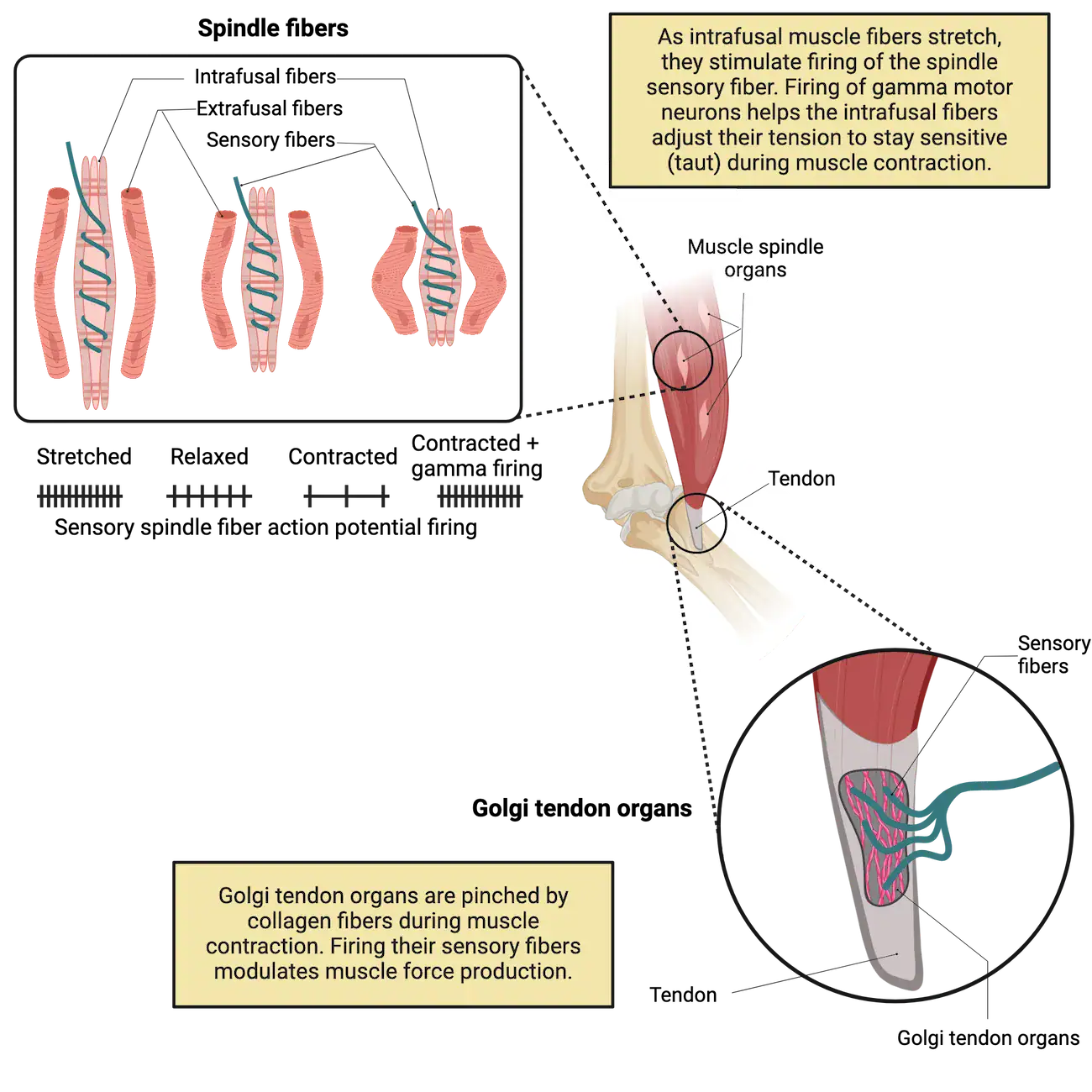
External source: OpenStax — Proprioceptive Feedback, Muscle Spindles and Golgi Tendon Organs
Muscle Spindles
Muscle spindles are sensory receptors located within skeletal muscles. They are particularly sensitive to changes in muscle length and the rate at which that length changes.
This makes them important for detecting changes in limb position and movement. They also contribute to reflex responses that help regulate muscle activity.
For example, when a muscle is suddenly stretched, information from muscle spindles can contribute to a rapid response that helps control the movement.
Muscle spindle information therefore contributes to the nervous system’s ongoing understanding of where a limb is positioned and how it is moving.
Golgi Tendon Organs
Golgi tendon organs are sensory receptors associated with tendons. They provide information related to muscle tension and the forces being transmitted through the muscle-tendon unit.
This information helps the nervous system regulate force production and coordinate movement.
The interaction between muscle spindles, Golgi tendon organs and other sensory receptors gives the nervous system multiple sources of information about what is happening during movement. OpenStax
Joint Receptors, Skin and Other Sensory Information
Proprioceptive information does not come exclusively from muscles and tendons.
Receptors associated with joints and surrounding tissues can contribute information about joint position and movement. Sensory receptors in the skin can also provide information about pressure, contact and movement relative to a surface.
This includes Pacinian corpuscles, Ruffini endings, Meissner’s corpuscles and Merkel’s disks. Pacinian corpuscles are located deeper in the skin and are particularly responsive to transient pressure and high-frequency vibration, while Ruffini endings respond to skin stretch and deformation. OpenStax
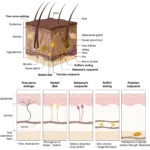
External source: OpenStax — Somatosensory Receptors
The nervous system integrates all of these sources rather than relying on a single receptor type.
This is important because movement occurs within a constantly changing sensory environment. Information from the feet, for example, can help the nervous system understand contact with the ground while information from muscles and joints contributes to an understanding of limb position.
Proprioception and Balance
Proprioception is closely related to balance, but the two terms are not interchangeable.
Balance is the ability to control body position and stability. Proprioception provides some of the sensory information used to achieve that control, alongside vision and information from the vestibular system.
Standing on one leg provides a simple example. Your nervous system must continually monitor the position of your ankle, knee and hip while responding to small movements that could otherwise cause you to lose stability.
The challenge becomes greater when visual information is reduced, the surface changes or the movement becomes more dynamic.
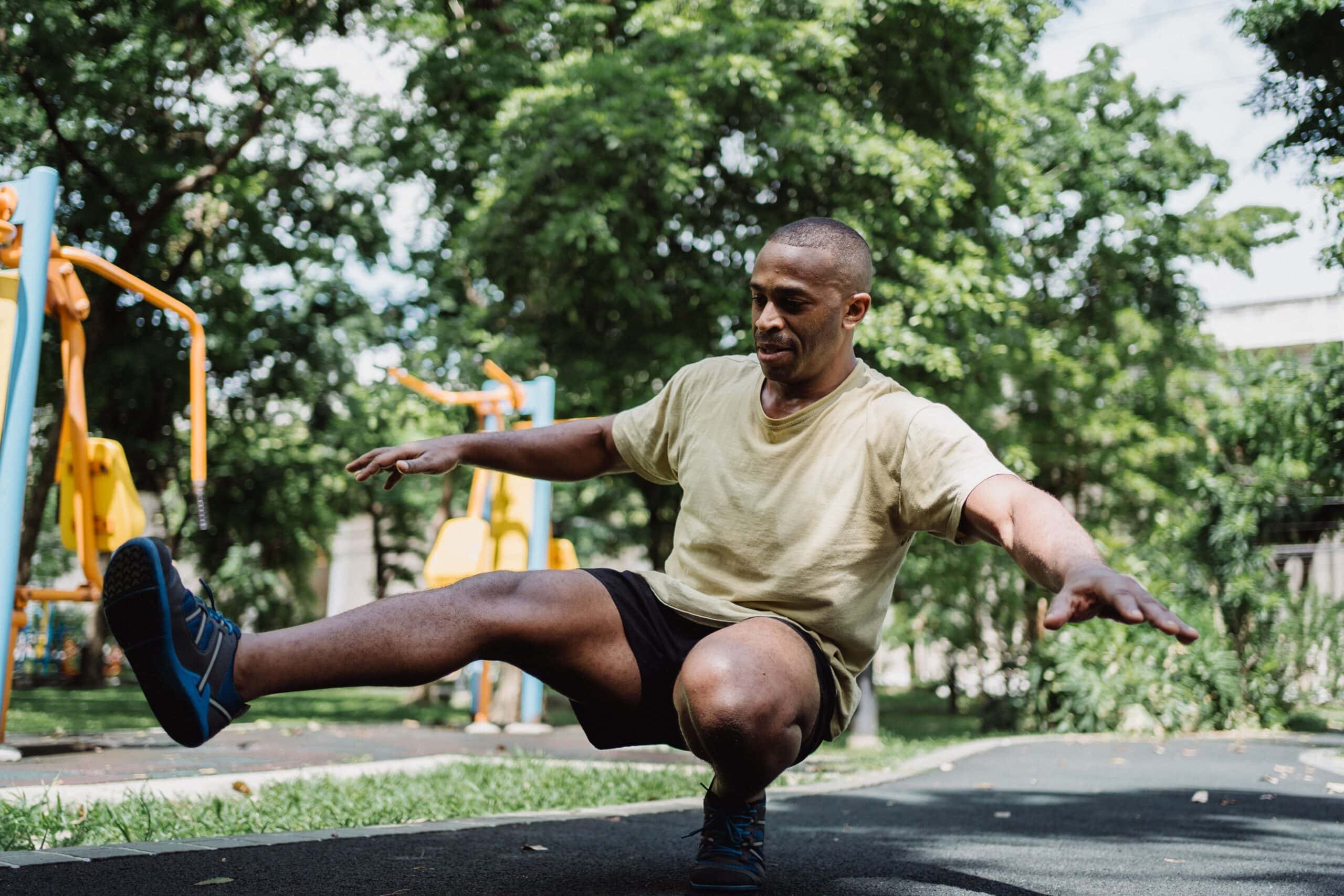
External image source: Pexels — Single-Leg Balance Exercise
Can You Improve Proprioception?
Yes. Research indicates that proprioceptive training can improve measured proprioceptive and motor outcomes, although the effects depend on the type of training and the specific ability being assessed.
The important point is that proprioception is trainable, but training should be matched to the movement demands you want to improve.
Simply making an exercise more unstable does not automatically make it better. The value of a proprioceptive exercise depends on what sensory and motor challenge it creates and whether that challenge is relevant to the person’s goals.
Proprioception Exercises
Single-Leg Balance
Standing on one leg reduces your base of support and requires continual adjustments from the ankle, knee and hip.
Progressions can include moving the free leg, reaching in different directions, reducing visual information, performing the exercise on a compliant surface and adding an external movement task.
External image source: Pexels — Woman Balancing on One Leg
Unilateral Strength Exercises
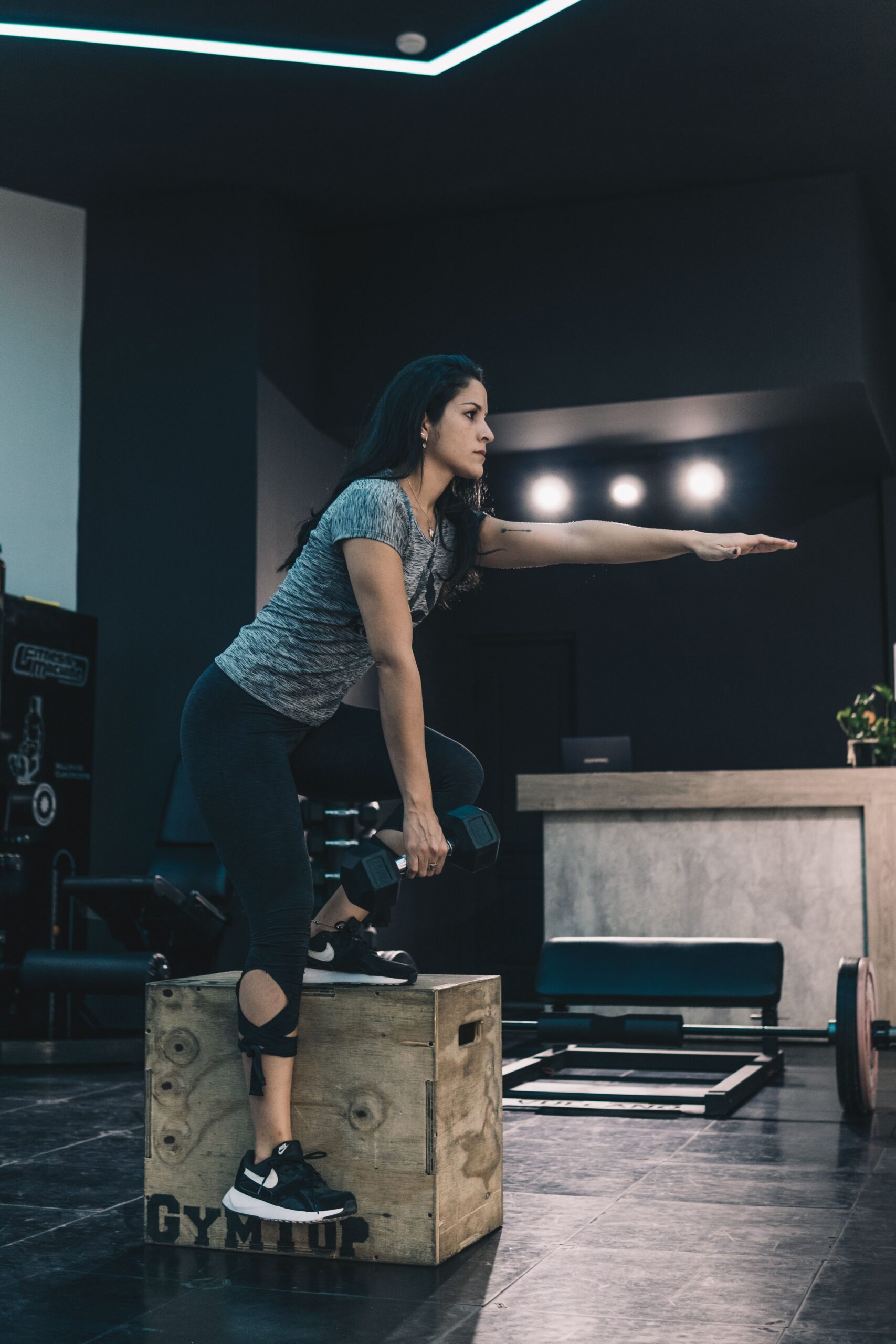
Exercises such as split squats, step-ups and single-leg Romanian deadlifts combine strength with movement control. They require the nervous system to coordinate multiple joints while maintaining stability.
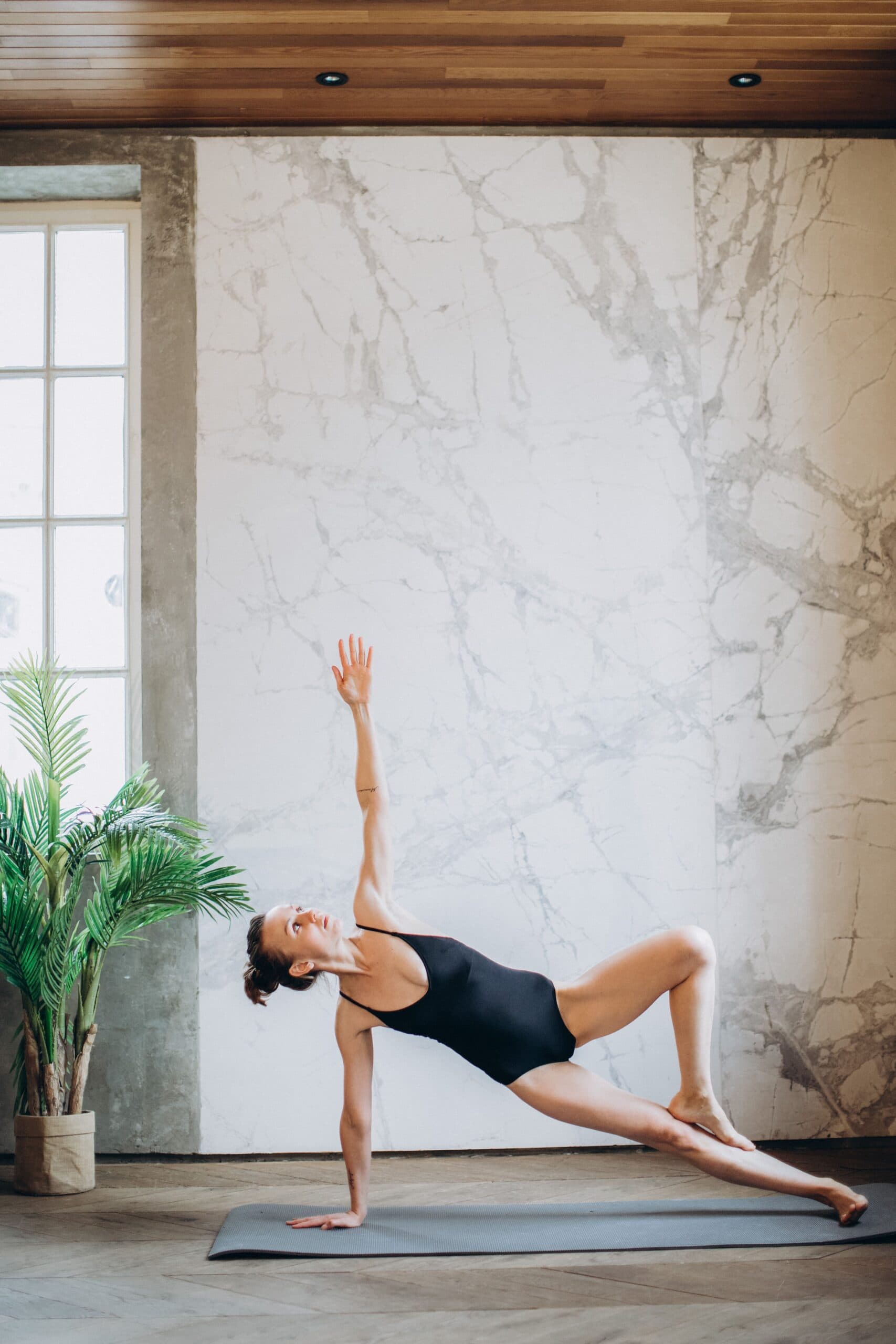
Landing and Deceleration
Jumping, landing and changing direction place substantial demands on sensory and motor control. The objective is not simply to wobble less. It is to control the body effectively while absorbing and redirecting force.
Balance-Board Exercises
Balance boards and unstable surfaces can increase the sensory and motor demands of an exercise. They are not automatically superior to stable-surface exercises, however. Their usefulness depends on the objective of the programme and the ability of the person performing them.
External image source: Pexels — Balance-Board Exercise
How Should Proprioception Training Progress?
Proprioception training should generally become more demanding as the person develops control.
Progression can involve reducing the base of support, changing the surface, adding movement, increasing speed, introducing external loads or adding reactive elements.
The key is to increase the challenge without losing the quality of movement. An exercise that becomes so difficult that the person can no longer control the task may no longer provide the intended training stimulus.
Progression should therefore be based on competence rather than simply making an exercise harder for the sake of it.
Proprioception in Sport
Sport places particularly high demands on proprioceptive function because athletes often need to control their bodies while moving quickly and responding to unpredictable situations.
Changing direction, landing, accelerating, decelerating and interacting with opponents or equipment all require rapid sensory processing and motor responses.
Proprioception can therefore form part of a broader training approach that develops strength, coordination, balance, reaction and sport-specific movement control.
The most useful exercises will depend on the demands of the sport. A footballer changing direction at speed has different movement requirements from a weightlifter controlling a heavy barbell.
Proprioception After Injury
Injury can affect movement, joint mechanics and sensory information. Rehabilitation therefore often includes exercises designed to restore strength, coordination, balance and movement control before returning to more demanding activities.
Following an injury, a person may initially perform simple and predictable movements before progressing towards more complex tasks.
The exact rehabilitation process depends on the injury and the individual. Proprioceptive exercises should therefore be considered within the wider rehabilitation programme rather than treated as a standalone solution.
What Happens When Proprioception Is Impaired?
Reduced proprioceptive function can make movement more difficult to control.
A person may have greater difficulty knowing where a limb is positioned without looking at it, maintaining balance or responding to unexpected changes in position.
The effects depend on the underlying cause and which sensory pathways are affected. Proprioceptive impairment can occur alongside neurological conditions, injury or other problems affecting sensory information.
When significant impairment is suspected, assessment by an appropriate healthcare professional is important.
Proprioception and Ageing
Some aspects of sensory and sensorimotor function can change with age.
Maintaining physical activity, strength and movement practice can help maintain physical function and movement control.
Balance and strength exercises can be particularly useful because they challenge the systems involved in maintaining stability and coordinating movement.
The aim is not to prevent every change associated with ageing, but to maintain as much physical capability and independence as possible.
Proprioception Is Not Just Balance
It is easy to associate proprioception exclusively with balance exercises, but the concept is much broader.
Proprioception provides information about body position, movement and aspects of force. That information contributes to everything from walking and lifting to running, changing direction and controlling precise movements.
A person can therefore train proprioceptive abilities through many different types of movement rather than relying exclusively on unstable surfaces or balance boards.
Frequently Asked Questions About Proprioception
Is proprioception the same as balance?
No. Proprioception provides information about body position, movement and aspects of force. Balance is the ability to control body position and stability using information from proprioception, vision, the vestibular system and other sensory inputs.
Can You Improve Proprioception?
Yes. Research indicates that proprioceptive training can improve measured proprioceptive and motor outcomes, although the effects depend on the type of training and the specific ability being assessed. If you want to really get somewhere when it comes to how to improve proprioception with gym clients, you want to start low level which is usually supported balance drills or low level plank work. These provide the base to improve into a step, a lunge, a hop, a jump with increase in load, tempo and other training variables for the balance reach. The plank can be progressed to more advanced versions which can include assisted balance drills which can be used for return to play drills for those who play sport and are coming back from injury as these drills are designed to mimic the demands of their sport or activity.
Proprioception can be loaded just like anything else using the same FITT principles that you will learn about in your Level 3 Personal Training qualification and it is an often overlooked or not known about element of training that very few people outside of the fitness world are privy to. Proprioception doesn’t just help you with sport, it helps you to be more resilient, confident and capable in everyday life whether its preventing falls, reducing ankle sprains or being able to take on unexpected physical challenges. There is value in it for everyone and is often best trained at the same time as other motor skills such as balance, coordination, agility, reaction time, speed and power. These all fall into the skill related components of fitness.
What Are the Best Proprioception Exercises?
There is no single exercise that is best for every person or objective. Useful options include single-leg balance, unilateral strength exercises, controlled landing and deceleration drills, reactive movement and appropriately progressed balance exercises.
Does Strength Training Improve Proprioception?
Strength training involves substantial sensory and motor processing because the nervous system must coordinate force and movement. Whether a particular strength programme improves a specific measure of proprioception depends on the exercises, programme and outcome being assessed.
Does Proprioception Decline With Age?
Some aspects of sensory and sensorimotor function can change with age. Maintaining physical activity, strength and movement practice can help maintain physical function and movement control. When proprioception declines, injury risk increases and recovery time is prolonged. Reduced proprioception can also lead to a loss of physical competence and confidence when it comes to everyday challenges. It partly declines with age but more so because the proprioceptors become desensitised through regression from lack of training. This is where the use it or lose it principle applies.
Why Is Proprioception Important After an Injury?
Injury can affect movement, joint mechanics and sensory information. Rehabilitation therefore often includes exercises designed to restore strength, coordination, balance and movement control before returning to more demanding activities.
Is Standing on a Wobble Board Enough to Improve Proprioception?
Not necessarily. Wobble boards can provide a useful balance challenge, but proprioception is broader than balance and training effects can be task-specific. A well-designed programme should match the exercise to the movement demands you ultimately want to improve.
Proprioception can come in many forms such as plank work, handstands or using unstable equipment such as TRX, Bosu balls, wobble cushions or changing the surface from gym floor to sand, grass or other natural surfaces which changes the feedback mechanism and the ground reaction force providing us with extra stimulus to challenge us.
The Bottom Line
Proprioception is a fundamental part of movement control. It allows the nervous system to gather information about body position, movement and force and use that information to coordinate movement.
It contributes to balance, strength, sport performance, rehabilitation and everyday movement. It is not just useful for life, it is vital for life and we all need to train it.
Improving proprioception does not require endless balance-board exercises. A well-designed programme can develop proprioceptive abilities through single-leg work, strength training, landing and deceleration, balance exercises and progressively more demanding movement tasks. It can also be done at home or outside so equipment is not always necessary providing that we can create enough stimulus in line with our training principles.
The most useful approach is to select exercises according to the person, the objective and the movement demands they need to meet then find different ways to progress them beyond just adding weight.
Further Reading and Research
A Systematic Review of the Learning Dynamics of Proprioception Training — Specificity, acquisition, retention and transfer of proprioceptive training.
The Effectiveness of Proprioceptive Training for Improving Motor Performance and Motor Dysfunction — Systematic review of proprioceptive and motor outcomes.
The Effectiveness of Proprioceptive Training for Improving Motor Function — Earlier systematic review of proprioceptive training.
Clarifying Proprioceptive Training: A Narrative Review — Recent review of the definition, assessment and application of proprioceptive training.
Proprioception — Cleveland Clinic — Accessible overview for general readers.
Want to Build Better Movement?
Improving movement quality does not require endlessly performing balance drills. A well-designed training programme should develop strength, coordination, mobility and control together, with exercises selected according to the demands of the individual.
Explore Redefining Fitness to learn more about an evidence-informed approach to fitness and exercise.