
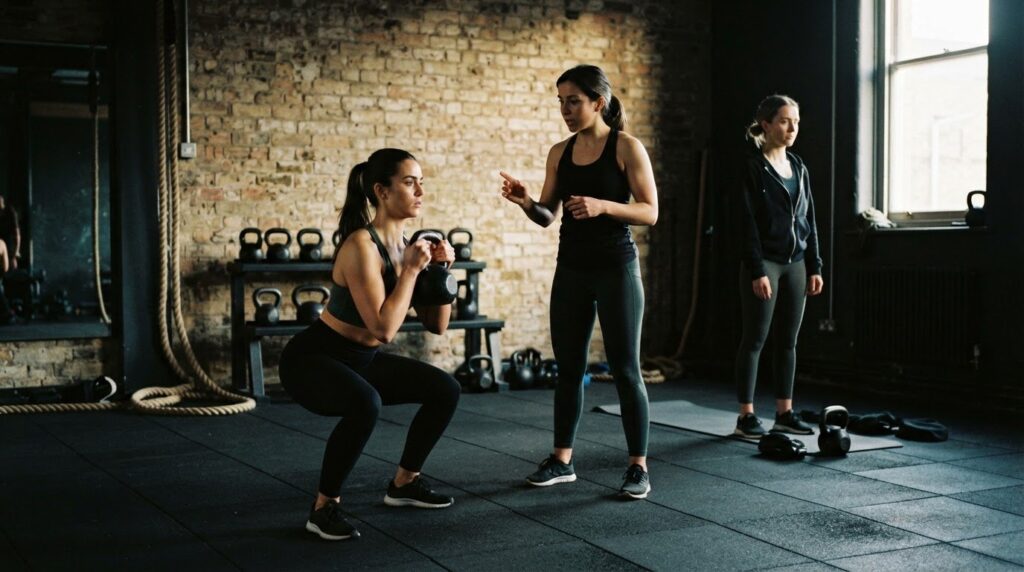
The Rise and Fall of Boutique Gyms: Lessons for PTs The rise and fall of boutique gyms isn’t simply a story of a fitness trend that peaked and disappeared. Focused classes, skilled coaching and a sense of community made the model appealing, but those qualities alone can’t protect a studio when attendance shifts and operating pressures grow.
It’s natural to ask what comes after the boom. Members still want more than a room full of equipment: they value guidance, connection and a reason to keep showing up. But how studios deliver that experience is changing, and copying yesterday’s formula is unlikely to be enough.
This article explores what fuelled boutique fitness, how in-person, hybrid and virtual models are evolving, and what may come next. For personal trainers, the key lesson is to build value through coaching quality, consistency and human connection, not just a polished class or a full timetable. To thrive in this market, understand what keeps people coming back.
Table of Contents
What Comes After the Boutique Fitness Boom?
Boutique fitness didn’t begin with a polished cycling studio or a branded workout. Earlier concepts sold a focused experience: a specific activity, a distinctive atmosphere and personal attention. Today, a boutique fitness studio is generally described as occupying 800-3500 square feet and specialising in one or two fitness areas. That focus separates it from a broad, equipment-led gym. Members know what the studio does, what a class involves and what experience they can expect.
The business model turns a focused offer into repeat attendance. A studio builds its timetable around a defined training style, then gives members a structured way to book and attend classes. Membership fees remain the largest revenue stream for boutique gym studios, while services are expected to grow fastest. That distinction matters: a busy timetable may attract attention, but consistent coaching and a worthwhile experience give people reasons to return. A specialist label alone won’t rescue an offer that feels generic.
The concept has older roots than its current branding suggests. In the 1930s, Elizabeth Arden and Helena Rubinstein operated luxury salons with health and wellness centres. These businesses connected fitness with beauty, wellbeing and a carefully shaped customer experience. In the 1950s, Slenderella attracted women to fitness salons using vibrating tables for passive exercise. The equipment and methods differ sharply from modern classes, but the commercial idea is familiar: package fitness as a distinct, appealing experience.
Then Judi Sheppard Missett founded Jazzercise in the 1970s, blending dance with group exercise. Its significance wasn’t simply the format. Group fitness made a workout social, recognisable and repeatable, with an instructor guiding participants through a shared session. Boutique operators later sharpened that formula around specific disciplines and atmospheres. For personal trainers, the lesson is direct: a class needs more than choreography. Clear instruction and a sense of belonging help turn attendance into habit.
The expansion became hard to ignore. Boutique studios had grown by 121% since 2013 and accounted for 40% of the market in 2017. In London, the number of boutique fitness studios increased by 281% between 2013 and 2018. Those figures show how rapidly the model could expand when specialist classes met demand for more focused training. They don’t prove every studio had a durable business, though. Growth in studio numbers is not the same as sustainable attendance.
London’s timetable gives the scale another dimension: boutique fitness studios provided more than 15,000 classes per week. That volume creates choice, but it also makes differentiation essential. A studio must deliver a clear training purpose, capable coaching and a consistent atmosphere, not just another slot on the schedule. The rise and fall of boutique gyms is therefore less about one format disappearing than a sharper test of its foundations. The studios best placed to last are those that make coaching and community central to the experience.
Why Are Boutique Fitness Studios So Popular?
In the UK, boutique gyms gained momentum as London’s specialist studios expanded through the 2010s. Their appeal came from focused classes, distinctive atmospheres and coaching that made each session easier to follow than an open-ended gym workout.
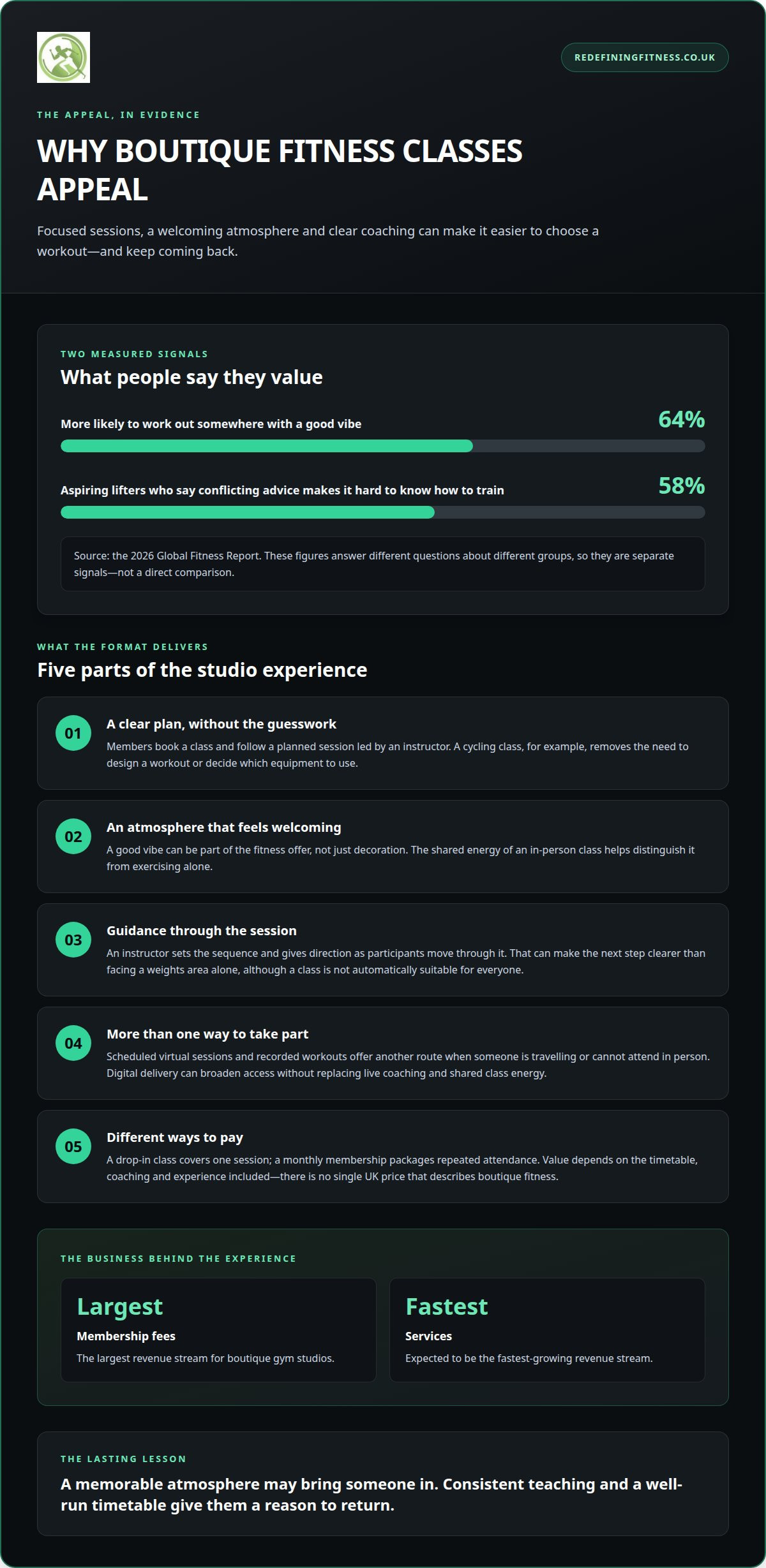
That structure tackles decision fatigue. Members choose a class, book a place and follow a planned session led by an instructor. A cycling class, for example, removes the need to design a workout or decide which equipment to use. The 2026 Global Fitness Report found that 64% of people are more likely to work out somewhere with a good vibe. A welcoming studio atmosphere can therefore be part of the fitness offer, not just decoration.
Classes also offer a practical response to uncertainty. The Global Fitness Report found that 58% of aspiring lifters say conflicting advice makes it hard to know how to train. In a structured class, the instructor sets the sequence and gives direction as participants move through it. That doesn’t make every class suitable for every person, but it can make the next step clearer than facing a crowded weights area alone.
Virtual classes and digital platforms extend convenience beyond the studio. Members can follow a scheduled session remotely or use recorded workouts when travelling or unable to attend in person. Digital delivery can broaden access without replacing the live instructor and shared energy that distinguish an in-person class. The strongest model treats online sessions as another route into a coherent programme, not a substitute for coaching.
Cost matters, but there’s no single UK price that describes boutique fitness. A drop-in class charges for one session, while a monthly membership packages repeated attendance. Value depends on the timetable, coaching and experience included. Members can compare whether the format fits their routine and gives them a reason to return. For studios, a low headline price means little if attendance doesn’t become consistent.
Which UK brands have grown or closed? The story is more useful when viewed through formats than as a simple list of winners and closures. Orangetheory is a recognisable example of coached, high-intensity group training, while London’s specialist studios demonstrate the appeal of focused classes. No single brand explains the wider shift.
Popularity came from reducing friction: members knew what to book, what they would do and who would guide them. The commercial challenge is keeping that promise in every class. A memorable atmosphere may draw someone in, but consistent teaching and a well-run timetable give them a reason to return.
Membership and Visitation Trends for Studios and Gyms
Membership totals and actual attendance tell different stories. A London studio may have active members on its books yet see uneven turnout across its timetable. Track visits alongside renewals: a class that repeatedly fills can reveal stronger demand than membership numbers alone. This helps operators see whether their offer creates a lasting routine or simply attracts initial interest.
Pandemic-era disruption changed how studios delivered sessions. In-person classes gave way to online workouts, and many operators later combined formats as members returned to shared spaces. For a London coach, flexibility in delivery is a practical consideration: a member who can’t reach a studio for an evening class may still value a structured remote session. The useful measure is whether each format supports ongoing participation.
Members may also spread their training across providers. Someone might use a traditional gym for independent workouts and book a Pilates class for focused instruction. That choice doesn’t necessarily signal weak loyalty; it may reflect different needs across the week. Studios should make their particular value clear, so members understand what they gain from returning to that class or coaching style.
Cost remains a constraint, especially when people balance fitness with other household spending. For London operators, discounting every class isn’t the answer. A clear timetable, reliable instruction and a consistent experience help members judge whether a membership suits their routine. Someone who can attend only after work needs class times that fit, not an impressive schedule they can’t use.
Social connection can support retention when it develops through everyday interactions. A 2014 study found that 63% of boutique studio users attended for the community aspect. That finding points to a practical job for coaches: learn members’ names, help newcomers settle in and make progress visible without turning sessions into competitions. A welcoming circuits class, for instance, can give people shared structure while allowing each person to work at an appropriate level.
Retention also depends on what happens between visits. If someone misses a familiar class, a coach can welcome them back without blame and help them rejoin. That contact reinforces belonging, while thoughtful programming gives members a reason to continue. For trainers in London, attendance patterns offer useful feedback: adjust timing, coaching or progression when participation starts to slip.
Sign-ups alone don’t show a studio’s health. Consistent visits, renewals and member connection each reveal a different part of the picture. Operators who monitor all three can respond before an empty class becomes a bigger problem. A durable concept makes its value clear every time a member walks through the door.
Studio, Hybrid and Virtual Delivery Models
Boutique fitness studios now make up over 40% of the fitness market. That share doesn’t mean one winning format has taken over. Studios can combine face-to-face classes with live-streamed sessions, recorded workouts or digital booking. Each channel serves a different purpose: in-person coaching delivers immediate feedback, while virtual sessions give members another way to follow a programme. The test is whether every format strengthens the same clear offer.
Specialisation gives studios a recognisable centre. Yoga, Pilates and barre account for the largest share of the global boutique gym studios market by exercise type, while HIIT is expected to be the fastest-growing type. Pilates accounted for 27% of all studio openings last year. These trends show both the pull of established disciplines and the appetite for energetic training. Boxing offers another focused concept, but the format needs skilled instruction, not just a distinctive label.
People also join because they want fitness to feel more accessible, purposeful or enjoyable. The 2026 Global Fitness Report found that 37% of people do not feel confident working out, while 41% consider exercise a chore. It also found that 54% want new ways to get fit. A well-led class can give participants structure and a shared goal. A hybrid option can add flexibility, provided the digital session still feels connected to the coaching.
Delivery choices shape the business as much as the workout. A studio session relies on space, equipment and an instructor’s presence. A virtual class reaches people beyond the room, but still needs clear demonstrations, good pacing and useful cues. Hybrid delivery requires operators to design for both experiences, rather than simply point a camera at a live class. In a boxing session, for example, the coach needs to make movements easy to follow and keep instruction useful on screen.
Growth brings pressure. The boutique gym studios market is fragmented, with operators competing across specialised concepts rather than relying on one dominant format. Membership fees currently provide the largest revenue stream, while services are expected to grow fastest. That shift puts more emphasis on what members actually receive: coaching, progression and a coherent experience. Digital access or extra classes help only when they support delivery and encourage repeat participation.
Choose a model based on what it needs to do. Use the studio for close instruction and group connection, virtual sessions to extend access, and hybrid delivery when both can be supported consistently. Measure bookings, attendance and repeat participation separately. A growing segment can still punish blurred positioning. Studios that maintain coaching quality across every channel give members a clear reason to choose them over another class, a traditional gym or no workout at all.
Boutique Gyms’ Focus on Coaching and Community
A boutique studio earns loyalty through more than its playlist or lighting. Its strongest role is to make exercise a coached experience, where people receive direction, learn movement and feel noticed. In a Pilates class, for example, an instructor might offer a clear modification and correct technique without disrupting the group. The equipment and format create the setting; the coach makes the training personal.
Community is more than a slogan on the wall. In a London studio, members may arrive with different levels of experience, confidence and reasons for training. A welcoming environment helps everyone feel they belong, rather than making the class seem designed only for regulars. Coaches shape that atmosphere with inclusive cues, respectful introductions and attention to different abilities. These choices influence whether a newcomer feels comfortable returning.
Build connection into the class itself. Before the warm-up, explain the session’s purpose and offer a simple way to adapt movements. During the workout, use names where appropriate, give specific feedback and make progress visible. At the end, recognise effort and explain what the next session will develop. In a boxing class, for example, teach combinations progressively instead of leaving newcomers to imitate the most experienced participant.
Professional judgement is what separates coaching from choreography. Repeating a routine may keep the timetable moving, but it doesn’t show whether members understand technique or are progressing. In Pilates, a coach can connect a movement to control, breathing and function, then adapt instruction as participants improve. In circuit training, clear regressions and progressions let people work towards the same session goal at different levels.
The fitness industry is competitive, and specialised concepts are easy to copy. Coaching quality is harder to replicate because it depends on observation, communication and consistency in every class. Strong coaches notice when a regular member’s attendance changes, welcome a first-timer without putting them on display, and maintain standards when the room gets busy. Those details give community practical meaning.
The desire for connection must be matched with operational discipline. A London studio needs a reliable class experience, clear session structure and instructors who understand the format they teach. If one class feels thoughtful and the next improvised, members have little reason to trust the concept. Community grows when people know what to expect, feel comfortable joining in and can see a way to progress.
For personal trainers, the takeaway is simple: master the craft behind the class. If you’re ready to strengthen your coaching foundations, develop your personal training skills and build experiences people want to return to. Your professional image also contributes to the experience, and why how you dress matters as a personal trainer is worth considering as you shape your approach.
Redefining Fitness Ltd
Redefining Fitness Ltd helps aspiring and developing personal trainers turn the lessons of boutique fitness into stronger coaching practice. Its Level 2 & 3 Personal Training Course is delivered online and in person, with specialist learning in areas including kettlebells, circuits and indoor cycling. That grounding matters when you want to create sessions with clear purpose, thoughtful progression and the human connection that keeps people engaged.
Turn to Redefining Fitness Ltd when you’re ready to build professional foundations or deepen your practical skills. The focus is not on copying a studio’s look; it’s on developing the knowledge and coaching standards behind a valuable fitness experience. If you’re ready to take that next step, contact Redefining Fitness Ltd.
Build What Members Come Back For
The rise and fall of boutique gyms reminds us that a compelling concept only opens the door. Your long-term value comes from the professional judgement you bring to each session: how you adapt your coaching, communicate progress and help people feel capable of taking the next step. That’s the standard worth working towards.
As you shape your direction, choose the kind of coach you want to become, then invest in the knowledge and practice that supports it. Don’t chase every new format. Build depth, stay curious and make your work useful to people with different needs and starting points. The fitness industry needs professionals who pair ambition with thoughtful, inclusive coaching. Let your reputation grow from the care and consistency people experience, not the noise around your name.
Are you the fitness industry’s next best secret? Explore the Redefining Fitness prospectus and take your next step with confidence.
Frequently Asked Questions
What Does This Mean for the Future of Fitness?
Fitness businesses will need to make participation practical, inclusive and worth repeating. In London, that could mean offering beginner-friendly group sessions alongside options for people managing health conditions. Trainers can use CIMSPA’s professional resources to support their development, while Sport England’s activity guidance offers wider context on participation. Technology can extend access, but thoughtful coaching remains essential to a useful experience.
Are Boutique Gyms Just a Passing Trend?
Individual studio concepts can lose momentum, but focused group exercise can adapt as people’s interests change. Yoga, Pilates, boxing and cycling each offer different ways to train, and studios can adjust their delivery without abandoning their identity. For a broader view of the sector, ukactive’s industry resources and EuropeActive’s fitness-sector work provide useful context. Longevity depends on serving members well, not simply following a fashionable format.
Do Traditional Health Clubs Need to Worry?
Traditional health clubs need to respond to changing expectations, not panic. A broad facility can serve independent workouts, while specialist sessions appeal to people seeking guidance in a particular discipline. Clubs can make their offer more compelling by improving instruction and creating welcoming classes. Health & Fitness Association resources offer industry perspective, while NHS exercise information helps frame the value of accessible physical activity.
How Can Boutique Studios Foster a Sense of Community?
Make belonging part of the routine. Welcome newcomers without putting them on the spot, explain what to expect and give members ways to take part at different levels. A London studio might keep class formats familiar while introducing members to one another naturally. Community organisations such as the YMCA and participation initiatives supported by Sport England also illustrate how welcoming environments can help people feel included in physical activity.
What Sets Boutique Gyms Apart from Traditional Gyms?
Boutique gyms focus on a narrower training experience, while traditional gyms generally offer broader access to equipment and exercise options. A specialist studio might dedicate its timetable to one discipline; a general gym gives members more freedom to choose their own workout. Neither is automatically better. The right choice depends on the support and setting someone wants, as well as practical factors such as location and class times.
What Is the Demographic of People Who Attend?
There isn’t one fixed demographic across every studio. Age, preferred exercise, timetable and neighbourhood all shape who attends. A lunchtime Pilates class may attract a different mix from an evening boxing session. Studios should avoid designing around assumptions and instead make instruction clear, provide suitable exercise options and create a respectful welcome. The Activity Alliance offers resources on making activity more inclusive for disabled people.
Which Are the Leading Players in the Global Boutique Fitness Market?
There is no single leader across every country and discipline; the market varies by format, location and business model. Yoga, Pilates and barre attract different audiences from HIIT or cycling. To understand professional standards and sector development, trainers can explore American College of Sports Medicine resources and ukactive’s UK industry work. For London professionals, local relevance and reliable coaching matter more than a global ranking.
Why Do Exercisers Love Boutiques?
People may value the focus, guidance and shared energy of a coached class. A clear session plan can make joining feel less daunting than designing a workout alone, while a supportive instructor helps participants understand what to do. For practical guidance on physical activity and wellbeing, the NHS exercise pages and World Health Organization’s physical activity guidance provide useful broader context.

Training to Failure & Muscle Growth: Complete PT Guide
Training to Failure & Muscle Growth: Complete PT Guide Training to failure isn’t a requirement for muscle growth. The real question, what…

What Is RPE in Training? How to Use It Effectively
What Is RPE in Training? How to Use It Effectively Effort isn’t a feeling to ignore; it’s information you can use. To understand what RPE is in…
