Online study alone won’t make you a capable personal trainer. A blended learning personal trainer course works when theory and practical coaching reinforce each other, not when workshops feel like an afterthought. It’s reasonable to want flexibility while also asking whether you’ll get enough hands-on practice to develop your coaching skills.
The answer depends on how the course is structured. You need more than learning materials: you need opportunities to apply what you’ve studied, get guidance and demonstrate what you understand. That’s how flexibility can support a serious route into the profession, rather than leave gaps in your learning.
This guide explains how online learning and face-to-face workshops can work together, what to look for in tutor support, practice and assessment, and how to choose a Level 2 and Level 3 learning route that fits your needs. Redefining Fitness delivers these qualifications through online study and practical workshops, supported by course materials, tutoring, mock examinations and final certification assessments. Here’s how to judge whether blended learning suits you.
Key Takeaways
- A blended learning personal trainer course combines online theory with planned face-to-face practice, but the format alone doesn’t guarantee quality.
- Look for a learning cycle that lets you study concepts, practise coaching skills, receive feedback and apply what you’ve learnt.
- Compare online-only, blended and in-person study by flexibility, practical experience, tutor contact and structure.
- Use a clear checklist to assess course materials, tutor support, opportunities to practise and how your learning is assessed.
- Understand how Level 2 and Level 3 learning can build your route into personal training, and what support can help you progress.
What is a blended learning personal trainer course?
A blended learning personal trainer course combines planned online study with face-to-face practical learning. It isn’t simply an online course with a workshop added at the end. The parts should connect: you build knowledge through study, practise relevant skills in person, then use guidance and assessment to identify what you understand and what needs more work. Blended learning describes this combination of digital and face-to-face learning, but the format alone says nothing about teaching quality or career outcomes.
Each format offers a different balance. Online-only study can give you independence and flexibility, but practical learning may be limited. Predominantly classroom-based learning puts more teaching in person, with less emphasis on online study. Blended learning combines independent learning with planned workshops. None is automatically best for everyone. The key question is whether the structure helps you build both underpinning knowledge and the ability to apply it.
What does blended study mean in personal training?
Online learning gives you space to work through course materials and build foundational knowledge before applying it. A face-to-face workshop then gives you the chance to practise relevant skills in a supported setting. Tutoring, feedback and assessment should connect those activities, helping you make sense of the theory and strengthen your understanding as you progress. Redefining Fitness brings online learning and practical workshops together in its Level 2 and Level 3 personal training qualifications, with tutoring, mock examinations and final certification assessments.
The distinction is simple but important: access to online materials isn’t the same as learning to coach. Practical sessions should give you opportunities to take part, practise and learn from feedback, rather than simply interrupting your online study.
Who might benefit from a blended personal trainer course?
Blended study may suit you if work, caring responsibilities or other commitments make a largely classroom-based timetable difficult, but you still want in-person practice. It can also work well if you prefer to study independently and want practical sessions to bring concepts to life. Some learners benefit from a clear mix of solo study, tutor input and workshops; others may prefer a different balance. Consider how you organise your time and learn best. Flexibility helps, but you’ll still need to set aside regular time for study and practice.
How online study and practical workshops build coaching skills
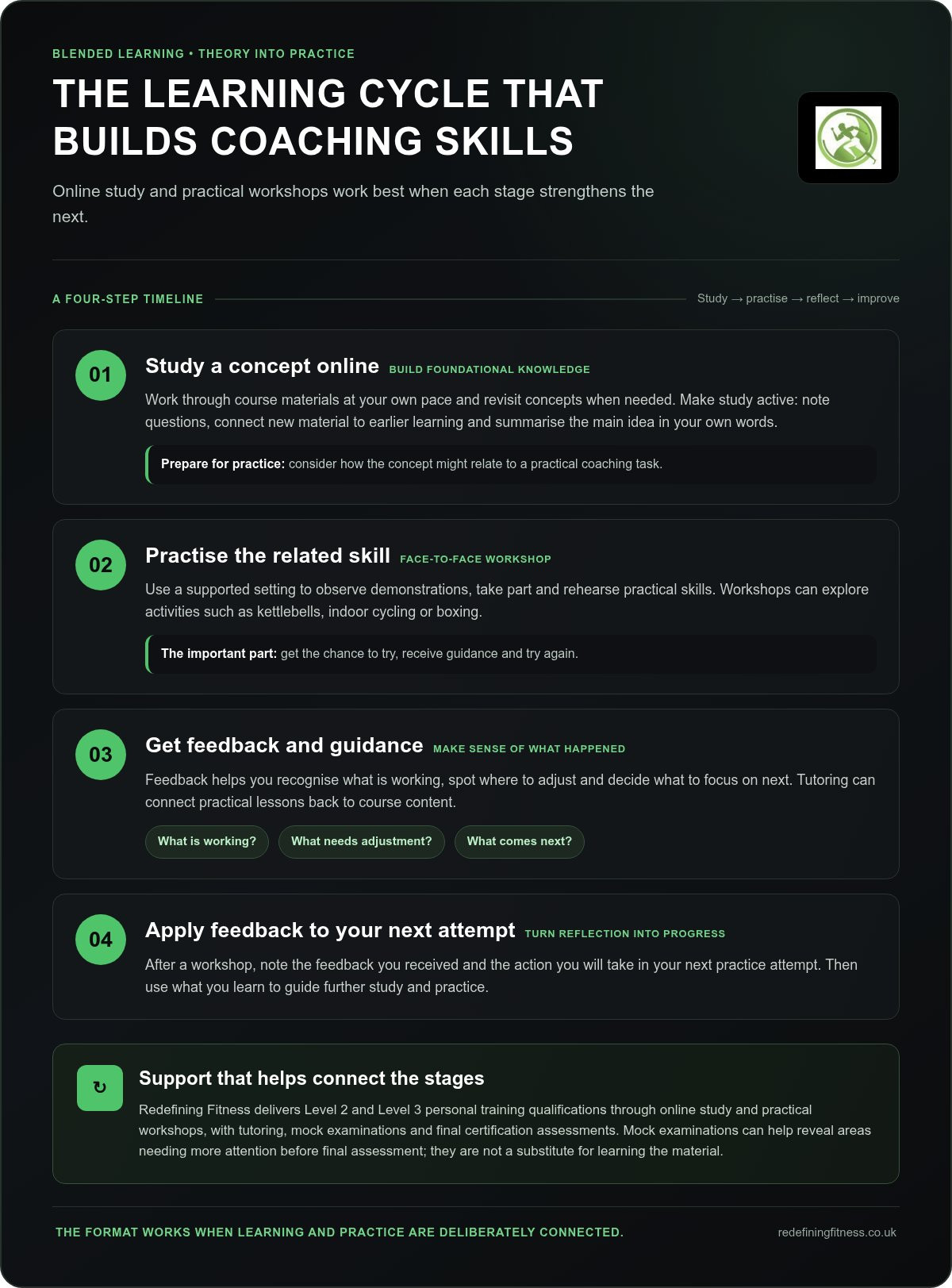
Online learning builds your knowledge base. Workshops give you a place to apply it. A strong blended learning personal trainer course connects the two in a deliberate cycle: study a concept, practise a related skill, receive feedback, then use that feedback to improve your next attempt. That connection is what turns flexible study into active learning.
Effective blended learning links theory, practical coaching and feedback, so each stage strengthens the next. If online materials and workshops feel like separate activities, the course isn’t making full use of the format.
What should online learning contribute?
An online learning portal gives you a structured place to work through course materials and build foundational knowledge. You can revisit a concept when you need to, review learning at your own pace and organise independent study around other commitments. But reading a module or completing an online activity doesn’t, by itself, show that you can explain or apply what you’ve learnt.
Make independent study active. Note questions as they arise, connect new material to earlier learning and bring anything unclear into tutoring or workshop discussions. After each study session, try summarising the main idea in your own words and identify how it might relate to a practical coaching task. This helps online study prepare you to practise instead of becoming a box-ticking exercise.
What should face-to-face workshops contribute?
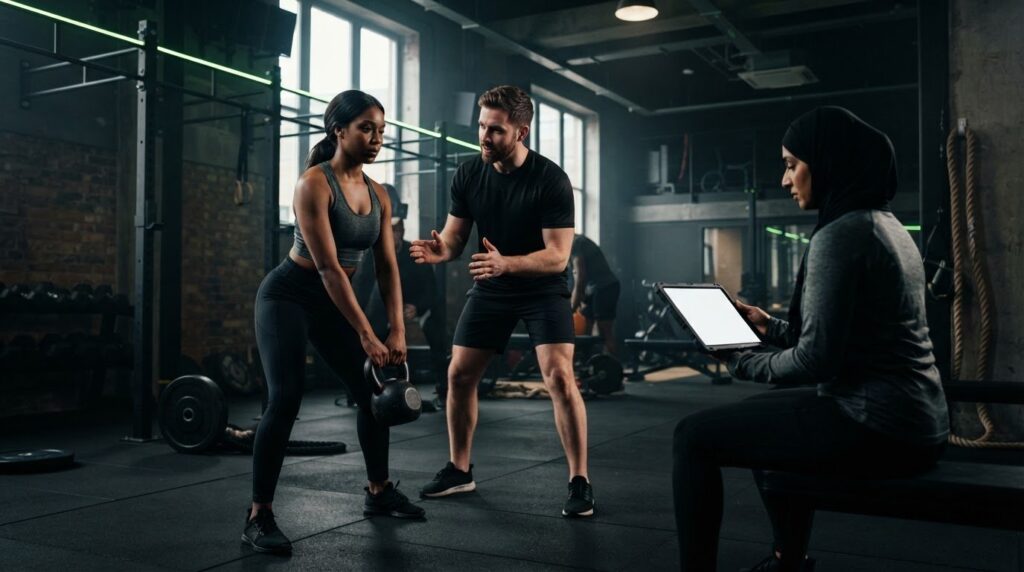
Workshops should give you supported opportunities to rehearse practical skills, observe demonstrations and receive feedback you can act on. For example, a session covering kettlebells, indoor cycling or boxing can help you explore how to approach an activity in practice, rather than learning about it only through course materials. The important part is participation: you need a chance to try, receive guidance and try again.
Feedback makes the difference. It can help you recognise what’s working, spot where you need to adjust and decide what to focus on next. After a workshop, note the feedback you received and the action you’ll take in your next practice attempt. Tutoring can connect practical lessons back to course content, while mock examinations can help reveal areas that need more attention before final certification assessments. They’re useful for identifying gaps, not a substitute for learning the material.
Redefining Fitness brings online learning and face-to-face practical workshops together across its Level 2 and Level 3 personal training qualifications, with tutoring, mock examinations and final certification assessments as part of the learning support. Explore the Level 2 and Level 3 personal training qualifications to see how this approach brings study and practice together.
Blended vs online-only vs in-person personal trainer courses
Choosing a study format isn’t a contest with one winner. Compare how each option fits your commitments and gives you opportunities to develop and demonstrate practical skills. A blended learning personal trainer course combines independent online study with planned face-to-face learning, but flexibility alone doesn’t prove that a course is well designed or will help you build coaching skills.
| Format | Flexibility | Face-to-face practice | Tutor contact | Study structure |
|---|---|---|---|---|
| Online-only | Often offers greater control over when you study. | May offer limited or no in-person practice, depending on the course. | Can vary; check how learners receive guidance and feedback. | Suited to independent study, with structure shaped by course design. |
| Blended | Online study can fit around other commitments. | Includes planned in-person practical learning. | Varies; consider how tutoring links online and practical learning. | Combines independent study with workshop learning. |
| Predominantly classroom-based | More dependent on scheduled sessions. | Provides face-to-face learning, though practical activities vary. | Contact takes place in person; additional support varies. | More centred on a timetable and in-person sessions. |
Is blended learning better than an online-only course?
It depends on your learning preferences, the support available and how the course handles practical skills. Online study alone doesn’t automatically mean you’re unprepared to coach, just as attending workshops doesn’t automatically demonstrate competence. Look at how you’ll practise relevant skills, receive guidance and show what you’ve learnt. A blended format can provide planned practical learning alongside independent study, but its value lies in the design, not the label.
If you’re comparing qualification routes, the Level 2 and 3 personal training diploma guide offers more detail on the pathway.
What trade-offs come with in-person study?
Classroom-based learning puts scheduled, face-to-face contact at the centre of your study. That structure can suit learners who value regular in-person sessions, but travel and timetable commitments may be harder to balance with work or caring responsibilities. Online study gives you more independence over where and when you work, though it asks you to organise that study consistently. Blended learning combines the two: you study remotely, then attend practical workshops for face-to-face learning. Choose the balance that fits your life while giving practical learning a meaningful place.
How to assess a blended learning personal trainer course
Don’t judge a course by the word “blended” or a long list of features. Assess how well its learning, practical experience and assessment fit together. Use this checklist to look beyond the format and consider what will actually support your progress.
Check the learning structure and practical experience
- Trace the connection between study and workshops. Can you see how online topics prepare you for face-to-face practical learning, and how workshop activities build on that knowledge? A workshop should have a clear learning purpose, not simply appear on the timetable.
- Look for chances to practise and improve. Consider whether practical learning lets you try relevant skills, receive useful feedback and put that feedback into action. Being present isn’t the same as practising.
- Understand how assessment works. Assessment expectations should be explained as you progress, not left as a surprise at the end. Consider how practice activities prepare you for assessment and how you’ll identify areas that need more attention.
A genuinely integrated course connects online learning, practical workshops and feedback; it doesn’t just bolt disconnected sessions onto digital content.
Check the support and learning environment
- Assess what tutor support means in practice. Useful support helps you understand course content, make progress when you’re unsure and act on feedback. Look for tutoring that guides your learning, rather than access to a tutor in name only.
- Check how resources and mock examinations fit the journey. A learning portal and course materials should help organise your study. Mock examinations can help you identify gaps before final certification assessments, especially when you use the results to guide further learning.
- Consider whether the teaching environment supports different learners. Inclusive teaching can help people with different learning needs engage with materials, ask for guidance and take part in practical learning. If you’re neurodivergent, clear structure and accessible support can help you approach study in a way that works for you.
These criteria make it easier to judge whether a blended learning personal trainer course offers a coherent route or simply combines separate features. Redefining Fitness brings online learning, face-to-face workshops, tutoring, course materials, mock examinations and final certification assessments together for its Level 2 and Level 3 personal training qualifications.
Explore a supported blended learning route with Redefining Fitness.
Study for your personal training qualification with Redefining Fitness
You’ve seen what makes blended study worthwhile: online learning connected to practical workshops, useful tutor guidance and clear assessment. The format should support how you learn, but your progress still depends on active study, practice and commitment. Redefining Fitness brings these elements together in its Level 2 and Level 3 personal training qualifications.
What does the Redefining Fitness learning experience include?
Study online through a learning portal and course materials, then build on your learning in face-to-face practical workshops. Tutoring support helps connect the different parts of the course, while mock examinations give you a chance to identify gaps before your final certification assessments.
Workshop areas include kettlebells, indoor cycling, boxing and health-focused modules. These practical sessions add an in-person dimension to independent study, giving you opportunities to engage with course topics beyond reading about them. The aim is an integrated learning route, not a stack of disconnected resources.
Learning should make room for different needs, too. Redefining Fitness prioritises inclusive teaching and supports neurodivergent learners. This approach can help learners engage with the course, while each person’s experience and progress remains individual.
Take the next step towards becoming a personal trainer
Think about the balance you need. Do you value the freedom to organise independent study, while also wanting practical workshops and tutoring to support your development? A blended route may fit if you’re ready to manage your learning and take an active role in practice. Consider how the course’s workshop and assessment commitments will fit with your schedule before deciding.
A qualification is a foundation, not a substitute for effort. You’ll need to work through the learning, use feedback and keep building your practical understanding. If that approach suits you, explore the blended learning personal trainer course and Level 2 and Level 3 route with Redefining Fitness.
Explore personal training courses with Redefining Fitness.
Choose a learning route that builds real capability
The right blended learning personal trainer course does more than offer flexibility. It connects online study with practical workshops, tutor guidance and clear assessment, helping you build knowledge while putting learning into practice. Compare the support and structure, not just the course label, and choose a Level 2 and Level 3 route that fits how you learn and the time you can commit.
Redefining Fitness combines online learning with face-to-face practical workshops. Tuition includes course materials, tutoring support, mock examinations and final certification assessments. The organisation also prioritises inclusive teaching and support for neurodivergent learners.
If this balance of independent study and practical learning fits your ambitions, take a closer look at the course approach. Explore personal training courses with Redefining Fitness.
Bring curiosity, consistency and a willingness to practise. You can build the knowledge and practical foundations to take your next step with confidence.
Frequently Asked Questions
Is a blended personal trainer course better than an online-only course?
Neither format is automatically better. The right choice depends on your learning preferences, available support and how practical skills are taught and assessed. Online-only study may suit you if you’re confident organising independent learning. A blended course adds planned face-to-face practical learning, which may suit you if you want to practise in person. Compare the learning and assessment structure, not just claims about convenience.
Can I study a personal trainer qualification around work and family?
Potentially, yes. Online study can give you more control over when you work through course materials, which may help if you’re balancing employment or caring responsibilities. Blended learning still includes face-to-face workshops and assessments, so you’ll need to plan for those commitments too. Consider how you’ll protect regular study time and fit practical learning around your existing responsibilities.
What happens in a personal trainer course practical workshop?
A practical workshop gives you a chance to engage with course topics in person and practise relevant skills in a supported learning environment. Activities may cover areas such as kettlebells, indoor cycling or boxing. Workshops are most useful when you can participate, receive guidance and apply feedback, rather than simply watch. They complement online study; they don’t replace the need to prepare and keep learning.
How long does a blended learning personal trainer course take?
There isn’t one standard duration for every blended course. The time needed can depend on the course structure, your independent study pace, practical workshop arrangements and how you progress through assessments. Don’t assume that online learning means you’ll finish quickly or that every course follows the same timetable. Review the course information and consider how much consistent study time you can realistically set aside.
What support should a blended personal trainer course include?
Look for practical support that helps you progress, not just access to course content. Useful features can include an online learning portal, course materials, tutoring, mock examinations and clearly explained final assessments. Tutor support should help you understand topics, work through difficulties and use feedback to improve. Inclusive teaching matters too: learners, including neurodivergent learners, can benefit from an environment that recognises different learning needs.
Is a blended personal trainer qualification recognised in the UK?
Blended describes the delivery format, not the qualification’s recognition. Recognition depends on the specific qualification and its awarding arrangements, so don’t assume that combining online and in-person learning establishes recognition. Check the qualification title, awarding body and current recognition information, then consider what employers in your intended area expect. Redefining Fitness delivers Level 2 and Level 3 personal training qualifications; the delivery format alone doesn’t establish recognition status.