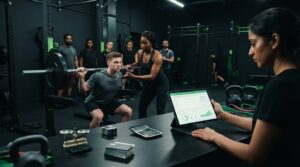
Will AI Replace Personal Trainers?
Artificial intelligence is changing how people work, and personal training will not be immune to that change. The question is not simply whether AI will replace personal trainers, because that suggests a straightforward replacement that is unlikely to reflect what actually happens. The more useful question is how much of a personal trainer’s current workload can be automated, accelerated or improved by AI, and what that will mean for the profession over the next few years.
The answer is that AI can already assist with a substantial amount of the work surrounding personal training. It can help trainers research information, write and adapt programmes, maintain client records, create website content, produce social media posts, write marketing copy, analyse information, prepare reports, organise business processes and communicate with clients. Many of these tasks previously consumed hours of a trainer’s working week without actually involving much face-to-face coaching. That does not mean personal trainers are about to disappear. It means the job is changing, and trainers who understand how to use AI effectively could become considerably more productive. So in this article we are going to ask the question “Will AI replace personal trainers?” but will also explore the nuance and context of what that may look like.
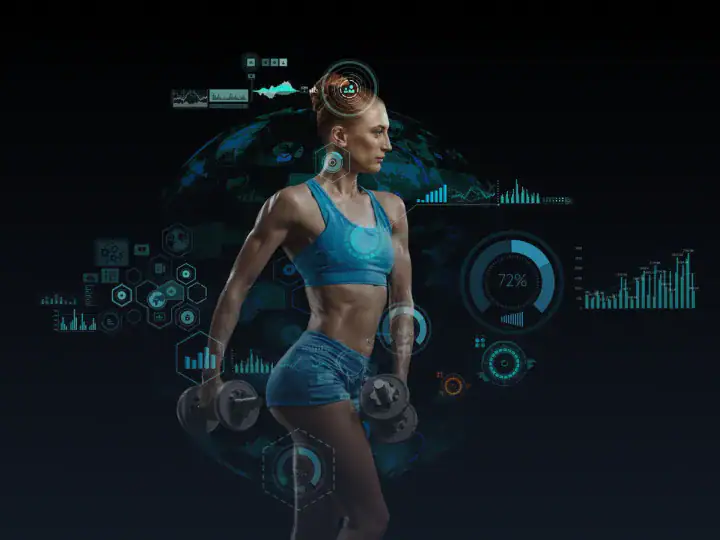
https://riseapps.co/machine-learning-and-ai-for-fitness/
How AI Is Changing Personal Training
Personal training has already gone through one major technological transformation. Trainers who once kept handwritten client records, manually wrote programmes on paper and used physical files for measurements and progress information gradually moved to digital systems. Booking, payments, programme delivery, communication and client management can now all be handled electronically.
AI represents the next stage of that process. Rather than simply moving manual processes onto a computer, artificial intelligence can assist with the production and organisation of information. It can help a trainer turn a set of client requirements into a programme, turn rough notes into a progress report, turn an idea into a social media campaign or turn a research question into a structured summary.
That matters because one of the biggest opportunities with AI for personal trainers is not necessarily replacing the trainer. It is removing the amount of low-value work that the trainer has to perform manually.
Research from Microsoft involving more than 6,000 knowledge workers across 56 organisations found measurable time savings from the use of Microsoft 365 Copilot, including reductions in time spent on certain common work tasks. The research was not conducted specifically on personal trainers, but it illustrates the wider productivity effect that makes AI relevant to professions containing significant amounts of writing, information processing and administration. Microsoft Research
What Can AI Do For Personal Trainers?
The range of applications is much broader than asking an AI chatbot to write a workout. Used properly, AI can support almost every administrative, marketing and programming process involved in running a modern personal training business.
AI Can Help With Workout Programming
Programming is one of the most obvious applications. AI can take information about a client’s goals, training experience, available equipment, schedule and preferences and use that information to generate a starting programme. It can also help produce exercise alternatives, organise training sessions, suggest progression ideas and restructure programmes when circumstances change.
This can save considerable time, particularly for trainers managing multiple clients who require individualised programmes. Instead of starting every programme from a blank page, the trainer can use AI to generate a structured starting point and then apply their own knowledge and professional judgement to it.
That distinction is important because AI-generated programming is not automatically correct. Research published in 2026 on artificial intelligence in exercise programming and coaching identified opportunities for AI in areas such as exercise prescription and coaching, while also highlighting limitations around validation, data quality and the need for human oversight. PubMed The trainer therefore does not disappear from the programming process. Their role becomes more focused on deciding what is appropriate, interpreting the client’s situation and modifying the output according to their expertise.
AI Can Help With Programme Adjustments
Programming is rarely a case of writing a plan once and leaving it untouched for twelve weeks. Clients miss sessions, equipment becomes unavailable, injuries or niggles occur, schedules change and goals develop.
AI can help a trainer generate alternatives quickly. If a client has only thirty minutes available, the trainer can use AI to restructure a session. If an exercise cannot be performed because of equipment restrictions, AI can suggest alternatives for the trainer to assess. If a client needs a change in training emphasis, AI can help produce potential programming options.
Previously, this could mean manually searching through exercise databases, rewriting sessions and rebuilding spreadsheets. AI can reduce much of that repetitive work while leaving the actual decision-making with the trainer.
AI Can Help With Client Records And Progress Tracking
Client administration is another area where AI could remove a significant amount of wasted time. Personal trainers need to keep track of goals, measurements, training history, attendance, programme changes, progress, feedback and other information. Digital systems have already made this easier than the old paper-based approach, but AI can go further by helping organise and interpret the information.
A trainer could use AI to summarise a client’s recent check-ins, identify changes in performance, prepare a progress report or turn a collection of notes into a structured record. Instead of spending significant time manually formatting information, the trainer can spend more time interpreting what that information actually means for the client.
The practical benefit is not that records become unnecessary. It is that maintaining good records becomes less burdensome.
AI Can Help With Research
Personal trainers regularly need to find information. They may have a question about training methodology, exercise selection, recovery, a particular population or a client’s circumstances and need to locate relevant information quickly.
Modern AI research tools can search across multiple sources, synthesise information and produce structured summaries. OpenAI describes its research tools as being capable of gathering and synthesising information from multiple sources and producing structured outputs with citations. OpenAI Academy
That can reduce the time spent opening multiple browser tabs, reading large quantities of material and manually compiling notes. It does not remove the need to evaluate sources, particularly when the subject involves health or safety, but it can make the research process considerably more efficient.
AI Can Help Build A Personal Trainer Website
A website used to require considerably more technical knowledge and, in many cases, external help from developers, designers and copywriters. AI tools are making it easier for small businesses and individual professionals to create and maintain websites without needing to perform every technical task themselves.
For a personal trainer, AI can help draft homepage copy, service descriptions, frequently asked questions, landing pages, blog articles, calls to action and other website content. It can also help structure pages around the questions potential clients are actually searching for.
The important point is that a website still needs a strong business behind it. AI can help build and populate the website, but it cannot compensate for an unclear offer, poor positioning or a service that clients do not value.
AI Can Help With Social Media
Social media is another area where personal trainers can spend an enormous amount of time. Coming up with content ideas, writing captions, scripting videos, planning campaigns and repurposing existing content can become a second job for a trainer who is also responsible for coaching clients.
AI can reduce that workload considerably. A trainer can take one idea and turn it into a longer article, several social posts, short-form video scripts, carousel concepts and email content. It can also help create content calendars and generate alternative versions of the same message for different audiences.
The result is not necessarily that trainers need to spend more time creating content. The opportunity is to produce useful content without allowing content creation to consume the entire working day.
AI Can Help With Copywriting
Many trainers know their subject but struggle to write about it. AI can help turn rough ideas, notes or spoken explanations into clearer written material.
That can include website copy, emails, newsletters, social media captions, blog articles, advertisements, lead magnets and client communications. It can also rewrite existing material for different audiences or change the tone and structure of a piece of content.
This is particularly useful for trainers who understand their niche but have traditionally avoided marketing because they do not enjoy writing. AI can reduce the friction between having an idea and actually publishing it.
AI Can Help With SEO
Search engine optimisation can also become significantly more accessible. AI can assist with keyword research, search-intent analysis, article structures, FAQs, meta descriptions, internal-linking ideas, content briefs and topic clusters.
That does not mean a trainer can simply generate hundreds of AI articles and expect Google to rank them. Google’s current guidance explicitly prioritises helpful, reliable, people-first content and warns against producing content primarily to manipulate search rankings. Google also recommends clear organisation, useful headings, relevant links and content that provides substantial value to the reader. Google Search Central
Used correctly, AI should therefore make a trainer’s SEO process more efficient rather than turn the website into a collection of generic machine-written articles.

AI Can Help With Marketing
Marketing is another major opportunity. AI can help a personal trainer identify potential audiences, develop content ideas, structure campaigns, create lead magnets, write email sequences and explore different ways of communicating an offer. It can also help a trainer analyse their existing marketing. For example, a trainer could provide several pieces of website copy and ask AI to identify inconsistencies in their positioning or explain how the messaging could be clearer for a particular target audience. The technology does not remove the need for marketing ability. It makes the execution of marketing considerably easier.

AI Can Help With Client Communication
Personal trainers spend a surprising amount of time answering essentially the same questions. Clients ask about sessions, programmes, exercises, scheduling, nutrition, progress and a range of other subjects. AI can help trainers draft responses, organise information and create reusable resources for frequently asked questions. That can reduce the amount of repetitive writing involved in client management while allowing the trainer to maintain oversight of the communication. The trainer still needs to understand the client and decide what should actually be communicated. AI simply makes producing the response less time-consuming.
AI Can Help With Business Administration
There is also a huge amount of work surrounding personal training that has nothing to do with exercise. Trainers have to manage enquiries, emails, documents, reports, content calendars, business plans, processes and other administrative tasks.
AI can assist with drafting documents, summarising information, creating templates, organising processes and turning unstructured notes into usable documents. The cumulative effect could be substantial because small administrative tasks tend to multiply throughout the week. This is particularly important for self-employed trainers, who are often simultaneously the coach, salesperson, marketer, administrator, content creator and business owner.
AI Will Remove A Lot Of Wasted Time
The biggest change may not be that AI can perform one particular personal training task. It is the cumulative effect of removing dozens of small tasks that previously consumed time. Consider how a trainer’s working day has changed over the last twenty years. A programme that was once written by hand can now be created and delivered digitally. Client records that were once kept on paper can now be stored and searched electronically. Bookings, payments and communication can be managed through software. AI adds another layer by helping produce, analyse and organise the information contained within those digital systems.
That means a trainer can potentially spend less time sitting at a computer performing repetitive administrative work and more time coaching, communicating with clients, developing their business or acquiring new clients. The important question is therefore not whether AI can do a personal trainer’s entire job. It is how much of the work surrounding the job can be made faster.
Will AI Replace Basic Personal Training?
This is where the impact becomes more significant. A client does not necessarily need to pay a personal trainer simply to receive a list of exercises. AI can already produce exercise explanations, basic training programmes and general fitness information at extremely low cost. That creates a problem for trainers whose primary selling point is essentially information delivery.
If the service consists largely of writing a programme and explaining what exercises somebody should perform, there is now technology capable of performing much of that work. The quality of the output will vary, and there are important limitations around individualisation and safety, but the underlying direction is clear. As basic information becomes easier to obtain, the value of the human professional has to come from somewhere else.
Why Good Personal Trainers Will Still Matter
Personal training is not simply an information service. People do not hire trainers solely because they lack access to exercise information. In many cases, they already know what they should be doing. They hire trainers because they struggle to implement that information consistently, need accountability, want guidance, benefit from individual coaching or simply perform better when another person is involved.
A good trainer observes what a client actually does rather than relying entirely on what the client says. They can recognise when a movement looks different from the previous week, understand how a client responds to different forms of coaching and adapt the session according to what is happening in front of them. Those interpersonal and practical elements are much harder to reduce to a generic piece of software. The fact that AI can produce information does not mean people will suddenly stop wanting human relationships. In many areas of life, technology removes administrative work while increasing the value of the human interaction that remains.
AI Could Increase The Market Share Of Better Trainers
This creates an interesting possibility for the personal training industry. If AI makes basic programming, research, administration and content creation easier, excellent trainers can use those productivity gains to increase their capacity. A trainer who previously had to spend several hours each week writing programmes and managing administration could potentially use that time to coach more clients, develop better services or improve their marketing.
That does not automatically mean that every good trainer will become more successful. Business fundamentals still matter. A trainer needs a product that people want, an ability to attract clients, strong relationships, good communication and sufficient expertise to deliver the service. AI simply gives those trainers more leverage. The same technology can expose trainers who do not have those fundamentals.
AI Does Not Fix A Weak Personal Training Business
This is an important distinction because AI can create the illusion of productivity. A trainer can use AI to produce an excellent-looking website, generate hundreds of social media posts, create sophisticated programmes and write polished marketing copy. None of that guarantees that anyone will buy the service. If the underlying product is weak, AI can simply help package a weak product more efficiently.
The trainer therefore needs to build the foundations first. That includes having appropriate qualifications, developing genuine coaching skills, understanding their target market, creating a clear offer and learning how to communicate the value of that offer. AI should then be used to make those foundations more scalable.
Personal Trainers Need To Learn How To Use AI
The sensible response to AI is not to ignore it. Personal trainers should learn how these tools work and experiment with the areas where they can save the most time. That might mean using AI to create a first draft of a programme, research a subject, organise client notes, analyse progress, write an article, develop a social media campaign, improve a website, produce marketing material or automate repetitive administration.
The important part is knowing where professional judgement remains necessary. A trainer should not blindly accept an AI-generated programme simply because it looks professional, just as they should not accept a search result without considering whether the source is reliable. The most useful model is therefore AI-assisted personal training, where technology handles more of the repetitive work and the trainer remains responsible for the professional decisions.
The Future Personal Trainer Will Need More Than A Basic Qualification
As technology makes basic information increasingly accessible, the distinction between having a qualification and being genuinely capable becomes more important. A trainer who has a broad educational foundation, understands exercise programming, communicates well, can coach different types of people and knows how to use technology has considerably more to offer than someone whose service is limited to producing generic workouts.
This is one reason personal trainers should think beyond the minimum qualification wherever possible. Additional education can broaden the populations a trainer understands, improve their ability to assess and programme appropriately and give them more tools with which to solve client problems. AI does not make education less important. In some respects, it makes deeper education more valuable because the basic information that used to differentiate a professional from the general public is becoming easier for everyone to access.
What Should Personal Trainers Do Now?
Personal trainers should start by identifying where their working week is currently being consumed by repetitive tasks. If several hours are spent writing programmes, producing content, responding to routine questions, researching basic information or maintaining records, those are obvious places to investigate AI assistance.
The next step is to learn how to use the technology rather than simply asking it random questions. Better inputs, clearer context and appropriate verification generally produce better results. Trainers should also establish boundaries around confidential client information and avoid putting sensitive information into tools without understanding how that information is handled. Most importantly, trainers should use the time saved by AI to increase the quality of their service rather than simply filling the extra time with more administration.
If AI saves two hours, those two hours should create something valuable. That might mean spending more time coaching an existing client, developing a better service, speaking to prospective clients, creating useful educational material or improving the trainer’s own knowledge and qualifications.
So, Will AI Replace Personal Trainers?
AI is unlikely to replace personal trainers in the simple sense of eliminating the profession. It is, however, highly likely to replace or substantially automate parts of the work that personal trainers currently perform.
Programming support, research, documentation, marketing, website development, social media, copywriting, client records and administration can all be assisted by increasingly capable technology. The result will be less manual work and potentially much greater productivity. That creates both an opportunity and a threat.
For a strong personal trainer, AI can remove a huge amount of the work that previously got in the way of coaching. It can make the trainer faster, more organised and capable of serving more people without simply adding more hours to the working week. For a trainer whose value proposition is largely based on tasks that AI can perform cheaply, the situation is different. If a client can obtain much of the information being sold to them from an AI system, the trainer needs to provide something more valuable. That is where coaching, judgement, relationships, accountability, communication and genuine expertise become increasingly important. The future is therefore unlikely to be a simple battle between personal trainers and artificial intelligence. The more realistic future is one in which personal trainers who understand AI have a productivity advantage over those who do not.
AI can make the fitness industry better by removing enormous amounts of unnecessary manual work. It can give trainers more time, more capability and more opportunities to help people. At the same time, it can expose trainers whose businesses depend on work that technology can now perform faster and more cheaply. The technology will not decide who succeeds. The quality of the trainer, the strength of the product, the ability to build relationships, the ability to attract and retain clients and the willingness to adapt will still matter. AI simply changes the amount of leverage available to each of them.
Frequently Asked Questions About AI And Personal Training
Will AI Replace Personal Trainers?
AI is unlikely to eliminate personal training as a profession, but it can automate many tasks currently performed by personal trainers. Programming support, research, client documentation, marketing, website content and administration can all be assisted by AI, while human coaching and professional judgement remain important parts of the service.
Can AI Create Personal Training Programmes?
Yes. AI can generate training programmes based on goals, experience, available equipment and other information supplied by the user. However, AI-generated programmes still require appropriate professional review, particularly when clients have complex needs or health considerations. Research published in 2026 highlights both the opportunities and limitations of AI in exercise programming and coaching. PubMed
How Can Personal Trainers Use AI?
Personal trainers can use AI for workout programming, programme adjustments, research, client records, progress reports, website content, SEO, social media, copywriting, marketing, communication, business planning and administrative tasks. The greatest benefit may come from combining several of these applications so that the trainer spends less time on repetitive work.
Will AI Make Personal Training Cheaper?
AI could reduce the time required to complete some parts of personal training, which may change the economics of delivering the service. However, the price of personal training is ultimately determined by the value of the overall service, not simply by how long it takes to write a programme.
Should Personal Trainers Learn AI?
Personal trainers should understand how AI can be used within their work because it is increasingly capable of assisting with research, writing, administration and information processing. Learning to use AI effectively can help trainers reduce repetitive work while allowing them to focus more of their time on coaching and business development.
What Skills Will Personal Trainers Need In The Future?
Future personal trainers will still need strong knowledge of exercise, programming and coaching. They will also benefit from communication, relationship building, behaviour-change skills, marketing, business development and technological literacy because these skills allow them to provide value beyond the basic information that AI can increasingly generate.
Is AI Better Than A Personal Trainer?
AI and personal trainers perform different functions. AI can provide rapid access to information and assist with programming and administration, while a personal trainer can observe a client, communicate with them, adapt coaching in real time and build an ongoing professional relationship. Current research also identifies limitations in AI exercise programming, meaning human oversight remains important. PubMed

https://www.pexels.com/photo/robot-s-hand-on-a-blue-background-8386437/
What Is The Future Of Personal Training?
The future of personal training is likely to involve greater use of AI and automation alongside human coaching. Trainers may spend less time on programming administration, research, documentation and content production and more time on coaching, relationships, client acquisition and higher-value professional work.
Personal training will always be a fantastic career for the right people because it’s people driven and no AI can replace the human touch. This is why our courses at Redefining Fitness are designed not only to teach you how to be a stand out trainer but also how to dominate your area and become a highly sought after PT using AI to help you get there. Whether you agree with AI or not it will happen, and for all its faults it does add value in certain places when it comes to speed, analysis and an opinion. A solid PT will know how to use AI and not simply use ChatGpt as a search engine because your entire business in a few years, will be able to be managed by AI with your input and oversight. This is why we asked the question, “Will AI replace Personal Trainers?” and this is why our answer is it depends on the context and nuance.
Want to be a world class PT? Head over to www.redefiningfitness.co.uk and download your prospectus and/or give us a call to speak with one of the team.
Sources And Further Reading
Google Search Central — Creating Helpful, Reliable, People-First Content
Google Search Central — SEO Starter Guide
Microsoft Research — Early Impacts Of M365 Copilot
PubMed — Artificial Intelligence In Exercise Programming And Coaching