How To Become A Personal Trainer In The UK 2026
Becoming a personal trainer in the UK is relatively straightforward in terms of the qualification pathway, but choosing how and where to study requires considerably more thought. There are a huge number of personal training courses available, with significant differences in price, delivery method, tutor support, practical training, qualification structure and the amount of education you actually receive. Someone looking for a quick certificate can find one. Someone who wants to develop into a genuinely capable coach needs to look considerably further.
For most people who want to become a gym-based personal trainer, the conventional route is to complete a Level 2 Gym or Fitness Instructor qualification before progressing to Level 3 Personal Training. CIMSPA currently describes this as the standard route into its Level 3 Personal Trainer pathway, although many providers combine the two qualifications into a single programme. The CIMSPA Personal Trainer Careers Hub provides an overview of the current qualification routes, including online, classroom and hybrid options. (CIMSPA Careers Hub)
The qualification, however, is only the beginning. A personal trainer needs much more than the ability to demonstrate exercises. The role involves understanding exercise science, designing programmes, coaching movement, communicating effectively, motivating clients, adapting training and knowing when a problem falls outside the trainer’s scope of practice. The National Careers Service personal trainer profile describes the role as including programme design, coaching, motivation, progress monitoring, health and lifestyle advice and, for self-employed trainers, business administration. (National Careers Service)
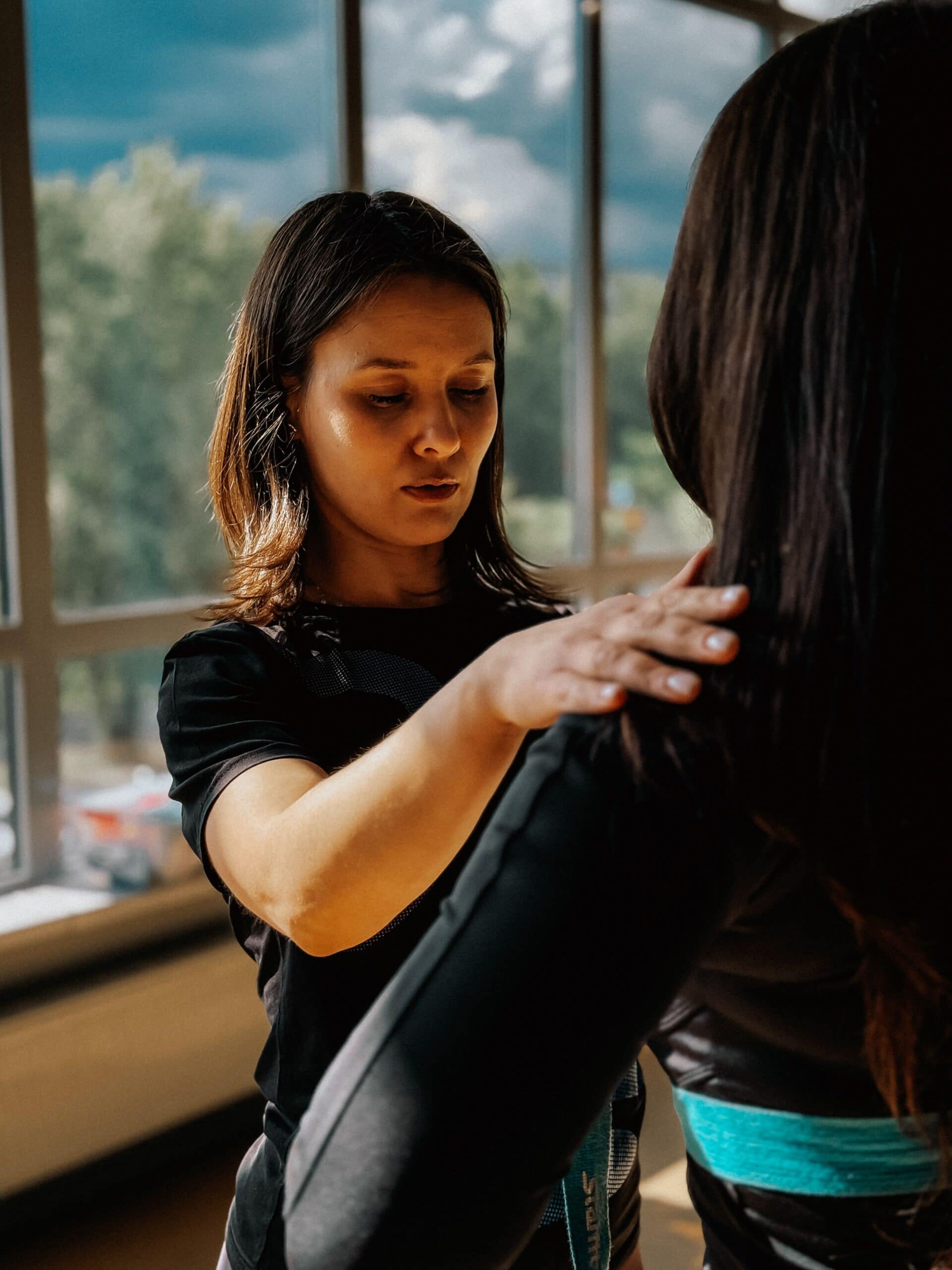
https://www.pexels.com/photo/personal-trainer-assisting-client-in-gym-session-37963563/
What Qualifications Do You Need To Become A Personal Trainer in the UK 2026?
For somebody entering the profession through the conventional gym-based route, the simplest way to understand the pathway of becoming a personal trainer in the UK in 2026 is Level 2 Gym Instructing followed by Level 3 Personal Training. Level 2 provides a foundation in working within a gym environment, while Level 3 develops that knowledge towards individual personal training and programme design. An award is a basic level of units, a certificate provides more depth and a wider breadth of units and a diploma tends to be more thorough. All three are usually valid when it comes to workplace requirements however savvier and more in the know companies will prefer a diploma or extended diploma for candidates to stand out.
CIMSPA currently states that students completing its Level 3 Award, Certificate or Diploma in Personal Training must first complete a Level 2 Gym/Fitness Instructor Certificate. It also notes that many providers combine both into a Level 3 Diploma in Gym Instructing and Personal Training. (CIMSPA Careers Hub)
There are other routes into the occupation. The National Careers Service lists college courses, apprenticeships, direct applications and specialist private training providers among the possible routes into personal training. The important point is therefore not that every personal trainer must follow precisely the same educational route, but that you need to establish what qualification and practical preparation the particular route actually provides. (National Careers Service)
Is There A Level 1 Personal Trainer Qualification?
Level 1 qualifications exist within the wider fitness and physical activity sector, but they are not the normal route for someone looking to become a fully qualified personal trainer in the uk in 2026. The existence of a Level 1 qualification does not mean that you have to progress sequentially through Level 1, Level 2 and Level 3 to enter the profession.
For someone whose objective is personal training in a gym environment, Level 2 Gym Instructing followed by Level 3 Personal Training is the much more relevant pathway. There are also combined Level 2 and Level 3 programmes that allow students to complete both stages through one course.
It is also worth understanding what the qualification levels actually mean. According to the GOV.UK qualification-level framework, Level 2 includes GCSE qualifications at grades 9–4, while Level 3 includes A levels, AS levels and a range of vocational Level 3 certificates and diplomas. A vocational Level 3 qualification and an A level therefore sit at the same broad framework level without being the same type of education. (GOV.UK)
That distinction is important throughout fitness education. Qualification level tells you where a qualification sits within the framework; it does not tell you that two qualifications at the same level teach the same subject, contain the same amount of learning or produce the same occupational skills.
What Is A Level 2 Gym Instructor Qualification?
A Level 2 Gym Instructor qualification is designed around the practical requirements of working in a gym environment. You are beginning to learn how to work with exercise equipment, instruct clients and apply basic training principles rather than simply studying exercise as an academic subject.
For someone intending to become a personal trainer, this is a logical foundation because it introduces the environment in which many personal trainers actually work. You begin to become comfortable around resistance machines, free weights and cardiovascular equipment while developing an understanding of exercise instruction and client interaction.
It is also why Gym Instructing is generally more directly relevant to aspiring personal trainers than a Level 2 Exercise to Music qualification. Exercise to Music is designed around group exercise and music-led instruction, whereas Gym Instructing is much more closely aligned with the equipment, environment and individual exercise instruction involved in gym-based personal training.
Neither is inherently a better qualification. They are designed for different purposes. Someone who wants to teach group exercise may have an excellent reason to choose Exercise to Music, while somebody who already knows that they want to become a gym-based personal trainer is likely to find Gym Instructing the more relevant foundation.
What Is A Level 3 Personal Training Qualification?
Level 3 is where the education becomes much more specifically focused on personal training. The qualification sits at Level 3 within the UK framework, alongside qualifications such as A levels and AS levels, but it is important not to confuse qualification level with educational purpose. A Level 3 personal training qualification is vocational and occupational, whereas an A level is an academic qualification. (GOV.UK)
A personal training qualification should therefore cover considerably more than showing someone how to use a piece of gym equipment. Anatomy and physiology are important because a trainer needs to understand the human body and how it responds to exercise, but they are only part of the job. Exercise selection, programme design, progression, communication, client motivation, behaviour and practical coaching all have to come together.
Knowing that the quadriceps extend the knee is useful. Being able to take that knowledge and decide how to train a particular client, explain an exercise clearly, modify it when necessary and progress it over time is a different skill entirely.
That is why the quality of the education matters. A trainer needs to develop an understanding of how different pieces of knowledge fit together rather than simply memorising anatomy diagrams and exercise descriptions.
Can You Have A Degree And Still Not Be Qualified To Be A Personal Trainer?
Yes. Having a degree does not automatically mean that somebody holds the qualification required for the conventional personal training pathway.
That does not make a degree in sports science, exercise physiology, biomechanics or a related subject less valuable. In some areas, a degree can provide substantially deeper academic knowledge than a vocational personal training qualification. The difference is that academic education and occupational training are designed to develop different capabilities.
Personal training involves communication, coaching, behaviour change, practical decision-making and the ability to translate information into something an individual client can actually understand and apply. Someone can have an excellent understanding of exercise physiology while still being unable to coach a nervous beginner effectively.
The reverse is also true. Having a Level 3 personal training qualification does not automatically make somebody an excellent coach. The qualification provides a foundation, but experience, continued learning and practical coaching ability determine how effectively that foundation is applied.
What Does A Personal Trainer Actually Do?
One of the biggest misconceptions about personal training is that the job consists of demonstrating exercises, counting repetitions and showing people how to operate machines. If that were genuinely all the profession involved, there would be little reason for extensive professional education when exercise demonstrations and basic workout programmes are available almost everywhere.
A personal trainer needs to understand what a client is trying to achieve, determine an appropriate way of progressing towards that goal, communicate the plan effectively, monitor what happens and adapt the programme when circumstances change. They also need to understand adherence and motivation because the most theoretically effective programme is useless if the client cannot consistently follow it. The National Careers Service specifically identifies programme design, teaching, motivation, psychology and client support among the skills required by personal trainers. (National Careers Service)
Personal training is therefore not simply about telling someone what exercise to perform. It is about taking knowledge and applying it to an individual person. It’s also about building a personal and nuanced, professional relationship where you can motivate, nurture and get to know your client. This means knowing what they like, dislike, respond to, how they need accountability, their communication style, personality quirks, training goals, lifestyle habits, support systems and everything in between. A fitness instructor counts reps, a personal trainer focuses on long term relationships, behaviour change and outcome accountability whilst transforming habits in the process.
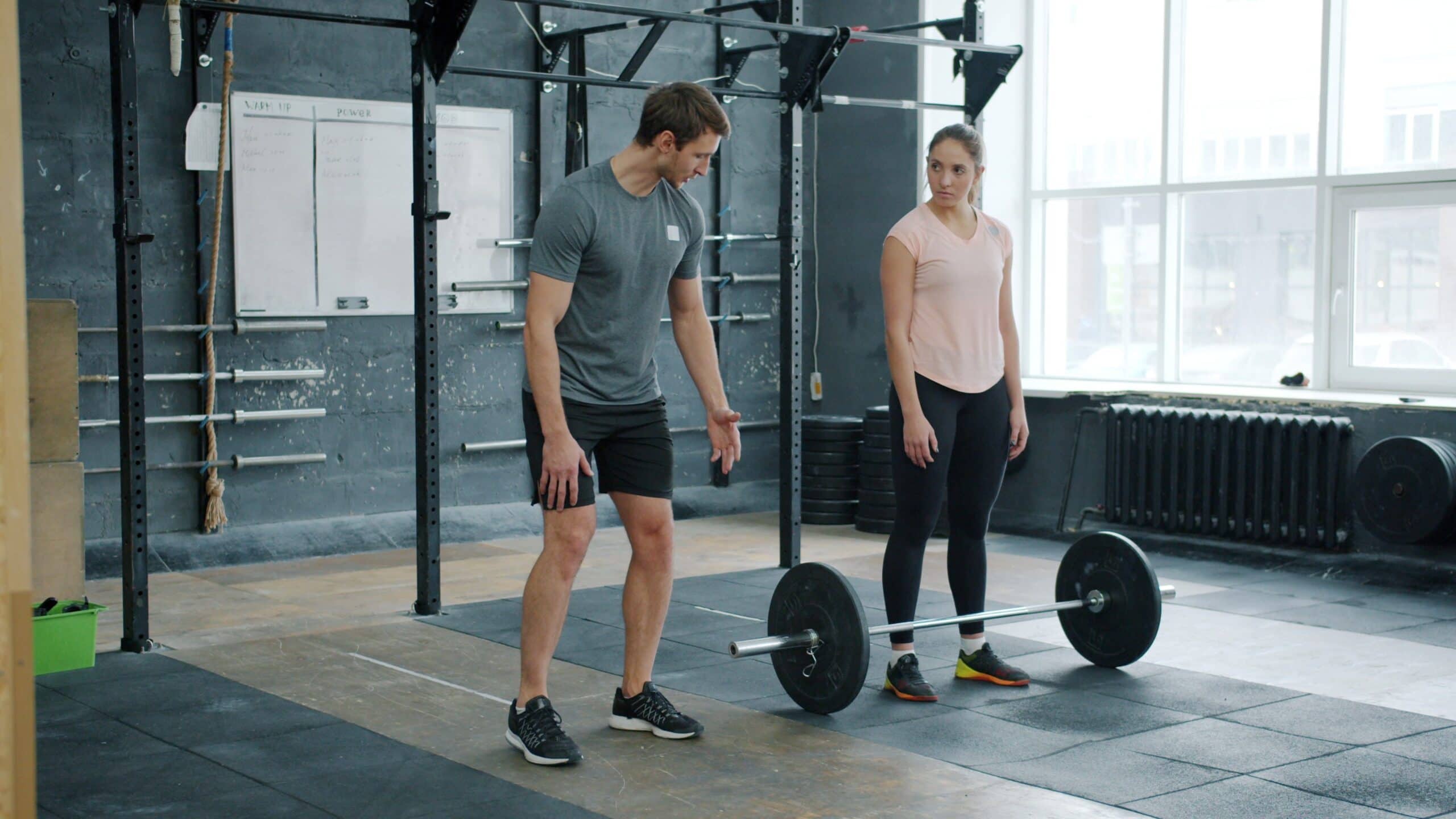
Why Your Thought Process Matters More Than Your Exercise List
A good trainer needs to develop a method of thinking rather than simply memorising hundreds of exercises. If a client cannot perform a particular movement comfortably, for example, the answer is not necessarily to replace it with another exercise from a list. You need to understand why the movement is not working and consider whether the issue relates to the exercise itself, the load, the range of motion, the instruction, the client’s experience or another factor.
The same applies to programme design. If someone can only train twice a week instead of four times, the trainer needs to understand the underlying objective well enough to redesign the programme. If a client hates a particular exercise, the trainer needs to understand what adaptation they were trying to achieve so that another route can be found. If progress stalls, the trainer needs enough knowledge to investigate why rather than simply adding another exercise.
This is where education becomes much more valuable than memorising answers. A competent trainer needs to understand the principles behind their decisions so that they can adapt those decisions when the circumstances change. A trainer with a competent thought process will understand why they are doing something both now and in the long term. Unfortunately, there are many personal trainers with a weak thought process and/or a non existent one and this leads to random exercises with no specific purpose, copy and paste exercises from social media and a complete lack of understanding of why that exercise is being used for that particular client at a given moment in time.
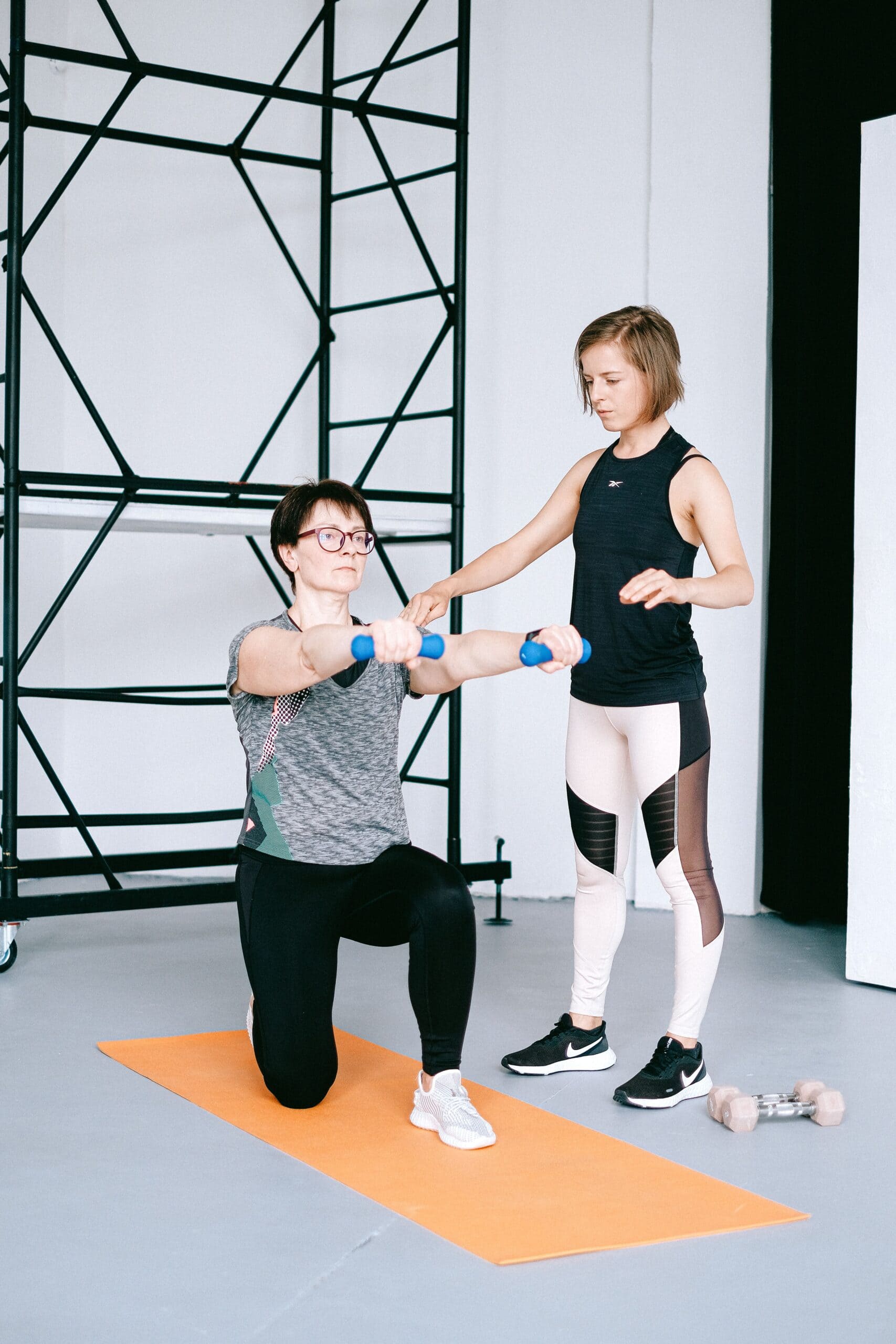
What Else Does A Personal Trainer Course Teach You?
Personal training education can extend beyond exercise science and coaching. Depending on the provider, courses may also cover client acquisition, sales, marketing, business development and professional practice.
That matters because personal training can be both a profession and a business. A trainer can be excellent technically and still struggle to make a living if they cannot attract and retain clients. Someone working independently may need to generate enquiries, communicate their service, manage bookings, market themselves and handle the administrative side of the business. The CIMSPA Personal Trainer Careers Hub specifically highlights business, finance, sales and marketing as relevant skills for building and retaining a client base. (CIMSPA Careers Hub) The depth of business education varies considerably between providers, which is another reason why comparing courses purely by qualification title and price is a mistake.
At Redefining Fitness, we focus on building longer term support systems with our graduates, helping them navigate their careers through helping with sourcing interviews, how to interview well and bring them into the working environment long before they finish their course. This puts our graduates several steps ahead of our competitors as they have existing relationships with their employers and also have broader and deeper knowledge because our courses teach personal training holistically and instil a progressive and curious thought process into our graduates, helping them to carve out their place in the fitness industry as a successful PT or other fitness professional. Most courses will teach you the basics fairly well but we focus on teaching you to master the fundamentals and then deep dive into the areas that interest you the most. Our courses were also written by world class tutors and leading industry experts who walk the walk today.
Are All Level 2 And Level 3 Personal Trainer Courses The Same?
No. Two providers can offer qualifications at the same level while providing very different educational experiences.
The qualification itself has defined learning outcomes and assessment requirements, but the way students are taught and supported can vary considerably. One provider may be heavily focused on getting students through assessments, while another may place greater emphasis on tutor interaction, practical application, discussion and developing the student’s ability to reason through problems.
This is also why you should distinguish between the awarding organisation and the training provider. The awarding organisation is responsible for the qualification, while the training provider delivers the education to the student. If you are unsure whether a qualification is regulated, you can use the GOV.UK regulated qualifications search to investigate the qualification and awarding organisation.
The difference between providers can become particularly important when comparing online courses. Online delivery can be extremely effective for some learners, but the quality of the platform, tutor access, practical assessment process and support can vary substantially.
Should You Just Choose The Cheapest Personal Trainer Course?
Not necessarily.
Personal training courses vary substantially in price, and a low price does not automatically mean poor education. Equally, a high price does not automatically mean excellent education. Before comparing the numbers, you need to establish exactly what each course contains.
A combined Level 2 and Level 3 programme should not be compared directly with a course offering only one qualification. You should also look at tutor support, guided learning, practical assessments, additional costs, delivery format, access to learning materials and any business or career support.The real question is what you are receiving in return for the money.
If the objective is simply to obtain a certificate as quickly as possible, there are courses designed around that requirement. But if you are entering a profession where clients will trust you with their training, confidence and physical development, it is worth considering whether the education is actually preparing you to coach people rather than simply preparing you to pass an assessment. We highly recommend that you do not rush yourself through a certificate because you will come away with a piece of paper and learn nothing. This will hinder you in the industry and you will struggle to get jobs in the top gyms because there are better, more qualified and more relevant trainers than you. Cutting a corner will cost you, your clients and your career if you are not careful. Instead, take your time to learn the industry and master the fundamentals because if you want to win and be successful in your craft, this is how you become a personal trainer in the UK in 2026.
What Should You Look For In A Personal Trainer Course?
The first thing to examine is the provider’s philosophy. What do they actually believe a personal trainer should be capable of doing? Are they trying to develop coaches, or is the course primarily structured around completing the minimum requirements for the qualification?
Then look at the learning experience itself. Is the course online, classroom-based or hybrid? How much tutor interaction is available? How are practical skills assessed? Can you ask questions when you do not understand something? If practical assessment is completed remotely, how much feedback do you receive?
Your own learning requirements matter as well. If you have ADHD, dyslexia, autism or another learning difference, investigate what support is available before enrolling. Online education can offer flexibility, but flexibility is not the same thing as educational support. Find out how tutors communicate, how quickly they respond, whether materials are accessible and what reasonable adjustments are available.
You should also investigate who is actually teaching you. Being successful in the fitness industry does not automatically make someone a good educator, just as having extensive academic knowledge does not automatically make somebody an excellent coach. Ideally, you want educators who understand the subject, have relevant practical experience and can explain complex concepts clearly.
Do You Need CIMSPA To Become A Personal Trainer?
CIMSPA is the professional body for the UK’s sport and physical activity sector, but it is important not to confuse CIMSPA with the awarding organisation that issues your qualification.
For example, a personal training qualification may be awarded by an organisation such as Active IQ or Focus Awards while also being recognised or endorsed through CIMSPA’s framework. CIMSPA’s current Personal Trainer Practitioner information explains the professional-status route and the standards expected of personal trainers. CIMSPA also provides an accreditation library where prospective students can investigate qualifications aligned with its Personal Trainer Practitioner standard.
This is why you should look beyond a provider simply saying that a course is “CIMSPA recognised”. Find out exactly what qualification you are receiving, who awards it, whether it is regulated, whether it is CIMSPA-endorsed and what professional status or membership route the qualification gives you access to.
Can You Use A UK Level 3 Personal Training Qualification In Other Countries?
This is an important question if you are considering a career outside Britain, because a UK personal training qualification can be considerably more internationally useful than many people realise. The exact answer depends on the country, the qualification, the employer and whether personal training is regulated in that market.
The Middle East is one of the strongest examples of where UK personal training qualifications can travel well. UK fitness qualifications are widely used within the region’s international fitness industry, and there are formal registration systems that recognise UK awarding organisations. In the UAE, for example, REPs UAE’s approved entry qualifications currently list personal training qualifications awarded by UK organisations including Focus Awards and Active IQ. (REPS UAE)
That means a recognised UK Level 3 qualification can provide a genuine route into the UAE fitness market rather than simply being a certificate that has no relevance once you leave Britain. The exact registration requirements still need to be checked for the country and role you are applying for, but the underlying point is important: UK Level 3 qualifications can have strong portability in parts of the Middle East.
Australia is possible as well, but the position is more dependent on the specific qualification and the requirements of the organisation or employer. The Australian Government explains that recognition of overseas qualifications depends on the occupation and that some occupations have specific registration, licensing, professional-membership or industry requirements. Its official guidance on recognising overseas qualifications is therefore worth checking before assuming that a particular UK qualification will transfer directly. (Department of Education)
New Zealand has a formal process for evaluating overseas qualifications where an assessment is required. NZQA’s International Qualification Assessment service can compare an overseas qualification against the New Zealand Qualifications and Credentials Framework, although NZQA also makes clear that not every overseas qualification needs to be assessed and that the relevant organisation should be checked first. (NZQA)
The United States and Canada are generally less straightforward. You should not assume that a UK Level 3 personal training qualification automatically gives you the equivalent status of a local qualification. The requirements depend on the particular market and employer, and Canada has formal foreign-credential-recognition processes for regulated occupations that vary by province or territory. The Government of Canada’s foreign credential recognition guidance explains that recognition requirements can vary according to the occupation and jurisdiction. (Canada)
There are also countries where personal training is relatively lightly regulated. In those markets, an employer may simply assess your existing qualification, experience and professional background rather than requiring a specific local licence. That can make an internationally recognised UK qualification useful, but “not regulated” does not mean that every employer will automatically accept every qualification.
If working abroad is one of your ambitions, therefore, international portability is something you should investigate before choosing your course. Look at the exact awarding organisation and qualification rather than assuming that every UK Level 3 qualification carries the same international recognition. The difference between qualifications can matter just as much overseas as it does in the UK.
What Happens After You Qualify?
Completing Level 3 is the beginning of your professional development rather than the point at which your education stops. You could work in a commercial gym, private studio, leisure facility or independently, and each environment requires slightly different skills.
The National Careers Service recognises both employed and self-employed routes and notes that personal trainers may be responsible for promoting their services and handling business administration when self-employed. (National Careers Service)
Experience then becomes increasingly important. A course can teach you the principles of programme design and exercise coaching, but working with real clients exposes you to situations that cannot all be recreated in a textbook. You learn how different personalities respond to feedback, how adherence affects programming, how clients interpret instructions and how much individual context can influence the application of apparently straightforward training principles.
That is why qualification and experience should not be treated as competing ideas. The qualification gives you a foundation, while practical experience gives you opportunities to apply, test and develop what you have learned.
Should You Get More Qualifications After Level 3?
A Level 3 qualification should generally be regarded as a foundation rather than the final word on your education. Personal training covers an enormous range of clients and objectives, and there are specialist areas where further education can be useful.
The important thing is not to collect certificates simply because you can. Additional education should make you more capable of doing something useful. If you want to work with a particular population, develop a particular coaching skill or understand a particular area of exercise more deeply, further education can expand your capabilities.
The National Careers Service, for example, identifies further training in areas such as yoga, Pilates, nutrition and group training as potential progression routes for personal trainers. (National Careers Service)
The same principle applies to continuing professional development. The objective should be to become better at your job, not simply to make your CV longer.
What Makes A Good Personal Trainer?
Ultimately, the question behind choosing a qualification is not simply which certificate you should buy. It is what sort of professional you want to become.
A good personal trainer needs to understand exercise, but that is only the starting point. They need to communicate, coach, observe, listen, motivate, adapt and solve problems. They need to understand that two clients with identical goals can require completely different approaches because their experience, preferences, behaviour and circumstances are different.
They also need to understand the limits of their own expertise. Being a good trainer does not mean pretending to be a doctor, physiotherapist, psychologist or dietitian. It means knowing what falls within your scope, recognising when another professional is required and working responsibly within the boundaries of your education.
That is why the quality of your thinking matters so much. A good trainer does not need a memorised answer for every situation. They need enough knowledge and experience to ask the right questions, identify the relevant variables and make a reasoned decision. Learning to ask the right questions, at the right time in the right goes a long way to building successful client relationships when you learn to how to become a personal trainer in the uk 2026, which is why many successful personal trainers also train to become life coaches later in their career.

https://www.pexels.com/photo/man-holding-black-barbell-703012/
Final Thoughts
If you want to become a personal trainer in the UK in 2026, the conventional qualification pathway is relatively clear. For a gym-based career, that normally means Level 2 Gym Instructing followed by Level 3 Personal Training, either as separate qualifications or through a combined programme. The National Careers Service also recognises college courses, apprenticeships, direct applications and private training providers as possible routes into the profession. (National Careers Service)
The qualification level itself also needs to be understood properly. Level 2 broadly corresponds to GCSE level, while Level 3 includes A levels, AS levels and vocational Level 3 qualifications. Those qualifications can occupy the same framework level while providing completely different types of education. (GOV.UK)
Most importantly, being qualified and being good at the job are not the same thing. A degree does not automatically make somebody a good personal trainer, just as a Level 3 certificate does not automatically make somebody a great coach. The qualification should provide the foundation, while continued learning and practical experience develop your ability to apply that knowledge to real people.
When choosing a personal training course, therefore, look beyond the headline price and certificate. Investigate the awarding organisation, the qualification, the tutors, the learning platform, practical assessment, tutor support, the provider’s philosophy and the opportunities for developing your coaching ability. If you have ambitions to work internationally, investigate that as well, because the portability of a UK Level 3 qualification can vary considerably between countries.
A good personal training qualification should leave you with more than a certificate. It should give you a strong enough foundation to continue learning, develop your own coaching judgement and eventually become the sort of trainer who can explain not only what a client should do, but why they should do it and how to adapt it when circumstances change.
If you want to take the next step in how to become a personal trainer in the uk 2026, visit us at www.redefiningfitness.co.uk and request a prospectus today and/or speak with one of the team.