
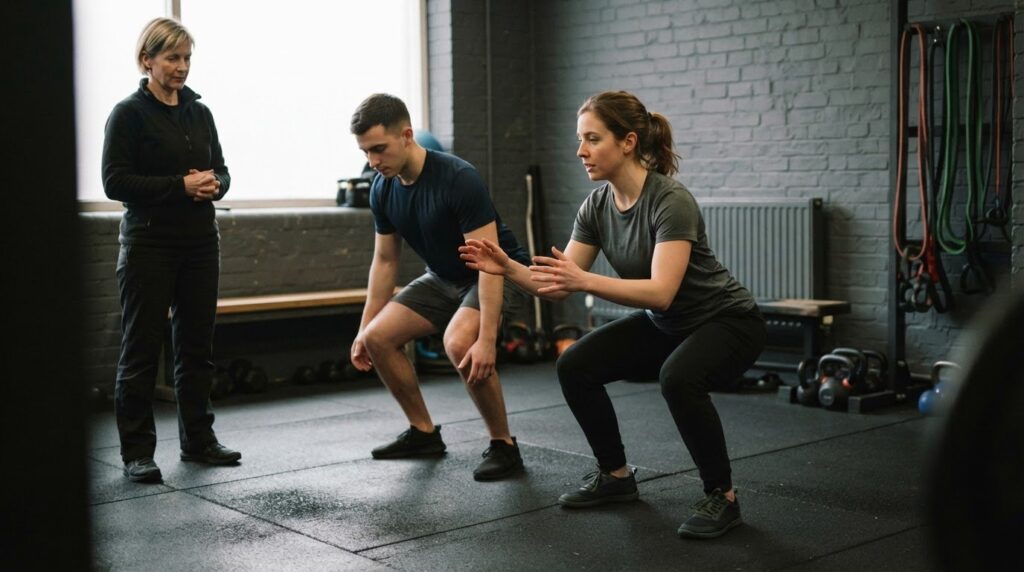
Why How You Dress Matters as a Personal Trainer Your clothing makes an impression before you speak. It can affect how confidently you demonstrate movement and signal the standard you bring to a session. Clothes that restrict you, feel uncomfortable or look neglected can undermine the professional image you want to build.
Training gear needs to be practical, but practical doesn’t have to mean uncomfortable or overly casual. Choose clothing that lets you move freely, suits your setting and stays presentable throughout the day. That balance can help clients feel at ease while allowing you to focus on coaching.
This article explains how a personal trainer outfit can build trust, support movement, express your professional image and work across different sessions. You’ll find practical guidance on what to wear, what to avoid and how to build a wardrobe that serves your work.
Table of Contents
1. Why Does Your Personal Trainer Outfit Matter?
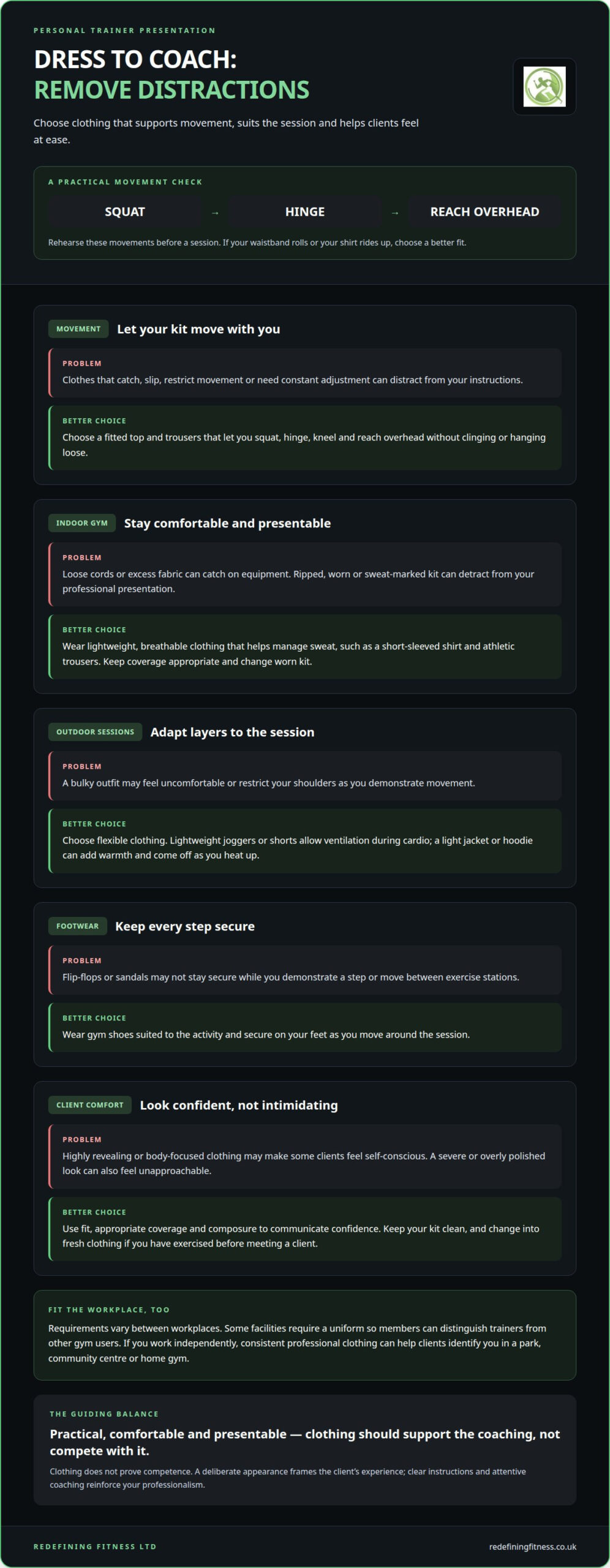
Your outfit is part of the coaching environment, not decoration. Why how you dress matters as a personal trainer comes down to practical professionalism: a clean, well-fitting shirt and trousers that let you demonstrate a squat or reach overhead show that you’re ready to coach. Clients notice whether you look prepared, while clothing that catches, slips or restricts movement can distract from your instructions. Aim for an image that feels capable, approachable and suited to fitness.
In an indoor gym, choose lightweight, breathable clothing that helps manage sweat. A short-sleeved shirt and athletic trousers, for example, can keep you comfortable as you demonstrate exercises. Avoid loose cords or fabric that could catch in machines. Keep coverage appropriate, and change ripped, worn or sweat-marked kit so it doesn’t detract from your professional presentation.
Outdoor sessions call for flexible clothing and an adjustable layer. Lightweight joggers or shorts allow ventilation during cardio, while a light jacket can add warmth before you start moving. In a client’s home gym, choose clothes that let you kneel, demonstrate a lunge and move safely around equipment without excess fabric trailing.
For training sessions in the UK, prioritise clothing that allows full movement, provides appropriate coverage and has no features likely to catch on equipment. Wear gym shoes suited to the activity, not flip-flops or sandals. Your footwear should stay secure while you demonstrate a step or move between exercise stations.
Do UK gyms have dress codes or uniform requirements for personal trainers? Requirements vary between workplaces, from large gyms to smaller fitness centres and therapy clinics. Some facilities require staff to wear a uniform so members can distinguish trainers from other gym users. If you work independently, consistent professional clothing can help clients identify you in a park, community centre or home gym.
What fabrics and features work well for personal trainer clothes? Choose lightweight, breathable fabrics that help manage sweat, with a fit that allows movement without clinging or hanging loose. A shirt that stays in place during a floor demonstration is more practical than one chosen only for appearance. Some fitness clothing combines different fabrics to balance their properties.
For a cold gym or an early outdoor session, choose a layer rather than a bulky outfit. A hoodie or zip-up can provide warmth and come off as you heat up. Pick a lightweight option that doesn’t restrict your shoulders or become uncomfortable during demonstrations. Adapt your layers through the day while keeping your presentation consistent.
This is why how you dress matters as a personal trainer: your shirts, trousers and footwear should suit the session and help clients feel comfortable working with you. When your clothes fit well, stay presentable and support the movements you coach, your professional image feels deliberate rather than performative.
2. Professional Presentation and Client Trust
Clients form impressions before your first exercise demonstration. A neat appearance, clean kit and calm manner can make you look prepared to coach; a creased, visibly worn shirt may suggest the opposite. Clothing doesn’t prove competence, but it frames how clients experience your professionalism. Make the first impression deliberate, then reinforce it through clear instructions and attentive coaching.
Grooming is part of professional preparation. Arrive in clean clothing, with tidy hair and footwear ready for the session. If you’ve exercised before meeting a client, change into fresh kit rather than wearing clothes from your previous workout. A clean shirt and fresh towel show consideration for the shared training space.
Your appearance should help clients feel at ease, not judged. Highly revealing or body-focused clothing may lead some clients to compare their appearance with yours, which could make a beginner less comfortable asking for help. Choose a look that communicates confidence through fit, coverage and composure, rather than drawing attention through exposure.
Fit matters because it shows attention to detail. Baggy trousers can obscure your demonstrations, while tight or ill-fitting garments may distract during a consultation. Choose a comfortable, considered outfit that lets clients focus on your coaching cues. A well-fitted top, for example, keeps your posture visible when you demonstrate a hinge or explain shoulder position.
Confidence doesn’t mean intimidation. A highly polished or severe look can feel unapproachable to someone entering a gym for the first time. Balance authority with warmth: make eye contact, introduce yourself clearly and explain the session before asking a client to move. A simple, professional outfit supports a welcome; it shouldn’t become a barrier to conversation.
If your facility supplies a uniform, keep it clean and ready for work. Its logo may identify your role, but your presentation still shapes the client’s experience. Check for visible wear before each shift and replace damaged branded clothing when needed. If you work independently, consistent colours or a recognisable shirt can help clients identify you in a community centre or park.
Build presentation into your working routine. Before leaving, check that your clothing is clean, comfortable and suitable for the session. Then consider the client’s perspective: does your appearance feel professional without making them self-conscious? This standard applies to consultations, first-time gym visits and demanding exercise sessions. Your presentation should earn trust, not create avoidable distractions.
3. Comfortable, Non-Obstructive Sportswear
Comfort isn’t a luxury when you’re coaching movement. It lets you demonstrate clearly, change position and stay focused on a client’s technique. Choose a fitted top and trousers that let you squat, hinge and reach overhead without adjusting your clothes. A practical test: rehearse those movements before the session. If a waistband rolls or a shirt rides up, choose a better fit.
You can look professional and feel comfortable in sportswear that fits well and suits the activity. Leggings, capris or sweatpants can all work if they aren’t excessively loose and allow you to move freely. Trousers should stay in place as you kneel beside a client or demonstrate a lunge. A clean, well-fitting outfit looks considered without sacrificing function.
Don’t let excess fabric interfere with coaching. Loose hems, dangling cords or open layers can catch on equipment or distract during demonstrations. Choose garments that sit securely, especially during machine-based exercises. A long, loose drawstring near a moving cable is a poor choice; a secure waistband lets you keep your attention on the client.
Match your footwear to the session, not to a general idea of gym style. For high-impact work such as running, lightweight supportive trainers with adequate cushioning are recommended. Strength training calls for a different feel: a stable shoe with a flat base and minimal arch support. Choose with purpose, as running shoes and strength-training shoes serve different demands.
For women, a sports bra should provide support while allowing comfortable breathing and movement. Test it with an overhead reach, a deep breath and a gentle bounce before coaching in it. Choose shirts and layers that provide appropriate coverage as you bend or stretch. These checks help you demonstrate without adjusting your clothing or distracting clients.
Apply the same practical thinking to accessories. Avoid anything that swings, trails or could catch while you coach near exercise machines. A loose scarf or hanging drawstring has no place near moving equipment. Keep useful items, such as a towel or drinking bottle, within easy reach but outside the area where you demonstrate or guide a client.
Before each session, test your outfit by reaching overhead, squatting, lunging and kneeling. Notice whether seams rub, fabric shifts or a layer restricts your shoulders. Change anything that doesn’t pass the test. This quick check helps ensure your clothes look professional and work through warm-ups, demonstrations and floor exercises.
4. Tailoring a Personal Image to Inspire Client Confidence
Your personal image should match the coaching experience you want clients to have. A trainer leading a calm mobility session may dress differently from someone coaching energetic circuits. The aim isn’t to dress as a character, but to choose clothing that suits your work, setting and clients. That’s why how you dress matters as a personal trainer: your presentation should fit the experience you create.
Start with the client’s point of view. Someone new to exercise at a community centre may feel unsure before the session begins. Recognisable sportswear and a relaxed manner can make it easier to identify you as the trainer. In a private home gym, a neat outfit suited to the setting can feel professional without appearing overly formal.
Let your coaching style shape the details. For kettlebell exercises, choose clothing that lets clients see your posture and follow the movement. For indoor cycling, practical sportswear suits the active environment. Your outfit should support the work you do, not suggest a different role.
Consistency helps clients recognise you. Choose a small set of colours or a repeatable style for consultations, gym sessions and outdoor coaching. A consistent shirt style, for example, can help clients spot you in a busy fitness centre. Keep the look flexible enough for movement rather than turning it into a rigid uniform.
Confidence comes from alignment, not imitation. If you prefer understated clothing, you don’t need to force a loud look to appear assertive. Bold colours can also feel authentic when they suit your personality and the setting. Choose clothes you can coach in naturally, so your attention stays on the client.
Consider comfort and accessibility when shaping your image. A client who feels self-conscious may find an approachable appearance more reassuring than an intimidating or overly revealing one. Covered, practical sportswear can keep attention on movement and coaching cues. You can still express your personality without making the client feel examined.
Use a simple decision process when choosing an outfit: identify the session, consider the client and setting, then pick clothing that supports the coaching task. A park workout may call for layers and practical footwear, while a consultation may suit a performance polo and athletic trousers. Understanding why how you dress matters as a personal trainer helps you choose with purpose and keep the client’s experience at the centre.
5. A Working Personal Trainer Wardrobe
Build a wardrobe around the work, not an idealised fitness image. A practical starting point is 2 to 3 branded pieces, then expand as your training volume grows. Choose kit you’d be happy to recommend to a client: comfortable, fit for exercise and presentable across a working day. Attire earns its place by doing a job.
A useful rotation can include 3 to 5 branded performance tees, 2 polo shirts for consultations, and 3 to 4 pairs of athletic shorts or training trousers. That gives you options for active coaching and less physical conversations without dressing as though every appointment is identical. Choose shirts that suit your setting and remain comfortable through repeated demonstrations.
Keep branding clear, not cluttered. Your name and a simple description such as personal trainer or fitness coach can help clients identify you in a busy facility or public space. If you work independently in a park or community centre, a consistent shirt can distinguish you from people exercising nearby. Replace branded clothing when visible wear makes the lettering or fabric look tired.
Plan for different tasks. A performance polo with athletic trousers can suit a consultation, while a training tee and shorts work for an active session. For outdoor work or a cold gym, a lightweight layer adds flexibility. Choose a hoodie or zip-up that’s easy to remove once movement warms you up.
Give footwear its own place in your wardrobe plan. Choose supportive gym shoes suited to the workout, rather than flip-flops or sandals. A stable, flat-based shoe suits strength work, while running calls for lightweight supportive trainers with adequate cushioning. One pair may not suit every session equally well, so let the activity guide your choice.
How much should a personal trainer budget for work clothes and shoes in the UK? There’s no single budget that suits every trainer: the total depends on what you already own, how often you train, how quickly your kit wears and the footwear your sessions require. Start with serviceable essentials, then replace worn items and add pieces that meet a genuine work need.
Protect the investment with a simple routine: keep training clothes clean, check seams and branding, and change into fresh kit after exercising before a client session. A wardrobe that stays clean and intact supports a consistent professional image without demanding a large collection. If you’re ready to build coaching skills alongside your professional standards, explore personal training qualifications.
Redefining Fitness: Level 2 & 3 Personal Training Course
Redefining Fitness offers a Level 2 & 3 Personal Training Course to help you build the knowledge and practical foundations for a career in personal training. The qualifications are delivered online and in person, with face-to-face workshops covering specialist areas including kettlebells, circuits and indoor cycling.
Your professional image matters, but clothes alone can’t replace sound coaching knowledge. Use your learning to develop the confidence to demonstrate exercises clearly, communicate with clients and make considered choices throughout your working day. If you’re ready to strengthen your foundations and take the next step towards becoming a personal trainer, contact Redefining Fitness to discuss the course.
Make Your Professional Standards Visible
Make your professional standards consistent, from preparation to coaching. Treat each detail of your work as a deliberate choice that can support confidence. Keep refining your judgement, stay curious about your craft and let your actions, not appearance alone, show clients what they can expect from you.
Are you the fitness industry’s next best secret? If you’re ready to develop your skills and build a considered professional identity, take that ambition seriously. Explore the Redefining Fitness Ltd prospectus and start shaping the coach you want to become.
Frequently Asked Questions
Why Does Your Personal Trainer Outfit Matter?
Your outfit helps clients recognise your role and sets expectations before coaching begins. A consistent, work-ready appearance can make an unfamiliar setting feel more organised, especially when you meet someone at a busy London leisure centre. It can also help you shift from everyday tasks into a focused session. Treat clothing as part of preparation, alongside planning exercises and welcoming the client.
What Should a Personal Trainer Wear During Training Sessions?
Wear exercise clothing that suits the movements you’ll coach and lets you demonstrate without repeated adjustments. If your session includes floor exercises, for example, check that your top stays in place when you bend and reach. Choose a fit that lets clients see the positions you demonstrate while keeping your presentation professional. Bring a clean change of kit if you’ll be travelling from another activity before coaching.
How Does a Personal Trainer’s Clothing Affect Client Trust and First Impressions?
Clothing can shape a client’s first impression of your preparation, but it can’t establish coaching ability by itself. A tidy outfit suited to the setting may help a new client feel they’re in a purposeful session. By contrast, distracting clothing or an appearance that makes someone self-conscious can create distance. Pair a considered look with a clear introduction, attentive listening and explanations that respect the client’s experience.
What Should a Personal Trainer Wear for Different Types of Training Sessions?
Choose clothing with the session’s movements in mind. For circuits, wear kit that allows quick changes between standing and floor exercises. For kettlebell coaching, make sure your clothing doesn’t obscure the positions you demonstrate. Indoor cycling calls for exercise wear suited to repeated movement on the bike. Whatever the format, consider what clients need to see and how your clothing behaves throughout the activity.
What Clothing Is Appropriate for Personal Trainers in UK Gyms and Fitness Studios?
Appropriate clothing depends on the facility: expectations can differ between a large gym, a smaller fitness centre and a studio. Some workplaces ask staff to wear a shared uniform, while independent trainers may choose consistent clothing that identifies their role. Keep your outfit suitable for exercise and the setting. If your facility provides a uniform, wear it neatly and maintain a professional appearance.
How Should Personal Trainers Dress When Working With Clients Outdoors in the UK?
For outdoor coaching, dress for the activity and conditions at the session location. In a London park, an adjustable layer can keep you comfortable before movement begins and come off as the session progresses. Choose trousers or shorts that allow the planned exercises, and footwear suited to the surface. Keep your appearance recognisable and professional, even in an informal setting.
Training to Failure & Muscle Growth: Complete PT Guide
Training to Failure & Muscle Growth: Complete PT Guide Training to failure isn’t a requirement for muscle growth. The real question, what…
What Is RPE in Training? How to Use It Effectively
What Is RPE in Training? How to Use It Effectively Effort isn’t a feeling to ignore; it’s information you can use. To understand what RPE is in…
