
How Does Personal Trainer Insurance Work? UK Guide Insurance isn’t a box-ticking exercise; it’s protection against claims connected with your work. Public liability, professional indemnity and employers’ liability address different risks, and the right cover depends on your role and activities.
You’re right to want more than a policy name and a price. This guide explains why personal trainer insurance matters, what employers’ liability covers, how premiums and payment options work, and what to consider when choosing cover. Focus on the details that match your work, not just the headline limit.
Table of Contents
Why Do I Need Insurance for My Personal Training Business?
In the UK, personal trainers commonly consider public liability, professional indemnity and personal accident cover. Understanding how personal trainer insurance works means matching each policy to the risks, locations and activities involved in your work.
Professional Indemnity Protection
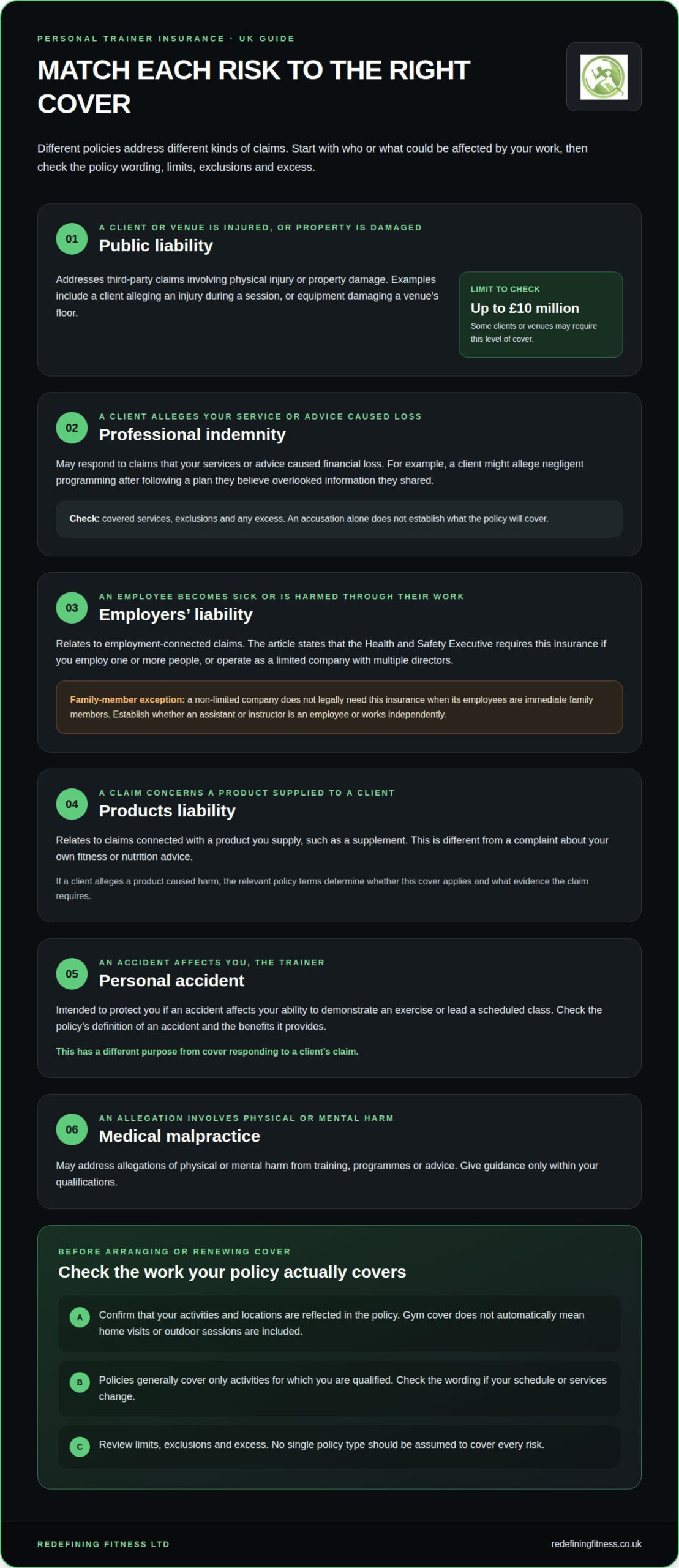
Professional indemnity cover may respond to claims that your services or advice caused financial loss. For example, a client might allege negligent programming after following a plan they believe overlooked information they shared. Malpractice allegations may involve advice outside your qualifications or competence. Read the policy wording for covered services, exclusions and any excess. Understanding how personal trainer insurance works also means recognising that an accusation alone does not establish what the policy will cover.
Public Liability for Injury and Damage
Public liability cover addresses claims involving physical injury or property damage to a third party. A client might allege they were injured during a training session, or equipment could damage a venue’s floor. Some clients or venues may require up to £10 million of public liability cover. Check that the limit fits the work you accept, including sessions at a gym or sports centre.
Personal Accident Cover
Personal accident cover is intended to protect you if an accident affects you, rather than responding to a client’s claim against your business. An injury could prevent you from demonstrating an exercise or leading a scheduled class. Check the policy’s definition of an accident and the benefits it provides. This cover has a different purpose from public liability and professional indemnity, so don’t assume one replaces the others.
Cover Across Training Locations
Cover for work in gyms, clients’ homes or outdoors depends on the policy terms. Don’t assume insurance for gym sessions automatically extends to home visits or outdoor work. Self-employed fitness contractors need cover for training clients at home, at work or outdoors. Policies generally cover only activities for which the trainer is qualified, so make sure each activity and location is reflected in the policy details.
For example, a trainer who coaches in a gym and runs outdoor sessions needs a policy that addresses both settings. Keep your description of the work accurate when arranging or renewing cover. If your schedule changes, such as when you add home visits, compare the new activity with the policy wording before delivering those sessions.
Employers’ Liability Insurance
Employers’ liability, public liability and products liability address different risks in a fitness business. The distinction matters: a claim involving an employee is not the same as a client’s injury or a problem with a product.
Employers’ Liability Requirements
The Health and Safety Executive states that personal trainers who employ one or more people, or operate as a limited company with multiple directors, are legally required to have employers’ liability insurance. This cover may protect you if an employee becomes sick or is harmed through actions connected with their employment. It applies to employment-related claims, not simply because someone attends a fitness session.
A non-limited company does not legally need this insurance when its employees are immediate family members. If you hire an assistant or another instructor, establish whether they are employees or work independently before deciding which cover applies. Employment arrangements shape the requirement, so don’t treat every person supporting your business as having the same status.
Public Liability Insurance
Public liability insurance concerns claims from third parties, including clients and venues. For example, a client could seek compensation after an injury connected with a session, or a venue could claim for damage to its property. Public liability is separate from employers’ liability because it addresses harm or damage involving people outside your workforce.
When reviewing a policy, identify who could bring a claim and what it relates to. A client’s allegation about a training service or advice may involve professional indemnity, while physical injury or property damage may involve public liability. The policy wording, exclusions and excess determine the exact response.
Products Liability and Nutrition Advice
Products liability relates to claims connected with a product supplied to a client, such as a supplement. That differs from a complaint about your own fitness or nutrition advice. If a client alleges that a product caused harm, the relevant policy terms determine whether products liability applies and what evidence the claim requires.
Advice can also create professional risks. A client might allege that nutrition guidance caused harm, or that a wellbeing recommendation was negligent. Professional indemnity may address claims that services or advice caused financial loss; medical malpractice cover may address allegations of physical or mental harm from training, programmes or advice. Give guidance only within your qualifications.
Before arranging cover, list your staff roles, client-facing activities and any products you supply. Match each risk to the relevant liability insurance, then read its limits, exclusions and excess. This helps you see whether a policy addresses employees, third parties, products and advice without assuming one type of cover does every job.
Insurance Costs and Payment Options
Treat that range as a guide, not a fixed price for every business. Coaching adults in a studio presents a different risk profile from working with children or running varied sessions.
Your premium may depend on your claims history, business size and the amount of cover needed. A previous claim involving an injury can affect the insurer’s assessment, as can the number of clients and the nature of your sessions. Specialist cover for a wider range of activities may also affect the cost.
The insurer’s quote sets out the payment options. If payment by instalments is offered, compare the total payable with the cost of paying annually, rather than focusing only on each instalment. Read the payment schedule for due dates and any charges so you know what you’ll pay over the policy period.
Don’t judge a premium by its headline figure alone. Compare what the liability cover includes, its limits, exclusions and excess, then consider whether it addresses the work you actually do. A policy that excludes a particular activity won’t meet that need, even if its premium looks lower.
For example, a trainer working outdoors and in clients’ homes should account for both activities when assessing cover. A business supplying products may also need to consider product-related risks. The policy’s scope, your claims history and business size all influence the insurer’s assessment, so these details matter when comparing costs.
Build your budget around the cover you need, not just the cheapest payment option. List your activities, client groups and locations, then use those details when requesting a quote. Check whether the quoted premium reflects your required liability cover and the relevant exclusions. This gives you a clearer basis for comparing payment terms.
Personal trainers working with children will usually pay a higher insurance premium. If this describes your work, state the client group clearly when seeking a quote rather than relying on a price based on a different kind of coaching. Ask the insurer to confirm that the proposed policy reflects sessions involving children and covers the activities you plan to provide. Compare the premium with the policy scope, limits, exclusions and excess. A higher cost does not by itself show that cover is suitable, and a lower cost does not establish that it includes your work. Review the payment schedule against the total payable, too, so you can compare overall cost and cover. If your client mix or sessions change, revisit whether the policy still matches your work. Clear details about your services help you assess quotes on a like-for-like basis and avoid choosing solely by headline price.
Insurance for Employed and Self-Employed Trainers
Your employment status affects who arranges insurance and which work the policy needs to cover. Distinguish an employee’s role from a contractor’s responsibilities before relying on any insurance.
Cover for Employed Trainers
An employed personal trainer may be covered by their employer’s insurance for sessions delivered as part of their job. The employer’s policy determines which activities, locations and claims it covers. For example, a trainer leading exercise classes should establish whether their role falls within the policy’s scope. Ask the employer how public liability and professional indemnity apply to your work, rather than assuming every instructor has identical protection.
Cover for Self-Employed Contractors
Self-employed fitness contractors who pay to access gym facilities are responsible for arranging their own insurance. That figure addresses a common venue requirement, but the policy must also reflect the contractor’s activities. A trainer offering exercise sessions in several settings needs cover suited to that work, not just gym access.
Working independently means taking responsibility for claims arising from your own business activities. If you train clients at home, at work or outdoors, arrange insurance that covers those locations. Don’t treat a gym’s policy as automatic protection for a contractor who pays to use its facilities. Identify who employs you, who controls the session and whose policy applies.
Before accepting a contract, clarify the arrangement in writing. Record whether you’re employed or self-employed, which sessions you deliver and where they take place. Then compare those details with the policy’s covered activities and exclusions. For instance, a contractor adding outdoor sessions needs policy wording that includes that work, rather than relying on cover intended for gym-based exercise.
Professional indemnity also matters for independent trainers who provide exercise programmes or advice. Public liability and professional indemnity respond to different types of claims, so don’t assume one replaces the other. If your work changes, such as when you take on new clients or add another training activity, update the policy details to match your actual role. Clear records help establish which work the insurance was arranged to cover.
Employment status can change over time. A trainer might move from a gym-employed role to renting space as a contractor, or combine employed sessions with freelance work. Treat each arrangement separately: an employer’s insurance may apply to employed duties, while self-employed sessions require the trainer’s own cover. Map each session to the relevant role and policy before delivering it.
Finding a Personal Trainer Insurance Provider
Choose cover by matching the policy to your work, not by chasing the largest headline limit. Start with your activities, client groups and locations, such as gym sessions, studio classes or outdoor coaching. Use those details to compare policy wording with your actual work, then review general business insurance guidance alongside the policy itself.
Next, compare liability limits with each venue or client requirement. Check whether public liability and professional indemnity insurance are included. The Financial Conduct Authority’s insurance information and its Financial Services Register can help you understand the insurance market and firms’ regulatory status.
Read the exclusions before comparing premiums. A policy may treat gym sessions differently from outdoor work, or cover only activities for which you’re qualified. If you coach at a studio and in clients’ homes, look for wording that includes both settings. The Insurance Act 2015 provides a statutory reference point for business insurance contracts; the policy wording still sets out your cover.
Then examine the excess and claims process. The excess is the amount you contribute towards an eligible claim, so compare it alongside the policy limit. Check what evidence the insurer requires and how claims are reported. If you need to understand complaint routes, the Financial Ombudsman’s insurance information explains its role.
Separate legal duties from venue rules. According to the Health and Safety Executive, trainers who employ one or more people or operate as a limited company with multiple directors must have employers’ liability insurance. The Employers’ Liability (Compulsory Insurance) Act 1969 is the legislation behind that requirement. A gym may also set its own public liability requirement.
Use a comparison record for each provider:
- Record public liability and professional indemnity limits.
- Note exclusions, excesses and covered training locations.
- List activities and client groups included in the policy.
- Write down how claims are reported and what documents are needed.
Finally, compare the full terms against your work, not just a headline figure. Keep the policy documents with your business records, alongside the company records guidance. For additional insurance context, consult the British Insurance Brokers’ Association and the Health and Safety Executive’s employers’ liability guide.
Redefining Fitness: Level 2 & 3 Personal Training Course
Redefining Fitness offers a Level 2 & 3 Personal Training Course for people building the knowledge and qualifications to work in fitness. Insurance generally covers only activities for which a trainer is qualified, so professional development and suitable cover belong in the same career plan. A qualification doesn’t replace insurance, but it helps define the work you’re trained to deliver. For context on how these qualifications shape different career paths, see this guide to gym instructors vs personal trainers.
Redefining Fitness delivers its courses online and in person, combining videos, PowerPoints and quizzes with face-to-face practical workshops. This blended format gives you different ways to engage with the material while developing practical skills. If you’re considering a move into personal training, think about the demands of the role as well as the qualification itself: safe coaching requires sound judgement, clear communication and a strong grasp of your responsibilities.
After your core training, specialist learning can help you build skills for particular class formats. Redefining Fitness offers courses in Kettlebells, Circuits and Indoor Cycling. These options let you develop your interests and broaden the kinds of fitness sessions you may be able to deliver, subject to your qualifications and the terms of any insurance policy you arrange.
Take a careful approach. Match the activities you want to teach with the qualifications you hold, then make sure your insurance reflects those activities. For example, if you plan to coach circuits, don’t assume a policy covers that work simply because it covers personal training generally. Your training and the policy wording both matter. Build your professional knowledge before expanding the services you offer.
Redefining Fitness combines inclusive teaching with support for neurodivergent learners. Its course content is designed to be accessible for neurodivergent learners and non-native English speakers, with different learning needs in mind. Strong professional standards shouldn’t depend on fitting one mould. The aim is to build capability and understanding you can carry into your work, while taking responsibility for your scope of practice.
Are you the fitness industry’s next best secret? If you’re ready to explore your next step in personal training, contact Redefining Fitness.
Frequently Asked Questions
Do I Need a First Aid Qualification or Certificate to Take Out a Policy?
A first-aid certificate and insurance cover serve different purposes. Your certificate records first-aid training, while the policy defines the work and claims it covers. Holding a certificate doesn’t automatically extend cover to a new activity or location. Before starting sessions, make sure your policy reflects your qualifications, the training you deliver and the settings where you work. Check these details before you begin.
How Does This Affect Fitness Instructors Working in a Gym or Health Club Environment?
Your employment status and duties affect which insurance applies in a gym or health club. An employed instructor may be covered by the employer’s policy for work within their role. A self-employed trainer who pays to use gym facilities arranges their own cover. In a London studio, distinguish employed duties from separate freelance sessions. Check the relevant policy terms.
Am I Insured When Giving Advice to My Clients?
Advice is covered only within your policy’s scope and your qualifications. Professional indemnity insurance can respond to claims that your services or advice caused financial loss. Allegations of physical or mental harm from training, programmes or advice may involve medical malpractice cover. A nutrition suggestion can raise different issues from an exercise cue, so give advice within your competence. Check your policy for details.
Are There Any Exclusions?
Yes. Policy exclusions can limit cover for particular activities, locations or circumstances. Cover for gym-based coaching doesn’t automatically include outdoor sessions. Policies generally cover only activities for which you’re qualified, and an excess may apply to a claim. Read the exclusions alongside the limits, and make sure the activities you deliver fit the policy terms. Check this before taking on new work.
Do Freelance or Mobile PTs Need Insurance?
Self-employed trainers are responsible for arranging cover for their own work, including sessions at home, at work or outdoors. Paying to use a gym doesn’t make you an employee or automatically place freelance sessions under its policy. A mobile trainer visiting clients’ homes should ensure the policy covers that setting and the activities delivered there, not only regular gym sessions. Check the terms before each type of work.
What Does Personal Trainer Public Liability Insurance Cover in the UK?
Public liability insurance may cover claims involving physical injury to a third party or damage to their property. A client could claim after being hurt during an exercise session, or a venue could claim for property damage linked to your work. The policy terms determine what it covers, and an excess may apply. It doesn’t replace cover for advice-related claims. Check the wording for the relevant limits.
What Does Personal Trainer Professional Indemnity Insurance Cover?
Professional indemnity insurance may cover claims that your service or advice caused a client financial loss. For example, a client could allege that a programme or recommendation led to financial consequences. This differs from public liability, which concerns third-party injury or property damage. Check that the insured work matches your qualifications and the advice you give. Review the policy terms before providing advice.