
Muscle growth is earned over months, not judged after a handful of sessions. The answer to how long it takes to build muscle is that early measurable progress can emerge after 6-8 weeks, noticeable physique changes often take 3-6 months, and substantial progress typically takes 6-12 months of consistent training.
If progress feels slower as you get older, that doesn’t mean you can’t build muscle. Age can affect how readily you gain muscle, but consistent strength training and sound nutrition still help you make progress. What matters most is what you repeat, not chasing a shortcut.
This guide explains how training habits, protein, hydration, overall nutrition, recovery and age shape your results. You’ll learn what to expect at different stages, why progress can stall and how to build a realistic approach that supports lasting strength and muscle.
Table of Contents
What Impedes Muscle Growth?
Muscle growth depends on repeated resistance exercise, enough food and protein, and recovery between workouts. Inconsistent training or too little sleep can slow visible progress, even when individual sessions feel demanding.
Several factors determine whether your training provides a useful stimulus: exercise frequency, the weights you lift, repetitions and sets, nutrition, recovery, age, genetics and medical history. Progress can stall when calories or protein are insufficient, training is inconsistent, stress remains high, alcohol intake is excessive or workouts leave too little time to recover. Long periods of inactivity outside the gym can also undermine your effort.
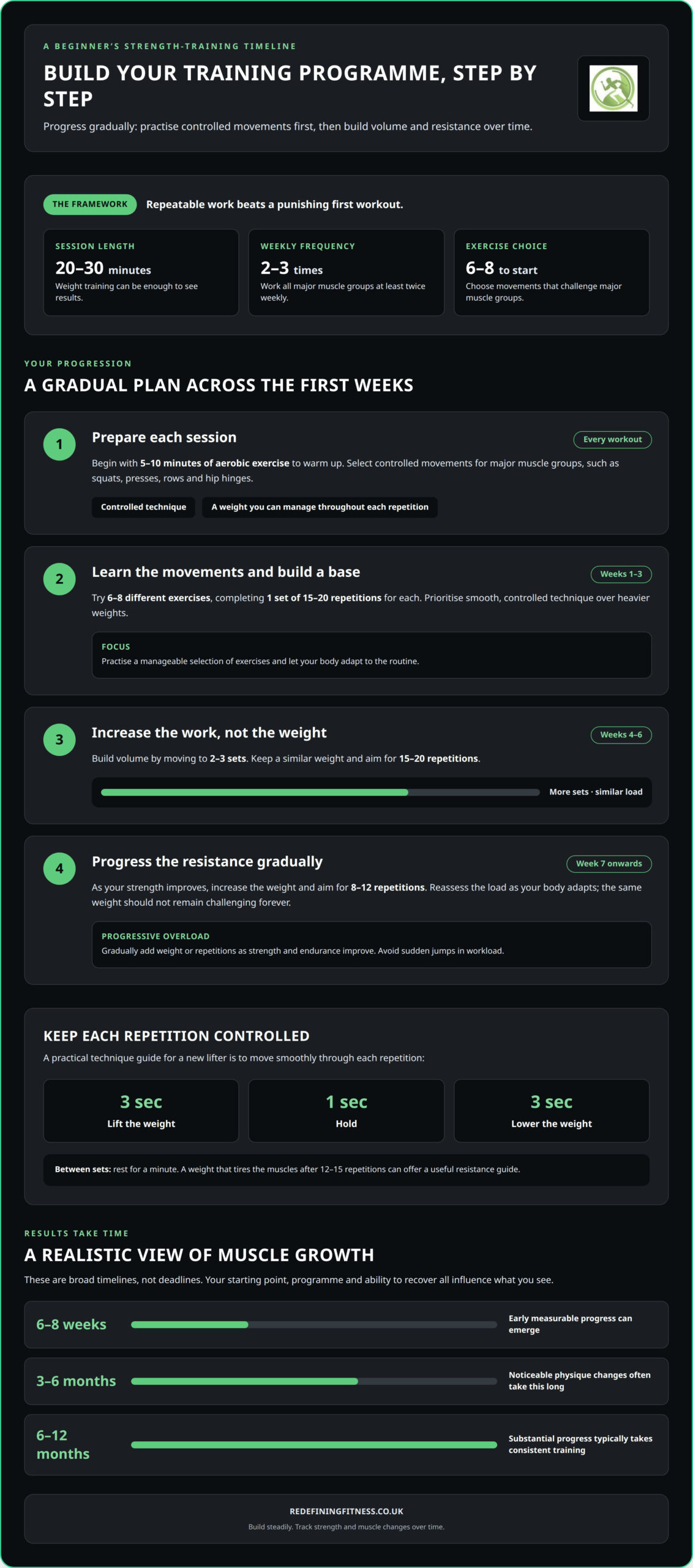
Set realistic expectations. Early measurable muscle growth typically appears after 6-8 weeks of training, while noticeable physique changes often take 3-6 months of consistent work. Substantial visible gains may take six months or more. These are broad timelines, not a deadline: your starting point, programme and ability to recover all influence what you see.
Men and women can both build muscle through resistance training, but individual progress varies. Commonly quoted monthly estimates for men and women can oversimplify the effects of training history, nutrition, genetics and age. Judge progress by changes in strength and muscle measurements, rather than assuming one monthly figure applies to everyone.
Protein Synthesis and Intake
Protein synthesis is the process of building proteins, and muscle growth requires it to exceed muscle protein breakdown. After exercise, muscle protein synthesis may remain elevated for up to a whole day, so repeated training and adequate nutrition matter beyond the workout itself.
The American Heart Association gives adults aged 18 years or older a recommended protein allowance of 0.8 g/kg per day. For men looking to build muscle, the National Strength and Conditioning Association recommends 1.2 to 2.0 g per kilogram of bodyweight. These figures show why both total intake and the training stimulus matter.
Recovery and Progress Tracking
Recovery gives your body time to repair and adapt after training. Aim for seven to nine hours of sleep each night to support tissue repair. Regularly cutting sleep short can work against consistent exercise.
Track progress in a workout log: record exercises, weights and repetitions, then compare your performance over time. Strength improvements may come before visible changes. A DEXA scan can measure lean muscle mass, offering another way to assess changes that may not be clear in the mirror.
Gradually starting a weight-training programme
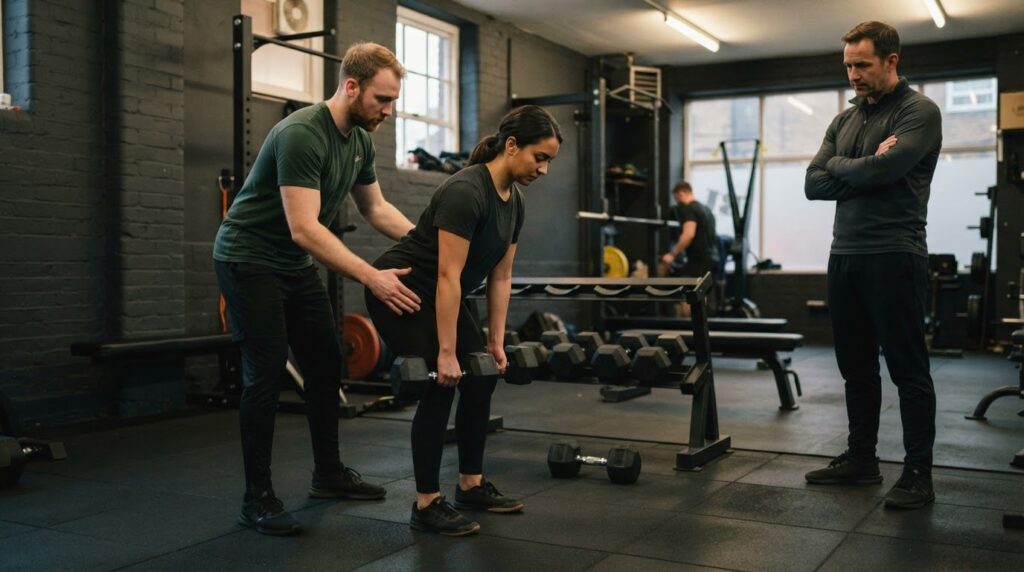
Build your training routine around controlled, repeatable work, not a punishing first workout. A beginner plan should challenge major muscle groups while leaving room to adapt.
What strength training exercises are best for building muscle? Choose movements that challenge major muscle groups, such as squats, presses, rows and hip hinges. Use a weight you can control throughout each repetition, then adjust it as your strength improves.
Start each session with five to ten minutes of aerobic exercise to warm up. For a beginner, a useful starting point is six to eight different exercises, with one set of 15-20 repetitions for each during weeks one to three. Prioritise controlled technique over heavier weight.
Overload, Frequency and Training Duration
Progressive overload means gradually increasing the weight lifted or repetitions performed as your strength and endurance improve. It gives your muscles a continuing challenge without demanding a dramatic jump in workload. Weight training for 20 to 30 minutes, two to three times a week, can be enough to see results. Work all major muscle groups at least twice during weekly workouts.
One beginner progression builds volume before load. During weeks four to six, increase to two or three sets while keeping a similar weight and aiming for 15-20 repetitions. From week seven onward, increase the weight and aim for 8-12 repetitions. Reassess the load as your body adapts; the same weight shouldn’t stay challenging forever.
Training at Different Experience Levels
Beginners benefit from practising a manageable selection of exercises and developing sound technique. Experienced lifters can draw on established movement skills to progress resistance and workload. The principle of muscle growth is the same; what differs is how much training stress you can handle, recover from and repeat with control.
For a new lifter, 8 to 15 repetitions can be a practical range for each set. Rest for a minute between sets, and move the weight smoothly: take about three seconds to lift, hold for one second, then lower it over another three seconds. A weight that tires the muscles after 12 to 15 repetitions offers a useful resistance guide.
Don’t force a rapid jump in weight or volume. Pushing too hard too quickly can cause injury and delay progress. Keep each repetition controlled, and increase resistance or repetitions progressively as the current workload becomes manageable. For structured learning on exercise programming, explore Level 2 and Level 3 personal training qualifications.
Protein, hydration and nutrition
Training creates the stimulus; food and fluids help your body respond. Build a practical eating routine around varied meals and protein-rich foods.
Do you need to eat in a calorie surplus to gain muscle? Don’t assume a large surplus is essential. Muscle-building results depend on adequate calories and protein alongside repeated resistance training, so avoid eating more than you need without a clear reason.
Nutrition and Protein for Muscle Growth
Nutrition supplies energy and building materials for repair after lifting. Protein provides amino acids, while carbohydrates and fats contribute to a balanced eating pattern. That balance matters because training alone cannot make up for consistently inadequate food intake. The National Strength and Conditioning Association offers a reference point for protein needs, but your food choices and training routine shape how you apply general guidance. Think about the meals you can sustain, not a perfect menu.
Choose familiar protein-rich foods, such as eggs, Greek yoghurt, chicken, fish, lentils or tofu. For example, lentils and grains make a substantial meal with a plant-based protein source. Variety helps you build a routine around foods you enjoy instead of relying on a single ingredient. Consider your whole day of eating, not just a post-workout snack.
Calorie Surplus and Muscle Gain
A calorie surplus means consuming more energy than your body uses. It can support weight gain, but it doesn’t direct that gain towards muscle by itself. Resistance training provides the stimulus, while adequate protein and recovery support adaptation. Extra food without a purposeful lifting routine may increase bodyweight without improving your training. Focus on how food intake and exercise work together, rather than treating a surplus as a magic switch.
Hydration supports exercise, but fluid needs vary by person, activity and conditions. Keep water available and drink around training according to thirst and the environment. A warm indoor cycling class may feel different from a strength session in a cool room. Drinking more isn’t a substitute for suitable meals, protein or recovery.
Make your plan workable. Choose foods you can prepare consistently, such as yoghurt or eggs at breakfast and beans or tofu at dinner. Pair that eating pattern with regular lifting, and give your body the resources to repair after workouts. Consistency beats an elaborate plan you can’t maintain.
Age and muscle-building progress
Age can make building muscle harder, but it doesn’t close the door. Age-related losses in muscle mass and strength can affect progress, while consistent strength training and nutrition can still bring improvement.
Your age is one part of the picture, not a verdict on your potential. Training history, genetics, nutrition, recovery, medical history and medications can all influence how your body responds. Two people of the same age can therefore make different progress with the same routine. Focus on the challenge your current training provides, then assess it against your own performance and recovery.
A 10-week resistance-training programme involving untrained college-aged men and women found similar elbow-flexor strength gains. That example shows that men and women in the programme improved similarly in that measure. It does not establish that every age group responds identically, or that strength gains always match changes in muscle size. Measure the outcome you care about, rather than treating one result as a universal timeline.
For older adults, consistency matters more than copying a younger lifter’s workload. A useful routine challenges major muscle groups and allows recovery between demanding sessions. Increase resistance or repetitions as your strength improves rather than making a sudden jump. If a movement feels uncomfortable or difficult to control, adjust the exercise or load. Aim for a repeatable training stimulus, not one exhausting workout.
Is it possible to build muscle while losing fat? Yes, muscle gain and fat loss can happen together, particularly when resistance training challenges your muscles and your nutrition supports repair. Track strength, body measurements and how your clothing fits, rather than relying on scale weight alone. For example, a steady lifting log can show improved performance even when bodyweight changes little.
Pay attention to medical history because some conditions and medications can affect training capacity or recovery. Age alone doesn’t have to dictate your routine; the challenge should suit your circumstances. If you have a health condition or take medication that affects exercise, discuss suitable activity with a qualified health professional. Then focus on movements you can perform consistently, progressing load and repetitions with control.
Keep the standard clear: repeat the work, fuel your training and record changes. A dated log of exercises, weights and repetitions helps distinguish real progress from day-to-day fluctuations. Compare entries across training blocks, not just individual sessions. Whether you’re new to lifting or returning after time away, muscle mass responds to a sustained stimulus. Age influences the process, but it doesn’t make effort irrelevant.
How much muscle can beginners gain per month?
There isn’t one monthly figure that fits every beginner. These estimates vary because training experience, consistency, nutrition, recovery and genetics all shape progress.
Use those figures as context, not a scorecard. They are estimates, not results you can demand from your body each month. Someone returning to lifting after a break may respond differently from someone who has never followed a structured routine. Training quality matters too: a consistent programme that challenges your muscles gives you a stronger basis for progress than irregular workouts.
Visible changes also follow their own timeline. People who stick to regular strength training may notice muscle gains in 6 to 10 weeks. After two to three months of consistent strength training and protein-focused nutrition, slight changes in muscle definition may appear. After four to six months of continued, challenging training, changes to frame and muscle composition may become obvious.
Don’t confuse scale weight with muscle gain. The number on the scales reflects total bodyweight, not a direct measure of muscle. For example, a beginner could become stronger without a dramatic change in bodyweight, while changes in food intake or hydration affect scale readings. Compare consistent measurements over time, and consider training performance alongside appearance.
For a clearer picture, record the weight you lift and your repetitions, then compare performance across training blocks. Take body measurements under similar conditions and note how your clothing fits. A DEXA scan can measure lean muscle mass, but it isn’t the only way to track change. Use more than one indicator instead of letting a single weigh-in determine whether your programme is working.
Keep the process grounded. A beginner’s first month can involve learning technique and building a repeatable routine, not simply chasing the largest possible gain. Regular resistance training, adequate calories and protein, and recovery support adaptation. If your lifts progress and measurements shift over time, you have more useful evidence than a monthly estimate alone.
Are you ready to turn your interest in muscle growth into deeper fitness knowledge? Explore personal training qualifications and strengthen your understanding of how effective training works.
Warm up with aerobic exercise for 5 to 10 minutes. Weeks 1-3: one set per exercise, 15-20 repetitions; Weeks 4-6: 2 or 3 sets, similar weight, 15-20 repetitions. Significant muscle-mass increases have been found with as much as 1.6g/kg of protein per day.
Redefining Fitness
Redefining Fitness Ltd is a natural next step if understanding muscle growth has sparked an interest in coaching others. Its Level 2 and Level 3 Personal Training Course is delivered online and in person, building knowledge for people developing a career in fitness.
Training principles become more useful when you understand how resistance, nutrition and recovery work together. Redefining Fitness Ltd offers specialist learning in areas including kettlebells, circuits and indoor cycling, alongside health-focused modules. Explore these courses to deepen your knowledge and support others through informed, inclusive teaching.
If you’re ready to take the next step, contact Redefining Fitness Ltd to discuss your training goals.
Make Your Next Move Count
Stop treating progress as a race against someone else’s timetable. A better question is how long it takes to build muscle when your training reflects your starting point, priorities and sustainable habits. A thoughtful plan gives you room to learn, adjust and keep moving forward when progress feels less visible.
If building your fitness expertise is your next challenge, turn that curiosity into purposeful action. Redefining Fitness Ltd can help you explore a path into the industry through its training and specialist course options. Are you the fitness industry’s next best secret? Explore the prospectus and consider where you want to go next.
You don’t need every answer before you begin. Bring your ambition, stay open to learning and build the skills to make a lasting difference.
Frequently Asked Questions
How Long Does It Take to Build Muscle?
Early measurable muscle growth can appear after 6-8 weeks of training, while noticeable physique changes often take 3-6 months. Substantial progress typically takes 6-12 months of consistent effort. How long it takes to build muscle depends on factors such as training consistency, nutrition, recovery, genetics and starting experience. Treat these timeframes as guideposts, not deadlines, and assess progress through performance and physical changes over time.
How do muscles grow?
Muscles grow when resistance training challenges them and the body repairs and rebuilds muscle tissue afterwards. Lifting provides the stimulus; recovery and adequate nutrition support the rebuilding process. For example, when a set of squats becomes manageable, gradually increasing repetitions or resistance can renew the challenge. Growth depends on repeating that cycle, not expecting one unusually demanding session to transform muscle size.
How is muscle mass increased?
Increase muscle mass through a consistent resistance-training routine that challenges major muscle groups, alongside adequate food, protein and recovery. A training log, for example, can show whether your repetitions or lifted weight are progressing across sessions. If performance remains unchanged, review whether the exercise provides enough challenge and whether your routine allows for recovery. Don’t judge muscle gain by scale weight alone, as it reflects overall bodyweight.
How long does it take to gain muscle?
Some measurable changes can develop before you see a clear difference in the mirror. Early measurable growth typically occurs after 6-8 weeks of training, while substantial progress often takes 6-12 months of consistent work. Your training history and routine influence the pace. A beginner learning movements may first notice better control or performance, while changes in muscle size take longer to assess reliably.
When can you expect to see muscle gains?
With regular strength training, noticeable muscle gains may emerge in 6 to 10 weeks. Slight changes in definition may become visible after two to three months of consistent training and protein-focused nutrition. Changes to your frame and muscle composition may become obvious after four to six months of continued, challenging work. Compare photographs or measurements taken under similar conditions, rather than judging progress from one day.
How long does it take to notice muscle growth?
Many people notice changes in performance before obvious changes in muscle size. After three to four weeks of training, you may find you can lift heavier weights, complete more repetitions or exercise longer. These improvements show your training capacity is changing, but they don’t necessarily mean visible muscle growth has already occurred. Keep separate notes on strength and appearance so you can track each kind of progress.
What factors affect how quickly you build muscle?
Training frequency, weights, repetitions, sets, diet, protein intake, recovery, genetics, age and medical history can all affect your progress. Inconsistent sessions, insufficient calories, poor sleep or inadequate recovery can undermine your effort. For instance, if your lifts repeatedly decline after adding more sessions, fatigue may be limiting your performance. Review your routine as a whole rather than blaming one workout or meal.
How many sets and reps should you do for muscle growth?
A general training guide is two to three sets of six to 12 repetitions, performed three times a week, with 60-second rests between sets. The right load should let you complete each repetition with control while making the final repetitions challenging. Reassess resistance as you adapt. Your exercise choice, experience and ability to recover matter, so treat the range as a starting framework rather than a rigid rule.
How Long Does It Take to Lose Body Fat? Realistic Guide
How Long Does It Take to Lose Body Fat? Realistic Guide Fat loss doesn’t follow a neat calendar. The National Health Service advises aiming to lose…
How Long Does It Take to Build Muscle? A Realistic Guide
Muscle growth is earned over months, not judged after a handful of sessions. The answer to how long it takes to build muscle is that early measurable…
