

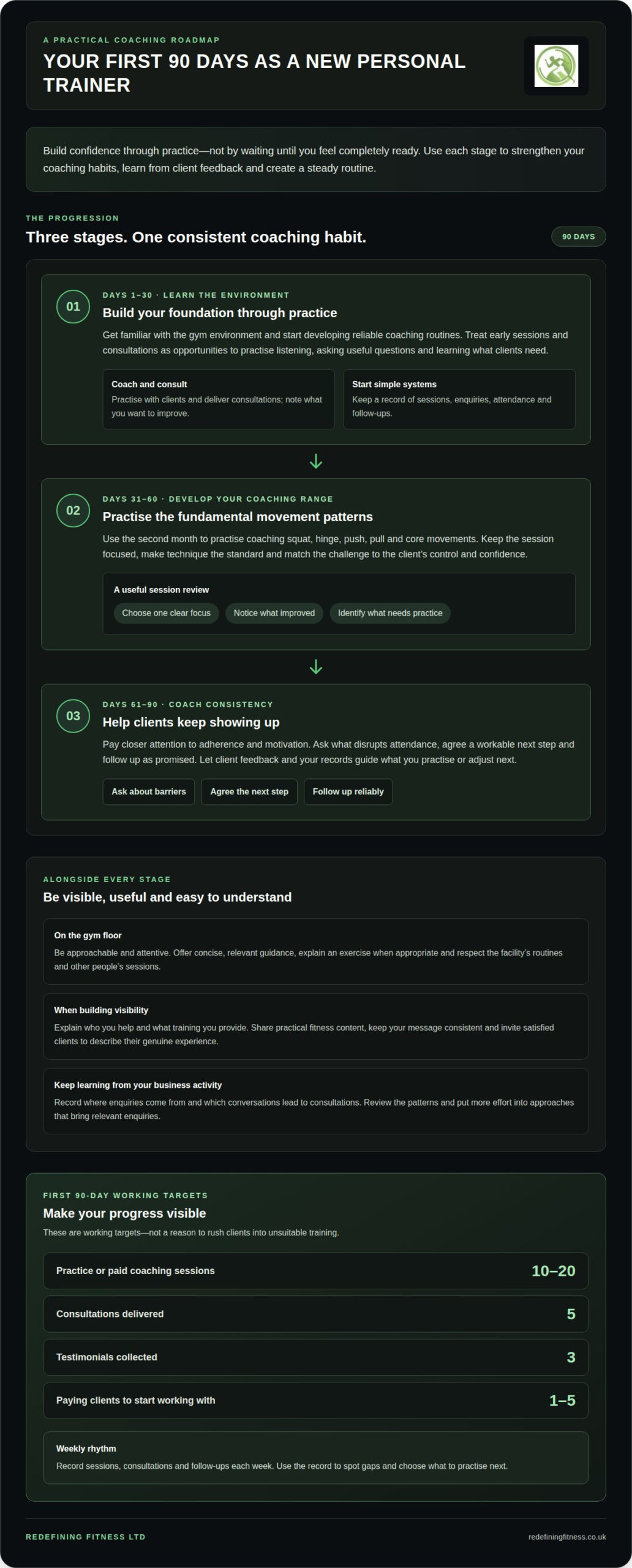
Your First 90 Days as a New Personal Trainer: Success Plan Your first 90 days as a new personal trainer should be about building confidence through practice, not waiting until you feel completely ready. Aim to complete 10 to 20 practice or paid coaching sessions, deliver five consultations, collect three testimonials and start working with one to five paying clients. Build simple systems as you go, so every session teaches you something useful.
Good coaching takes more than exercise knowledge. It depends on how you use that knowledge: listen closely, track changes and help each client stay engaged, with clear expectations from the start.
This plan shows you how to review progress, revisit goals and repeat an initial workout to see what has changed. It also covers communication and cancellation boundaries, with practical priorities for each stage of your first three months. These habits help you coach with purpose and build professional standards from day one.
Table of Contents
- Discussing progress, barriers, and questions over coffee
- First 90 Days for a Newly Qualified Personal Trainer
- Reviewing goals and choosing the next training plan
- Setting client communication and cancellation boundaries
- Repeating the initial workout at the 30-day check-in
- Redefining Fitness: Level 2 & 3 Personal Training Course
Discussing progress, barriers, and questions over coffee
Use a coffee check-in to listen, not to deliver a speech. Ask what feels easier, what remains difficult and what has changed outside training. A client may find climbing stairs easier but struggle to attend after work. Record both. Progress includes confidence, consistency and daily function, not only changes on the scale.
Turn the conversation into a personalised plan. Agree one priority, such as improving squat technique or building strength for everyday lifting, then explain how sessions will address it. The NHS recommends that adults in the UK aim for at least 150 minutes of moderate-intensity activity each week. The NHS also states that exercise can lower the risk of early death by up to 30%. Use these points as context, not pressure. A client’s programme must reflect their starting point, goals and relevant health information.
Make sound technique the standard before increasing the challenge. Observe how a client moves, give one clear cue, then reassess the same movement. If their back position changes during a hinge, reduce the load or range and practise the pattern again. Progress safely by matching the challenge to their control, confidence and recovery, rather than chasing heavier weights each session. If pain or health needs fall outside your role, stay within your scope and use an appropriate referral route.
A 13-week progressive strength programme needs a visible thread. Start with movements the client can perform well, then build through planned changes to load, repetitions, range or complexity. Log the exercise, the variation used, the client’s response and the next step. Revisit that record during check-ins. If progress stalls, ask about sleep, schedule, confidence and barriers before changing the whole programme. A plan is personalised only when the client’s feedback shapes it.
Review your business progress with the same discipline. After each consultation, note what helped clarify the client’s needs and where your questions missed useful detail. Track enquiries, consultations, attendance and follow-ups in one simple record. If several clients face the same scheduling problem, improve your process instead of blaming motivation. These patterns can sharpen your coaching and time management.
How do personal trainers register as self-employed and handle tax in the UK? Contact HMRC about registering as self-employed, keep records of income and allowable business costs, and organise tax administration around your circumstances. Set aside time to review your records regularly rather than leaving everything until year-end.
What are typical personal trainer prices in the UK in 2026? There is no single useful UK-wide rate to apply to every trainer. Fees depend on factors such as location, session format, duration, facilities and the service included, so set pricing around your actual costs and offer.
What are common mistakes and risks for personal trainers starting out? Common mistakes include giving everyone the same plan, increasing the load before technique is reliable, neglecting follow-ups and letting business administration slide. Clear records, coaching within your scope and consistent communication help you spot issues early.
First 90 Days for a Newly Qualified Personal Trainer
From day 30 onwards, shift from learning the gym environment to building consistent coaching habits. Your first 90 days as a new personal trainer need structure and accountability, so early practice develops into a clear, sustainable routine.
Intensity and Consistency Building
In the second month, practise coaching squat, hinge, push, pull and core movements. Choose a clear focus for each session, then review what improved and what needs more practice. In the third month, pay closer attention to adherence and motivation. Ask what disrupts attendance, agree on a workable next step and follow up as promised. This gives each session purpose and makes consistency something you coach, not simply expect.
Across the first 90 days, aim for 10 to 20 practice or paid coaching sessions, five consultations, three testimonials and one to five paying clients. Treat these as working targets, not reasons to rush clients into unsuitable training. Record sessions, consultations and follow-ups each week. That simple structure makes your effort visible, helps you spot gaps and gives you a useful basis for deciding what to practise next.
Client Growth Through Floor Presence
Being present on the gym floor lets people see your coaching before they consider working with you. Stay attentive to the space, offer concise guidance when appropriate and explain an exercise without taking over someone else’s session. If a member asks about a movement, demonstrate its key technique and invite a conversation about their goals. Calm, clear communication can make a stronger impression than trying to sell yourself to everyone nearby.
Build trust through reliable conduct: arrive prepared, respect the facility’s routines and keep conversations professional. Notice recurring questions, such as how to make a movement easier or what an exercise trains. Use these moments to sharpen your explanations and find useful topics for future conversations. Being present on the gym floor is not about hovering. It means being approachable, observant and ready to offer relevant help.
Visibility and Client Finding
Make your offer easy to understand. Explain who you help, what training you provide and what an interested person can do next. For example, describe how an initial conversation can clarify goals, availability and preferred training style. Share practical fitness content that demonstrates your judgement, such as a beginner-friendly movement adjustment and why you chose it. Clear examples help prospective clients understand your approach without inflated claims or jargon.
Use a consistent message across your professional profile, introductory conversations and follow-up notes. Invite satisfied clients to share a testimonial about their genuine experience. Record where each enquiry came from and which conversations led to consultations. Review the record regularly and invest more effort in approaches that bring relevant enquiries. This makes your visibility more purposeful and helps you build a client base through deliberate, trackable actions.
Confidence for Beginners
Confidence comes from preparation and practice, not pretending to know everything. Before each session, write down its objective, the movements you’ll coach and an alternative if a client struggles. Afterwards, note one decision that worked and one skill to practise. Use those notes to prepare for the next session. This turns experience into focused professional development and helps you respond purposefully when a client needs an adjustment.
Your first 90 days as a new personal trainer should also include building relevant qualifications and arranging appropriate insurance for your work and setting. A Level 2 and Level 3 personal training qualification provides a foundation for coaching; employers and facilities may have their own requirements. Keep your professional scope clear and communicate honestly. When a client’s needs exceed your competence, recognise that boundary and seek suitable support rather than guessing.
Reviewing goals and choosing the next training plan
Use client feedback and your work records to decide what comes next. A useful review connects the client’s priorities with a practical plan and your own professional development.
Target Client Selection
Choose a target client by matching their needs with your skills, interests and professional scope. For example, you might focus on beginners who want to build confidence with basic strength exercises, rather than claiming expertise across every fitness goal. Listen for recurring needs in consultations, then consider whether your experience prepares you to address them. A clear focus helps potential clients understand whom your coaching is designed to support.
Keep your focus flexible enough to account for individual differences. Two beginners may have different schedules, preferences and reasons for training, even if they share a broad goal. Ask what they want to do more comfortably in daily life, then shape your approach around their answer. If nutrition comes up, clarify what falls within your competence and keep your guidance within your role.
Milestone-Based Goal Setting
Set goals for 30, 60 and 90 days that measure actions you can influence. In the first 30 days, establish a dependable routine for consultations and administration. By day 60, review how you explain exercises and follow up with prospective clients. At day 90, assess your client work and business processes, then choose one priority for your next phase. Your milestones should give direction, not pressure you to control every outcome.
A practical 90-day target is 10 to 20 practice or paid coaching sessions, five consultations, three testimonials and one to five paying clients. Make each milestone specific and record progress regularly. If consultations are happening but follow-ups are being missed, focus on improving that process before adding more outreach. This approach keeps your goals useful and tied to actions you can take.
Choose the client’s next training plan by weighing their priorities against attendance, feedback and session performance. If a movement remains too demanding, adjust its variation before increasing the challenge. If scheduling is the main obstacle, discuss a workable routine before changing the exercise plan. Explain each adjustment and record the client’s response at the next session.
Track daily habits that support reliable coaching, such as preparing session notes, recording attendance and completing agreed follow-ups. A simple log makes patterns easier to spot. If you keep putting off admin after late sessions, move it to a more consistent point in your working day. Review your habits regularly and keep those that improve preparation and the client experience.
People choosing a personal trainer need to understand your coaching approach. Explain how you shape sessions around their goals and communicate progress. Invite questions about your experience and working style, then answer plainly. A useful conversation helps both sides decide whether their expectations and preferences align before they commit to a training plan.
Review business goals alongside client outcomes. For example, you might aim for 20 training sessions per week with client attendance above 90%. Treat this as a planning benchmark, then consider your capacity, cancellations and preparation before changing your workload. If growth starts to undermine consistent coaching, strengthen your systems before taking on more work.
Setting client communication and cancellation boundaries
Clear boundaries make coaching relationships more dependable. Agree how clients can contact you, when you respond, how cancellations work and what happens after a missed session. Put these expectations in writing before training begins. This gives both sides a shared foundation instead of leaving awkward decisions until someone cancels.
Start onboarding with a focused conversation about the client’s goals, experience and routine. Ask what they want to do more easily, such as walking uphill, carrying shopping or building strength. Discuss relevant health information, previous training and barriers to attendance. If weight is a goal, ask what progress means to them rather than assuming the scale tells the whole story.
Turn the client’s answers into a practical starting point. Agree what the first sessions will focus on, how you’ll record progress and when you’ll review the plan. Explain what they can expect from you, including session preparation and follow-up. Ask what they need in return, such as reminders or clear exercise notes. Specific expectations help prevent misunderstandings later.
Set communication boundaries that are firm and workable. Tell clients which channel to use for routine messages and when you’re available to reply. Don’t make yourself available 24 hours a day, seven days a week. If a client messages late about a non-urgent question, respond during your stated working hours. Consistency matters more than instant replies.
Write a cancellation policy in plain language before sessions begin. State how much notice you require, how you handle late cancellations and how clients can rearrange appointments. You might allow a client one free cancellation for an emergency, then apply the agreed policy consistently. Avoid making exceptions under pressure. A clear process protects your schedule and treats clients fairly.
Retention depends on whether your service fits the client’s real life. Agree on a regular session time, then discuss what could disrupt it, such as shift work, caring responsibilities or travel. Ask clients to tell you early when a barrier arises, so you can discuss a realistic adjustment. Don’t use guilt to improve attendance. Work with them to solve the practical problem.
Use attendance as useful feedback. Aim for clients to attend at least 90% of their scheduled personal training sessions. If attendance falls below that level, start with a calm check-in: ask what changed, revisit the plan and agree a next step. For example, a client struggling with evening sessions might prefer another time or a shorter walking goal between appointments. Record the agreement and follow through at the next session.
Repeating the initial workout at the 30-day check-in
Repeat the initial workout to compare performance with the client’s starting point, not to stage a test they must pass. Review your notes first: exercises, technique, equipment, adjustments and client feedback. Keep the conditions as similar as practical, then discuss what felt different. A clear comparison helps you make a more useful training decision.
A first personal training session typically lasts 60-90 minutes, with the introductory workout taking 30-40 minutes. That first workout should introduce appropriate exercise technique in a supportive environment. At the 30-day check-in, repeat suitable exercises and observe control, confidence and the client’s response. If an exercise no longer fits their ability or needs, adapt it rather than forcing an identical version.
Use the comparison to decide what comes next. A client may perform a movement with steadier technique, need fewer adjustments or find it more manageable. Record both your observations and what the client reports. Don’t treat one session as proof of lasting change. Consider it alongside attendance, previous notes and the goals you agreed together.
Build the weekly workout schedule around the client’s availability, training experience and recovery between sessions. Most personal training clients benefit from 2-3 sessions per week. That’s a guide for planning, not a reason to impose the same schedule on everyone. Agree training days, consider how the client feels between workouts, and leave room for rest when planning demanding sessions.
Keep the plan balanced. A client might combine strength exercises with cardio that suits their preferences and current ability. Choose exercises they can perform with sound technique, then explain how each supports their goals. If the initial workout used equipment, note what was available and whether the client could use it confidently. If equipment access changes, choose a practical alternative and record the adjustment.
Progress across 90 days should come from deliberate adjustments, not constant novelty. Compare the check-in with the initial record, then decide whether to retain, adapt or progress each exercise. Change one relevant training variable at a time, such as the exercise variation or workload, and observe the response in later sessions. Your notes should make that decision clear to both you and the client.
When a client’s needs call for more specialised support, stay within your professional scope and use an appropriate referral route. Developing your knowledge of exercise referral training can help you understand this pathway. Keep the client’s goals, starting point and recorded response at the centre of every decision.
Redefining Fitness: Level 2 & 3 Personal Training Course
Redefining Fitness offers Level 2 and Level 3 personal training qualifications for building the knowledge and coaching skills your first 90 days demand. Delivered online and in person, the courses combine blended learning with face-to-face workshops. You can also develop specialist skills through options such as kettlebells, circuits and indoor cycling.
Turn to this training when you want a stronger foundation for client consultations, exercise technique and programme planning, rather than relying on guesswork as you begin coaching. Keep practising, reviewing client progress and refining your approach as you learn.
Are you the fitness industry’s next best secret? Contact Redefining Fitness to discuss your next step.
Build Your Next Stage With Purpose
Your first 90 days as a new personal trainer are a starting point, not a verdict on your potential. The standard you set now comes from how you keep learning, respond to client needs and turn each coaching experience into better practice. Choose one professional skill to strengthen next, then make time to practise it deliberately. Consistent, thoughtful work builds a career with substance.
Redefining Fitness Ltd can support your next step in developing as a fitness professional. If you’re ready to invest in your coaching foundations and keep building your expertise, contact Redefining Fitness Ltd.
Are you the fitness industry’s next best secret? Keep showing up, stay curious and give your craft the attention it deserves.
Frequently Asked Questions
What can I expect from each week?
Each week should move from preparation to coaching, reflection and adjustment. Early on, focus on understanding the gym environment and improving your consultation skills. In the second month, practise coaching core movement patterns; later, give more attention to client adherence and motivation. Keep a short weekly review: note what you delivered, how clients responded and what you’ll change next. This turns experience into deliberate development.
What does the fitness assessment in your first personal training session involve?
A fitness assessment usually explores a client’s health history, movement patterns and current fitness level. It’s one part of an initial session, alongside a consultation, goal-setting conversation and introductory workout. The assessment takes 15-20 minutes, while consultation and paperwork take 20-30 minutes. Explain each activity before starting, invite questions and record observations clearly. Your notes should help shape suitable training, not label or judge the client.
What should a newly qualified personal trainer do in their first week?
Use your first week to build a working routine before chasing a packed diary. Prepare a consultation template, a session-note system and a clear way to track enquiries. Practise explaining a movement in plain language, then ask someone you trust whether your instructions were easy to follow. Learn the facility’s layout and routines. A prepared first week gives you a repeatable process when your first client enquiry arrives.
How can a new personal trainer find clients in the UK?
Make your coaching visible and easy to understand. In London, explain clearly where and how you train, who your approach suits and how someone can start a conversation. Share useful, accurate content that shows your coaching judgement, such as a movement variation for a beginner. Build professional relationships through everyday conversations and follow up promptly with people who express interest. Track which activities lead to genuine enquiries.
How should a new personal trainer run client consultations and fitness assessments?
Lead with listening. Ask the client what they want to change, what has helped before and what might get in the way. Clarify their preferred training style and explain how you’ll use assessment observations to shape sessions. During movement checks, give one instruction at a time and observe the response. Summarise the priorities you heard before proposing a plan, then invite the client to correct anything you’ve misunderstood.
How can personal trainers create safe, effective programmes for new clients?
Start with the client’s current ability, goals, experience and available equipment. Choose exercises they can perform with control, explain the intended effort and record their response. Progress the plan gradually, changing a relevant training variable only when the client is ready. If a need falls outside your professional scope, use an appropriate referral pathway. A useful programme is one the client can follow consistently, not one that looks impressive on paper.
What client retention strategies work best for new personal trainers?
Retention starts with making each session relevant to the client’s priorities. Ask what felt useful afterwards and use the answer to shape the next appointment. Notice improvements they may overlook, such as feeling more confident with a movement or managing an exercise variation independently. Offer choices that support the agreed goal, and recognise consistency without relying on weight alone. Clients are more likely to stay engaged when they can see their progress.

Nutrition Hacks for Personal Trainers: Drive Client Results
Nutrition Hacks for Personal Trainers: Drive Client Results Nutrition advice can help clients make progress, but a trainer’s role has clear…

Your First 90 Days as a New Personal Trainer: Success Plan
Your First 90 Days as a New Personal Trainer: Success Plan Your first 90 days as a new personal trainer should be about building confidence through…
