
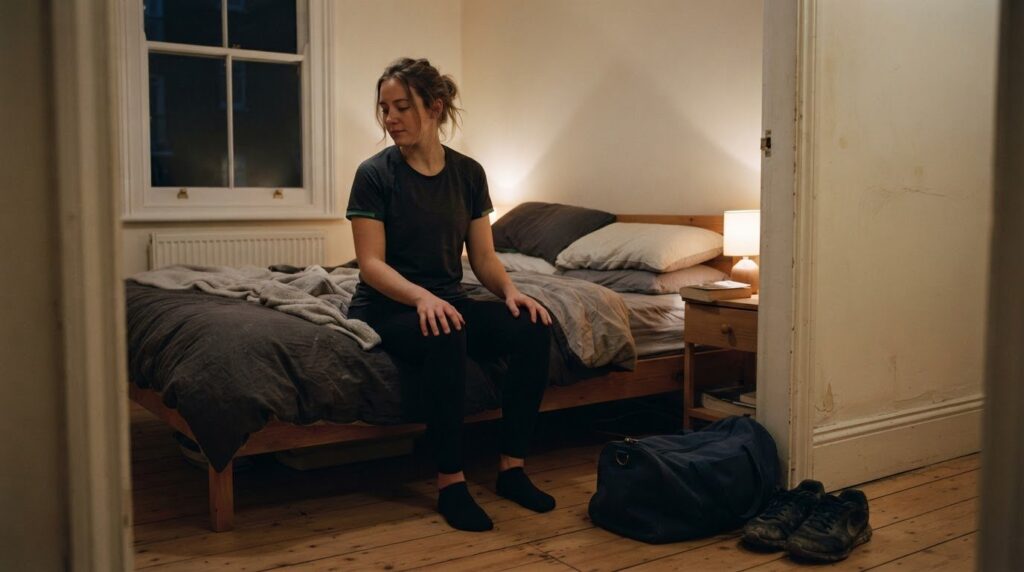
Stop treating sleep as something to squeeze in after the work is done. The best sleep hacks for personal trainers start with a firm foundation: adults are generally recommended to get at least seven hours of sleep per night. Build a routine that makes this achievable rather than accidental.
You already know recovery matters, but knowing it and protecting it are different disciplines, especially when early clients, late sessions and a busy mind compete with bedtime. Consistent sleep habits, thoughtful caffeine timing, practical ways to settle anxiety and a calm, work-free bedroom can support recovery and your fitness goals.
No miracle routines or complicated rules. Just clear, realistic adjustments that fit around the demands of coaching, giving your body a better chance to rest so you can be ready for the next day.
Table of Contents
Sleep Hygiene and Restrictive Routines
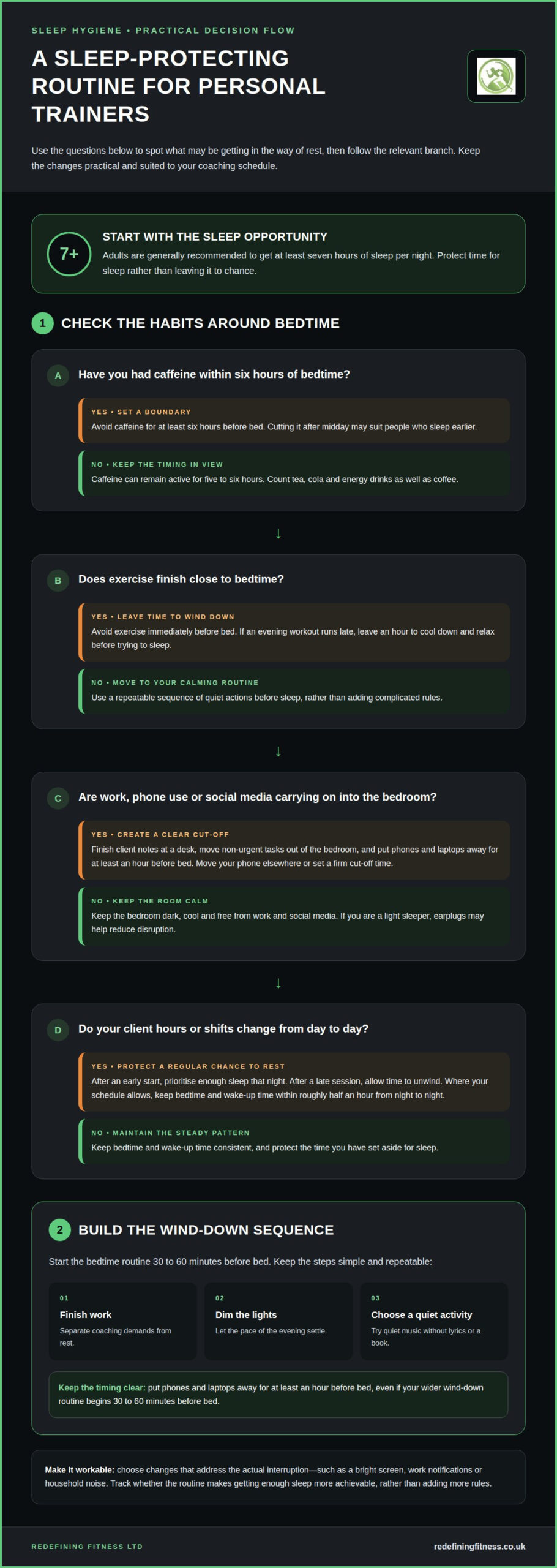
Sleep hygiene means shaping your daily habits and bedroom to support consistent rest. Adults are generally recommended to get at least seven hours of sleep per night, so protect time for sleep rather than leaving it to chance.
Building a Bedtime Routine
A bedtime routine is a repeatable set of calming actions before sleep. Start it 30 to 60 minutes before bed, then keep the sequence simple: finish work, dim the lights, and choose quiet music without lyrics or a book. Put phones and laptops away for at least an hour before bed. Repeating familiar steps helps separate coaching demands from rest.
Managing Sleep Around Shifts
To manage sleep around changing shifts, protect a regular opportunity to rest despite varying client hours. After an early start, prioritise enough sleep that night; after a late session, allow time to unwind before bed. Where your schedule allows, keep bedtime and wake-up time within roughly half an hour from night to night. Consistency helps establish a steadier pattern.
Personal trainers who run their own businesses can fall into a restrictive routine: early clients, admin between sessions, then late messages. Set a clear work cut-off and move non-urgent tasks out of the bedroom. For example, finish client notes at a desk, then start winding down. If you feel every spare hour must become work, remember that sleep helps you feel prepared for the next day.
Protect the routine from habits that quietly undermine it. Caffeine can remain active for five to six hours, so avoiding it for at least six hours before bedtime is a useful boundary; cutting it after midday may suit people who sleep earlier. Avoid exercise immediately before bed. If an evening workout runs late, leave an hour to cool down and relax before trying to sleep.
Make the bedroom a signal for rest, not a second workplace. Keep it dark, cool and free from work and social media; move your phone elsewhere or set a firm cut-off time. If you’re a light sleeper, try earplugs to reduce disruption. These are practical adjustments, not a test of discipline: choose changes that address the actual interruption, whether it’s a bright screen, work notifications or household noise.
Sleep routines for entrepreneurs also need to account for the value assigned to working time. According to the UK Government, the sleep-cost calculator values time at the UK National Living Wage rate of £12.71 per hour, stated for April 2026. A sleep coach may help someone examine habits, but a routine can begin with a consistent wind-down and a protected bedtime. Track whether those steps make getting enough sleep more achievable, rather than adding more rules.
How Does Sleep Affect Your Fitness Goals?
A nap can offer a short opportunity to rest, but it cannot replace a full night’s sleep. Keep it brief enough to protect bedtime. The right duration depends on whether you can still fall asleep at your usual time.
Sleep and Workout Performance
Sleep supports the physical and mental processes involved in training performance. With sleep deprivation, strength, endurance, power and aerobic capacity can fall, making a familiar session feel harder. Memory, attention and emotional awareness can also suffer, affecting how you coach and respond to clients. If fat loss or muscle gain is your goal, aim for eight or more hours of sleep per night.
Sleep and Injury Prevention
Sleep cannot guarantee injury prevention, but disrupted rest can weaken skills that help you move with control. Proprioception, coordination and motor skills may decline, making it harder to judge a position or respond smoothly during a lift. For example, fatigue during a squat session can make it harder to maintain careful technique. Treat poor sleep as a reason to reassess demanding training, not to push through automatically.
Naps for Recovery
A nap may help you feel more rested between an early start and later coaching, but it supplements rather than replaces night-time sleep. Keep it short and avoid letting it run so late that bedtime becomes difficult. There’s no single nap duration that suits every trainer; choose one that refreshes you without disrupting your next night’s routine.
Stress matters, too. One night of insufficient sleep can affect the body’s and brain’s day-to-day processes, while sleep deprivation can leave you less prepared to handle pressure. If a client cancels, your timetable changes or a session demands sharper concentration, mental fatigue can make the day feel tougher. Regular sleep gives you a stronger base for managing those demands.
The physical effects can reach beyond the gym. Sleeping four hours a night for three nights can reduce the body’s ability to deal with glucose by 40%. Lack of sleep can also increase inflammation, as inflammatory chemicals remain in the bloodstream. Those changes matter when you’re pursuing consistent training and recovery, not just chasing a better session today.
Use this as a cue to adjust your workload, not as a reason to panic over one rough night. If you slept poorly, prioritise controlled movement and sound technique rather than testing a personal best. If short sleep becomes a pattern, address the cause and protect a longer opportunity for sleep. Your clients need your judgement as much as your energy, so manage both deliberately.
Cutting Caffeine by Midday
Caffeine can keep you feeling alert, but alertness isn’t the same as being rested. Its half-life is roughly five to six hours, meaning the body takes that long to process about half of it. A coffee during a late coaching shift can therefore affect your ability to fall asleep, even when you feel ready for bed. Sleep hacks for personal trainers should start with a caffeine boundary that fits the working day.
Set a caffeine cut-off by working backwards from your bedtime. Cutting caffeine after midday is a practical starting point because an afternoon coffee can still be active in the evening. If you coach early and go to bed early, an earlier cut-off may make sense. Aim for a pattern that protects sleep, not a rule you follow blindly.
Count more than coffee. Tea, cola and energy drinks can also contribute caffeine, so include them when reviewing your day. A drink picked up between clients or before an evening exercise session can push your intake later than intended. Write down each caffeinated drink and when you had it for a few days; the pattern may be clearer than your memory.
Don’t use caffeine to override repeated short nights. It may make you feel more awake, but it doesn’t replace sleep or remove the effects of sleep deprivation. If you’re reaching for another coffee to get through a routine coaching day, review the earlier choices: late work, a disrupted wind-down or caffeine that carried too far into the day.
Personal trainers often need flexible schedules, so plan around your final session. If a late client pushes your day back, choose a caffeine cut-off based on your intended bedtime, not when you usually finish work. Swap the late coffee for a non-caffeinated drink, then keep the rest of your evening routine steady. Sleep hacks for personal trainers work best as a consistent system, not a single midday coffee rule.
Test the change with a simple record. Note your last caffeinated drink, when you went to bed and whether you fell asleep easily. Also record how you felt the next day, including your focus during sessions and energy during exercise. If sleep improves after an earlier cut-off, keep that boundary. If it doesn’t, examine other disruptions rather than adding more caffeine.
Make adjustments deliberately. Move your final caffeinated drink earlier, then give the change several nights before judging its effect. Avoid compensating with extra drinks the following morning, which can restart the same cycle. A clear cut-off, a realistic bedtime and an honest record make caffeine management a practical recovery habit, not another demanding task on your schedule.
Insomnia and Sleep-Related Anxiety
A difficult night can start a cycle: worry about sleep makes bedtime feel like another performance test. Lack of sleep can activate the body’s fight-or-flight signalling system, raising heart rate and blood pressure. For a trainer already managing a packed schedule, that physical alertness can make switching off harder. Break the cycle with a specific calming practice, not more pressure to fall asleep immediately.
Try progressive muscle relaxation in bed: tense and release muscles gradually, starting at your feet and moving upwards. If your thoughts pull you away, bring attention back to your breathing. Another option is a simple breathwork exercise: set a 10-minute timer, breathe in for five or six seconds, then exhale for five or six seconds. Repeat at a comfortable pace; stop if it feels uncomfortable.
Protect the connection between sleep and your bedroom by avoiding clock-watching and work messages if you wake during the night. Sleep trackers can show useful patterns, but don’t treat one low score as a verdict on tomorrow. A poor score can create unnecessary concern and influence how you feel about the day. Focus instead on how you’re functioning, such as your concentration during client conversations and ability to manage routine tasks.
Seek medical help if ongoing sleep problems affect your daily life or if you suspect sleep apnoea. A sleep coach is not usually medically trained and cannot diagnose or treat clinical conditions. For chronic insomnia, CBT-I is a therapy recommended in professional guidelines; internet-based treatment can be as effective as face-to-face treatment. This offers a clearer route than repeatedly trying another bedtime trick.
Keep a short record across several nights: note when sleep became difficult, what was on your mind and how you felt the next day. A pattern may point to work stress, anxiety about a session or a habit that keeps your mind active. Use the record to describe the problem clearly when seeking support. It can help distinguish a difficult patch from persistent insomnia that deserves more focused care.
Don’t turn rest into another performance metric. If a tracker score or rigid sleep target increases anxiety, step back from the score and return to a calming practice, such as breathing or muscle relaxation. Cognitive strategies work best when they reduce pressure rather than add another test. Persistent sleep disruption deserves attention, not self-blame. Seek medical support if it affects your wellbeing or you suspect a sleep-related condition.
Keeping the Bedroom Calm and Work-Free
Your bedroom should give your mind fewer reasons to stay switched on. Start by identifying the main distraction: a bright streetlight, a laptop on the bedside table or messages arriving late. A dark, cool, distraction-free room can signal that it’s time to rest. Change the specific source of disturbance first rather than redesigning the whole room.
Give work a clear boundary. If you write client notes on your phone, finish them outside the bedroom and leave the device elsewhere overnight. If that isn’t practical, set a firm cut-off and silence work notifications. A screen lighting up beside your pillow can pull your attention straight back to tomorrow’s schedule. Keep the bedroom associated with rest, not unfinished admin.
Make your bedroom arrangement easy to maintain. Put laundry in a basket, move training kit away from the bed and keep only what supports winding down within reach. For example, place a book and a glass of water on the bedside table instead of session plans and a laptop. Small choices like these reduce visible reminders of work without demanding a complicated routine.
Keep the room comfortable enough to settle in, rather than chasing a perfect setup. If outside light reaches your bed, use curtains to darken the space. If household noise interrupts your rest, try earplugs. Choose slow-paced music without lyrics if quiet leaves your thoughts racing. These are options, not essential kit; use what addresses the disruption you actually experience.
Your bedroom is one part of recovery, not the whole system. Regular movement can support sleep by building physical fatigue and helping you fall and stay asleep. That doesn’t mean adding another punishing workout after a long coaching day. A walk between sessions or gentle movement after work may be a more realistic way to build consistency and protect energy for the next day.
Notice how the setup affects your nights. If you keep checking messages, move the phone farther away; if light wakes you, darken the window. Change one factor at a time, then pay attention to whether settling down feels easier. Strong coaching skills depend on sound judgement, and that includes recognising when a bedroom detail is undermining rest. For professional development in personal training, explore personal training qualifications.
Redefining Fitness: Level 2 & 3 Personal Training Course
Redefining Fitness offers a Level 2 & 3 Personal Training Course for people ready to build professional knowledge and coaching skills. The course is delivered online and in person, combining blended learning with face-to-face workshops.
Sound recovery habits matter in a demanding fitness career, but they’re only one part of developing as a trainer. To broaden your practical knowledge, Redefining Fitness offers courses in Kettlebells, Circuits and Indoor Cycling. These can help you build expertise across different forms of exercise alongside the foundations of personal training.
This is a natural next step if you’re preparing for a fitness career or strengthening your coaching practice. Contact Redefining Fitness to discuss the Level 2 & 3 Personal Training Course and the learning path that fits your goals.
Make Recovery Part of Your Coaching Standard
Your next step is to treat recovery as part of the way you work, not an afterthought squeezed around it. Build habits you can sustain through early starts, late sessions and the changing demands of a coaching week. Then apply the same professional discipline to your development: keep learning, reflect on your practice and strengthen the way you support the people who trust your guidance.
Sleep hacks for personal trainers can help you take recovery seriously, but your ambition can reach further than your own routine. If you’re ready to build your knowledge and grow as a fitness professional, take a deliberate step towards that goal. Are you the fitness industry’s next best secret? Contact Redefining Fitness to explore your next move. Keep showing up with purpose, keep developing your craft, and give yourself room to become the coach you aspire to be.
Frequently Asked Questions
A Personal Trainers’ Guide to Sleep: Are You Getting Enough?
Adults are generally recommended to get at least seven hours of sleep per night. To judge whether your sleep is meeting your needs, look beyond the clock: consider whether you can stay attentive during client conversations and make sound decisions in sessions. An isolated restless night is different from a pattern that repeatedly leaves you struggling to function. Keep that distinction in mind when reviewing your week.
What About Magnesium?
Magnesium supplementation isn’t essential for everyone, and it isn’t a guaranteed sleep remedy. Leafy greens, seeds and dark chocolate provide dietary sources. For example, you could include seeds with breakfast or leafy greens in a meal rather than immediately reaching for a supplement. If you’re concerned about your intake or considering supplementation, discuss your circumstances with a nutritionist or dietitian, particularly if you have a medical condition or take medication.
How Much Sleep Do Personal Trainers Need Each Night?
Adults are generally recommended to get at least seven hours of sleep each night. If you’re working towards fat loss or muscle gain, the guidance in this article is to aim for eight or more hours. Think about when you need to wake for your first client, then plan your evening around a realistic opportunity for sleep. A demanding coaching timetable doesn’t remove your need for recovery.
What Evidence-Based Sleep Habits Improve Sleep Quality for Fitness Professionals?
Focus on repeatable habits rather than a complicated checklist. Keep a steady sleep schedule where possible, create a quiet transition out of work and reduce bedroom distractions. If you’re unsure which change matters most, notice what repeatedly interrupts your rest, such as late messages or outside light, and address that factor first. Don’t treat one tracker score as proof that your sleep was good or poor.
What Are Practical Sleep Routines for Trainers with Changing Work Schedules?
Keep your wind-down sequence familiar, even if the time changes. After a late session, for example, finish essential admin, prepare what you need for the morning, then move into a quiet activity. After an early shift, protect enough time for rest later rather than filling every open gap with work. A repeatable sequence gives changing workdays a dependable cue that coaching has finished.
How Should Personal Trainers Use Caffeine Without Disrupting Sleep?
Plan caffeine around your intended bedtime, and count drinks beyond coffee, including tea, cola and energy drinks. Caffeine has a half-life of roughly five to six hours, so late intake may still affect you at bedtime. If you coach in the evening, choose a non-caffeinated drink for your final session. Notice whether changing your last caffeinated drink alters how easily you settle at night.
How Does Sleep Affect Muscle Recovery, Performance and Injury Risk?
Insufficient sleep can affect strength, endurance, power and aerobic capacity; disrupted rest can also impair coordination and motor skills. This matters when you demonstrate movement or make decisions while tired. Sleep loss doesn’t mean an injury will occur, but reduced concentration can make precise execution harder. If you feel unusually unfocused, avoid turning a training session into a test of maximal effort and prioritise controlled movement.
What Bedroom Temperature, Light and Noise Conditions Support Better Sleep?
A dark, cool and distraction-free bedroom can help your body recognise that it’s time to rest. There’s no single temperature figure to aim for here, so focus on whether the room feels comfortable and whether heat disrupts your sleep. Match your response to the source of light or noise: block streetlight, silence notifications or use earplugs if background sounds regularly disturb you.
Why Personal Trainers Need Multi-Disciplinary Teams
Great coaching has limits when you try to do everything alone. Why personal trainers should build multidisciplinary teams comes down to a simple…

Can Personal Trainers Prescribe Rehab? UK Guide
Can Personal Trainers Prescribe Rehab? UK Guide Can personal trainers prescribe rehab? No. In the UK, unless they’re also qualified physiotherapists,…
