Confirmation Bias in Fitness: Why Personal Trainers Ignore Evidence

The fitness industry places considerable emphasis on knowledge, qualifications, experience and confidence. Yet none of these automatically guarantees that a professional can evaluate information objectively. A personal trainer can hold recognised qualifications, understand exercise physiology and produce excellent client results while still interpreting research selectively whenever it challenges an established belief. This is one of the reasons confirmation bias deserves greater attention in fitness education: it can influence not only what professionals believe, but also how they coach, communicate and make commercial decisions.
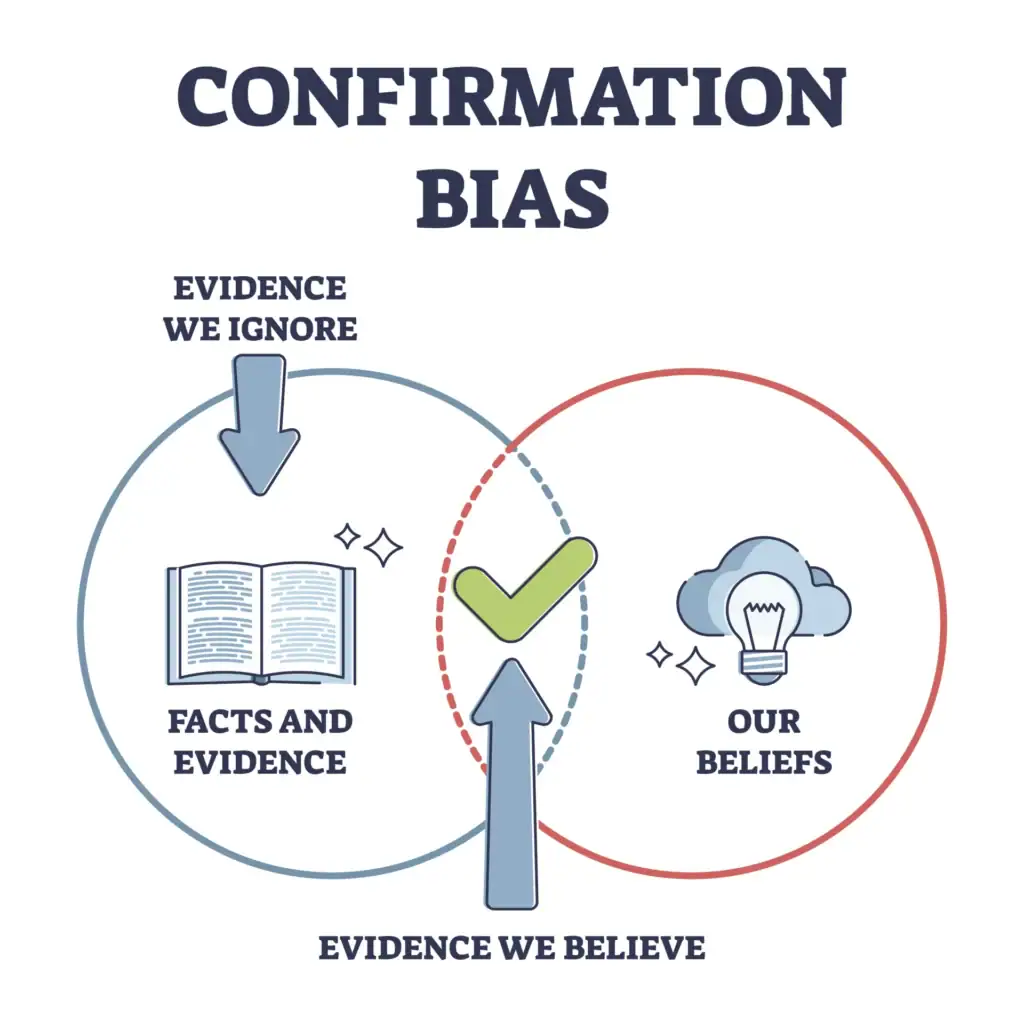
Confirmation bias describes the tendency to seek, interpret and remember information in ways that support existing beliefs or expectations. Psychologist Raymond Nickerson explored this phenomenon extensively in his influential 1998 review, Confirmation Bias: A Ubiquitous Phenomenon in Many Guises. The research illustrates how people can favour information that confirms their assumptions without necessarily recognising that they are doing so. In practical terms, a trainer may scrutinise a study that challenges their preferred training method while accepting a supportive study with considerably less criticism.
This matters because the fitness industry contains competing claims about resistance training, nutrition, supplementation, recovery, fat loss and athletic performance. Some disagreements reflect legitimate scientific uncertainty, differences in individual circumstances or distinct training objectives. Others persist because professionals become attached to particular explanations and evaluate new information according to whether it supports their existing position. The problem is not having an opinion; it is applying different standards of evidence depending on whether the conclusion is one you want to believe.
What Confirmation Bias Actually Looks Like
Confirmation bias can influence several stages of reasoning. People may selectively seek information that supports their views, interpret ambiguous findings in their favour, remember successful examples more readily than unsuccessful ones, or dismiss contradictory evidence using standards they would not apply to information they already accept. These processes can reinforce one another, gradually producing a strong sense of certainty without a corresponding improvement in the quality of the underlying belief.
Consider a personal trainer who believes that one particular resistance-training system is superior to all alternatives. They follow coaches who advocate the method, purchase courses built around it and regularly share content supporting its effectiveness. When a study reports positive results, they interpret it as further proof that their approach is correct. When another study finds comparable results using a different method, they question the researchers, sample size or methodology. Those criticisms might be justified, but if they are applied selectively, the trainer is protecting a conclusion rather than evaluating the evidence consistently.
Psychologist Peter Wason’s early research into hypothesis testing offers a useful starting point for understanding this behaviour. His 1960 paper, On the Failure to Eliminate Hypotheses in a Conceptual Task, examined how people test potential explanations and demonstrated the importance of how a hypothesis is investigated. Seeking examples that support a theory is not the same as testing whether that theory survives meaningful attempts to disprove it. In fitness, the difference can determine whether a professional genuinely evaluates a training method or simply collects reasons to keep recommending it.
Why Experience Can Reinforce the Wrong Conclusion

Practical experience is valuable, but it does not automatically establish causation or comparative superiority. A trainer who has used a particular programme for ten years may have substantial evidence that their clients can make progress with it. However, that experience alone cannot establish that the programme is responsible for every improvement, that it is better than competing methods or that it is suitable for every client. Training consistency, exercise selection, progressive overload, nutrition, recovery and the quality of the coaching relationship may all contribute to the results observed.
The problem becomes more pronounced when professionals remember successful cases selectively. A trainer may recall several clients who achieved impressive transformations while overlooking people who struggled, discontinued the programme or achieved comparable outcomes using different methods. The successful cases become evidence of the system’s superiority, while unsuccessful cases are attributed to poor adherence or unusual circumstances. Sometimes those explanations are correct, but assuming that they must be correct prevents the trainer from examining whether the programme itself needs to change.
A more rigorous approach distinguishes observation from interpretation. If a client gains muscle while following a particular programme, the observed outcome is genuine. The conclusion that the programme alone caused the improvement is a separate claim that requires consideration of alternative explanations. This distinction does not diminish coaching experience; it makes that experience more useful by preventing plausible interpretations from being treated as established facts.
Evidence-based practice therefore requires a combination of scientific research, professional expertise and an understanding of the individual client. The American College of Sports Medicine provides professional and scientific resources relevant to exercise prescription, while the National Strength and Conditioning Association publishes research-informed material for strength and conditioning professionals. Neither experience nor scientific literature should be treated as infallible. The objective is to evaluate both proportionately and recognise what each can reasonably establish.
How Confirmation Bias Distorts Exercise Science
Exercise science offers countless opportunities for confirmation bias because training outcomes depend on several interacting variables. Repetition ranges, training frequency, exercise selection, rest intervals and periodisation can all become subjects of professional tribalism. Trainers develop preferences through education and experience, then sometimes turn those preferences into universal rules that cannot be questioned.
Consider resistance training for muscle hypertrophy. One coach insists that moderate repetitions are essential, another argues that heavy loads are inherently superior, and a third promotes high-repetition training as the defining approach. Each may find individual studies that appear to support their position. However, the broader evidence indicates that muscle growth can occur across a relatively wide range of loading conditions when training is appropriately designed. The optimal choice depends on the objective, the individual, the exercise, the effort applied and the practical demands of the programme. Research demonstrating that a method works does not automatically establish that it is superior to every alternative.
The same problem appears in exercise selection. A trainer may claim that a particular movement is indispensable because it produces a strong muscular sensation or high muscle activation during laboratory testing. Yet acute muscle activation does not independently establish long-term hypertrophy, and subjective sensation cannot reliably determine which exercise will produce the greatest adaptation. Exercise selection also depends on loading potential, technique, individual tolerance, equipment availability and the ability to progress over time. A coach who understands these distinctions can make informed decisions without becoming attached to a single exercise as the only legitimate option.
Training splits and periodisation systems can become equally ideological. Some trainers insist that one programme structure is the only rational approach, while dismissing alternatives without evaluating how they distribute training stress, accommodate recovery or fit the client’s schedule. A training split is a way of organising training, not an outcome in itself. The relevant question is whether the structure provides an effective and sustainable route towards the desired adaptation. The British Journal of Sports Medicine and the Journal of Strength and Conditioning Research provide routes into published research that can help professionals investigate these questions rather than relying exclusively on training personalities or familiar coaching traditions.
Nutrition: When Personal Success Becomes a Universal Rule

Nutrition is another area in which confirmation bias can transform individual experiences into rigid beliefs. A trainer follows a low-carbohydrate diet, loses weight and experiences improved appetite control, then concludes that carbohydrates are inherently fattening. Another person adopts a plant-based diet, improves their health markers and decides that everyone should eliminate animal products. Someone else follows intermittent fasting successfully and becomes convinced that meal timing is the primary determinant of body composition. Each person may be accurately describing their experience, but the conclusion may extend far beyond what that experience can establish.
Body composition is influenced by energy balance, dietary composition, physical activity, behaviour and other factors. Different nutritional approaches can support successful outcomes, but their suitability depends on individual circumstances, preferences, health considerations and the ability to sustain them. Someone who finds intermittent fasting easier to maintain may benefit from the structure it provides, while another person may find that regular meals better support their training and lifestyle. The fact that one approach works well for a particular individual does not establish that it is universally superior.
Confirmation bias also affects how unsuccessful attempts are interpreted. When a preferred diet fails, a trainer might blame the individual for lacking discipline rather than consider whether the approach was poorly suited to their circumstances. Sometimes adherence is the limiting factor; sometimes the intervention is impractical or inadequately tailored; often, several factors interact. Automatically blaming the individual protects the original belief from scrutiny and prevents the practitioner from learning why the approach failed.
The British Nutrition Foundation and the NHS Eatwell Guide offer useful reference points for evaluating general nutrition advice. For more detailed investigation, PubMed provides access to biomedical research, including systematic reviews and clinical studies. These resources should be used to examine the strength and limitations of evidence, not to find isolated quotations that validate a predetermined nutritional philosophy.
Fitness Influencers, Social Media and Commercial Incentives
Social media can reinforce confirmation bias by repeatedly exposing users to information resembling content they have previously engaged with. A trainer who watches videos promoting a particular supplement or training system may encounter increasingly similar claims, creating the impression that the preferred approach enjoys overwhelming professional consensus. In reality, the repetition may partly reflect the recommendation system rather than the strength of the scientific evidence.
A 2025 systematic review published in JMIR Infodemiology examined research into physical activity misinformation on social media. The authors identified 33 studies addressing misinformation across different exercise-related topics and platforms, highlighting concerns about the quality of information circulating online and the need for stronger research into its prevalence, reach and impact. The review is available through PubMed and the Journal of Medical Internet Research. Its findings reinforce the need to distinguish between popular fitness content and information that has been adequately substantiated.
Commercial incentives can complicate the picture further. An influencer selling supplements, coaching programmes or training systems may benefit financially from presenting their preferred approach as uniquely effective. This does not automatically make their claims false, but it provides a reason to examine the supporting evidence, the language used and the limitations acknowledged. A product can have some supporting research without delivering the extraordinary benefits suggested by its marketing. A persuasive communicator can understand their subject exceptionally well, or they can be highly skilled at presenting uncertain claims with absolute confidence.
The Advertising Standards Authority provides guidance on advertising claims in the UK, while the Competition and Markets Authority publishes information on consumer protection and misleading commercial practices. For fitness professionals, the principle is straightforward: distinguish scientific evidence from testimonials, popularity and salesmanship. Ask whether a claim would remain convincing if it came from someone promoting a competing product or someone whose opinions you disliked. If its perceived credibility changes according to the identity of the person making it, personal allegiance may be influencing your judgement.
Why Intelligent People Can Become Better at Defending Bad Ideas
It is tempting to assume that education and intelligence automatically protect people from confirmation bias. They do not. Knowledge can improve someone’s ability to evaluate complex arguments, recognise methodological weaknesses and distinguish strong evidence from weak evidence. However, those same skills can also be used to construct more sophisticated justifications for a preferred conclusion. A knowledgeable trainer may identify legitimate statistical limitations in a study while applying those criticisms selectively to research that challenges their existing position.
Psychologist Ziva Kunda explored this problem in her influential paper, The Case for Motivated Reasoning (1990). Her research examined how goals and motivations can influence the cognitive processes through which people evaluate information. Individuals may arrive at conclusions that satisfy their motivations while still experiencing their reasoning as objective. In the fitness industry, those motivations might include protecting a professional reputation, maintaining group belonging, defending a commercial product or preserving a long-standing belief about training and nutrition.
This creates a distinction between reasoning to establish what is most likely to be true and reasoning to defend a conclusion that has already been accepted. Consider a coach who rejects a study challenging their preferred training method because its sample size is relatively small. That criticism might be reasonable, but if the same coach routinely accepts equally limited studies supporting their position, their apparent scientific rigour is selective. Their knowledge has not necessarily made them more objective; it has given them a larger collection of technical arguments with which to defend a conclusion they already favour.
The solution is not to distrust expertise or assume that confidence indicates dishonesty. It is to recognise that expertise and objectivity are different qualities. A professional can be highly knowledgeable yet still evaluate information inconsistently. The more time, money and reputation someone has invested in a particular position, the more important it becomes to examine whether they are assessing new information on its merits or protecting an existing commitment.
The Commercial Cost of Confirmation Bias
Confirmation bias can affect coaching quality, business credibility and the decisions clients make about their training. A trainer who refuses to reconsider ineffective practices may continue delivering a service that does not adequately address client needs. An educator who presents disputed interpretations as established scientific facts may teach students to imitate certainty rather than evaluate evidence. A business that promotes unsupported nutritional claims may damage its reputation when those claims are challenged by more credible information.
The same problem can undermine commercial decisions. A trainer who believes social media is the only worthwhile acquisition channel might dismiss local partnerships, referral systems or search engine optimisation without properly evaluating their potential. Another may reject group coaching because they believe one-to-one training is inherently superior, even when a group format could better serve a particular audience. In both cases, the professional is evaluating alternatives according to existing preferences rather than their actual suitability.
The objective is not to abandon established practices whenever a new idea appears. Business decisions involve uncertainty, limited resources and competing priorities. However, dismissing an option before examining its potential prevents the business from learning whether it could work. A sustainable professional practice requires the ability to distinguish a justified decision from a familiar one, particularly when those decisions affect client outcomes and long-term financial performance.
There is also a reputational cost to refusing to acknowledge uncertainty. Clients are frequently exposed to contradictory claims about exercise, nutrition and health. A trainer who can explain the reasoning behind a recommendation, acknowledge its limitations and adapt when necessary demonstrates a more credible form of expertise than someone who presents every preference as an unquestionable fact. Professional authority should come from the quality of the reasoning, not from the unwillingness to reconsider it.
How Personal Trainers Can Reduce Confirmation Bias
Confirmation bias cannot simply be eliminated through willpower, and recognising it does not make someone immune to it. A more effective approach is to establish processes that make biased decisions less likely. When evaluating a training method, nutritional claim or business strategy, deliberately seek credible evidence that challenges your position as well as evidence that supports it. Ask what findings would be necessary to establish the claim, whether the available research meets that standard and whether alternative explanations could account for the observed results. The objective is not to oppose every established practice but to ensure that supportive evidence is not automatically treated as sufficient because it is convenient.
It is also useful to separate observations from conclusions. If a client gains muscle while following a particular programme, the observation is that their muscle mass increased during that period. The conclusion that the programme alone caused the improvement requires consideration of training consistency, progression, previous experience, nutrition and recovery. The programme may have been effective, but distinguishing what was observed from what was inferred prevents a plausible explanation from being mistaken for a proven causal relationship. Maintaining consistent records of client progress, attendance and adherence can help identify patterns that selective memory might otherwise conceal.
Consistency in evaluating evidence is equally important. If you reject a study because its sample is small, consider whether you have accepted similarly limited evidence supporting your preferred position. If you question a researcher’s financial interests, examine the commercial incentives of those promoting your favoured method. Where appropriate, consult systematic reviews, meta-analyses and position statements rather than building an entire professional philosophy around one favourable study. Research databases such as PubMed and Europe PMC can help you locate scientific literature, while the Cochrane Library provides systematic reviews across numerous areas of health research. These resources do not guarantee that every conclusion is correct, but they provide a stronger foundation for investigation than relying exclusively on social media commentary.
One particularly useful exercise is to identify in advance what evidence would cause you to change your mind. If no conceivable finding could alter your position, the belief is no longer being treated as a conclusion open to examination. Invite informed criticism from colleagues who can challenge your reasoning constructively, and distinguish disagreement with an argument from a personal attack. A colleague who identifies a genuine weakness in your reasoning is providing an opportunity to improve your professional practice, even when the correction is uncomfortable.
Intellectual Humility Is a Professional Strength
Some trainers worry that acknowledging uncertainty will undermine their authority. In reality, there is a substantial difference between being uncertain about everything and recognising the limits of what the evidence establishes. A competent professional should be able to distinguish between well-supported principles, emerging evidence, disputed interpretations and questions that remain unresolved. This allows them to communicate confidently without exaggerating what they know.
A trainer can confidently explain the importance of progressive overload while acknowledging that several programming approaches may achieve it. They can explain the role of energy balance in body composition without claiming that every dietary approach is equally effective or suitable. They can recommend a particular exercise while recognising that alternatives may be more appropriate for another client. This is not indecision; it is confidence calibrated to the strength of the evidence and the circumstances in which a recommendation is being applied.
The strongest coaches are not necessarily those who change their minds most frequently, nor those who maintain their positions regardless of new evidence. They are those who can explain why they hold a particular position, distinguish strong evidence from weak evidence and identify what would justify revising their conclusions. Their authority comes not from pretending to be infallible but from demonstrating a consistent commitment to making well-reasoned decisions.
Conclusion: Are You Following the Evidence or Protecting Your Beliefs?
Confirmation bias is easy to recognise in other people and considerably harder to identify in ourselves. It appears when a trainer dismisses contradictory research without applying the same scrutiny to supportive findings, when a personal success story becomes a universal recommendation, when commercial interests influence the interpretation of science or when professional identity becomes more important than getting the answer right. These behaviours can occur even among experienced professionals who genuinely believe they are making objective decisions.
The fitness industry does not need trainers who abandon every established practice whenever a new study appears, nor does it need professionals who treat every scientific publication as definitive. It needs practitioners who evaluate evidence proportionately, distinguish observation from causation, recognise uncertainty and revise their decisions when warranted. The challenge is not to eliminate personal beliefs but to prevent those beliefs from determining which evidence is allowed to count.
The next time you encounter a claim that challenges your approach to training, nutrition or coaching, resist the immediate urge to defend your position. Examine the quality of the evidence, consider alternative explanations and ask whether you would reach the same conclusion if the findings supported a method you disliked. You may discover that your original position was justified, that it needs refinement or that a belief you have defended for years was never as well supported as you assumed. All three outcomes can improve your professional practice.
The goal of evidence-based coaching is not to become someone who is always right. It is to become someone who is increasingly difficult to fool, including by their own assumptions.
References and Further Reading
Wason, P. C. (1960). On the failure to eliminate hypotheses in a conceptual task. Quarterly Journal of Experimental Psychology.
Kunda, Z. (1990). The case for motivated reasoning. Psychological Bulletin.
Nickerson, R. S. (1998). Confirmation bias: A ubiquitous phenomenon in many guises. Review of General Psychology.
Physical Activity Misinformation on Social Media: Systematic Review. JMIR Infodemiology (2025).
Additional professional and scientific resources include the American College of Sports Medicine, the National Strength and Conditioning Association, the British Journal of Sports Medicine, the Journal of Strength and Conditioning Research, the British Nutrition Foundation, the NHS Eatwell Guide, PubMed, Europe PMC, the Cochrane Library, the Advertising Standards Authority and the Competition and Markets Authority.
Are You the Industry’s Next Best Secret?
The fitness industry needs more than trainers who can demonstrate exercises or repeat information they have learnt on a course. It needs professionals who understand the science behind their decisions, can evaluate competing claims and have the confidence to challenge assumptions when the evidence demands it. Technical competence matters, but so does the ability to think critically, communicate effectively and continue developing throughout a career.
At Redefining Fitness, we help aspiring fitness professionals build the knowledge and practical skills required to enter the industry. Our approach to fitness education is designed to develop capable professionals who can apply what they learn rather than simply memorise information. Our team has collectively taught, assessed and mentored more than 2,000 students, and our organisation has received industry recognition, including Fitness Training Provider of the Year in South East England at the Prestige Awards.
If you want to become a fitness professional who understands the reasoning behind good coaching rather than simply following the loudest voice in the room, start by exploring your options. Explore Redefining Fitness and take your first step into the industry.