The Sunk Cost Fallacy in Fitness: Why People Stick With Training Plans That Aren’t Working
You have followed the same training programme for six months. You paid for the coaching, bought the supplements, organised your schedule around your workouts and spent hundreds of hours trying to make it work. Yet your strength has stalled, your motivation is declining and the results you expected have failed to materialise. Rather than question the programme, you tell yourself that you have already invested too much to stop now. Another month, another training block and another attempt might finally make everything worthwhile.
This is a classic example of the sunk cost fallacy: allowing resources already invested in a decision to influence whether you continue with it, even when those resources cannot be recovered and continuing may not be the best option. The concept is well established in behavioural psychology, including the research paper The Psychology of Sunk Cost by Hal Arkes and Catherine Blumer, published in 1985. Their research examined how previous investments of money, time and effort can make people more inclined to continue an activity.

Fitness provides fertile ground for this bias because progress is rarely immediate, results are not always easy to measure, and people often connect their training methods with their identity. A person who has spent years following a particular programme may find it difficult to admit that it no longer suits their needs. A personal trainer who has invested considerable time in developing a coaching system may resist changing it, even when client outcomes suggest that a different approach would be more effective.
Understanding the sunk cost fallacy is not about abandoning every programme that becomes difficult or quitting whenever progress slows. It is about learning to distinguish between a worthwhile investment that still has future value and an unproductive commitment being maintained simply because of what has already been spent.
What Is the Sunk Cost Fallacy?
A sunk cost is a resource that has already been spent and cannot be recovered. It might be money paid for a gym membership, time invested in a training programme, effort devoted to a particular physique goal or years spent developing a coaching method. These investments may have produced benefits, but their historical cost cannot be reversed simply by continuing.
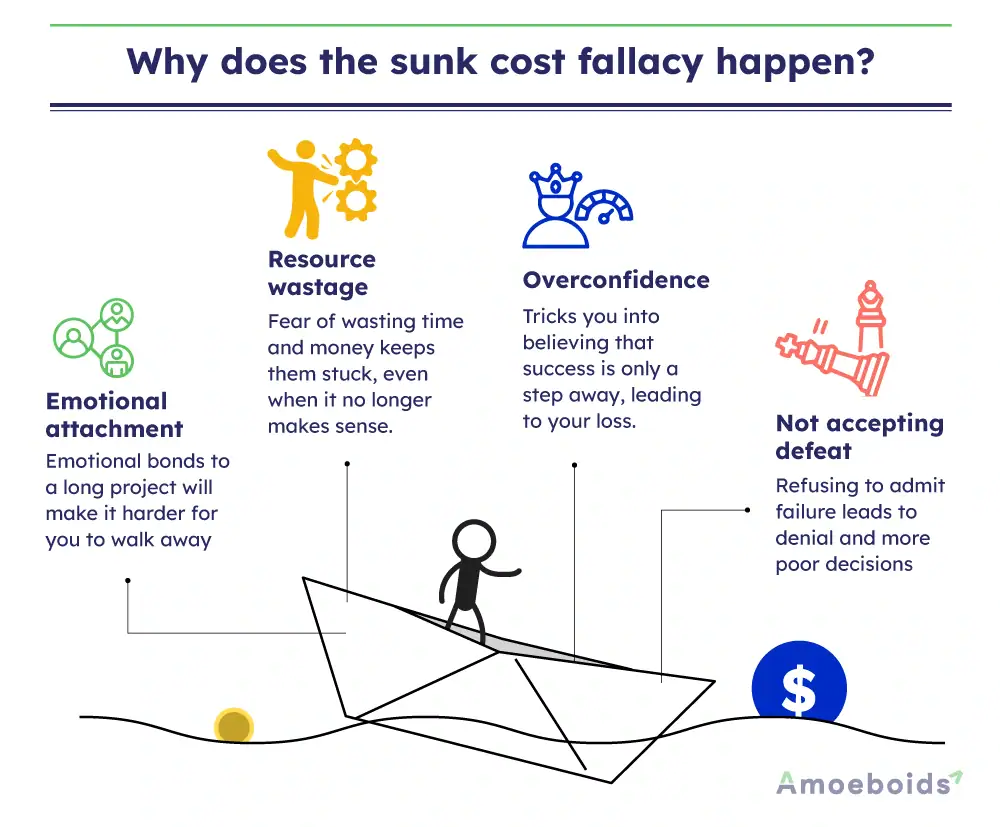
The fallacy occurs when the amount already invested becomes the main reason to continue. Instead of evaluating the likely benefits and costs of the next decision, a person focuses on what they have already sacrificed. The underlying logic becomes, “I have come this far, so I cannot stop now.” That reasoning may feel sensible because people naturally want their efforts to mean something, but the effort already spent does not automatically make future effort worthwhile.
Consider someone who pays for a twelve-month gym membership and discovers after two months that the facility is overcrowded, inconvenient and poorly suited to their goals. They continue attending reluctantly because they do not want the membership fee to go to waste. The original payment is already gone, whether they attend or not. If another gym, home training or a different activity would make regular exercise more sustainable, the relevant question is which option offers the best future outcome, not how to justify the original payment. This distinction matters because past investment and future value are not the same thing. A training programme should earn its place in your routine through its current suitability, not through the number of months you have already spent following it.
Why the Sunk Cost Fallacy Is So Powerful in Fitness

1. We Do Not Want Our Effort to Feel Wasted
People often experience discomfort when their actions fail to produce the outcome they expected. Recognising that a decision was poor can feel like admitting that time, money or effort was wasted. Continuing offers a tempting alternative: if the investment eventually pays off, the original decision can still be viewed as worthwhile. Arkes and Blumer’s research identified the desire not to appear wasteful as one explanation for the sunk cost effect.
In fitness, this might mean continuing an unnecessarily complicated programme because it took weeks to design, or refusing to change a diet because it required substantial sacrifice to maintain. The problem is that continuing does not guarantee that the original investment will be recovered. A programme that is poorly matched to someone’s needs does not become effective simply because they have endured it for longer. In some cases, the attempt to avoid wasting past effort creates a larger waste of future time and resources.
2. Fitness Becomes Part of Personal Identity
Training is often more than a practical activity. It can become part of how someone understands themselves: the disciplined athlete, the dedicated bodybuilder, the endurance runner or the person who never misses a workout. When a training method becomes tied to that identity, changing it can feel like a personal failure rather than a rational adjustment.
For example, a runner who has built their identity around completing high mileage may resist reducing volume even when persistent fatigue and declining performance indicate that their current approach needs reviewing. A strength athlete may continue prioritising heavy compound lifts despite a change in goals, available time or physical capacity. In each case, the person is not necessarily evaluating the method objectively; they may also be protecting the identity attached to it.
This does not mean that commitment, discipline or consistency are undesirable. They are important qualities in long-term training. The distinction is between being committed to a meaningful outcome and being attached to one particular method of achieving it. A person can remain deeply committed to becoming fitter while changing the programme, coach, exercise selection or schedule that will help them get there.
3. Progress Is Difficult to Judge Without Reliable Measures
Fitness progress is not always linear. Body weight fluctuates, performance varies with sleep and stress, and visible changes may take time to emerge. These fluctuations make it easier to rationalise a programme that is not working. Someone may interpret every setback as temporary and every small improvement as evidence that the overall approach is correct.
This is where objective monitoring becomes important. Depending on the goal, useful indicators might include training loads and repetitions, exercise performance, attendance, body measurements, relevant health markers assessed by an appropriate professional, or progress towards a specific event. No single metric tells the whole story, but a consistent set of measures makes it easier to identify trends rather than relying entirely on memory or emotion.
It is also important to allow enough time for a fair assessment. A few poor sessions do not prove that a programme has failed, just as a single personal best does not prove that every element of it is optimal. The aim is not to react impulsively to short-term fluctuations; it is to use relevant evidence to determine whether the current approach remains appropriate.
4. The Promise of Future Results Keeps Us Committed
The sunk cost fallacy becomes particularly difficult to recognise when people believe success is just around the corner. Someone who has spent months trying to lose weight may convince themselves that one more restrictive diet will finally work. An athlete who has repeatedly failed to hit a target may believe the next training block will deliver the breakthrough they have been waiting for.
Sometimes that optimism is justified. Training adaptations take time, and a plateau can be a normal part of development. The problem arises when the prediction of future success is repeatedly used to excuse the absence of meaningful progress, without a credible explanation for why the next attempt should produce a different result.
A useful question is whether anything material has changed. Has the programme been adjusted in response to performance data? Has recovery improved? Has the nutrition strategy become more sustainable? Has a coach identified and addressed a specific weakness? If the answer is no, repeating the same approach while expecting a different outcome deserves scrutiny.
Research into sunk-cost decision-making also examines how people escalate their commitment to a course of action after previous investments. A later review, Evaluating the Sunk Cost Effect, explored factors associated with sunk-cost behaviour and how susceptibility can be measured. Read the research on sunk-cost decision-making.
How the Sunk Cost Fallacy Appears in Training, Nutrition and Coaching

Sticking With an Ineffective Training Programme
A programme can be well designed on paper and still be unsuitable for a particular individual. Training history, recovery capacity, injury considerations, available time, preferences and the actual goal all influence whether a programme is appropriate. Someone preparing for a marathon has different requirements from someone trying to increase maximal strength, and a beginner may need a different structure from an experienced lifter.
The sunk cost fallacy appears when the individual refuses to modify the programme because they have already invested considerable effort in it. They might continue adding training volume despite persistent fatigue, insist on following an advanced routine that they cannot recover from, or retain exercises that aggravate a problem because those exercises have always been part of their training.
The solution is not to abandon structured programming. It is to assess whether the programme continues to serve its intended purpose. If performance is improving, recovery is manageable and the approach remains appropriate, continuing makes sense. If the evidence points towards a problem, the programme should be reviewed rather than protected from criticism.
Continuing a Diet That Cannot Be Sustained
Nutrition provides another clear example. A person may spend months following a highly restrictive diet, turning down social occasions and investing substantial effort in meal preparation. When the approach becomes difficult to maintain, they may feel compelled to continue because changing strategy would mean admitting that all the sacrifice was unnecessary.
However, a dietary approach should be judged by its nutritional adequacy, suitability for the individual’s circumstances, effects on health and ability to support the intended outcome. A plan that produces short-term weight loss but repeatedly leads to cycles of restriction and overeating may need to be reconsidered, even if it has demanded considerable effort.
This is not an argument for changing nutrition strategies at the first sign of discomfort. Sustainable change often involves adjustment, patience and periods when progress is slower than expected. The distinction is whether the strategy remains appropriate and is producing a worthwhile outcome, not whether it is always easy to follow.
Refusing to Leave an Unsuitable Personal Trainer
A client may remain with a personal trainer because they have already paid for a block of sessions, have known the trainer for years or feel uncomfortable admitting that the relationship is not working. They may continue paying for generic programming, limited communication or sessions that do not reflect their goals.
The money already paid should not determine whether the client continues the relationship. What matters is whether the service being delivered now provides sufficient value and whether there is a reasonable basis for expecting improvement. If the trainer acknowledges the problem, proposes a credible adjustment and follows through, continuing may be sensible. If the same issues persist without meaningful change, ending the arrangement may be the better decision.
The same principle applies to coaches. A professional should be willing to review their methods, listen to client feedback and change their approach when the evidence warrants it. The CIMSPA Professional and Apprenticeship Standards provide a useful reference for understanding the knowledge, skills and behaviours expected across the sport and physical activity workforce. Personal training involves adapting guidance to individual needs, not simply repeating a preferred system regardless of the outcome.
Buying More Equipment, Supplements or Courses
Sunk costs can also encourage people to keep investing in a strategy that is already failing. Someone who has bought expensive home gym equipment may feel obliged to use it even when another form of exercise would suit their schedule better. A consumer who has purchased several supplements may continue taking them simply to justify the expense, despite having little evidence that they provide a meaningful benefit.
The same pattern occurs in professional development. A trainer may keep buying courses that repeat information they already know, while avoiding the more difficult work of improving client communication, practical coaching or business management. The number of courses completed is not the same as professional competence, just as the price of equipment is not evidence of its usefulness.
Before making another purchase, assess the expected future benefit. What specific problem will the purchase solve? Is there credible evidence that it can solve that problem? Is there a more effective or economical alternative? If those questions cannot be answered clearly, the purchase may be an attempt to justify previous expenditure rather than a rational next step.
How to Discern the Sunk Cost Fallacy From Genuine Commitment

Recognising the sunk cost fallacy requires more than asking whether a programme is difficult. Effective training often involves sustained effort, temporary discomfort and periods of slow progress. If people abandoned every activity that became challenging, they would struggle to develop meaningful fitness, skill or strength. The key is to determine whether persistence is supported by a reasonable expectation of future benefit.
1. Would You Choose This Approach If You Were Starting Today?
Imagine that you had not spent the previous six months following the programme, paying the coach or purchasing the equipment. Based on what you know now, would you willingly make the same decision?
This question removes some of the emotional weight attached to previous investment. If you would not choose the programme today because it is inconvenient, ineffective or poorly matched to your goals, the fact that you have already invested in it is not sufficient justification for continuing.
The answer is not automatically a reason to stop. You may have acquired valuable experience, and the programme may still be delivering benefits. However, if your only compelling reason for continuing is that you have already invested so much, the sunk cost fallacy may be influencing your judgement.
2. Is There Objective Evidence That the Approach Is Working?
Define what success should look like before deciding whether to continue. A strength programme might be assessed through improvements in load, repetitions, technique and recovery. A weight-management strategy could be assessed through longer-term weight trends, adherence, relevant health considerations and whether the approach remains sustainable. A personal training relationship might be evaluated through progress towards agreed goals, the quality of feedback and the extent to which the service meets the client’s needs.
Tracking matters because memory is selective. People may remember the occasional excellent session while overlooking weeks of stagnation, or focus on a disappointing weigh-in while ignoring a broader positive trend. A systematic review and meta-analysis published in 2024 examined self-monitoring and feedback in dietary and physical-activity interventions. The findings support the relevance of feedback for behaviour change, although the strength of the evidence varies by outcome and intervention. Read the research in the International Journal of Behavioral Nutrition and Physical Activity.
The practical lesson is that decisions should be informed by useful feedback, not just by how much effort you remember putting in.
3. What Has Changed Since the Last Time You Tried?
If the same strategy has repeatedly failed, identify what will make the next attempt different. A new training block may be justified if it addresses a clear limitation. A dietary adjustment may make sense if it improves adherence or corrects an identified problem. A different coach may be appropriate if the current relationship cannot provide the support you need.
By contrast, simply repeating the same behaviour and hoping for a different outcome is not a convincing plan. Before recommitting, identify the mechanism through which the next attempt is expected to work. If there is no clear answer, the decision may be driven more by the desire to recover previous investment than by a realistic assessment of future prospects.
4. Are You Protecting Your Goal or Defending Your Method?
This is one of the most important distinctions. Your goal might be to build muscle, improve cardiovascular fitness, reduce health risks or become a better personal trainer. The methods used to reach that goal are tools, not obligations.
A person who changes from five training sessions a week to three because the reduced schedule is more sustainable has not necessarily lowered their standards. They may have made a more effective decision. Someone who switches from a rigid diet to a less restrictive approach may be improving the likelihood of long-term adherence. A trainer who abandons a favourite coaching method in favour of one that better suits a client is demonstrating professional judgement.
Research on exercise motivation supports the importance of considering why people exercise and how their motivation is sustained. A systematic review of 66 empirical studies found consistent support for positive relationships between more autonomous forms of motivation and exercise behaviour. Read the review, Exercise, Physical Activity, and Self-Determination Theory.
The implication is not that every difficult or externally motivated goal is wrong. Rather, a successful long-term approach should fit the person’s goals and circumstances, instead of requiring them to defend a particular method at any cost.
5. What Would You Advise Someone Else in the Same Position?
People often evaluate their own decisions differently from how they evaluate those of others. You might advise a friend to leave an unsuitable gym, change a failing training plan or stop paying for a service that does not meet their needs. Yet when you face the same decision, your previous investment can make you more reluctant to act.
Temporarily removing yourself from the situation can help. Describe the facts as though you were advising a client: what the goal is, what has been invested, what the results show, what alternatives exist and what continuing is likely to cost. Then make the decision using those facts rather than treating past commitment as a reason in itself.
A Practical Framework for Making Better Fitness Decisions
![?????????????? “?????” ????????????????????????? | Total Conditioning Kiitos????? | ???????[???]](https://images.openai.com/static-rsc-4/1yyPZwnWZ7A0jo3FXiNSnrl4YNQR3E7GfLhSL8M1lQ6K9MU7Bz2zvZLqMkY3Mey5dZTPTFPByqDxIG4S8izngsRX_kn9H1Suk_JAOeIXmBOxeURg5zJy2uOWS-27tPmPc_5IXXEgCJM178AoxCcOk-IImxV7EUPJegH3zuhKyKY?purpose=inline)
Recognising the bias is useful, but a repeatable decision-making process is more valuable. The objective is to make changes deliberately rather than oscillating between blind persistence and impulsive quitting.
Start by defining the outcome you want and identifying the evidence that would indicate meaningful progress. Be specific enough to assess the result, but avoid relying on a single measurement that can fluctuate for reasons unrelated to long-term improvement. Set a review point appropriate to the programme, the goal and the likely rate of adaptation. A short introductory phase may warrant a different review period from a long-term strength or endurance plan.
At that review point, evaluate the evidence. Consider what is improving, what is not, whether the programme is being followed as intended, and whether factors such as sleep, stress, nutrition or inconsistent attendance could explain the results. Do not blame the programme for a lack of progress without examining whether it has been implemented consistently; equally, do not blame yourself indefinitely when the approach itself may need changing.
Next, compare the realistic options. Continuing unchanged is only one possibility. You might adjust training volume, change the exercise selection, reduce complexity, seek qualified advice, change providers or stop an activity that no longer serves its purpose. Consider the likely benefits, financial costs, time requirements, risks and practical consequences of each option from this point forward. Previous expenditure can inform what you have learned, but it should not dictate the next decision.
Finally, decide what evidence would cause you to review the decision again. This creates a more disciplined process: you continue while there is a reasonable basis for doing so, adapt when the evidence supports adaptation, and stop when the approach no longer offers sufficient value. It also prevents every difficult week from becoming a reason to abandon a plan prematurely.
Research on implementation intentions offers further context for translating intentions into action. These intentions specify when and where a behaviour will occur, and a systematic review found that their effectiveness can depend on factors such as self-efficacy and existing intentions. Read the research on implementation intentions for exercise and physical activity. In practice, deciding in advance when you will review a programme, which measures you will examine and what changes would trigger a reassessment can make the process more consistent.
When You Should Not Change Your Training Plan
There is a danger in taking the sunk cost concept too far. Not every long-term commitment is irrational, and not every plateau is evidence that a programme has failed. Meaningful adaptations require time, and performance can fluctuate because of fatigue, life stress, illness, sleep or normal variation.
For example, a beginner who has followed a resistance-training programme for only two weeks may not yet have enough evidence to judge its effectiveness. An experienced lifter may need to work through a planned period of reduced performance before a taper or recovery phase. An endurance athlete might temporarily reduce training volume to recover from accumulated fatigue, rather than abandoning the overall plan.
The correct decision depends on the circumstances. Continue when the approach remains suitable, the expected adaptation is plausible and there is a reasonable basis for allowing more time. Review the plan when progress consistently diverges from expectations, the strategy becomes unsustainable or the original assumptions no longer apply. Seek appropriately qualified medical or clinical advice when symptoms, injuries or health concerns require it.
The NHS physical activity guidelines for adults aged 19 to 64 provide a useful reference for general activity and muscle-strengthening recommendations. The UK Chief Medical Officers’ physical activity guidance also outlines the health benefits of activity and the importance of building strength. These are general public-health recommendations, not a substitute for individual programming, but they help put fitness decisions in a broader context.
What the Sunk Cost Fallacy Means for Personal Trainers
The concept has implications beyond individual gym members. Personal trainers make decisions about programme design, client retention, professional development and business operations. In each area, previous investment can make it harder to recognise when a change is needed.
A trainer may continue using a particular assessment method because they spent years learning it. A gym may retain a poorly performing service because it required significant investment to launch. A coach may keep a client on a programme that is no longer appropriate because changing it would mean admitting that the original plan was flawed.
Professional competence involves being able to reassess decisions without treating revision as defeat. The role of a personal trainer includes planning and delivering personalised exercise programmes, adapting guidance to client needs and recognising when specialist advice or referral is appropriate. The CIMSPA Personal Trainer career guidance describes these responsibilities, while the CIMSPA professional standards library provides further occupational guidance.
Trainers should therefore be prepared to explain why a programme is appropriate, how progress will be assessed and what might lead them to change the approach. Clients should understand that adjustments are part of informed coaching, not necessarily evidence of incompetence. A coach who can identify a problem, explain the reasoning behind a change and evaluate the result is demonstrating a willingness to learn.
This also makes honest communication important. Clients should not be pressured to continue paying for a service merely because they have already invested money in it. Retention is valuable when the relationship continues to deliver meaningful value, not when a client feels trapped by previous expenditure. The same principle applies to education providers: qualifications and professional development should be evaluated by the knowledge, competence and opportunities they provide, rather than by the amount already spent.
Frequently Asked Questions
Is the Sunk Cost Fallacy the Same as Being Persistent?
No. Persistence means continuing to work towards a worthwhile goal despite difficulty. The sunk cost fallacy occurs when past investment becomes a reason to continue, regardless of whether the current approach remains sensible. Someone can be persistent while changing methods, and someone can continue a failing programme for months without making a rational decision.
How Do I Know Whether My Training Programme Has Stopped Working?
Look for a meaningful pattern rather than reacting to an isolated bad session. Assess progress against the programme’s intended outcomes, consider adherence and recovery, and establish whether the current approach still fits your needs. If progress has stalled, investigate why before deciding whether to adjust the plan or allow more time.
Should I Stop Using a Personal Trainer If I Am Not Getting Results?
Not automatically. First, discuss the results, your expectations and the factors affecting progress. A competent trainer should be able to explain the current strategy, review relevant evidence and make appropriate adjustments. If the service repeatedly fails to meet agreed needs and there is no credible plan for improvement, comparing alternatives may be justified.
Is It a Waste of Money to Abandon a Gym Membership or Training Programme?
Money already spent cannot generally be recovered simply by continuing. The relevant question is whether using the service from now on offers sufficient value compared with the available alternatives. A membership or programme may still be worth keeping, but the original purchase price alone is not a sound reason to retain it.
Can the Sunk Cost Fallacy Affect Nutrition and Supplements?
Yes. People may continue restrictive diets, unnecessary supplement purchases or unsuitable nutrition strategies because they have already invested money and effort. Evaluate the likely future benefit, nutritional suitability, evidence and sustainability of the approach rather than assuming that previous sacrifice makes it worthwhile.
Conclusion: Commitment to the Goal, Not the Mistake
The sunk cost fallacy explains why people sometimes continue investing in training programmes, diets, coaching relationships and fitness products that no longer justify the cost. The desire to avoid waste is understandable, but continuing an unsuitable approach does not recover what has already been spent. It can simply create additional costs in time, money, motivation and missed opportunities.
The solution is not to abandon commitment. It is to direct commitment towards the outcome rather than the method. Review progress using relevant evidence, distinguish temporary setbacks from persistent problems, question whether the next investment is likely to help and remain willing to adapt when circumstances change.
A strong training mindset is not one that refuses to change course. It is one that can recognise when persistence is productive and when it has become an excuse to avoid reassessing a decision. The time you have already invested should inform what you have learned, not dictate what you do next.
Ready to Build a Career in Fitness?

Understanding human behaviour is part of becoming a competent personal trainer. Effective coaches need more than exercise knowledge: they must be able to assess individual needs, communicate clearly, interpret progress and adapt their approach when the evidence supports a change.
At Redefining Fitness, our team has taught, assessed and mentored more than 2,000 students. Our industry experience and award-recognised work in fitness education support our commitment to preparing aspiring trainers for the realities of professional practice.
If you are considering a career in personal training, explore our personal training courses, learn more about our team and tutors, or read our guide to becoming a successful personal trainer.
Your investment in education should give you the knowledge and practical skills to make better decisions throughout your career. Choose training that prepares you to coach people, evaluate outcomes and adapt with confidence.
Research and Further Reading
-
Arkes, H. R. and Blumer, C. (1985). The Psychology of Sunk Cost. Organizational Behavior and Human Decision Processes.
-
Evaluating the Sunk Cost Effect. Research on factors associated with sunk-cost behaviour.
-
Teixeira, P. J. et al. (2012). Exercise, Physical Activity, and Self-Determination Theory: A Systematic Review.
-
Impact of Feedback Generation and Presentation on Self-Monitoring Behaviours, Dietary Intake, Physical Activity, and Weight. International Journal of Behavioral Nutrition and Physical Activity.