

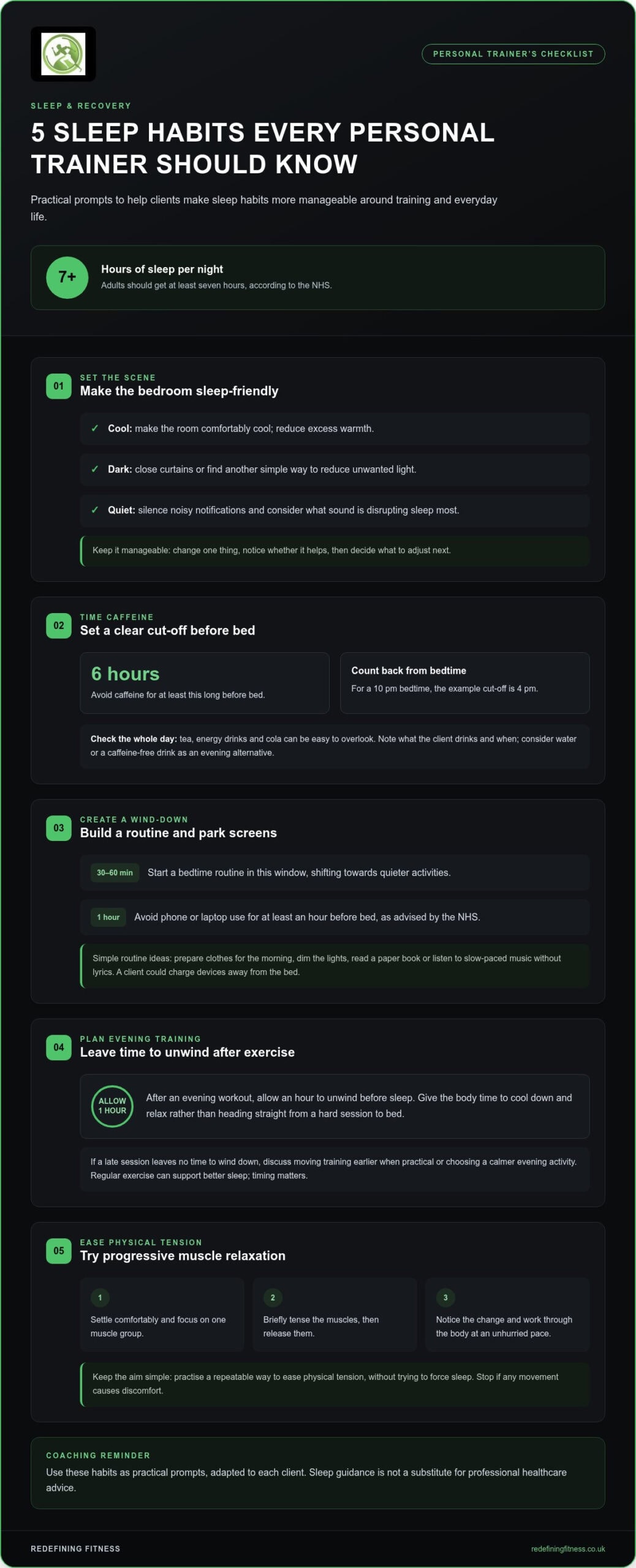
The five sleep hacks every personal trainer should know are to make the bedroom cool, dark and quiet; avoid caffeine for at least six hours before bed; build a wind-down routine; put screens away for an hour before sleep; and use relaxation techniques such as progressive muscle relaxation. After an evening workout, allow an hour to unwind. Adults should get at least seven hours of sleep per night, according to the NHS.
You already know that training matters. But recovery isn’t an optional extra, and sleep habits can affect whether clients feel ready to train again. Regular exercise can support better sleep, yet a late session, bright screens or a restless mind can make it harder to settle down.
This guide shares five practical, client-friendly sleep hacks every personal trainer should know, without turning sleep advice into guesswork. You’ll learn how to make the bedroom more sleep-friendly, time caffeine and evening exercise, and help clients build a routine they can maintain. Keep it simple, adapt the conversation to each person and coach habits that support recovery beyond the gym.
Table of Contents
5 Sleep Hacks Every Personal Trainer Should Know
Sleep advice belongs in a trainer’s recovery conversation, not in a lecture about willpower. Sufficient sleep supports muscle recovery and performance. Deep sleep facilitates the release of growth hormone, which supports the transport of proteins to muscles. Adults are generally recommended to get at least seven hours of sleep per night, according to the NHS. These five habits give clients practical steps to fit around their routines.
1. Make the bedroom cool, dark and quiet
Start with the sleep environment before suggesting another supplement or recovery gadget. Encourage clients to reduce light, unwanted noise and excess warmth in the bedroom. For example, they could close the curtains, silence noisy notifications and make the room comfortably cool. The aim is to remove distractions that make settling down harder, not to create a perfect bedroom.
Ask clients which factor disrupts their sleep most. Someone living on a noisy street may benefit from addressing sound first, while a bright room may call for better control of outside light. Keep the experiment simple: change one thing, notice whether it helps, then decide what to adjust next. A manageable step is more useful than an elaborate sleep set-up they won’t maintain.
2. Set a caffeine cut-off six hours before bed
Help clients count back from their usual bedtime, rather than relying on a vague promise to drink less coffee. The practical rule is to avoid caffeine for at least six hours before bed. A client aiming to sleep at 10 pm, for example, would set a 4 pm cut-off. That example is a planning tool, not a claim that everyone follows the same schedule.
Include more than coffee in the conversation. Clients may overlook tea, energy drinks or cola when tracking caffeine. Ask them to note what they drink and when, then identify a realistic replacement for an evening drink. Water or a caffeine-free drink can make the change easier to repeat. The goal is a consistent boundary, not an all-or-nothing challenge that falls apart after one busy day.
3. Build a wind-down routine and park screens
Suggest beginning a bedtime routine 30 to 60 minutes before bed. Use that window to shift from work, scrolling or household tasks towards quieter activities. The NHS advises avoiding phone or laptop use for at least an hour before bed. Clients can charge devices away from the bed, set an alarm in advance and choose a paper book instead.
Make the routine specific enough to follow on a demanding evening. For instance, a client might prepare clothes for the morning, dim the lights and read a few pages. Slow-paced music without lyrics may also help them unwind. Keep the steps repeatable, whether the client trains early, works shifts or manages family commitments. A routine should fit real life, not compete with it.
4. Give evening training time to wind down
Encourage regular exercise, which can improve sleep quality, but avoid scheduling a hard session immediately before bed. The body needs time to cool down and relax after exercise. For an evening workout, allow an hour to unwind before sleep. That gives the client time to shift from training intensity to calmer activities rather than finishing a session and heading straight to bed.
Help clients plan backwards from bedtime. If their schedule leaves no time to unwind after a late session, discuss moving training earlier when practical or choosing a calmer evening activity. Don’t frame exercise as the enemy of sleep. The key is timing: regular movement supports sleep quality, while exercise immediately before bed may leave too little time to settle.
5. Practise progressive muscle relaxation
Offer restless clients a technique they can use without equipment. Progressive muscle relaxation brings attention to the present and helps relax the body. Invite them to settle comfortably, focus on one muscle group, briefly tense it, then release it and notice the change. They can work through the body at an unhurried pace, stopping if any movement causes discomfort.
Keep the instruction calm and practical. The client isn’t trying to force sleep or achieve perfect relaxation; they’re practising a repeatable way to ease physical tension. Slow, lyric-free music can be another option. Ask which approach feels manageable, then encourage consistent practice as part of the evening routine.
Redefining Fitness: Level 2 & 3 Personal Training Course
Redefining Fitness offers the Level 2 & 3 Personal Training Course for people ready to build their knowledge and coach with greater confidence. Understanding sleep habits can strengthen your wider approach to training and recovery conversations. The qualifications are delivered online and in person, combining blended learning with face-to-face workshops. Specialist areas include kettlebells, circuits and indoor cycling.
Use the five sleep hacks as practical coaching prompts, not a substitute for professional healthcare advice. A strong trainer knows how to share useful habits whilst keeping advice grounded and relevant to the client in front of them. If you’re ready to develop your skills and take the next step into personal training, are you the fitness industry’s next best secret? Contact Redefining Fitness to explore the course.
Turn Better Recovery Conversations Into Better Coaching
Great coaching reaches beyond the session. The way you discuss sleep can help clients connect everyday choices with how they feel and perform, without making promises or stepping beyond your role. Listen closely, ask thoughtful questions and make your guidance practical for the person in front of you. That’s how knowledge becomes a stronger coaching skill.
The five sleep hacks every personal trainer should know can also sharpen your professional development. Bring the same rigour to your learning: build your foundations, expand your understanding and keep raising the standard of support you offer. Redefining Fitness Ltd can help you take that next step in your fitness career.
Are you the fitness industry’s next best secret? Explore the prospectus and contact Redefining Fitness Ltd today. Take a confident step towards your future in fitness. You have the drive; now give it room to grow.

Nutrition Hacks for Personal Trainers: Drive Client Results
Nutrition Hacks for Personal Trainers: Drive Client Results Nutrition advice can help clients make progress, but a trainer’s role has clear…

Your First 90 Days as a New Personal Trainer: Success Plan
Your First 90 Days as a New Personal Trainer: Success Plan Your first 90 days as a new personal trainer should be about building confidence through…
