

New personal trainers get better faster by spotting and correcting errors that undermine safe, effective coaching. Rushing assessments, ignoring medical history and using rigid programmes can all weaken a client’s experience. Strong practice draws on CIMSPA’s professional standards, NHS exercise guidance and the UK Chief Medical Officers’ physical activity guidelines. Technical knowledge matters, but it won’t rescue coaching that fails to fit the person in front of you.
You already know clients need more than a hard workout. They need a trainer who listens, adapts and explains each decision. Explore UK Coaching resources, NICE guidance and Sport England insight to broaden your perspective. The difference is between simply delivering sessions and building the judgement that keeps people engaged.
This article examines avoidable errors in screening, programme planning, communication, behaviour change and nutrition guidance. For wider context, see the British Dietetic Association, Mind, the UCL Centre for Behaviour Change and the World Health Organization’s physical activity information. You’ll find practical ways to coach with greater confidence and care.
Table of Contents
1. Fitness assessments and client medical history
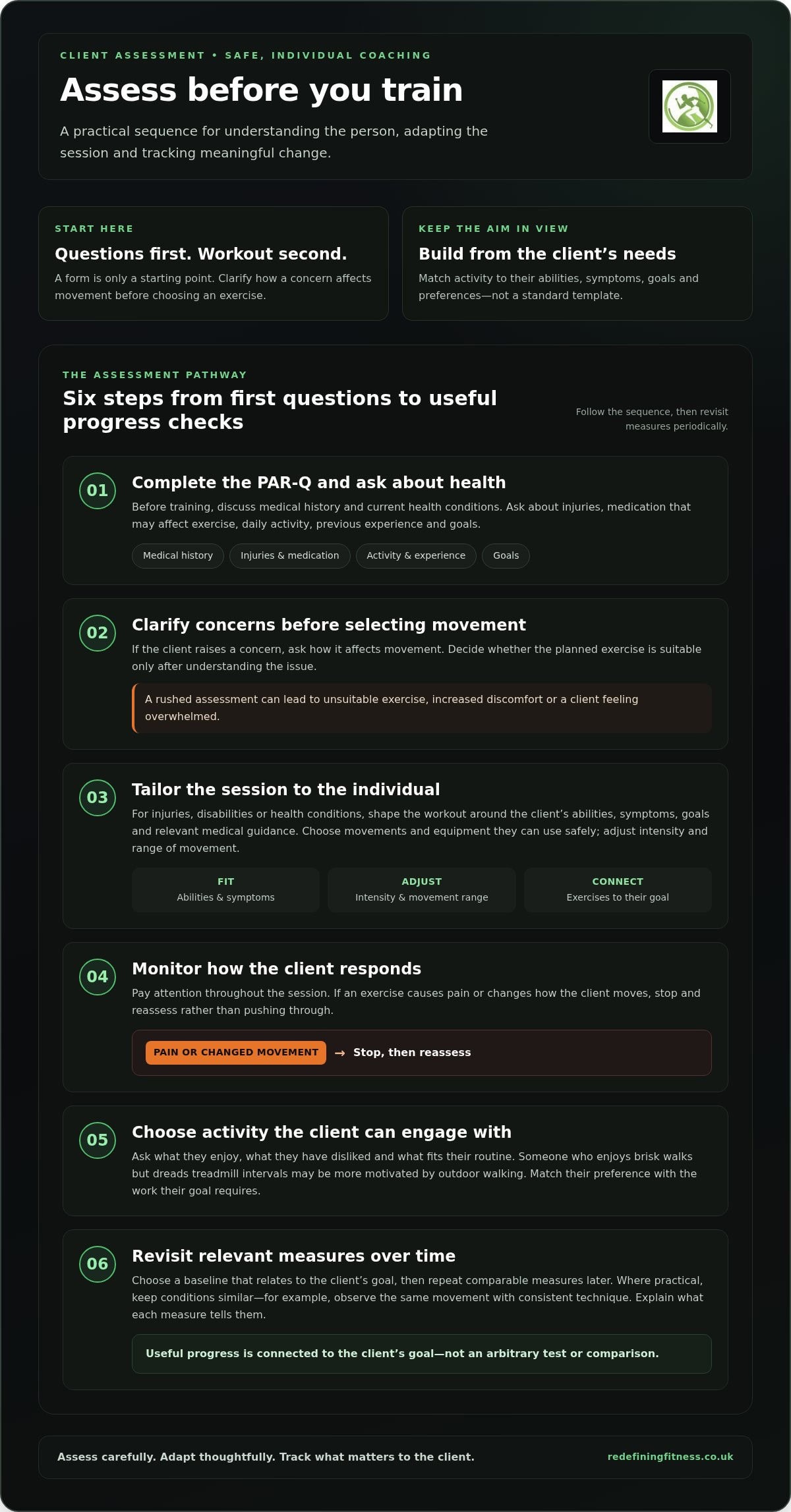
Begin with questions, not a workout. Before training a new client, complete a PAR-Q and ask about their medical history and current health conditions. Discuss injuries, medication that may affect exercise, daily activity, previous experience and goals. A form is only a starting point. If the client raises a concern, clarify how it affects movement before deciding whether the planned exercise is suitable.
Rushing this process is one of the 10 personal trainer mistakes that can undermine safe, effective coaching. Unsuitable exercise may aggravate an injury, increase discomfort or leave a client overwhelmed and less motivated to continue. For example, don’t push a client returning after a knee injury into movements that provoke pain just because they appear in a standard plan. Build from their needs, not a template.
For injuries, disabilities or health conditions, tailor the workout to the client’s abilities, symptoms, goals and relevant medical guidance. Choose movements and equipment they can use safely, adjust intensity and range of movement, and monitor their response throughout the session. If an exercise causes pain or changes how they move, stop and reassess rather than pushing through.
Assess fitness periodically so clients can see what is changing. Choose a relevant baseline, then repeat comparable measures later, such as observing the same movement with consistent technique. Keep conditions similar where practical, and explain what each measure tells you. A result is most useful when it relates to the client’s goal, rather than an arbitrary test or comparison.
Don’t confuse your preferred training style with the client’s best route. Ask which activities they enjoy, what they’ve disliked and what fits their routine. Someone who enjoys brisk walks but dreads treadmill intervals may be more motivated by outdoor walking. Match that preference with the work their goal requires. Treating every client as if they enjoy the same training belongs among the 10 personal trainer mistakes to avoid.
Make every exercise earn its place. For general fitness, include work that develops strength and aerobic capacity. If a client wants to return to a particular activity, choose movements that support its demands. Explain the purpose of each choice so the client understands how the session connects to their goal.
Respect the client’s previous trainer. Ask what worked, what didn’t and which exercises they already know. Don’t dismiss an earlier programme to prove your expertise. If they valued a movement, consider its relevance to their current ability and goals before deciding whether to keep it.
Identify the people you coach best. Focusing on groups such as beginners or older adults can guide your learning and communication. Specialising means building relevant expertise, not assuming everyone in a group has the same needs. Coach the person in front of you.
2. What mistakes do new personal trainers make?
A programme isn’t better because it took two hours to write. New trainers often over-engineer a 12-week plan, then struggle when a client’s work, sleep or motivation changes. These 10 personal trainer mistakes include planning for an ideal week instead of the client’s real circumstances. Build around a few relevant exercises, record the work and adjust it week to week. Good programming serves the person, not the spreadsheet.
Keep the plan simple enough to use and detailed enough to track. Record each exercise, weight, sets and repetitions, and repetitions remaining when useful. For example, if a client completes the same squat with steadier technique, that is meaningful progress even before adding weight. Keep foundational exercises in the plan for several weeks so clients can learn the movement and you can compare performance fairly.
Plan flexibility into the programme rather than treating every change as failure. A client preparing for a cruise in six months may have a clear deadline, but their available time can still shift. Offer a shorter alternative when a session gets squeezed, and preserve the main training priority. A textbook rest interval of 60 seconds won’t suit every client or every workout.
Progress gradually. Increase the challenge only when the client can perform the current work with control and sound technique. That may mean adding repetitions before weight, or choosing a manageable variation before a harder one. Include rest days rather than prescribing hard sessions every day. A plan with no room for recovery or life outside training is poor planning, not discipline.
For general fitness, combine strength training and aerobic exercise, then tailor the balance to the person’s aim. A client who wants to become stronger needs a different emphasis from someone building stamina for weekend walks. Periodise the programme by organising training into purposeful phases, but don’t confuse complexity with quality. These 10 personal trainer mistakes are easier to avoid when the plan remains usable as real life changes.
What qualifications and insurance should a personal trainer have in the UK? A Level 3 personal training qualification is an entry point, not proof of complete professional competence. Keep developing your practical judgement, and arrange suitable insurance for the work you undertake, with cover that reflects your services.
What are the 10 most common mistakes personal trainers make? They include weak assessment, ignoring medical history, unsuitable programming, poor progress tracking, rushing progression, neglecting recovery, inflexible planning, weak communication, blurred boundaries and nutrition advice beyond scope. In programme design, the recurring error is writing for an ideal week instead of the client’s actual one.
Common marketing mistakes include trying to appeal to everyone, copying another trainer’s business without a clear purpose, and promoting sessions without explaining who they help. Define your intended audience first, then describe the specific problem your coaching can address.
3. Communication and behaviour-change skills
A technically perfect session can still fall short if the client feels unheard. Ask one focused question before giving advice: “What made movement difficult this week?” Then listen without interrupting, reflect their answer and agree on one practical next step. If a client missed a planned walk because of a late shift, explore a shorter option together. Coaching starts with understanding their reality, not delivering a lecture.
Don’t mistake compliance for lasting behaviour change. A client may follow instructions during a session yet struggle to act independently between sessions. Help them identify a cue, choose an achievable action and decide how to respond when plans change. For example, they could link a short walk to finishing lunch, then choose an indoor alternative in poor weather. Their choice builds ownership.
Set goals the client can describe in their own words. “Get fitter” gives you little direction; “walk to the station without stopping” gives you a real-life outcome to discuss. Break the goal into a manageable action and review it at the next session. Ask what felt straightforward, what got in the way and what they want to adjust. That conversation turns motivation into useful information.
Give feedback on behaviour, not character. Replace “You’re lazy” with “You trained twice and completed the warm-up both times.” Specific observations show clients what they did without shaming them. If a client feels discouraged by a missed target, acknowledge their frustration, identify what interrupted the plan and agree on a response for next time. Respectful language protects trust and keeps the discussion focused on action.
Go an extra 10% by offering useful guidance beyond the workout, without taking control of every choice. A client who sits for long stretches might benefit from discussing movement breaks they can fit into their day. Ask permission before suggesting changes, then let them select an option. Support is not pressure. Everyone deserves coaching that respects their circumstances, preferences and pace.
Build communication skills deliberately throughout your career. After each session, note one question that opened a useful conversation and one moment when you spoke too quickly. Practise explaining an exercise in plain language, then ask the client how it felt. If they mention discomfort or confusion, respond with curiosity rather than defensiveness. Clear coaching helps clients understand their choices and strengthens your professional judgement.
Don’t assume every client responds to the same motivation. One person may value visible muscle development; another may care more about keeping up on family walks. Ask what matters to them, check that your coaching reflects it, and revisit the answer as their priorities change. These skills take practice, but deliberate listening and specific questions give you a practical place to start.
4. Communication and social awareness
Professional boundaries aren’t cold. They protect your energy and make the coaching relationship clear. If you answer routine messages at 11pm, clients may expect round-the-clock access, and that pattern can contribute to burnout. Set expectations early: explain when you respond, which messages belong in a session, and how clients should raise urgent concerns. Then apply those boundaries consistently, rather than making exceptions you can’t sustain.
Social awareness means noticing the pressures around a client, not judging their choices. Someone training around shift work, family commitments or shared meals needs practical coaching, not criticism for missing a session. Ask what their week looks like before suggesting changes. If eating with family matters to them, don’t frame that routine as an obstacle. Explore how training can fit their life without demanding that life revolve around training.
Build professional relationships rather than trying to do everything alone. Speak with other coaches, attend relevant industry events and contribute thoughtfully to local fitness communities, including those in London. A physiotherapist, community group or experienced coach may understand needs outside your expertise, while your network can create opportunities to learn and collaborate. Treat each connection as a relationship, not a quick route to referrals. Listen, offer useful insight and follow through on commitments.
Don’t expect a prospective client to go from stranger to paying client in one step. A social media post can introduce your approach, but trust often grows through useful conversations and consistent communication. For example, explain how you help beginners feel comfortable with strength training, then invite questions without pressuring anyone to buy. Make your message specific to the audience you want to reach. Broad claims aimed at everyone tell readers little about why your coaching might suit them.
Use social media with the same respect you show in person. Ask before sharing a client’s progress, image or personal story, and don’t turn someone’s private struggle into promotional content. A client may be proud of completing a first class but still want that achievement kept off public channels. Give them control over what you share and how you describe it. Never use shame, comparison or another person’s body as a marketing prop.
Recognise when a client needs a different kind of support. If someone asks for help beyond your knowledge, be honest about your limits and help them identify an appropriate next step. If your coaching style or expertise isn’t a good match, discuss that respectfully rather than prolonging an unhelpful relationship. Clear boundaries, genuine professional networks and considerate communication strengthen your career without making clients responsible for your success.
5. Providing nutrition guidance within scope of practice
Nutrition can influence training, but confidence doesn’t make you qualified to prescribe everything. If you aren’t a registered dietitian, focus on general nutrition guidance and sustainable habits rather than detailed meal plans. That distinction matters. A client asking for a strict menu tailored to a health condition needs support beyond general fitness coaching, not a plan improvised between sets.
Start with the client’s stated challenge. If they say they often train after work without eating beforehand, ask about their routine and what feels manageable. You can discuss general habits, such as planning a meal or snack that suits their schedule, without dictating exact foods or portions. Keep the conversation practical and centred on their experience, not your personal diet preferences.
Separate education from prescription. Explaining that meals can include a mix of foods is different from creating a personalised menu with specific quantities. Avoid presenting one eating pattern as essential for everyone, or claiming that a particular food automatically builds muscle or improves strength. A client’s culture, budget, preferences and health all shape what works in daily life.
Ask careful questions before offering suggestions. Find out what the client already eats around training, which changes they’ve tried and what made those changes difficult. If someone skips lunch because work gets busy, a practical conversation might explore how they could plan ahead. Don’t turn that example into a rigid rule or expect every client to follow the same routine.
Know when a request moves beyond your role. A client seeking a detailed meal plan, advice on managing a medical condition through food, or help with a difficult relationship with eating needs appropriately qualified support. Don’t diagnose, promise outcomes or treat a fitness qualification as nutrition expertise. Explain the limit plainly, then encourage the client to seek guidance from a registered dietitian when they need detailed dietary support.
Keep learning, too. Record nutrition questions that arise in coaching, identify what you can answer responsibly and note where you need more knowledge. Use reputable education to strengthen your general understanding, but don’t let a short course become permission to make claims outside your competence. Good judgement includes knowing what not to advise on.
Clients deserve useful support without pressure or shame. If a client wants to change a habit, agree on one practical step they choose, then discuss how it went at the next session. That approach respects autonomy and keeps nutrition connected to their real challenges. Build strong coaching foundations through professional fitness training, and keep your guidance within your competence.
Redefining Fitness: Level 2 & 3 Personal Training Course
Redefining Fitness is a natural next step if you’re building the knowledge and practical judgement to coach with care. Its Level 2 & 3 Personal Training Course is delivered online and in person, combining blended learning with face-to-face workshops. Use that structured learning to strengthen your foundations, then keep developing how you assess, plan and communicate with clients.
When you’re ready to broaden your skills, training in areas such as kettlebells, circuits and indoor cycling can add variety to your coaching toolkit. Choose learning that supports the clients and sessions you want to work with, rather than collecting qualifications without a clear purpose.
Ready to take your next step? Visit Redefining Fitness to explore the course.
Make Your Next Move Count
Your career won’t be defined by the mistakes you’ve made, but by what you do next. Choose one part of your coaching to improve, practise it deliberately and ask someone you trust for feedback. Then apply what you learn with care. Professional growth isn’t a badge you earn once; it’s the standard you bring to every client and decision.
Avoiding these 10 personal trainer mistakes is a strong starting point, but lasting progress comes from staying curious and accountable. Keep building your knowledge, recognise the limits of your expertise and make each client interaction an opportunity to become a more thoughtful coach. You don’t need to know everything. You do need the discipline to keep learning.
Are you the fitness industry’s next best secret? Take the next step in your development by exploring the Redefining Fitness prospectus. Bring your ambition, keep raising your standards and build a career you’re proud to stand behind.
Frequently Asked Questions
How can a new trainer get better faster?
Improve faster by deliberately reviewing your coaching, not simply accumulating sessions. After a difficult interaction, write down what happened, what you assumed and what you’d do differently. Commit to continuing professional development courses quarterly, and set aside an hour each day for relevant reading. Apply one useful idea at a time, then ask a trusted colleague to observe your coaching and give specific feedback.
What mistakes do new personal trainers make?
New trainers often mistake activity for progress: they add exercises, advice and complexity without checking what the client needs. For example, a beginner intimidated by a busy gym may need a clear introduction to equipment before attempting a demanding circuit. Another common mistake is copying a successful coach’s style without considering whether it suits your strengths, values and intended clients.
How should personal trainers assess a client’s health and fitness before training?
Use conversation and practical observation to understand what the client can do comfortably today. Ask how they manage everyday tasks, such as carrying shopping or climbing stairs, then agree on a simple, relevant movement to observe. Explain what you’re assessing and invite the client to say if they feel uncomfortable. Record a clear baseline in neutral language so future comparisons remain useful and respectful.
How can personal trainers set realistic goals and track client progress?
Translate broad ambitions into outcomes the client can notice in everyday life. If they want more confidence with resistance training, agree what that means, such as setting up equipment independently or completing a familiar movement with control. Record the starting point and review it together at agreed intervals. Progress can include better confidence, consistency or technique, not only changes in body weight.
How can personal trainers improve client retention and communication?
Make each client feel recognised, not processed. At the start of a session, refer to something they mentioned previously, such as an upcoming work trip, and ask how it affected their routine. Agree how they prefer to communicate between sessions and what kind of check-in feels useful. If attendance drops, reach out without blame, listen to the reason and discuss a realistic way to reconnect.

Nutrition Hacks for Personal Trainers: Drive Client Results
Nutrition Hacks for Personal Trainers: Drive Client Results Nutrition advice can help clients make progress, but a trainer’s role has clear…

Your First 90 Days as a New Personal Trainer: Success Plan
Your First 90 Days as a New Personal Trainer: Success Plan Your first 90 days as a new personal trainer should be about building confidence through…
