How To Maximise Your Hydration For Your Gym Workouts
Hydration is fundamental to health, exercise and physical performance, yet it is often approached with overly simplistic advice. Recommendations such as “drink eight glasses of water a day” can be useful as a starting point, but they do not account for the substantial differences in body size, activity levels, climate, diet and individual fluid requirements.
Your hydration needs can change significantly depending on how much you exercise, how much you sweat and the environment in which you train. Losing too much fluid can affect thermoregulation and exercise performance, while deliberately drinking excessive amounts can also create problems. The objective is therefore not to drink as much water as possible, but to maintain an appropriate fluid balance for your circumstances.
This guide looks at the practical principles behind effective hydration, including water quality, daily fluid intake, exercise, caffeine, alcohol, electrolytes and how to recognise when you may be drinking too little or too much.
https://www.uclahealth.org/news/article/hydration-hacks-how-drink-more-water-every-day
How To Maximise Your Hydration: What Is The Best Water To Drink?
For most people, the best water to drink is simply safe water that is readily available and that you will consume consistently. In the UK, treated public tap water is generally suitable for regular consumption, with water companies operating under regulatory standards designed to protect drinking-water quality. The Drinking Water Inspectorate provides information on drinking-water quality and regulation in England and Wales.
Bottled water is not automatically healthier than tap water. It can be convenient, particularly when travelling or when the local water supply is uncertain, but bottled water comes from a range of sources and can itself be subject to contamination if it is improperly handled or stored. The CDC’s guidance on bottled-water safety explains that bottled water can come from public water systems as well as underground sources and is subject to safety requirements.
If you are travelling somewhere where the safety of the local water supply is uncertain, however, the calculation changes. Check local public-health advice and, where necessary, use sealed bottled water or appropriately treated water. The CDC’s guidance on safe drinking water when travelling provides practical advice on assessing water safety and dealing with potentially contaminated supplies.
There is also an environmental argument for using tap water where it is safe to do so. Regularly relying on bottled water creates additional packaging and transportation, whereas a reusable bottle filled from a safe tap provides a simple alternative.
Does Water pH Matter For Hydration?
The pH of drinking water is often given far more importance than it deserves when discussing hydration. Water being slightly alkaline or acidic does not make it inherently more hydrating, and there is no good reason for most people to seek out water with a specific pH for ordinary exercise or daily hydration.
The World Health Organization’s Guidelines for Drinking-water Quality treat pH primarily as an important water-quality and operational parameter rather than a health-promoting property that consumers need to optimise. The commonly referenced range for drinking-water systems is around pH 6.5 to 8.5, although the appropriate range depends on the circumstances of the water supply.
Your body also regulates its internal acid-base balance very tightly through the lungs and kidneys. Drinking slightly alkaline water does not meaningfully alter the pH of your blood, and there is no established performance advantage from trying to keep your drinking water at a particular pH.
For everyday hydration, water quality, availability and palatability matter considerably more than whether the bottle says 6.8, 7.2 or 8.0. Whilst pH is not everything it does matter to some degree and the effects on your body will vary slightly even within the safe range. If this topic interests you, check out this video:
How Much Water Should You Drink Each Day?
There is no single volume of water that every adult needs to drink every day. Fluid requirements vary according to body size, physical activity, climate, diet and physiological circumstances. The European Food Safety Authority recognises that nutrient and water requirements vary between individuals and according to factors including physical activity and physiological status.
The frequently repeated recommendation of eight glasses of water a day can be used as a simple starting point, but it should not be treated as a universal physiological requirement. Someone working indoors in a cool climate will have very different fluid requirements from someone training outdoors in hot weather.
It is also important to remember that total water intake does not come exclusively from glasses of plain water. Food and other beverages contribute to overall fluid intake, so obsessing over a specific number of litres of water without considering the rest of your diet can give you a distorted picture of your actual hydration.
Your requirements can change from one day to another. A long training session, hot weather or unusually high sweat losses can increase your fluid needs, while a sedentary day in a cool environment may require considerably less.
The sensible approach is therefore to establish a reasonable baseline and adjust it according to your circumstances rather than treating one number as a rule that must be followed every day.
Should You Drink Little And Often?
Drinking regularly throughout the day can be a practical way to maintain hydration without having to consume large amounts of fluid at once. There is no need to force yourself to drink continuously, but allowing yourself to become substantially dehydrated before drinking can make it more difficult to replace fluid losses during prolonged exercise.
The amount and timing of fluid you need should reflect what you are doing. A normal working day requires a different approach from a long run in hot weather, particularly if you are sweating heavily.
For shorter and less demanding exercise, drinking according to thirst can be a useful practical strategy. During prolonged endurance exercise, however, a more structured approach may be appropriate, particularly if you know that you have a high sweat rate.
The important principle is flexibility. Your hydration strategy should change when the demands placed on your body change rather than remaining fixed throughout the year.
How Can You Tell If You Are Properly Hydrated?
Urine colour can provide a useful indication of hydration status, particularly when considered alongside thirst and other symptoms. Darker urine can be associated with lower fluid intake, while consistently very pale urine can indicate that you are drinking heavily.
Urine colour is not a perfect diagnostic test. Foods, supplements, medications and medical conditions can all change urine colour, so it should be treated as one practical indicator rather than an exact measurement of hydration.
Thirst, changes in bodyweight, urine frequency and how you feel during exercise can provide additional information. For athletes, weighing yourself before and after longer training sessions can also help estimate sweat losses and provide a basis for developing a more individualised hydration strategy.
There is also no benefit to trying to keep your urine completely clear throughout the day. If you are continually drinking large amounts of water simply to eliminate any yellow colour from your urine, you may be consuming more fluid than you actually need.
Can You Drink Too Much Water?
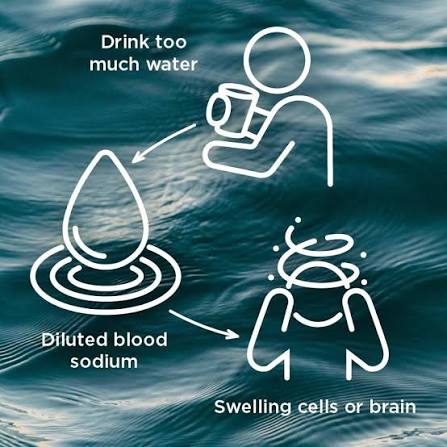
Yes. Excessive water consumption can dilute the sodium concentration in your blood and contribute to a condition known as hyponatraemia. This is particularly relevant during prolonged exercise, where some athletes may consume large amounts of fluid in an attempt to replace every drop of sweat.
Exercise-associated hyponatraemia is primarily associated with consuming more fluid than the body can effectively excrete, rather than simply failing to consume enough sodium. The International Exercise-Associated Hyponatremia Consensus Statement highlights excessive fluid intake as a central risk factor.
Symptoms can include headache, nausea, vomiting, weakness, confusion and, in severe cases, neurological complications. It is therefore important not to treat hydration as a situation where more is always better.
This is one reason hydration strategies should be individualised. If you are exercising for several hours in hot conditions and sweating heavily, replacing appropriate amounts of fluid and sodium can be important. If you are completing a short gym session, deliberately consuming several litres of water is unnecessary. Good hydration means maintaining an appropriate fluid balance, not maximising water consumption.
https://www.brita.co.uk/news-stories/why-brita/csr/Can-You-Drink-Too-Much-Water
How Much Should You Drink When Exercising?
Your fluid requirements increase during exercise because you lose water through sweating and respiration. The amount you need depends on exercise duration, intensity, environmental conditions and your individual sweat rate.
A short resistance-training session in a cool gym may require relatively little additional fluid, whereas a long run in hot and humid conditions can produce substantial sweat losses. Two people performing exactly the same workout can also have very different hydration requirements because their sweat rates are different.
For longer or more demanding sessions, particularly in hot conditions, estimating your sweat rate can provide useful information. Weigh yourself before and after training, account for the fluid you consumed during the session and consider any urine produced. This gives you an approximate picture of how much fluid you lost.
There is no need to replace every gram of bodyweight lost during every workout. The appropriate strategy depends on the duration and circumstances of the session, and drinking beyond your actual requirements can increase the risk of overhydration.
Research consistently shows that significant hypohydration can impair endurance performance, particularly when exercise takes place in hot conditions. Evidence also indicates that the effects can vary according to exercise type and environment, so hydration recommendations should not be reduced to one universal percentage or fluid target.
When Are Electrolytes Actually Needed?
Electrolytes become more relevant when fluid losses are substantial, particularly during prolonged exercise, heavy sweating or exercise in hot and humid conditions. For a typical gym session lasting less than an hour in normal conditions, most people are unlikely to need a dedicated electrolyte supplement because a normal diet generally provides sufficient sodium and other electrolytes.
The main electrolyte lost through sweat is sodium, although sweat also contains smaller amounts of potassium and other minerals. Individual sweat composition varies considerably, which means there is no single electrolyte requirement that applies to everyone. The American College of Sports Medicine’s resources on hydration and electrolytes provide further guidance on matching fluid and electrolyte replacement to exercise demands.
Electrolytes become more useful during longer endurance sessions, particularly when exercise lasts several hours or takes place in hot conditions. Heavy sweaters may also have greater sodium losses than other people. Salt residue on clothing or skin can be one indication of substantial sodium loss, although it cannot tell you precisely how much sodium you have lost.
Electrolytes should not, however, be treated as a mandatory supplement for every workout. Most people completing ordinary daily activities, shorter resistance-training sessions or moderate exercise in normal temperatures can obtain sufficient electrolytes through their regular diet.
There is also an important distinction between electrolyte replacement and carbohydrate replacement. Sports drinks can contain both, but sodium and carbohydrate perform different functions. During prolonged endurance exercise, carbohydrate may be useful for maintaining energy availability, while sodium becomes relevant to fluid and electrolyte replacement.
The objective is therefore to match electrolyte intake to actual losses rather than automatically adding electrolyte tablets to every bottle of water. More electrolytes are not automatically better, and excessive fluid consumption can itself contribute to exercise-associated hyponatraemia.
https://www.outsideonline.com/health/nutrition/your-guide-using-electrolytes-properly/
Does Caffeine Dehydrate You?
Caffeine has traditionally been described as a strong diuretic that inevitably causes dehydration, but that is an oversimplification. Caffeinated drinks such as coffee and tea contribute to overall fluid intake, and normal amounts consumed by habitual caffeine users do not generally cause a net fluid loss greater than the volume consumed.
A review of caffeine and fluid balance found that normal servings of caffeinated drinks do not appear to compromise hydration status in habitual consumers. Larger acute doses can increase urine production, particularly in people who are not accustomed to caffeine, but this is different from saying that coffee automatically dehydrates you.
Caffeine can also have legitimate applications in exercise performance. The relevant consideration is therefore not simply whether a drink contains caffeine, but how much you consume, when you consume it and how you personally respond.
The bigger concern for many people is sleep. Large amounts of caffeine, particularly later in the day, can interfere with sleep quality and therefore indirectly affect recovery and performance. That is a much more useful reason to monitor caffeine intake than the outdated idea that every cup of coffee needs to be offset with additional water.
How Much Caffeine Should You Have?
There is no universal requirement to limit caffeine to exactly two cups of coffee per day because caffeine concentrations vary considerably between drinks. A strong coffee, energy drink and cup of tea can contain very different quantities.
It is therefore more useful to consider total caffeine intake rather than counting cups. Someone drinking two strong coffees may consume substantially more caffeine than someone drinking two weaker teas.
If you use caffeine around exercise, consider both the amount and timing. Consuming substantial amounts late in the day can interfere with sleep, while taking caffeine strategically before exercise may be useful for some people.
Caffeine should therefore be treated as part of your overall nutrition and lifestyle rather than as a hydration problem. Moderate caffeine consumption does not mean that you are automatically dehydrating yourself.
Does Alcohol Cause Dehydration?
Alcohol can increase urine production and contribute to fluid loss, particularly at higher intakes. It can also affect sleep and recovery, meaning that its consequences for fitness extend beyond hydration.
Having water alongside alcoholic drinks can help maintain fluid intake, but it does not cancel out the effects of alcohol. The amount consumed remains the most important factor, and dehydration is only one part of the broader health and performance picture.
Alcohol also provides calories without offering the same nutritional value as protein-rich foods, fruit, vegetables and other nutrient-dense foods. For someone focused on body composition or exercise performance, regular alcohol consumption can therefore become relevant for several reasons beyond hydration.
The current NHS guidance on alcohol recommends that adults who drink regularly should not exceed 14 units per week, spread over three or more days. This is a general lower-risk drinking recommendation, not a hydration target.
How Does Hydration Affect Exercise Performance?
Hydration can have a meaningful effect on exercise performance, particularly when exercise is prolonged or performed in hot conditions. As fluid losses increase, the cardiovascular and thermoregulatory demands placed on the body also increase.
The effect is not identical across every type of exercise. Research is particularly consistent regarding endurance exercise in the heat, while the performance consequences of moderate dehydration can be smaller or less consistent during shorter forms of exercise.
A review of hydration and exercise performance found that dehydration becomes particularly problematic as fluid losses increase and that the effects are amplified during prolonged exercise in hot environments. More recent research has also found performance reductions at around 2% body-mass loss in some running conditions.
This does not mean that you need to drink continuously during every workout. Excessive fluid intake carries its own risks, particularly during prolonged endurance exercise. The objective is to begin exercise adequately hydrated and replace an appropriate amount of fluid according to the demands of the session.
For regular exercisers, hydration should therefore be considered part of the overall performance and recovery strategy rather than something that only matters once you become extremely thirsty.
What Is The Best Hydration Strategy For Exercise?
A sensible hydration strategy starts before exercise rather than attempting to compensate for significant dehydration once training has already begun. Begin sessions normally hydrated and consider the expected duration, intensity, temperature and your personal sweat rate.
During shorter sessions, drinking according to thirst may be sufficient for many people. During prolonged exercise or hot-weather training, a more structured strategy can be useful, particularly if previous sessions have shown that you lose large amounts of fluid.
After training, continue drinking according to thirst and normal fluid requirements. If you have experienced substantial sweat losses during prolonged exercise, replacing some of the sodium lost through sweat may also be appropriate.
For endurance athletes, it can be useful to keep records of bodyweight before and after training, environmental conditions, fluid consumed and exercise duration. Over time, this can provide a much better picture of your individual requirements than relying on a generic hydration formula.
There is no single hydration strategy that works for everybody. The most effective approach is the one that matches your body, your training and your environment while avoiding both substantial dehydration and unnecessary overdrinking.
How Can You Improve Hydration For Health And Fitness?
The simplest way to improve hydration is to make it part of your normal routine rather than treating it as something that needs to be corrected at the end of the day. Keep water readily available, drink regularly according to thirst and increase your intake when activity or environmental conditions increase your fluid losses.
Pay particular attention to exercise duration and temperature. A short resistance session in a cool environment requires a different approach from a long run in hot weather. If you regularly perform prolonged endurance training, learning your approximate sweat rate can make your hydration strategy considerably more precise.
Do not rely on water alone if the circumstances genuinely call for electrolyte replacement, but do not assume that every workout requires an electrolyte product either. Most people can meet their normal electrolyte requirements through food, while prolonged exercise and heavy sweating create a greater need to consider sodium replacement.
Finally, remember that hydration is about balance. Drinking too little can impair health and performance, but deliberately drinking excessive amounts can also create problems. The aim is not to consume the maximum amount of water possible; it is to maintain an appropriate level of hydration for what you are actually doing.
How To Maximise Your Hydration For Your Gym Workouts: The Key Points To Remember
Hydration is important for health, exercise performance and recovery, but effective hydration does not require obsessing over one arbitrary daily water target.
Safe tap water is generally an excellent everyday option where the local supply is properly treated and regulated. Bottled water can be useful when travelling or when water safety is uncertain, but it is not automatically nutritionally superior to tap water. The CDC’s drinking-water guidance provides further information on water quality and safety.
Your fluid requirements vary according to body size, activity, climate, diet and sweat rate. Thirst, urine colour and changes in bodyweight can all provide useful information, although none should be treated as a perfect standalone measurement.
Remember that dehydration is not the only risk. Excessive water consumption can contribute to hyponatraemia, particularly during prolonged endurance exercise, so drinking more is not automatically better.
Caffeine does not automatically dehydrate you, and normal consumption of coffee or tea can contribute to fluid intake. Alcohol can contribute to fluid loss and has broader implications for health, sleep and recovery, so it is worth considering as part of the overall picture rather than simply as a hydration issue.
Electrolytes become more relevant when exercise is prolonged, sweat losses are substantial or conditions are hot. They are not a requirement for every workout, and the appropriate amount depends on individual sweat and sodium losses.
Ultimately, good hydration is about matching fluid and electrolyte intake to the demands placed on your body. Drink enough to replace normal losses, increase your intake when exercise or environmental demands increase, and avoid forcing excessive amounts of fluid simply because you believe more water must always be better.
Further Reading And Evidence
For readers who want to explore the science behind hydration in more detail, the European Food Safety Authority’s dietary reference values, the World Health Organization’s drinking-water guidelines, the American College of Sports Medicine’s hydration resources and the NHS guidance on alcohol consumption provide useful starting points.
For exercise-specific research, the literature on hydration and physical performance, exercise-associated hyponatraemia and caffeine and fluid balance provides a more detailed scientific basis for the practical recommendations discussed above.
Ready To Take Your Personal Training Knowledge Further?
Understanding hydration is one part of the wider exercise science knowledge required to work effectively as a personal trainer. A capable fitness professional needs to understand how nutrition, hydration, exercise intensity, environmental conditions and recovery interact rather than relying on simplistic rules.
If you are considering becoming a personal trainer, visit Redefining Fitness to explore the available qualifications and training options. You can also download the Redefining Fitness prospectus from the website to understand the courses available and the education provided throughout the qualification journey.