

Nutrition Hacks for Personal Trainers: Drive Client Results Nutrition advice can help clients make progress, but a trainer’s role has clear boundaries. In the UK, personal trainers need a Level 3 Personal Training Qualification recognised by CIMSPA, and most aren’t qualified to provide meal plans. The best nutrition hacks for personal trainers focus on practical, sustainable habits while keeping advice within your competence.
You already know a client’s results depend on more than what happens in a workout. Food preferences, routines and confidence all affect whether healthy changes last. Learn to tailor everyday nutrition guidance, avoid restrictive advice, stay within your scope and discuss portions and macros without guesswork. Then apply these skills with a clear, client-centred approach.
Table of Contents
1. Do Personal Trainers Give Nutrition Advice?
Yes, personal trainers can support everyday nutrition habits, but coaching has limits. Most personal trainers aren’t qualified to provide meal plans. Focus on practical education, such as discussing food choices, routines and client goals. Refer clinical nutrition needs beyond your competence to an appropriately qualified professional. Strong coaching starts with listening, not handing every client the same menu.
Begin with a consultation about goals, dietary preferences, medical history and daily routines. Ask what the client eats, when they eat and how meals fit around work, training and family life. A food journal covering 3 to 7 days can reveal patterns that memory misses. Review it together without judgement, then identify one useful habit to explore.
Ask about cooking skills and access to food before suggesting meal preparation. A client who works shifts may need portable options, while someone who dislikes cooking may rely on ready-made meals. Explore what happens at breakfast, during the commute and after evening training. These details help your guidance fit real life, rather than an imaginary perfect week.
Ask about ingredients, allergies and sensitivities instead of assuming only peanuts, gluten or dairy matter. Find out what reactions the client has noticed and whether a health professional has assessed them. Preparation matters too: a salad can change substantially with generous dressing, added butter or a calorie-dense sauce. Discuss ingredients and portions without labelling foods as universally good or bad.
Food-tracking apps can help clients record intake and spot habits, but entries rely on accurate portions and database information. Use them to prompt discussion, not to label a meal healthy based on one number. If a client tracks micronutrients, explain that a log shows recorded intake, not a diagnosis of deficiency. Keep the conversation focused on food variety and the client’s goals.
Coaching software can bring food logs, training notes and check-ins together for review. Compare recorded meals with the client’s training schedule, sleep routine and feedback about energy. For example, repeatedly missing lunch on workdays may point to a practical planning barrier. Use that pattern to agree on a manageable adjustment, then review whether it works for the client’s week.
Supplements aren’t automatically effective or safe for every fitness client; suitability depends on the person, their diet, health and the product. UK costs vary with the supplement, ingredients, serving size and brand, so there isn’t one useful price for all products.
Keep the boundary clear: discuss general food habits, but don’t prescribe therapeutic diets or treat medical conditions. If a client reports a diagnosed condition, complex symptoms or a suspected deficiency, direct them to appropriate clinical support. Your value lies in consistent fitness coaching, careful questions and practical follow-through.
2. Personalising meal plans around client preferences
A meal plan only works if the client can live with it. Start with their favourite foods, cultural traditions, budget, cooking confidence and usual eating habits. Shape suggestions around those realities, rather than demanding a complete lifestyle overhaul. Nutrition guidance may differ for athletes, older adults, vegans and vegetarians, depending on food preferences, training demands and personal goals. Ask what the client already enjoys eating before suggesting changes.
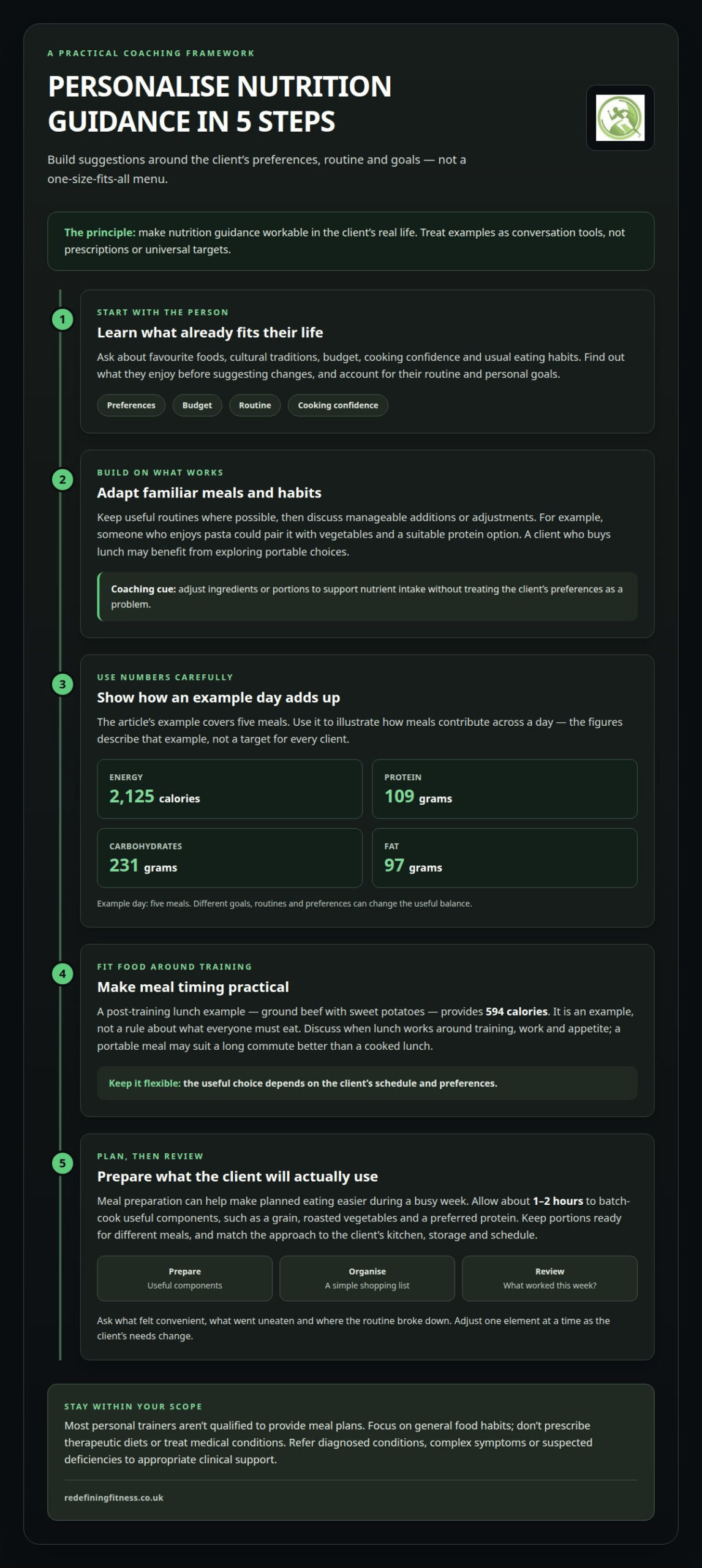
Build on strengths the client already has. Someone who regularly prepares breakfast could add a protein source they enjoy, while a client who buys lunch may need portable choices. Keep familiar meals wherever possible, then adjust ingredients or portions to support nutrient intake. If a client loves pasta, for example, discuss pairing it with vegetables and a suitable protein option. These nutrition hacks for personal trainers work best when they respect client preferences instead of treating them as obstacles.
Use an example day to explain structure, not prescribe a universal plan. One example provides 2,125 calories, 109 grams of protein, 231 grams of carbohydrates and 97 grams of fat across five meals. Those totals describe that example, not a target for every client. A different goal, routine or preference can change the useful balance. Use the figures to show how meals contribute across a day, then adapt the discussion to the individual.
For a post-training lunch example, ground beef with sweet potatoes provides 594 calories. Protein helps repair muscle tissue after a workout, but the example isn’t a rule about what every client must eat. Discuss when lunch fits around training, work and appetite. If a client trains before a long commute, a portable meal may suit better than a cooked lunch. Nutrition hacks for personal trainers should make timing practical, not rigid.
Meal preparation can make planned eating easier to manage during a busy week. Allow about 1-2 hours for preparation, then batch-cook components the client will actually use. For example, prepare a grain, roast vegetables and cook a preferred protein, keeping portions ready for different meals. A simple shopping list can reduce last-minute decisions and help limit food waste. Match the method to the client’s kitchen, storage and schedule.
Review the approach as the client’s needs change. A vegetarian client may want different protein choices; an athlete may need meals arranged around training sessions. Ask what felt convenient, what went uneaten and where the routine broke down. Then adjust one element, such as lunch preparation or snack choices. Personalised meal guidance is a working framework, not a fixed menu that ignores changing preferences.
3. Avoiding unsustainable dietary restriction
Restriction can look decisive on paper and still fall apart in everyday life. A rigid plan may clash with work, family meals or cultural choices, or make clients feel they must avoid favourite foods. Rapid weight loss and restrictive eating can leave clients struggling to meet their needs and maintain consistent habits; misinformation can push them towards unsuitable choices. Your job is to support sustainable behaviour, not reward short-term compliance.
Set a realistic standard. The 80/20 rule allows flexibility, with good choices made 80% of the time and room for less structured choices the other 20%. Treat it as a conversation tool, not a scorecard. A client who eats vegetables with most lunches but enjoys a takeaway with friends can still practise useful habits. Success means building a routine they can repeat, not eliminating every food they enjoy.
Keep changes small enough to last through a busy week. Limit advice to one or two adjustments the client feels ready to try. For example, if they often miss lunch before an evening workout, agree on a practical lunch option rather than changing breakfast, snacks and dinner all at once. Review the change at the next check-in. If it doesn’t fit their routine, adapt it instead of blaming their motivation.
Don’t treat skipped meals as a badge of discipline. Skipping meals can affect metabolism and may leave a client hungry or distracted later in the day. Explore the reason first: an early shift, low appetite, limited breaks or a deliberate attempt to compensate for eating. Then discuss a workable option, such as bringing a packed lunch or planning a snack around their schedule.
Fad diets sell certainty. Wikipedia lists over 100 common diets, yet no single approach suits every client’s preferences, lifestyle and goals. Don’t prescribe a trending diet as a universal solution. Ask what the client has tried, what they found manageable and what they want to change. A plan built around their actual eating habits is more useful than copying an influencer’s rules.
Challenge misinformation without humiliating the person who brings it to you. If a client says they must cut out all carbohydrates to support a workout, ask where that belief came from and what they expect it to achieve. Distinguish a personal preference from a blanket rule. Keep nutrition discussions grounded in practical food choices, and refer clinical concerns beyond your competence.
Finally, reject perfection as the measure of progress. No client can maintain flawless eating for 52 weeks a year, and defining success as 100 percent adherence sets an impossible standard. Track whether a chosen habit is becoming more consistent, then adjust the approach when life changes. That is coaching, not dietary policing.
4. Nutrition coaching mistakes and referral boundaries
The biggest mistake is confusing general habit coaching with individual clinical nutrition care. Most personal trainers aren’t qualified to provide meal plans, so don’t present a prescriptive menu as standard coaching. You can discuss everyday food choices, routines and progress. When a client raises a diagnosed condition, complex symptoms or treatment-related nutrition needs, recognise that the issue is beyond general health and fitness coaching.
Know what different qualifications mean. In the UK, a nutrition coach doesn’t need a degree to support individuals or small groups with healthy diet and lifestyle choices. A person using the title Registered Nutritionist, or RNutr, needs a nutrition degree at BSc level or higher and UK Voluntary Register of Nutritionists membership. Level 4 RSPH Nutrition and Level 5 Nutrition qualifications offer further knowledge for nutrition coaching roles.
For fat loss while preserving muscle, focus on gradual, sustainable food habits, protein-containing choices and continued strength-focused training. Avoid promising a particular rate of weight change or prescribing severe restriction. If a client’s health needs shape their goal, make the boundary clear and refer them to suitable clinical nutrition support. Your coaching can still reinforce consistent exercise and realistic routines.
Build a coaching package around work you can deliver: scheduled check-ins, habit reviews, food education and accountability. For example, a client could review meal routines and training consistency at each meeting, then agree on one practical adjustment. Don’t present a package as medical treatment or promise a specific fat-loss outcome. Clear scope protects the client and gives your service a credible purpose.
Monitor behaviour as well as weight. A weekly or biweekly assessment can review training attendance, meal routines, energy feedback and the client’s own priorities. If progress stalls despite solid adherence, the guidance describes small adjustments of 10-15%. Treat that figure as a possible adjustment, not an automatic prescription. First establish what changed, whether tracking reflects usual intake, and whether the plan remains workable.
Use reliable sources for nutrition topics, not a trending post or a client’s social-media feed. If advice conflicts, explain what you can support based on your knowledge and qualification, and avoid presenting speculation as fact. A nutrition professional with relevant expertise can assess needs outside your remit. That boundary isn’t a failure of coaching; it is a deliberate standard of responsible practice.
Exercise referral provides a structured route when a client’s health circumstances call for more carefully supported activity. Keep the distinction clear: encourage activity within your competence, document the agreed coaching focus, and don’t diagnose or treat a condition through food advice. Strong coaching means knowing when to guide, when to monitor and when another professional’s expertise is needed.
5. Portion guidance and macro tracking
Teach the basics first: calories describe energy intake, while macronutrients are protein, carbohydrate and fat. Micronutrients include vitamins and minerals, so a balanced diet considers food quality as well as totals. To estimate calorie and protein needs, consider someone’s goals, body size, activity, current intake and progress. Treat any estimate as a starting point, then review how their routine and results respond.
Energy balance describes the relationship between energy consumed and energy used. A sustained difference can influence body weight, but a calorie total doesn’t describe the whole diet. For example, two lunches may contain similar calories yet differ in protein, vegetables and fibre. Discuss the overall pattern, including meals, drinks and additions such as oil, butter or dressings. Small extras can change total intake without changing the apparent size of a meal.
Use portions to make guidance practical. Ask the client to show what they typically serve, then discuss where a change might fit. If their plate contains little protein, explore adding eggs, pulses, fish or another preferred option. If they rarely eat vegetables, identify a variety they’ll prepare and enjoy. This turns abstract macro targets into visible choices without treating one portion size as right for everyone.
Macro tracking can help a client understand how meals contribute to daily intake. Explain that protein supports muscle tissue repair after a workout, while carbohydrate and fat also contribute to the overall diet. A food-tracking app can display calories and macronutrients, but its results depend on accurate entries and portions. Compare a recorded meal with what was actually served, including cooking oils and sauces. Treat the log as a prompt for discussion, not a verdict.
Micronutrient tracking calls for the same care. An app can report what a client entered, but that record alone doesn’t establish whether they have a deficiency. Start with food variety: for example, review whether meals include fruit, vegetables, pulses, dairy or alternatives, and wholegrain options. Treat gaps as opportunities to improve variety. Don’t turn an app’s number into a diagnosis or use it to justify supplements.
Keep the process manageable. If someone feels overwhelmed by weighing every ingredient, begin with a repeatable meal and a consistent serving utensil. They can prepare a familiar lunch, record it accurately, then compare hunger and routine at check-ins. If precision helps and suits their goals, tracking can become more detailed. If it adds stress without useful insight, return to portion awareness and food variety.
Evidence-based coaching means explaining calories, macros and micronutrients clearly, then matching the detail to the client. Use estimates to guide discussion, not claim certainty. A balanced approach connects portions with preferences, training and everyday life, so the client understands what to adjust and why.
Redefining Fitness: Level 2 & 3 Personal Training Course
Redefining Fitness offers Level 2 and Level 3 Personal Training qualifications, delivered online and in person. If you want to coach with confidence, these courses provide a route to building your personal training knowledge and practical foundations. Nutrition coaching demands more than sharing meal ideas: you need to understand your role, communicate clearly and recognise when a client needs support beyond your scope.
As your skills develop, specialist options include Kettlebells, Circuits and Indoor Cycling. Choose learning that strengthens your wider fitness practice while keeping nutrition advice responsible and client-centred. The right next step is a course that matches where you are now and the professional skills you want to build.
Ready to take that step? Contact Redefining Fitness to discuss the Level 2 & 3 Personal Training Course.
Turn Better Coaching Into Your Professional Edge
Make sound judgement part of every client conversation. Keep developing your practice through resources from CIMSPA, the NHS, the British Dietetic Association, the Association for Nutrition and the National Institute for Health and Care Excellence. Broaden your professional perspective with Sport England, UK Coaching, the Food Standards Agency, GOV.UK and the UK Voluntary Register of Nutritionists. Use credible sources to inform your learning, while keeping advice within your own competence.
Choose the standard you want clients to experience: clear communication, thoughtful boundaries and guidance that respects the person in front of you. Are you the fitness industry’s next best secret? Explore the Redefining Fitness Ltd prospectus and take your next step with confidence.
Frequently Asked Questions
Do Personal Trainers Give Nutrition Advice?
Yes, personal trainers can discuss general food choices and healthy habits, provided they stay within their competence. For example, a trainer might help a London client compare breakfast options using food labels, then discuss which choice suits their routine. That differs from assessing a medical condition or prescribing a therapeutic diet. If a client needs individual clinical nutrition support, refer them to an appropriately qualified professional.
What nutrition advice can UK personal trainers legally give without dietitian qualifications?
Personal trainers can offer general education about food choices and lifestyle habits, but most aren’t qualified to provide meal plans. Avoid presenting yourself as a clinician or treating a health condition through nutrition advice. In the UK, the title Registered Nutritionist, or RNutr, requires a nutrition degree at BSc level or higher and membership of the UK Voluntary Register of Nutritionists. Keep your advice within your training and role.
What are practical high-protein, affordable meal ideas in the UK?
Build simple meals around accessible staples such as eggs, lentils, beans, tinned fish, milk, yoghurt, chicken or turkey. For example, try eggs on toast, lentil soup with bread, or tinned fish mixed into a jacket potato. Frozen vegetables can add variety without requiring fresh produce for every meal. Costs depend on the product, pack size and shop, so help clients choose options that fit their own food budget.
What should clients eat before and after workouts, and when?
A client who wants food before training can try a familiar snack about 30 minutes to an hour beforehand, then adjust the choice to appetite and comfort. A banana with yoghurt or toast with an egg may suit some routines. After training, the next convenient meal can include a protein source and other foods the client enjoys. Avoid turning timing into a rigid rule when ordinary meal patterns work.
How can personal trainers help clients build sustainable nutrition habits?
Connect a new habit to something already fixed in the client’s day. For example, a client who leaves home by train could pack a snack beside their work bag the night before. Agree how they’ll handle disrupted plans, such as a delayed commute or an unexpected late shift. Review what worked at the next check-in, then keep, adapt or replace the habit based on their experience.
How should personal trainers adapt nutrition advice for allergies, medical conditions and eating-disorder concerns?
Don’t diagnose allergies, manage medical diets or treat eating disorders through coaching. Ask what support the client already receives, avoid suggesting foods that conflict with their stated restrictions, and refer clinical questions to an appropriate healthcare professional. If food tracking or weight-focused goals seem to increase distress, pause that approach and prioritise the client’s wellbeing. Keep exercise coaching within your competence while they access suitable care.

Nutrition Hacks for Personal Trainers: Drive Client Results
Nutrition Hacks for Personal Trainers: Drive Client Results Nutrition advice can help clients make progress, but a trainer’s role has clear…

Your First 90 Days as a New Personal Trainer: Success Plan
Your First 90 Days as a New Personal Trainer: Success Plan Your first 90 days as a new personal trainer should be about building confidence through…
