
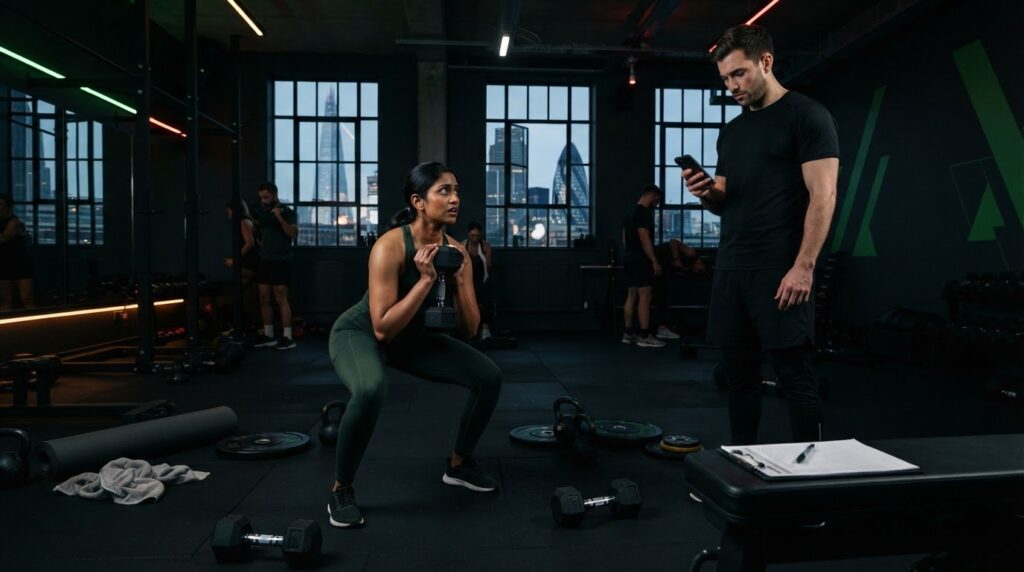
A trainer’s physique doesn’t prove they’re good at their job, and it shouldn’t be your test. The real signs of a bad personal trainer are in how they coach: poor programming, exercises they can’t explain, distracted sessions, body shaming and habits that undermine the standards they expect from you. Judge their practice, not their appearance.
You’re right to expect more than a hard workout and a loud voice. A capable trainer should understand your starting point, explain the purpose behind your plan and stay engaged while you train. This guide shows you how to spot the difference, including when a trainer’s own health and fitness habits might raise a sensible question, and when they’re simply irrelevant to coaching quality. Know the red flags, protect your confidence and make your next decision with clear eyes. If you need to raise a concern, understand your options.
Table of Contents
1. Poor workout programming and muscular balance
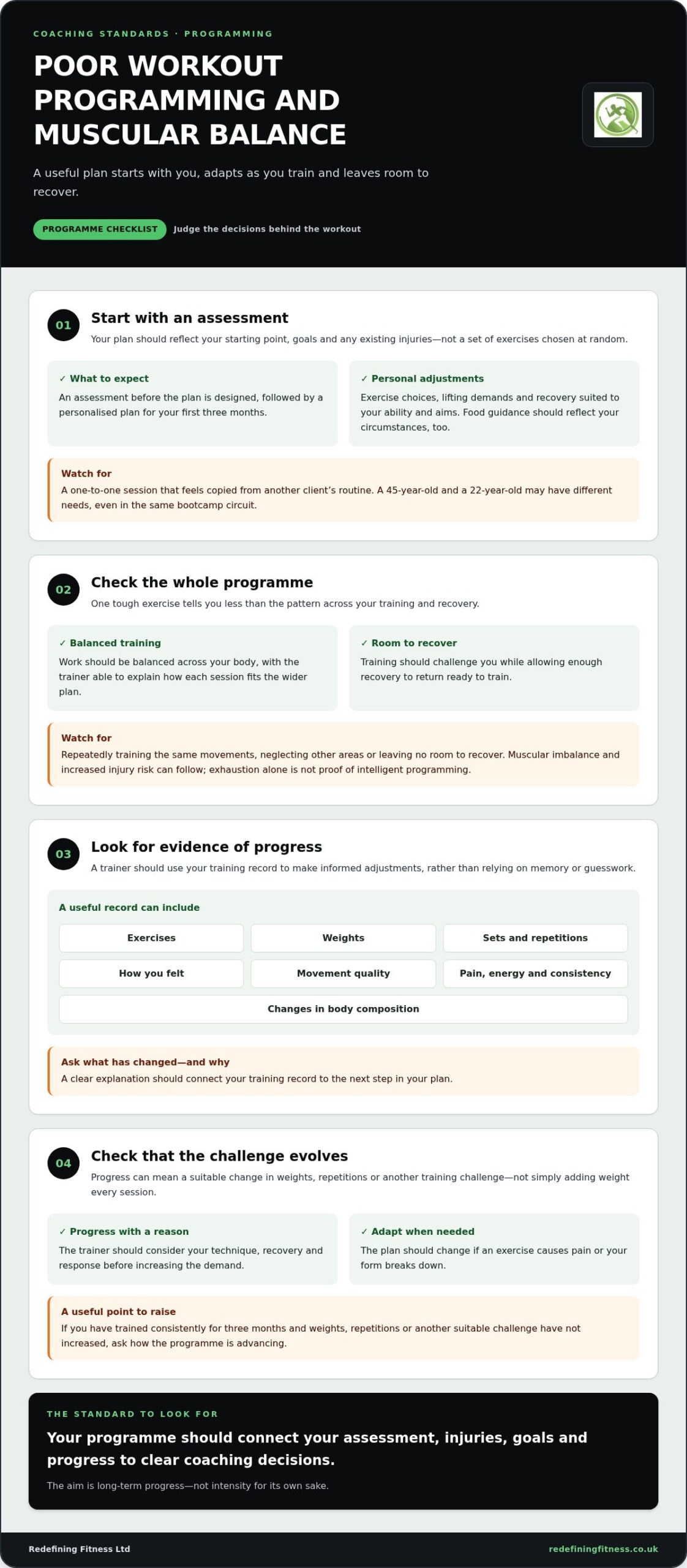
Before designing a workout plan, a personal trainer should assess your starting point, goals and any existing injuries. After that assessment, they should prepare a personalised plan for your first three months, rather than choosing exercises at random.
A one-to-one session should feel built around you, not copied from another client’s routine. A 45-year-old and a 22-year-old might have different needs, even if both attend the same bootcamp circuit. Your trainer should adapt exercise choices, lifting demands and recovery to your ability and aims. The same applies to your food intake: a useful plan should reflect your circumstances, not hand every client identical instructions.
Look at the whole programme, not just its toughest exercise. Repeatedly training the same movements while neglecting other areas can contribute to muscular imbalances and increase injury risk. Your trainer should balance the work across your body and explain how each session fits the wider plan. If every workout leaves you exhausted with no room to recover, that is not evidence of intelligent programming. Challenge matters, but so does recovering well enough to return ready to train.
Progress needs evidence. A trainer can track changes in repetitions and weights, movement quality, body composition, pain, energy or consistency. They should also record each session’s exercises, weights, sets, repetitions and how you felt. These details help them make informed adjustments instead of relying on memory or guesswork. Ask what has changed in your plan and why. A clear answer should connect your training record to your next step.
Too little progression is another warning sign. If you’ve trained consistently for three months and your trainer hasn’t increased the weights, repetitions or another suitable challenge, ask how the programme is advancing. Progress doesn’t mean adding weight every session: your trainer should consider your technique, recovery and response before increasing the demand. But a plan that never changes as your ability grows is not giving your strength a direction.
Judge the coaching by the decisions behind the workout. Can your trainer explain how the plan reflects your assessment, injuries, goals and progress? Do they adjust it when an exercise causes pain or your form breaks down? If your programme ignores those details, repeats the same session without reason or treats fatigue as the only measure of success, the problem is more than a dull workout. It’s poor programming, where long-term progress matters far more than the intensity of a single session: programmes should suit your starting point and injuries, balance work across your body, vary the training style and allow time for recovery.
2. Trainers who cannot explain exercise choices
Before prescribing exercise, a trainer should assess your starting point, goals and injury history, then adapt the exercises to what they learn. Safe practice means discussing relevant pain or movement limits, watching you perform an exercise and changing it if your form or comfort raises concern. A trainer who skips that conversation is guessing, not coaching.
Every exercise should have a purpose. Ask why you’re doing a movement and why it comes before another. A trainer might explain that a controlled squat practises a movement pattern, while a row develops pulling strength. The explanation needn’t sound technical, but it should connect the exercise to your goal. If the answer is “because I saw it online”, you’ve learned nothing useful about your programme.
Intensity is no excuse for sacrificing form. Your trainer should prioritise safe, controlled technique over lifting more weight or forcing extra repetitions. For example, if your back position changes during a heavy lift, a good coach can reduce the load, adjust the movement or choose another exercise. They should explain that decision instead of treating every correction as weakness or urging you to push through poor form.
Watch how the trainer coaches, not just what they prescribe. During your set, they should watch your repetitions and give feedback that helps you perform the next one better. If they prescribe an unfamiliar movement, they should demonstrate or explain it before you start. If you say it causes pain, they should listen and adapt the exercise instead of dismissing your experience or repeating the same instruction.
Question exercises on unstable surfaces if the trainer can’t explain their purpose. A wobble board or stability ball can make a movement feel harder, but instability limits how much weight you can use. That can restrict strength and muscle gains if building strength is your goal. The equipment isn’t automatically wrong; the red flag is using it as a flashy substitute for a clear training purpose.
Nutrition advice should relate to your goal, not become a sales pitch for supplements or rigid meal rules. For fat loss, total calorie intake and protein matter more than meal timing; eating six small meals hasn’t been shown to stoke metabolism compared with three larger meals. Supplements aren’t necessary for fitness and health gains. Medical nutrition needs belong with a registered dietitian, not guesswork from a trainer.
For aspiring coaches who want to build their own professional foundations, a Level 2 and Level 3 Personal Training Course is a relevant route into the field. As a client, your standard is simpler: expect each exercise, adjustment and nutrition point to come with a clear, appropriate reason.
3. Trainer distraction and lack of attention
A session isn’t coaching if your trainer is mentally elsewhere. You’re there to practise, build strength and learn; they’re responsible for paying attention to what you’re doing. If they keep chatting across the gym, watching someone else or missing obvious changes in your movement, you’re not getting focused support. The biggest warning is a pattern, not one brief interruption.
Preparation starts before you arrive. A trainer should know the session plan, have the necessary equipment ready and remember what you discussed last time. For example, if you said a particular movement felt uncomfortable, they should bring it up before putting it back into your workout. If you have to explain your goals again at the start or wait while they decide what’s next, their lack of preparation is taking time away from your training.
Phone use deserves a clear distinction. A trainer might use a phone as a timer or to record a relevant note, then turn their attention back to you. Scrolling, texting or taking personal calls while you’re lifting is different. During a set, they could miss a dropped shoulder, a rushed repetition or a change in your control. You shouldn’t have to compete with a screen to get feedback on the weight you’re handling.
Attention also means listening and adapting. If you arrive saying you slept badly, feel unusually tired or are worried about a movement, your trainer should take that into account. They might change the exercise, reduce the demand or give you more time to practise. Good trainers don’t just deliver the session they planned; they respond to the person in front of them. Repeating instructions more loudly without addressing your concern isn’t adaptation.
Look at how the trainer manages the whole session. Are they ready when you arrive? Do they explain the next step, notice when you need clarification and keep track of the time you’re meant to receive? A trainer who is consistently more than 10 minutes late without apologising or adjusting your session time is showing poor professional attention. Your training time shouldn’t quietly shrink because their schedule is disorganised.
Be direct if distraction becomes a pattern. Tell your trainer which moments feel unattended, such as phone use during your sets or having to repeat the same information each session. Then notice what changes: do they put the phone away, prepare your plan and respond to what you say? One lapse can be corrected. Repeated inattention after a clear conversation shows that their behaviour, not your expectations, is the problem.
4. Body shaming as a motivational tactic
A trainer can challenge your effort without attacking your body. “You can make that movement stronger” targets a skill; “you look awful” targets your appearance. The difference matters. A client paying for coaching deserves feedback that helps them take action, not insults dressed up as tough love. If comments about your shape or size leave you embarrassed, that’s not a training method you have to accept.
Notice what the trainer praises. Do they recognise consistent attendance, improved technique or choosing a manageable weight? Or do they comment only on your appearance and the number on the scales? A coach who says, “You kept good control through that set,” gives you something specific to build on. A trainer who compares you with another gym member turns coaching into humiliation.
Body shaming can also hide in jokes, nicknames or public remarks. “You’ll need to earn your lunch” may sound casual, but it links eating with punishment. Comments about what you’re wearing or how your body looks during an exercise can do the same. Unless you’ve clearly welcomed a particular kind of humour, a trainer shouldn’t assume it’s acceptable. Take your discomfort seriously, even if they say they were only joking.
Constructive coaching focuses on behaviours you can change. A trainer might help you set a realistic attendance goal, practise a movement or build confidence with an exercise you’ve avoided. They should explain what they mean by “work harder”, then give useful guidance, such as controlling each repetition or following the agreed session plan. Vague criticism like “you’re lazy” offers no practical next step. It labels you instead of coaching you.
If a comment crosses the line, name the behaviour directly: “Don’t comment on my body; give me feedback on my technique.” Then notice the response. A professional will listen, apologise and change their language. Deflection, repeated remarks or blaming you for being “too sensitive” show a refusal to respect a clear boundary. You don’t need to prove a comment was offensive before asking for it to stop.
Keep your goals separate from someone else’s preferred appearance. You might want to feel more capable carrying shopping, improve your stamina for a local walk or lift with better control. Those are meaningful aims without body criticism. A good trainer can motivate you with clear, relevant feedback and respect for your choices. If every session leaves you dreading the next remark, the issue isn’t a lack of willpower; it’s the coaching relationship.
5. A trainer’s personal health and fitness
A trainer’s physique isn’t a qualification. A lean, muscular coach can still give poor advice, while a trainer with a different body shape can coach with skill and care. Base your decision on their conduct, knowledge and ability to explain their work, not whether they match an idealised fitness image. Health and fitness look different for different people, and appearance alone can’t show what happens in a coaching session.
In the UK, the recommended qualifications are a Level 2 Gym Instructor qualification and a Level 3 Personal Trainer qualification. These qualifications offer a more meaningful benchmark than judging a trainer by their weight, clothing or personal workout habits.
To check qualifications and registration, ask to see the trainer’s certificates and the name of the awarding organisation. If they say they belong to a professional register, look up their name and current status in that register’s directory. Clear, verifiable answers are useful evidence; vague claims about being “fully qualified” don’t tell you what training they completed.
Consider how the trainer approaches their own health without treating their body as a test. For example, a coach might adjust their training around an injury or changing circumstances. That doesn’t automatically make them less capable. What matters is whether they use sound judgement with you, explain the limits of their expertise and avoid presenting personal preferences as universal rules. Their weight loss history isn’t proof that their approach will suit every client.
Be alert if a trainer uses their own routine to pressure you. “I train through pain, so you should too” isn’t a reasoned coaching decision. Nor should they insist that their eating pattern, supplement choices or appearance prove you need to copy them. You’re paying for guidance suited to your goals and circumstances, not a demand to reproduce someone else’s lifestyle.
If you need to complain, write down what happened, when it happened and what response you want. Send a clear complaint to the trainer or the gym or organisation arranging your sessions, and keep copies of relevant messages. If the trainer claims membership of a professional register, use its published complaints process. Keep your account factual: note the date, the words used and how the trainer responded when you raised your concern.
Choose competence over image. A trainer’s personal fitness may shape their perspective, but it doesn’t replace appropriate qualifications, professional boundaries or respectful coaching. Judge the work they give you, the explanations they provide and whether their behaviour supports your goals. Your body isn’t an audition for their approval.
Redefining Fitness: Level 2 & 3 Personal Training Course
Redefining Fitness offers a Level 2 & 3 Personal Training Course for people ready to build the knowledge and judgement that effective coaching demands. If spotting poor practice has made you consider becoming a trainer yourself, this is a practical next step towards learning how to programme and coach with purpose.
Redefining Fitness delivers personal training qualifications online and in person through blended learning and face-to-face workshops. Topics include kettlebells, circuits and indoor cycling, helping aspiring coaches develop specialist skills alongside their core personal training education. Strong coaching takes more than looking fit; it requires clear explanations, attentive practice and respect for each person’s needs.
Are you the fitness industry’s next best secret? Visit Redefining Fitness to explore the course.
Choose the standard you want to uphold
Your next step is to act on what you’ve noticed. If you’re still training with someone, decide what needs to change and say it plainly. Their response will tell you something important: whether they can listen, take responsibility and adapt. If trust has gone, you’re allowed to move on without defending your choice.
If you’re considering coaching others and have been weighing up the signs of a bad personal trainer, turn that scrutiny into a professional standard. Ask yourself what clients should experience in your sessions: clear purpose, attentive guidance and respect. Those expectations begin with the choices you make as a developing coach, not with how you look or how loudly you motivate.
Are you the fitness industry’s next best secret? Explore the prospectus and take a purposeful step towards building your future in fitness. Your standards can help shape a better experience for every person you coach.
Frequently Asked Questions
How do I know if my personal trainer is good?
A good trainer helps you understand your training, not just complete it. After a session, you should be able to describe what you practised and how it connects to your goals. Notice whether they welcome questions, remember relevant details you’ve shared and help you make more confident decisions between sessions. In a London gym or elsewhere, strong coaching should leave you better informed, not dependent on guesswork.
Want to Know if You’re Getting the Right Coaching?
Ask yourself whether you can speak honestly with your trainer and get a useful response. For example, if work commitments disrupt your routine, do they help you find a workable adjustment or make you feel guilty? You should be able to discuss what is and isn’t working without being belittled. A brief conversation about your goals and concerns can reveal whether the coaching relationship still suits you.
What are the warning signs of a bad personal trainer?
Warning signs include pressure to follow advice unrelated to your goals, dismissive answers when you raise concerns and claims that sound absolute rather than considered. Be wary if a trainer treats your questions as a nuisance or makes you feel you have to earn their respect. Focus on repeated behaviour and its effect on your confidence to train, rather than one awkward exchange.
How can I tell if a trainer is using unsafe exercise technique or inappropriate weights?
Stop and reassess if you can’t control the movement, keep losing your balance or feel sharp or worsening pain during an exercise. Tell your trainer what you’re experiencing before continuing. They should respond by changing the load, range or movement to suit your ability. Don’t let embarrassment or pressure push you through a repetition you can’t perform with control.
What are signs a personal trainer is behaving unprofessionally or crossing boundaries?
Unprofessional conduct can include unwanted comments about your private life, repeated personal messages unrelated to training, or touching you without explaining why and seeking your agreement. State your boundary clearly and note what happened, including the date and any relevant messages. If the behaviour continues, raise your concern with the gym or organisation arranging your sessions, and keep a record of your complaint.

10 Books Every Personal Trainer Should Read
10 Books Every Personal Trainer Should Read A personal training qualification gives you the foundations to begin working in the fitness industry, but becoming a
10 Techniques To Improve Memory, Understanding and Retention
10 Techniques to Improve Memory, Understanding and Retention Learning is one of the most valuable skills you can develop, yet most people spend considerably more
