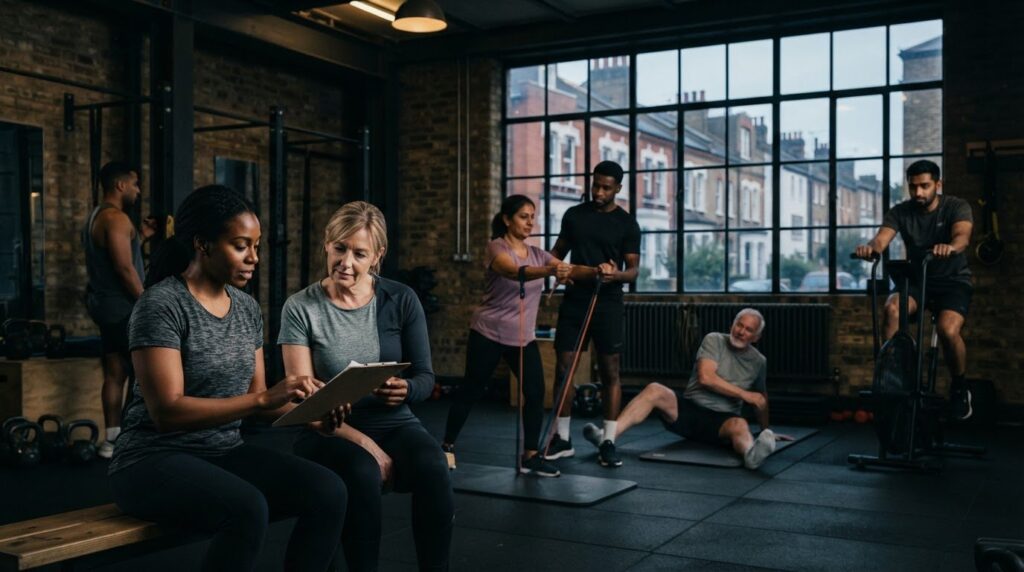
Health Referral Fitness Qualification: What It Is and Who Needs It A health condition doesn’t make you a clinician, and a health referral fitness qualification won’t turn you into one. That distinction matters. Exercise referral involves supporting people with health conditions to take part in appropriate physical activity, while recognising when a question or concern belongs with a healthcare professional. If you’re unsure how this differs from standard personal training, look beyond the course title and consider the skills and boundaries involved.
You may already know how to plan exercise and motivate clients. Supporting referred clients calls for more: understanding relevant health considerations, adapting activity responsibly and working within the referral information and your professional scope. Confidence isn’t about pretending to know everything. It’s about knowing what you can do, what you can’t, and when to seek guidance.
This article explains what exercise referral practice involves, who may benefit from this additional learning and where your responsibilities stop. You’ll also explore the knowledge and behaviours that help you support clients responsibly, how referral pathways can vary and what to consider when choosing a learning route. The aim isn’t to give you clinical authority. It’s to help you build sound, inclusive fitness practice with clear boundaries.
What Is a Health Referral Fitness Qualification?
A health referral fitness qualification develops a fitness professional’s knowledge and skills for supporting people referred to structured physical activity. It is not a medical qualification. It doesn’t train you to diagnose a condition, prescribe medical treatment or take over decisions that belong to a healthcare professional. Instead, it prepares you to work thoughtfully with the information provided and within the boundaries of your role.
Exercise referral schemes connect eligible people with structured activity support that may help them become more active. A referral gives useful context, but it doesn’t make every participant alike or transfer clinical responsibility to the fitness professional. A client may have a long-term condition, several health considerations or individual concerns that affect how they take part. Your role is to pay attention, communicate clearly and work within your competence.
An exercise referral practitioner supports a client’s participation in physical activity within the scope of their referral, without diagnosing, treating or giving medical advice. That boundary is the foundation of responsible practice. A personal trainer may need to recognise when a client’s health circumstances call for medical guidance. Referral learning builds on that awareness, with a focus on supporting people through structured activity.
How Exercise Referral Differs from General Fitness Instruction
General fitness instruction often starts with goals such as improving strength, building fitness or learning a new activity. Referral-based work adds health-related context. You need to understand the information provided, listen to the client’s experience and consider how their circumstances may affect participation. That calls for more than swapping one exercise for another. It requires measured decisions, clear communication and a willingness to ask for guidance when something falls outside your role.
There’s no single template for referred clients. Two people with the same condition may have different abilities, preferences, confidence levels and support needs. Appropriate progression means responding to the person in front of you, not pushing them through a standard plan or assuming what they can manage. If a concern falls outside your role, stay within your scope and follow the appropriate referral or communication pathway.
Who Might Explore This Fitness Qualification?
This learning may suit qualified fitness professionals who want to develop beyond general instruction and understand referral-based practice. It can be relevant if your work brings you into contact with people living with long-term conditions, or if you want to build the knowledge to support participation more responsibly. The focus is not on claiming clinical expertise. It’s on strengthening your fitness practice with better-informed judgement.
It may also appeal if you’re interested in how physical activity support connects with wider health pathways. Schemes can differ in their referral routes and arrangements, so understand the process for your setting rather than assuming one model applies everywhere. Strong learning develops practical capability alongside professional restraint: listen, adapt appropriately, communicate clearly and recognise when someone needs support beyond your remit.
How Health Referral Practice Connects Fitness and Healthcare
A referral is a starting point for informed support, not a handover of clinical responsibility. In practice, the pathway may involve referral information reaching a fitness setting, an initial conversation with the participant, appropriate activity and ongoing review. The details depend on the scheme and local arrangements, so don’t assume one process applies across the UK. In London, for example, understand the pathway used by the scheme you work with rather than relying on an approach from another area. Schemes may sit within broader local health structures, such as integrated care systems, and may connect with social prescribing.
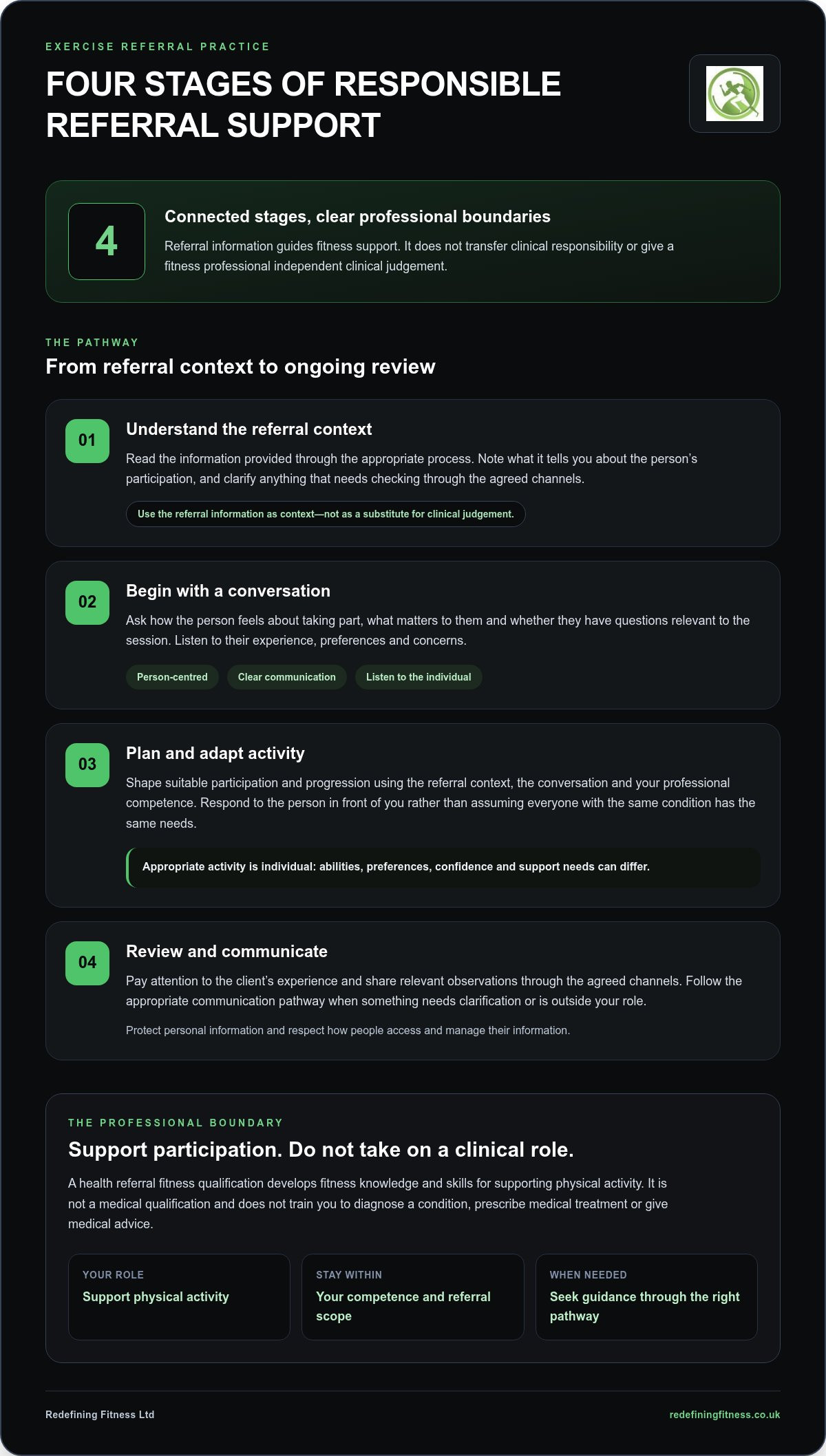
- Understand the referral context. Read information provided through the appropriate process and note what it tells you about the client’s participation. NICE guidance on exercise referral schemes offers broader context for this area of practice.
- Begin with a conversation. Ask how the person feels about taking part, what matters to them and whether they have questions relevant to the session. A person-centred approach is also reflected in NHS England’s personalised care work.
- Plan and adapt activity. Use the referral context, the conversation and your professional competence to shape suitable participation and progression. The NHS physical activity guidance for adults and the UK Chief Medical Officers’ physical activity guidelines provide wider activity context.
- Review and communicate. Pay attention to the client’s experience and share relevant observations through the agreed channels. Consider your practice against the relevant CIMSPA professional standards and check qualification details through the Ofqual register where relevant.
Referral information can guide fitness support, but it cannot give a fitness professional independent clinical judgement. Clear communication helps connect healthcare and fitness settings without blurring their responsibilities. Protect personal information in line with the ICO’s data protection principles and respect how people access and manage their information through NHS data services.
What Referral Information Can Mean for a Fitness Session
Relevant information can help you decide what to ask, what to consider when planning a session and what may need clarification through the appropriate channels. For example, if the information indicates a health condition, check the participant’s understanding of the session, ask about their preferences and invite them to raise concerns. Don’t infer restrictions or invent clinical instructions. Keep personal information confidential, record what is relevant and follow workplace procedures.
Why Collaboration and Clear Communication Matter
Good collaboration depends on useful, proportionate communication, not clinical guesswork. Report relevant observations through the scheme’s agreed process, using clear descriptions rather than diagnoses. If a participant raises a concern or appears unwell during activity, don’t press on regardless or try to explain the cause. Pause activity when appropriate, follow workplace procedures and seek suitable clinical guidance through the right route. Your responsibility is to recognise the limits of your role and act within them.
That kind of judgement takes more than a referral form. It depends on practical learning, careful communication and a willingness to seek guidance rather than bluff. Exercise Referral learning from Redefining Fitness can help you build capability beyond general fitness instruction while keeping your practice anchored to clear professional boundaries.
Qualification, Scope and Clinical Responsibility: Know the Difference
A qualification can strengthen your ability to support people through physical activity. It doesn’t turn fitness expertise into clinical authority. The distinction is simple, but it must hold in practice: work within your training, the referral information and the arrangements of the scheme you’re part of. Healthcare professionals retain clinical decision-making; your contribution is informed fitness support.
In the UK, CIMSPA’s professional standard for this specialism is titled “Working with People with Long Term Conditions”. Relevant Level 3 qualifications may be regulated by Ofqual and endorsed by CIMSPA, but titles and recognition aren’t interchangeable assumptions. Check the current criteria relevant to your intended role, employer or scheme. A certificate alone doesn’t guarantee access to a referral scheme, employment or particular client outcomes.
What a Fitness Professional Can Responsibly Contribute
Your contribution is practical and person-centred. You can listen to what a client says about their experience, use relevant referral information to inform session planning and adapt activity within your competence. You can also document observations in line with workplace procedures and pass on concerns through the appropriate channel. A health referral fitness qualification helps build this capability, but your decisions must still stay within your role and the scheme’s requirements.
When a Concern Sits Beyond Fitness Practice
Be direct about the boundary. If a client asks, “What does this symptom mean?”, “Should I change my medication?” or “Can exercise treat my condition?”, don’t answer as a clinician. Explain that those questions need appropriate clinical guidance, then follow the relevant workplace or referral procedure. If a concern arises during activity, respond according to your training and workplace process rather than trying to diagnose its cause or recommend treatment.
That boundary isn’t a retreat from responsibility. It’s responsible practice: notice, respond appropriately, record what matters and communicate through suitable channels. For broader context on how qualification routes fit into exercise referral practice, explore the Exercise Referral Qualification UK guide.
What Skills Help You Support Referred Clients Effectively?
Technical knowledge matters. So does the way you use it with a real person. Effective referral practice relies on listening, clear explanations and the ability to adapt your communication without making assumptions about someone’s needs. A health referral fitness qualification can develop relevant knowledge, but professional confidence grows when you combine learning with reflection, appropriate support and respect for each client’s circumstances.
Start with the person, not the label. A referral or diagnosis doesn’t tell you what someone enjoys, what they’ve done before, what makes them feel comfortable or what they want from being active. Ask open questions, listen to the answers and explain your reasoning in straightforward language. That makes it easier for a client to express preferences, raise concerns and make informed choices about taking part.
Adapting Communication Without Making Assumptions
Useful questions invite a conversation rather than steer someone towards your own assumptions. You might ask, “What kinds of activity have you enjoyed before?” or “Is there anything you’d like me to understand before we plan today’s session?” Give the person time to respond, and check that your explanation makes sense to them. Respectful, accessible communication helps people participate on their own terms. Don’t assume that a diagnosis, visible difference or referral tells you about someone’s ability, confidence or preferences.
Adapt how you communicate as well as what you say. Some clients may prefer a clear explanation before trying an activity; others may benefit from having options described one at a time. Use plain language, invite questions and check understanding without talking down to anyone. Where a person communicates differently or needs information presented another way, respond with respect and follow relevant workplace procedures. Inclusion isn’t an extra. It’s part of sound professional practice.
Planning Within Your Knowledge and Competence
Good planning means using what you’ve learnt to make considered fitness decisions, not stretching that knowledge into clinical advice. Take account of relevant referral information, the client’s feedback and your professional competence. If you’re uncertain, pause and seek appropriate guidance instead of guessing. After a session, reflect on what worked, what the client told you and what you might adapt next time. That discipline turns experience into better-informed practice.
Condition-specific learning can deepen your understanding of the context clients may bring. Learning about lower back pain management or obesity and diabetes, for example, can help you develop relevant awareness for fitness support. It doesn’t give you permission to diagnose, treat a medical condition or make clinical decisions. Keep the distinction firm: use learning to inform responsible exercise support, and direct clinical questions to the appropriate professional.
Build capability with a learning route that strengthens both knowledge and judgement. Explore Exercise Referral learning from Redefining Fitness to develop your practice with a focus on informed, inclusive support.
Building Your Health Referral Fitness Skills with Redefining Fitness
Once you understand referral practice and the limits of your role, further learning becomes a deliberate professional step, not just another certificate to collect. A health referral fitness qualification can help you build relevant knowledge for supporting people through physical activity, but meaningful development also depends on how you apply that learning, reflect on your decisions and work with appropriate support.
Redefining Fitness Ltd offers Exercise Referral learning alongside personal training qualifications and specialist courses. Its teaching approach prioritises inclusion and learner support, including support for neurodivergent learners. Courses combine online learning with face-to-face teaching. This gives learners different ways to engage with course content while keeping professional understanding and practical capability at the centre.
What to Look for in Your Next Learning Step
Choose learning that matches the work you want to do and helps you apply knowledge responsibly. Consider how the subject connects to referral practice, what learner support is available and whether the learning helps you think through real professional situations. Before committing to a qualification, check current entry criteria and recognition against authoritative information, including the relevant awarding body and CIMSPA professional standards. Course titles can vary, so focus on what the qualification prepares you to learn, not just the label.
Ask yourself what you need to develop: understanding referral information, communicating with clients, planning appropriate activity or knowing when to seek guidance? A clear answer helps you choose a useful next step rather than collecting credentials without direction. Look for learning that reinforces boundaries as well as capability. No qualification should be treated as a promise of scheme access, employment or client outcomes.
Turn Interest into a Clear Development Plan
Start with an honest review of your current practice. Note your existing fitness experience, the situations where you feel confident and the areas where you need stronger knowledge. Then consider which client groups or referral settings interest you. You don’t need to have every answer before you begin, but you do need to recognise where your competence ends and how you’ll respond when uncertainty arises.
Build reflection into your development. After learning or practice, consider what you understood, what you would handle differently and where guidance would strengthen your judgement. Keep developing through appropriate learning and professional collaboration, rather than relying on assumptions or working beyond your role. Redefining Fitness Ltd connects exercise referral learning with inclusive teaching and learner support, giving you a focused route to build your understanding.
Ready to take your next step with purpose? Are you the fitness industry’s next best secret? Explore the course prospectus.
Make Your Next Step Count
Your next move should be deliberate. Choose learning that strengthens your judgement, helps you support people respectfully and keeps your practice grounded in clear professional boundaries. A health referral fitness qualification can be part of that development, but the real measure is how thoughtfully you put your knowledge into practice.
Redefining Fitness offers Exercise Referral learning, with inclusive teaching and support for neurodivergent learners among its priorities. Professional development should make space for different learners while maintaining high standards. Bring curiosity, commitment and a willingness to keep learning; build capability one considered step at a time.
Ready to turn your interest into purposeful development? Are you the fitness industry’s next best secret? Explore the course prospectus. Your next chapter starts with the choice to learn well and practise responsibly.
Frequently Asked Questions
Is an Exercise Referral Qualification a Medical Qualification?
No. It’s a fitness qualification, not medical training. It doesn’t qualify you to diagnose a condition, advise someone to change medication or decide what treatment they need. If a client asks whether a symptom is caused by exercise, for example, direct them to an appropriate healthcare professional rather than speculating. Your value lies in informed fitness support, not in stepping into a clinician’s role.
Can a Personal Trainer Work with Clients Referred by Healthcare Professionals?
Yes, a personal trainer may work with referred clients when their qualifications, competence and the relevant scheme’s requirements support that work. A general personal training qualification alone may not meet the criteria for every referral scheme or client group. In London, as elsewhere, local scheme arrangements can differ, so understand the setting’s expectations and referral process before taking on this work.
Do You Need a Personal Training Qualification Before Studying Exercise Referral?
You may need a relevant fitness qualification first, but it doesn’t have to be a personal training qualification in every case. Current entry routes include a Level 2 Fitness Instructor qualification or a Level 3 Personal Trainer qualification. Requirements can depend on the specific qualification, so use the awarding organisation’s current course information to establish which prior qualification applies to your intended route.
Can You Complete an Exercise Referral Qualification Online in the UK?
Online learning is available in the UK, but don’t assume every exercise referral qualification can be completed wholly online. Delivery and assessment arrangements depend on the course. Redefining Fitness delivers courses online and in person, including face-to-face practical workshops. Read the course information to understand its learning format and how any practical elements are handled.
What Conditions Might Be Relevant to Exercise Referral Practice?
Exercise referral practice may involve people with long-term health conditions, including obesity, diabetes or lower back pain. These examples provide context for further learning; they don’t define what any individual can do or need. Two clients with the same condition may have different experiences and goals. Work from the information relevant to the person and their referral, rather than relying on generalisations or attempting to offer treatment.
Does an Exercise Referral Qualification Guarantee Work with an NHS Scheme?
No. A qualification doesn’t guarantee a role with an NHS-linked or local exercise referral scheme. Schemes can set their own requirements, referral arrangements and eligibility criteria, and these can vary by area, including across London. Treat the qualification as professional development, not a job offer. To assess a particular opportunity, review the scheme’s current criteria and consider whether your experience and training match its needs.
Are you the fitness industry’s next best secret? Explore the course prospectus.