
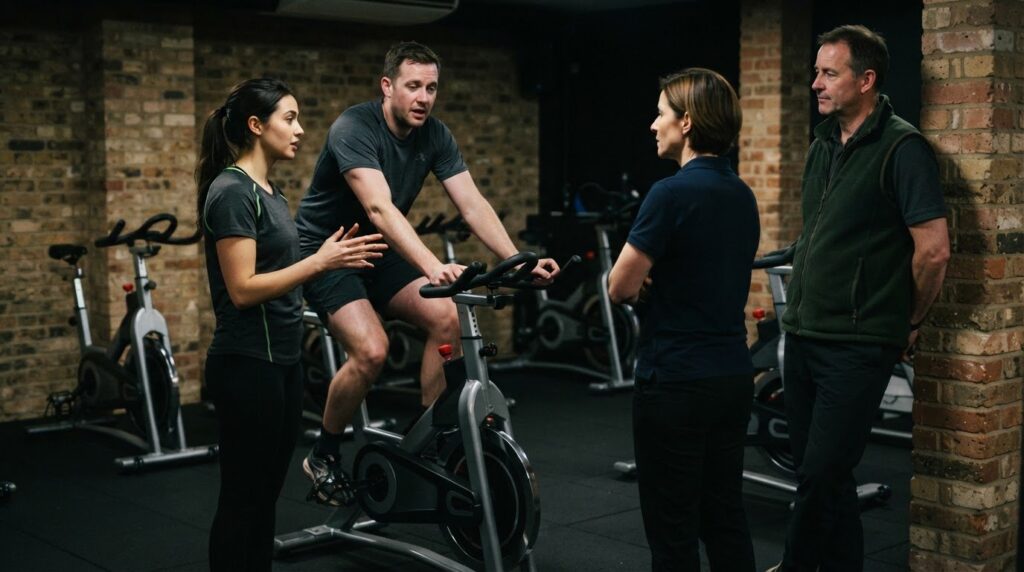
Great coaching has limits when you try to do everything alone. Why personal trainers should build multidisciplinary teams comes down to a simple truth: clients’ needs can stretch beyond exercise programming. A physiotherapist, dietitian, GP or strength and conditioning coach may bring expertise from different professional settings, including those represented by the Chartered Society of Physiotherapy, British Dietetic Association, General Medical Council and UK Coaching.
You already know that progress isn’t just about writing a tougher plan. The practical case for why personal trainers should build multidisciplinary teams is that clients may need support beyond exercise programming. Yet adding more professionals doesn’t automatically make care better. Clear roles matter across health and fitness, from the NHS and National Institute for Health and Care Excellence to the Health and Care Professions Council, CIMSPA and Mind.
This article explains what a multidisciplinary team is, who might be involved and how its members can work together around a client’s needs. You’ll also see what evidence suggests about potential benefits and drawbacks, including coordination challenges and blurred responsibilities. Understanding why personal trainers should build multidisciplinary teams means focusing on the right expertise and purposeful collaboration, principles that matter in fitness settings recognised by Sport England and across health and care.
Table of Contents
- Communication, collaboration and shared processes
- What is a Multidisciplinary Team and Why is it Important?
- What enables MDTs to work effectively?
- Evidence on multidisciplinary team outcomes
- Advantages and disadvantages of multidisciplinary teams
- Redefining Fitness Ltd: Level 2 & 3 Personal Training Course
Communication, collaboration and shared processes
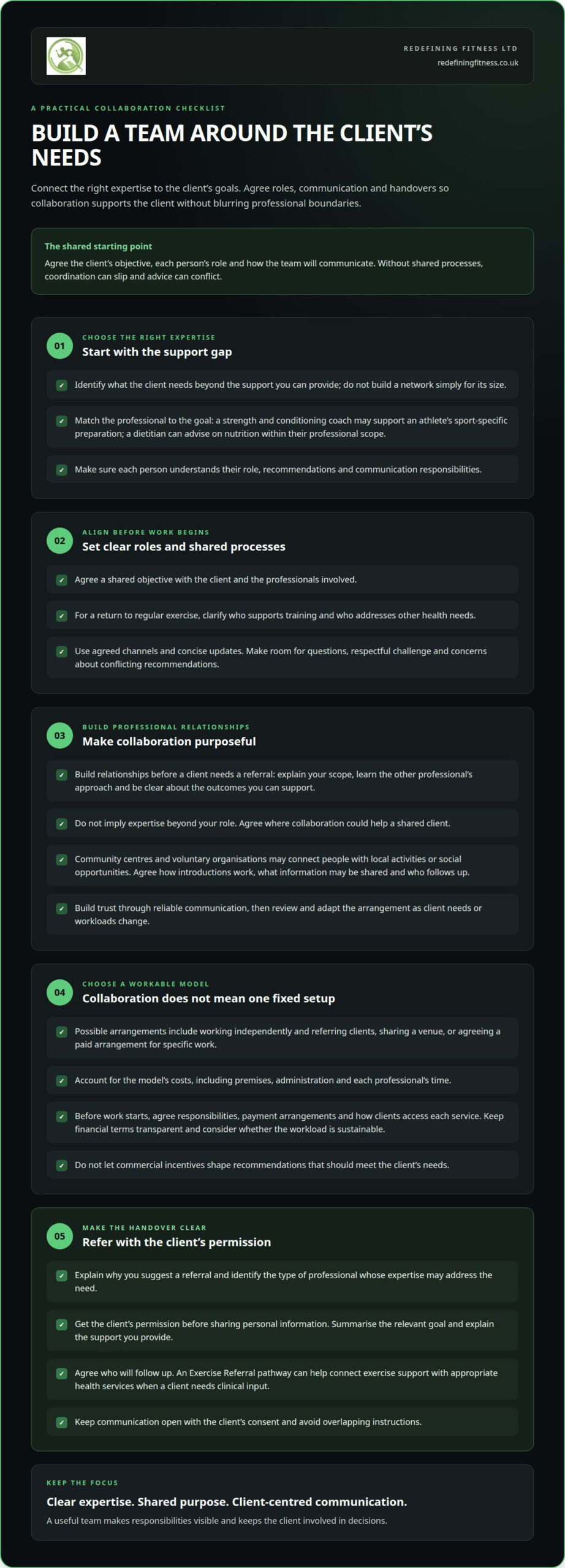
Collaboration works best when everyone agrees on the client’s goals, each person’s role and how they will communicate. Without shared processes, coordination can slip and clients may receive conflicting advice.
Choosing Professional Collaborators
Choose collaborators whose expertise complements your own and meets a client’s specific needs. Match the professional to the goal: a strength and conditioning coach may help an athlete prepare for sport-specific demands, while a dietitian can provide nutrition advice within their professional scope.
Start with gaps in the support you can provide, not the size of your network. A primary care team may include a GP, nurse practitioner, pharmacist, social worker and dietitian. Your team will look different, but each member should understand their role, recommendations and communication responsibilities.
Agree on a shared objective with the client and the professionals involved. For example, if a client wants to return to regular exercise, clarify who supports training and who addresses other health needs. Clear boundaries reduce duplicated advice and confusion about roles.
Networking and Approaching Collaborators
Networking means building professional relationships before a client needs a referral. Explain your scope, learn about the other professional’s approach and identify where collaboration could help a shared client. Be clear about the outcomes you can support, and don’t imply expertise beyond your role.
Voluntary and community organisations can also connect people with local activities and support. A community centre, for example, may help residents find group exercise or social opportunities. Agree how introductions will work, what information can be shared and who will follow up.
Grow your practice through collaboration by building trust with reliable communication, not simply by seeking referrals. Set a shared purpose, review how the arrangement works and adapt it as client needs or workloads change.
Collaboration Costs and Business Models
Collaboration describes how professionals coordinate; it doesn’t require one fixed business model. Partners might work independently and refer clients, share a venue or agree on a paid arrangement for specific work. Costs depend on the model, including premises, administration and each professional’s time.
For a personal trainer, the key question is whether an arrangement creates clear value without adding an unsustainable workload. Agree on responsibilities, payment arrangements and how clients access each service before work begins. Keep financial terms transparent, and don’t let commercial incentives shape recommendations that should meet the client’s needs.
Client Referrals to Other Professionals
A referral connects a client with a professional whose expertise addresses a need beyond your role. Explain why you’re suggesting the connection, identify the type of professional and get the client’s permission before sharing personal information.
Make the handover clear: summarise the client’s relevant goal, explain what support you provide and agree on who will follow up. For example, when a client needs clinical input, an Exercise Referral pathway can help connect exercise support with appropriate health services. Keep communication open with the client’s consent, and avoid overlapping instructions.
What is a Multidisciplinary Team and Why is it Important?
A multidisciplinary team brings professionals from different disciplines together around a shared goal. For a personal trainer, that means connecting the right expertise to a client’s needs, rather than trying to solve every problem alone.
Communication and Coordination Challenges
Communication and coordination can suffer when team members have different language, priorities or routines. A trainer may focus on exercise progression, while a clinician prioritises another aspect of care. If those perspectives are never shared, a client may receive conflicting guidance or have to repeat the same information. Agree on the shared goal, everyone’s role and how to raise concerns. That clarity can improve coordination and client satisfaction.
Community collaboration widens the picture beyond formal health services. A neighbourhood forum, community centre or voluntary group may know about local activities, social support and barriers residents face. In England, a neighbourhood is often an area of 30,000-50,000 people, supported by primary care and community partners. Those connections can increase awareness of relevant opportunities and help shape support around the people who live there.
Start with the community resources already serving the client population. A local group might provide social connection, while a primary care partner may help coordinate a clinical referral. Organisations don’t need identical methods to share a purpose. Agree what each can contribute, how introductions will happen and what information may be shared. Keep the client involved in decisions, rather than treating the network as a closed professional circle.
Communication Within the Team
Internal team communication means exchanging relevant information among all members, not just passing messages down through a coordinator. It matters because a professional who notices a change in a client’s needs must have a clear way to raise it. Use agreed channels, concise updates and shared objectives. A brief team huddle, for example, can clarify responsibilities and flag conflicting recommendations before they reach the client.
Good coordination also depends on creating a safe environment for honest discussion. If a team member fears blame, they may stay quiet about a missed handover or a concern affecting the shared plan. Make room for questions, respectful challenge and reflection. Regular meetings should review progress towards the goal and how the team is working together. This helps members address friction early, improve referral pathways and keep the client’s interests central.
Neighbourhood forums can support communication by giving professionals and community members a place to exchange perspectives. For example, a voluntary organisation may identify practical barriers that a clinical conversation alone could miss. Share only relevant information through agreed processes, and keep the client’s voice in the discussion. A team that listens across disciplines and community settings can make better-informed decisions without assuming one professional has the whole picture.
What enables MDTs to work effectively?
Effective teams turn broad intentions into clear roles, delegated tasks and a coordinated plan. Without those foundations, integrated support can become confusing rather than holistic.
Defining Roles and Responsibilities
Defining roles means agreeing what each professional contributes, which decisions they are responsible for and how they communicate. It matters because overlapping responsibilities can cause confusion, duplicated recommendations and gaps in support.
Describe each member’s expertise and limits in plain language. For example, a personal trainer can explain the exercise support they provide, while a clinician leads on clinical decisions. Agree who updates the client, who handles questions and how changes to the plan are shared. These steps give every professional a distinct contribution without making the client’s experience feel disconnected.
A paediatric primary care team shows how different expertise can work together: it may include a paediatrician, nurse, child psychologist, speech therapist, occupational therapist and social worker. Roles should reflect the needs being addressed, not simply the titles around the table. A clear remit for each member makes it easier to identify who contributes to each aspect of support and where further expertise is needed.
In the UK, personal trainers should keep advice within their training and competence. Offer general support that fits your professional preparation, but don’t diagnose medical conditions, prescribe treatment or present rehabilitation as clinical care. Refer clients to an appropriate health professional when their needs require expertise beyond your role.
Delegating Tasks Across the Team
Delegating tasks means assigning each action to the professional best placed to carry it out. It matters because a shared plan only works when someone is responsible for each task and everyone understands how their work connects.
For a client managing a health concern alongside an exercise goal, the team might separate clinical assessment, health advice and exercise planning. The relevant clinician handles clinical decisions; the trainer supports exercise within their competence. Record who will communicate each recommendation and how the client’s progress will inform the next discussion. Clear handovers help prevent conflicting instructions.
Delegation doesn’t mean passing a client between professionals and stepping away. Agree on the objective together, explain each role to the client and keep communication open with their consent. If needs change, review the plan and reassign tasks deliberately. A trainer who notices a concern can raise it and support an appropriate referral, rather than taking on a clinical role.
Boundaries protect both the client and the team. Don’t share private details casually, make promises on another professional’s behalf or let commercial interests override the client’s needs. Keep records and communication relevant to the work, and follow agreed processes for sharing information. When each professional respects their remit, integrated support can address different needs without blurring responsibility.
Evidence on multidisciplinary team outcomes
A multidisciplinary team can connect expertise that would otherwise sit in separate services. Evidence from health and care settings points to potential benefits, but outcomes depend on the people involved, how they coordinate and the needs they address. For personal trainers, the measured conclusion is that collaboration can strengthen joined-up support, but it won’t guarantee the same result for every client.
Coordinated care can make a practical difference. Patients treated by a team of physicians in a designated stroke unit were more likely to be alive, independent and living at home within a year of their stroke. In cancer care, multidisciplinary teams have been shown to significantly increase survival rates for people with common types of cancer. These examples come from healthcare settings, so they aren’t direct evidence that a fitness team will produce identical outcomes.
Integrated care also takes time to show change. In England, integrated care pilots that included multidisciplinary teams took over five years to produce gradual reductions in the growth of unplanned hospital admissions. The Rutland Integrated Neighbourhood Team reported that 94% of people surveyed experienced improvement in at least one reported wellbeing measure. These findings describe particular programmes, not a guaranteed result for every population or practice.
For trainers, the useful lesson is to judge collaboration by the client’s actual experience. A shared plan may help prevent conflicting recommendations, repeated check-ins and gaps between exercise support and clinical care. Track relevant outcomes, such as whether the client can follow the agreed plan, reach personal goals and understand each professional’s role. Ask for feedback directly. Satisfaction matters, but it should be considered alongside meaningful progress and appropriate support.
Coordination must protect privacy, too. Explain why information will be shared, obtain the client’s consent and share only details relevant to the team’s work. A shared-access electronic health record can help care providers securely exchange information and gain a fuller picture of a patient’s health. In a fitness setting, use agreed communication channels and involve the client in decisions about what is shared.
Regular review turns evidence into practice. A team can compare shared objectives with client feedback, identify duplicated tasks and adjust the plan as needs change. Primary care and community partners may contribute different perspectives, while the trainer reports exercise-related observations within their role. A multidisciplinary team proves its value through clear coordination and purposeful review, not simply by adding more professionals to a client’s support network.
Advantages and disadvantages of multidisciplinary teams
A multidisciplinary team can address problems no single professional can fully understand. In high-performance sport, combining expertise across disciplines can improve problem-solving. For a trainer, this might mean a specialist coach and clinician bringing different perspectives to a client’s physical needs. The advantage is broader insight, not simply a longer list of professionals.
That breadth can support more personalised plans. A client managing several health challenges may need exercise and clinical care to work together, rather than receiving separate recommendations that compete. Teams can also reduce duplicated services when members communicate and delegate clearly. In a hospital, coordinated care may connect different needs; in fitness practice, the same principle means aligning exercise support with the client’s wider plan.
There’s a human benefit, too. A client may feel better understood when a team considers physical goals alongside relevant mental and social factors. Each professional can contribute their expertise while the client’s priorities guide the shared direction. Collaboration can also support continuous learning: working alongside a specialist can help a trainer see where their knowledge ends and another professional’s begins.
But adding professionals can create friction rather than progress. Scheduling meetings, sharing updates and agreeing responsibilities take time. If coordination duties are added to existing workloads without accounting for capacity, client support can suffer. A small practice may find frequent meetings disproportionate, especially when the client’s needs are straightforward and a single referral is enough.
Duplication is another risk. A client could receive overlapping check-ins or recommendations if team members don’t agree who handles each task. Different professional priorities can also pull the plan in competing directions. For example, an exercise programme should fit relevant clinical guidance while remaining practical for the client’s goals and circumstances. Without an agreed process, the client becomes the messenger between professionals.
Use a simple test before expanding the team: does each person bring expertise the client needs, and can the members coordinate without creating unnecessary burden? Set a shared objective, define responsibilities and review whether the arrangement reduces duplication. If meetings multiply but the client’s plan remains unclear, simplify the structure. A capable team isn’t the biggest one. It’s the smallest combination of professionals that can effectively support the client’s needs.
Build that judgement through strong coaching foundations and a clear understanding of your role. Strengthen your professional coaching skills so collaboration adds genuine value rather than complexity.
Redefining Fitness Ltd: Level 2 & 3 Personal Training Course
Redefining Fitness Ltd offers Level 2 and Level 3 personal trainer qualifications for people ready to build the knowledge and judgement that effective collaboration demands. Delivered online and in person, the courses combine blended learning with face-to-face workshops, helping you develop practical coaching skills alongside your understanding of professional boundaries.
Specialist workshops cover kettlebells, circuits and indoor cycling. If you’re building a fitness career, strong foundations can help you contribute confidently within a multidisciplinary team, recognise when a client needs different expertise and work constructively with other professionals. The right next step is serious learning, not pretending one coach can do everything.
Are you the fitness industry’s next best secret? Contact Redefining Fitness Ltd to discuss your next step.
Build Your Next Standard
Your next move is to turn good intentions into deliberate professional growth. Identify an area where deeper knowledge could strengthen your practice, then develop the judgement to work well with others. Ambitious coaching means understanding what you can offer and where collaboration can add value.
That standard grows through curiosity, disciplined learning and the confidence to work constructively with people whose skills differ from yours. Keep developing your craft, stay clear about your role and make every professional relationship serve the client’s needs.
Are you the fitness industry’s next best secret? Explore the prospectus with Redefining Fitness Ltd and take your next step.
Frequently Asked Questions
Multidisciplinary Examples: What Are They?
Examples include a personal trainer coordinating with a physiotherapist, dietitian and GP to address a client’s different needs. A community-based team might also involve a social worker or pharmacist. The mix depends on the person, not a standard template. Someone returning to activity after an injury, for instance, may need clinical input alongside appropriately adapted exercise support, while another client may benefit from nutrition expertise.
What Are the Consequences of Multidisciplinary Teams Not Working Well Together?
Poor teamwork can leave clients facing contradictory guidance, repeated assessments or no clear next step. Imagine a client receiving one exercise recommendation from a trainer and a different one from another professional, with neither aware of the other’s advice. The client may lose confidence or disengage. Unclear responsibility can also mean an important update is missed, so teams need a reliable handover and a named person for each agreed action.
What Is Hoped to Be Achieved by MDTs?
MDTs aim to bring relevant expertise together around a person’s needs and shared goals. In practice, that means joining up support instead of asking the client to bridge gaps between separate services. A team might align exercise planning with a client’s wider health priorities while respecting each professional’s remit. The intended result is a coherent plan the client understands and can take part in.
What Is the Evidence on MDTs?
Evidence from health and care settings supports potential benefits, but it doesn’t establish that every fitness team will produce the same outcomes. Consider the setting, participants and outcomes measured before applying a finding to personal training. For example, a clinical team’s results may depend on services and resources that a private fitness practice doesn’t share. For trainers, useful evaluation includes whether communication improves and the client can follow the agreed support plan.
What Are the Benefits of Personal Trainers Building Multidisciplinary Teams?
A team can help a trainer respond more thoughtfully when a client’s needs change. If a new health concern shifts the client’s original goal, access to relevant expertise can inform an appropriate adjustment or referral. Collaboration can also clarify how exercise support fits the client’s wider priorities. The benefit isn’t adding contacts for appearance; it’s improving the quality and relevance of support.
Which Professionals Should Personal Trainers Include in a Multidisciplinary Team?
Include professionals whose expertise matches the client’s needs, rather than recruiting a fixed list. A physiotherapist may be relevant for musculoskeletal concerns, a dietitian for nutrition support, and a GP or mental health professional where appropriate. A strength and conditioning coach may contribute when an athlete’s sport shapes training demands. A social worker or pharmacist may also be relevant in some care contexts. Make each person’s role clear to the client.
How Can Collaboration With Physiotherapists, Dietitians and Mental Health Professionals Improve Client Outcomes?
These professionals bring different perspectives to a client’s plan. A physiotherapist can address rehabilitation within their expertise, a dietitian can provide nutrition support, and a mental health professional can address mental health needs. A trainer can keep exercise programming within their own competence and coordinate relevant updates with the client’s consent. For example, agreed communication can help align a training plan with other support rather than working at cross-purposes.
How Can Personal Trainers Find and Vet Trusted Local Professionals in the UK?
In London and elsewhere in the UK, start by identifying the expertise a client needs, then build relationships through local professional networks and community organisations. Discuss each person’s experience, scope of practice and approach to communication before establishing a referral relationship. Agree how the client will be introduced and what information may be shared with their consent. Review whether the working relationship serves clients well, and address concerns directly.

Why Personal Trainers Need Multi-Disciplinary Teams
Great coaching has limits when you try to do everything alone. Why personal trainers should build multidisciplinary teams comes down to a simple…

Can Personal Trainers Prescribe Rehab? UK Guide
Can Personal Trainers Prescribe Rehab? UK Guide Can personal trainers prescribe rehab? No. In the UK, unless they’re also qualified physiotherapists,…
