

The 70% diet, 30% exercise claim isn’t a universal rule. For most people focused on weight loss, diet accounts for around 80% or more of results, but that doesn’t make exercise optional. Nutrition myths for personal trainers deserve scrutiny because repeating a neat percentage isn’t the same as giving sound guidance.
It’s worth questioning familiar formulas. Protein, food choices and weight loss can quickly get tangled up in rigid rules, while clients look to you for clear, responsible answers. This article separates useful guidance from oversimplified claims, so you can support clients without stepping beyond your professional role.
You’ll learn what the evidence says about high-protein diets and kidney health, whether protein must be capped at each meal, and how to make eating habits more sustainable without banning favourite foods. We’ll also tackle the 70% diet claim and clarify the boundary: personal trainers can offer general nutrition education, while specific medical diets and eating-disorder treatment require a registered dietitian. Be precise, stay in scope, and give clients better than recycled fitness folklore.
Table of Contents
High-protein diets and kidney health
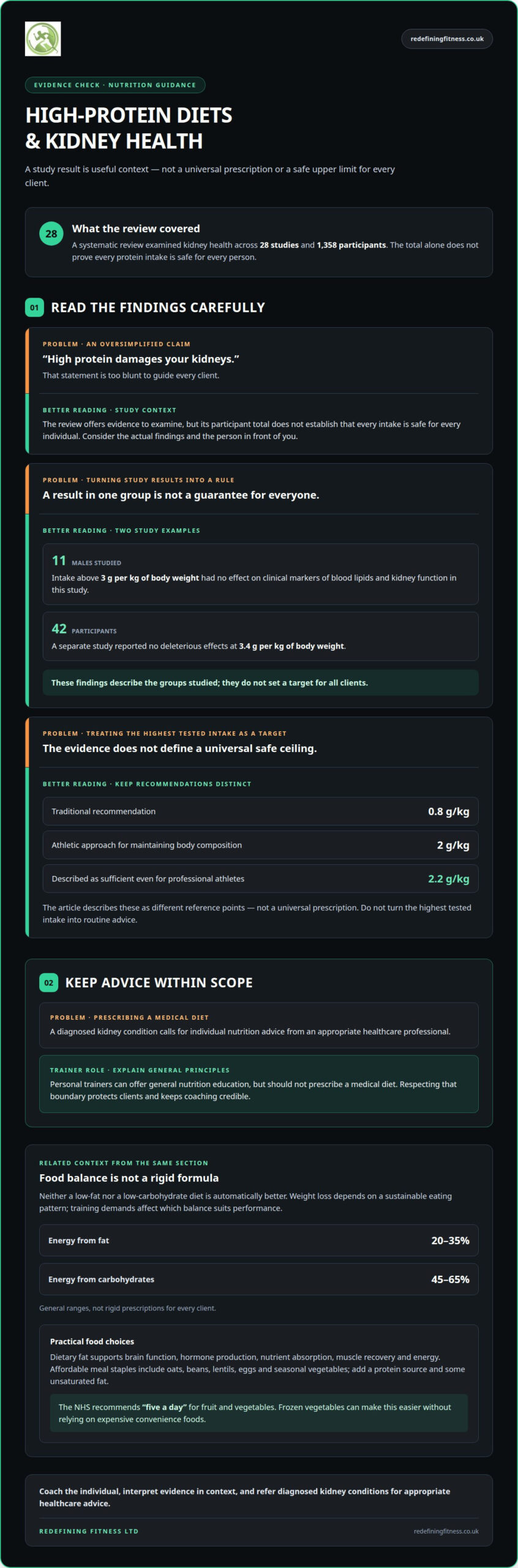
“High protein damages your kidneys” is too blunt to be useful. A systematic review examined kidney health across 28 studies and 1358 participants, but that total alone doesn’t prove every intake is safe for every person. Look at the actual findings and the person in front of you, not a dramatic headline.
Two small studies offer useful context. One study of 11 males found no effect on clinical markers of blood lipids and kidney function from protein intake above 3 g per kg of bodyweight. Another study of 42 participants reported no deleterious effects at 3.4 g per kg of bodyweight. Those findings describe the studied groups; they don’t establish a target for all clients or a universal safe upper limit.
How much protein do active adults need, and is there a safe upper limit? The traditional recommendation is 0.8 g per kg of bodyweight; an approach for athletic populations seeking to maintain body composition uses 2 g per kg. An intake of 2.2 grams per kilogram of body weight is described as sufficient even for professional athletes. The available study findings don’t define a universal safe ceiling, so don’t turn the highest tested intake into routine advice.
For clients with diagnosed kidney conditions, individual nutrition advice belongs with an appropriate healthcare professional. Personal trainers can explain general principles, but shouldn’t prescribe a medical diet. Respecting that boundary protects clients and keeps your coaching credible.
Are low-fat or low-carbohydrate diets better for weight loss and performance? Neither is automatically better: weight loss depends on a sustainable eating pattern, while training demands affect which balance suits performance. The article’s general ranges are 20-35% of energy from fat and 45-65% from carbohydrates, not rigid prescriptions for every client.
Dietary fat isn’t disposable. Healthy fats support brain function, hormone production, nutrient absorption, muscle recovery and energy. For affordable meals, start with staples such as oats, beans, lentils, eggs and seasonal vegetables, then add a protein source and some unsaturated fat. The NHS recommends “five a day” for fruit and vegetables; frozen vegetables can make that easier without relying on expensive convenience foods.
More protein doesn’t automatically mean more fat loss. Protein can help maintain muscle, but weight change still depends on the overall pattern of eating and activity. For athletes and everyday clients alike, keep the approach proportionate: meet individual needs, make meals practical and avoid turning one study into a blanket rule.
Protein intake and muscle maintenance
Muscle maintenance during weight loss depends on more than the scale. Athletes in one report lost up to 7.7 kg whilst maintaining or improving upper- and lower-body strength. That example challenges the idea that losing weight must mean losing strength. Resistance training, adequate dietary protein and a manageable energy deficit all matter.
Protein supports muscle repair after training, but timing claims often get exaggerated. Muscle protein synthesis may remain elevated for at least 48 hours after weight training, whilst protein sensitivity is reported to peak around 3 hours. A practical approach is to include a protein source in regular meals, such as eggs at breakfast or beans with lunch, rather than treating one post-workout shake as essential.
Do people need small, frequent meals to boost metabolism? No. Eating six times a day is one possible routine, not a metabolic requirement. Meal frequency should suit someone’s appetite, schedule and training, while total dietary intake remains central to weight loss.
Hydration supports training, but one daily water target won’t suit everyone or every session. Heat, exercise intensity, duration and individual sweat loss all affect fluid needs. A client training indoors, for example, may need a different drinking pattern from someone exercising outdoors on a hot day. Drinking water with meals and having fluids available during exercise are practical starting points.
Detox diets don’t trigger a special cleansing process. The liver and kidneys detox the body every day; juice cleanses may instead cause blood sugar crashes and muscle loss. A juice-only plan can also leave too little room for protein and other nutrients needed to support training. Build meals from a variety of foods rather than replacing them with a short-term cleanse.
Calorie intake affects weight loss, but a number on a calculator isn’t a complete plan. General daily ranges for males who exercise are 2000-3000 calories, and 1600-2400 calories for females who exercise. Actual needs depend on body size, activity and training demands. A 30-minute moderate-intensity run burns approximately 250-350 calories, but weight loss doesn’t require a daily treadmill session. Focus on the pattern across meals and activity, not one workout’s calorie estimate.
Can exercise target fat loss in specific body areas? No reliable exercise choice makes the body lose fat only from the area being trained. Core exercises can strengthen abdominal muscles, for example, but they don’t determine where body fat comes off. Coach progressive training and consistent habits instead of promising localised fat loss.
For personal trainers, the useful distinction is simple: support sustainable habits, not rigid rules. Track training performance, appetite and consistency alongside weight; together, these offer a fuller picture than calories alone.
Protein absorption and muscle protein synthesis
The familiar 20-30 grams per meal claim is often mistaken for an absorption limit. It isn’t a cap on how much protein the body can digest. Protein from a meal exceeding that amount doesn’t simply go to waste. Your digestive system breaks it down, and the resulting amino acids support processes throughout the body. Muscle protein synthesis is one use, not the only destination.
Consider an everyday meal: eggs on toast, yoghurt and fruit, or lentil curry. Each provides protein along with other nutrients, and the overall meal matters more than chasing a precise post-workout window. A shake can help when food is inconvenient, but it isn’t essential and doesn’t replace a varied diet built around nutritious foods.
Muscle growth needs a training stimulus as well as protein. Progressive overload means gradually increasing the challenge through load, repetitions, sets or better-controlled movement. A client might, for example, improve their squat technique before adding weight. Keep changes appropriate to their ability; adding load without good execution isn’t progress.
Complete failure isn’t the only route to growth. A 2016 study by Schoenfeld et al reported that training within two to three reps of failure can produce equivalent hypertrophy. The reported muscle-growth range is 5 to 30 reps when sets finish close to failure. Those findings make effort and progression more useful coaching targets than a single “perfect” rep count.
Apply this principle by keeping a clear record of workout performance. If a client completes the planned repetitions with controlled form, the next session can offer a modest progression. If their technique breaks down, keep the challenge steady and work on execution. Protein supports adaptation, but can’t make up for inconsistent training or poor recovery habits.
Protein shakes are supplements, not shortcuts. A shake may be convenient after a workout or during a busy day, while eggs, dairy, tofu, beans and fish provide alternatives. Choose according to preference, dietary needs and routine. The useful question isn’t whether a shake is better, but whether the person can maintain their overall eating pattern.
Be cautious about supplement claims. An estimate suggests that up to one in four off-the-shelf supplements inadvertently contain a banned substance. That risk is particularly relevant to tested athletes. Supplements also don’t replace progressive training, adequate dietary intake or sleep. Avoid presenting any product as essential for building muscle.
Protein has a thermic effect of 20-30% of its energy, meaning digestion uses some energy. That doesn’t make protein a fat-loss trick or justify unlimited intake. Build a normal meal around a protein source, vegetables and a suitable carbohydrate. Then connect the nutrition conversation to the client’s training, preferences and goals.
Sustainable eating and including favourite foods
“Clean eating” can sound disciplined, but it often comes with a rigid rulebook. A plan that bans bread, chocolate or meals out may look controlled on paper yet clash with someone’s everyday routine. Sustainable eating allows for preference and practicality. If a client enjoys pasta, suggest pairing it with vegetables and a protein source instead of labelling it forbidden.
The 80/20 rule offers one flexible framework: eat good foods 80% of the time and allow 20% for less healthy or more enjoyable foods. Treat that as a broad pattern, not a pass-or-fail score. A birthday meal or a favourite dessert doesn’t erase consistent habits. Equally, the 20% isn’t a target clients must hit; it simply illustrates that flexibility can coexist with nutritious choices.
Balanced eating supports energy and training. Carbohydrates provide useful fuel for sports and resistance exercise, while meals can also include protein, vegetables and dietary fats. Rice with beans and vegetables, for example, makes a more balanced plate than treating carbohydrates as something to eliminate. Adapt food choices to preferences, access and activity instead of imposing one template.
Clean eating becomes a concern when rules about food quality take over everyday life. Orthorexia describes an excessive fixation on the quality of healthy foods eaten. A client who avoids social meals because ingredients feel “unclean”, or feels distressed after eating a favourite food, may need support beyond routine fitness coaching. Don’t praise increasing restriction as commitment.
What are the risks of restrictive diets and unverified supplement claims? Restrictive plans can make it harder to meet energy and nutrient needs, especially when they exclude whole food groups. Unverified supplement claims can encourage unnecessary purchases, and some off-the-shelf supplements inadvertently contain banned substances.
Coach habits clients can repeat: plan meals around familiar foods, include carbohydrates around demanding training, and make room for enjoyable choices. A client who does resistance training might pack a lunch they already enjoy, then add fruit or yoghurt for variety. This builds consistency without turning every meal into a test of willpower.
Choose language that avoids moral labels. “Nutrient-rich” describes what a meal offers; “bad” turns food into a judgement. If a client’s eating rules cause distress or disrupt daily life, don’t try to diagnose or treat them. Stay within your scope and encourage appropriate professional support.
Personal trainers’ scope of nutrition advice
Good coaching means knowing where general education ends. Personal trainers can discuss calorie targets, macronutrient ratios, meal timing and practical food habits. You might help a client plan regular meals around work and exercise, for example. You can explain how food choices relate to training goals without prescribing treatment for a health condition.
Keep the focus on behaviour and fitness. A client might ask how to fuel an evening session or put together a balanced lunch. You can offer general guidance, then help them connect eating habits with energy, exercise and progress. Don’t diagnose a nutrient deficiency or prescribe a therapeutic diet; those steps go beyond routine personal-training support.
Specific medical diets and eating-disorder treatment require a registered dietitian. If a client describes distress around eating, asks for a diet to manage a diagnosed condition, or reports symptoms linked to food, don’t create a treatment plan. Stay supportive, explain your professional boundary and direct the nutrition issue to an appropriate specialist.
Which UK organisations provide evidence-based nutrition guidance for personal trainers? UK personal trainers are recommended to register with REPs or CIMSPA. The minimum qualification for a personal trainer in the UK is a Level 3 Certificate in Personal Training; registration and a qualification don’t replace a registered dietitian’s role in clinical nutrition.
Use a clear process in each session. First, establish whether the client wants general support or medical nutrition advice. Then keep your guidance practical, for example by discussing meal timing around a regular workout. If the request involves a diagnosed condition or disordered eating, don’t prescribe a plan; refer the nutrition concern appropriately.
For example, a client who wants more consistent energy for exercise can discuss meal routines and training schedules with you. Someone asking for a diet to manage diabetes needs clinical nutrition support. The distinction depends on the purpose of the advice, not on whether the conversation involves food or body composition.
Record the coaching goal in plain language, such as “plan lunch before the afternoon session”. Don’t record or present a medical diagnosis you aren’t qualified to make. Review progress using relevant fitness measures and the client’s experience, rather than promising a specific body-composition result. Professional confidence isn’t having every nutrition answer. It’s offering useful guidance, recognising your limits and acting accordingly.
Redefining Fitness: Level 2 & 3 Personal Training Course
Redefining Fitness offers Level 2 and Level 3 personal trainer qualifications, delivered online and in person. If you want to build your fitness career, these courses provide a foundation for coaching exercise and supporting clients with professional care. Strong practice includes knowing when nutrition advice stays general and when a client needs a registered dietitian.
You can also build practical skills in specialisms such as kettlebells, circuits and indoor cycling. These develop your exercise-coaching skills, while clear professional boundaries help you handle nutrition conversations responsibly. Becoming a personal trainer means more than repeating rules; it means using sound judgement and putting the client’s needs first.
Are you the fitness industry’s next best secret? Contact Redefining Fitness to discuss taking your next step.
Turn Better Judgement Into Better Coaching
Clients don’t need another confident-sounding rule. They need a coach who listens, separates useful guidance from rigid claims and recognises when a question calls for specialist support. Make that a standard part of every conversation: explain your reasoning, respect individual circumstances and keep developing your practice.
That’s how you build trust without pretending to have every answer. Nutrition myths for personal trainers matter less than the judgement you bring to real clients, routines and changing goals. Choose a next step that strengthens your skills and helps you coach with care.
Are you the fitness industry’s next best secret? Explore the Redefining Fitness Ltd prospectus and consider how you can move forward. Your commitment to thoughtful, responsible coaching can make a meaningful difference. Keep raising your standard.
Frequently Asked Questions
Is 70% Diet and 30% Exercise True?
No, 70/30 isn’t a universal formula for weight loss. Results depend on the person’s habits, goals and ability to maintain changes, so don’t present that ratio as a rule. The NHS guide to weight-loss myths can help challenge oversimplified claims. For practical next steps, the NHS also sets out weight-management advice.
So what should you do?
Build guidance around the client’s routine and one manageable change, such as planning lunch before a busy workday. For broader food choices, the NHS Eatwell Guide offers a UK reference point, while its five-a-day information covers fruit and vegetables. Use these resources to inform general education, not to prescribe an individual medical diet.
What are common nutrition myths personal trainers should know?
Watch for claims that a single food causes weight gain, that everyone needs the same meal schedule, or that supplements are essential. These nutrition myths for personal trainers can distract from the client’s circumstances and sustainable habits. For sports-specific context, the British Dietetic Association’s sports nutrition information is a useful professional reference. Treat social-media claims cautiously, especially when they promise rapid or guaranteed changes.
Do carbohydrates cause weight gain, or does total calorie intake matter more?
Carbohydrates don’t automatically cause weight gain; overall eating patterns and energy intake matter. Bread, potatoes and rice can fit into varied meals, with choices shaped by appetite and activity. The NHS explanation of carbohydrates gives clients a straightforward starting point. Use the Eatwell Guide to discuss balance without labelling foods as forbidden.
Is eating late at night linked to weight gain?
Eating late doesn’t automatically cause weight gain. A more useful coaching question is whether late meals fit the client’s appetite, sleep and training routine. Someone finishing work late might need a practical evening meal, while another person may prefer an earlier dinner. Avoid universal curfews; help clients notice how their routine affects comfort and consistency.
Are detox diets and juice cleanses effective or safe?
Detox plans don’t provide a special cleansing shortcut, and juice-only approaches can displace meals and nutrients. If a client wants to change their habits, support a return to regular, varied meals rather than endorsing a cleanse. The NHS’s myth-busting advice is a useful way to challenge dramatic weight-loss claims without making medical promises.
Do supplements improve results more than a balanced diet?
No supplement automatically outperforms a sound diet and training plan. A product may suit a specific situation, but claims deserve scrutiny, particularly for athletes subject to testing. UK Anti-Doping’s supplement information explains why athletes need to consider supplement risks. Avoid recommending products as essential or promising results from them; keep advice grounded in the client’s goals and professional scope.
What nutrition advice can UK personal trainers legally give, and when should they refer clients to a registered dietitian?
Personal trainers can provide general nutrition education, but specific medical diets and eating-disorder treatment require a registered dietitian. The British Dietetic Association’s explanation of dietitians and the HCPC’s information on dietitians clarify the profession. For fitness practice context, consult CIMSPA’s professional standards. Refer clients seeking clinical nutrition support rather than attempting treatment.
Are you the fitness industry’s next best secret? Explore the Redefining Fitness prospectus and consider your next step.

How Personal Trainers Can Use NLP for Client Success
Personal trainers can use NLP with clients to explore behaviour, reframe goals, question limiting beliefs, manage emotional states and build rapport….

Nutrition Myths for Personal Trainers Debunked
The 70% diet, 30% exercise claim isn’t a universal rule. For most people focused on weight loss, diet accounts for around 80% or more of results, but…
