7 Traits That Make A World Class Personal Trainer
World class personal trainers are few and far between. There are plenty of trainers who consider themselves world class, but reaching that level requires much more than confidence, charisma or a strong social media presence. It requires extensive qualifications, technical knowledge, practical coaching ability, exceptional people skills and a consistent record of delivering results for clients. So what makes a world class personal trainer? There is no single qualification or personality type that provides the answer, but there are several traits that consistently appear among the best trainers in the industry.

https://www.airtasker.com/us/services/female-personal-training/
7 Traits That Make A World Class Personal Trainer: What Makes A World Class Personal Trainer?
A world class personal trainer needs both extensive technical knowledge and exceptional people skills. Neither can compensate for the absence of the other.
A trainer can have an impressive educational background but struggle to communicate, build trust or adapt their coaching to different clients. Equally, someone can be naturally charismatic and excellent with people while lacking the technical knowledge required to programme and coach effectively. Neither represents the complete package.
The best personal trainers combine both. They continue developing their qualifications and technical knowledge while becoming better coaches, communicators and professionals. They understand not only what exercise to prescribe, but why it is appropriate, how to adapt it and how to get the client to execute it consistently. In this article we have narrowed it down to 7 traits that make a world class personal trainer but this is by no means an exhaustive list. Let’s see how many of these you have or aspire to have.
1. They Have A Thirst For Knowledge
One of the most important traits of a world class personal trainer is a genuine desire to keep learning. Completing a personal training qualification is the beginning of professional education, not the end of it.
Further qualifications, specialist courses, workshops, research and professional development can all expand a trainer’s knowledge. Equally important is reviewing your own coaching, seeking feedback and identifying gaps in your understanding.
There is also a difference between collecting qualifications and becoming a better trainer. A long list of certificates means little if the trainer cannot apply what they have learned with real clients. Continuing education should improve decision-making, programming and coaching.
For example, a trainer who completes further education in exercise referral should be able to use that knowledge when working with a client who has a more complex health background. They should understand how that client’s circumstances affect exercise selection, intensity, progression and professional boundaries rather than simply adding another qualification to their CV. The same applies to programming. If you have always prescribed three sets of ten for a particular exercise, greater knowledge should allow you to explain why that approach is appropriate, when it is not and what alternatives may be more suitable. Knowledge becomes valuable when it improves the decisions you make.
2. They Are Humble
A world class personal trainer understands their strengths but also recognises their limitations. This is particularly important in a profession where overconfidence can lead to poor decisions or trainers operating outside their expertise.
Imagine a client arrives with persistent pain and asks their personal trainer to fix it. A trainer with poor professional judgement might immediately prescribe exercises and claim to have the answer. A more responsible trainer recognises when the issue requires assessment by an appropriately qualified healthcare professional and stays within their scope of practice.
The same applies to specialist training. A trainer who primarily works with general population clients may not have the same expertise as a specialist strength and conditioning coach preparing an athlete for competition. Recognising that difference is a strength rather than a weakness.
Humility also keeps trainers open to feedback. Someone who believes they already know everything has little incentive to improve. A trainer who understands how much there is still to learn is more likely to seek education, ask questions and refine their coaching.
Confidence and humility can coexist. A trainer can be confident in their abilities when that confidence is supported by qualifications, competence, experience and results. The problem occurs when what someone claims and what they actually deliver are very different.
3. They Have Strong People Skills
Personal training is ultimately a people-focused profession. Technical knowledge is essential, but a trainer also needs to understand how to communicate that knowledge to different clients.
Strong people skills are not determined by whether someone is introverted or extroverted. They come from emotional intelligence, social awareness, listening and the ability to recognise how another person is responding.
For example, one client may want to understand exactly why they are performing an exercise and enjoy detailed explanations. Another may become overwhelmed by too much information and prefer concise instructions. A third may respond best to measurable targets and seeing their performance improve.
The training principles may be similar, but the coaching approach should not necessarily be identical.
The same applies when a client’s motivation changes. If someone who normally trains consistently suddenly starts missing sessions, a poor trainer might immediately assume they have become lazy or unmotivated. A good trainer asks questions and finds out what has changed. Work, family circumstances, stress, sleep or confidence could all affect adherence.
Being able to recognise those differences and adjust your approach is a major part of being an effective personal trainer.

https://cvlifestyles.co.uk/fitness-journey/personal-training/
4. They Are Authentic
The best personal trainers do not need to present themselves as flawless. They understand that trust is built through honesty, consistency and doing what you say you will do.
This becomes particularly important when something does not go according to plan. If a trainer makes a programming mistake or realises that an approach is not producing the expected result, pretending otherwise will eventually damage trust. Acknowledging the issue and explaining how it will be addressed demonstrates professionalism.
Authenticity also means avoiding unrealistic promises. Telling every client that they can achieve an extreme transformation in a few weeks may generate initial excitement, but failing to deliver creates disappointment. A trainer who explains what is realistically achievable and why is more likely to build a long-term relationship.
This matters even more in an industry heavily influenced by social media. Trainers can feel pressure to present themselves as permanently motivated, perfectly disciplined and somehow immune to the challenges experienced by everyone else.
Clients do not need a flawless trainer. They need someone they can trust.
5. They Know When To Ask For Help
No personal trainer knows everything, regardless of how many qualifications or years of experience they have. A world class trainer knows when something falls outside their knowledge, experience or professional scope.
For example, if a client presents with an issue that the trainer is not qualified to assess or treat, the answer is not to find an exercise online and hope it solves the problem. The trainer should recognise the limitation, communicate this clearly and refer the client to the appropriate professional.
This also applies to specialist training. A trainer who mainly works with general population clients may not have the same expertise as a specialist strength and conditioning coach preparing an athlete for competition. Rather than pretending to be an expert, they can collaborate with or refer to someone who has the appropriate experience.
World class personal trainers therefore tend to build strong professional networks. Those networks might include physiotherapists, dietitians, doctors, sports coaches and other trainers with complementary expertise.
Knowing when to say, “This is outside my expertise, but I know who can help,” is a sign of professional competence.
6. They Teach Clients To Become Self-Sufficient
A personal trainer should not aim to make clients permanently dependent on them.
Imagine a client who has spent a year losing weight with a personal trainer. If they still have no idea how to train, manage their habits or make sensible decisions without the trainer standing next to them, the process has not achieved its full potential.
The best personal trainers gradually teach clients why they are doing what they are doing. They might explain how their programme is structured, teach them how to judge training intensity, help them understand portion control or show them how to adapt when their circumstances change.
The client does not need to become an exercise scientist. They should, however, develop enough knowledge and confidence to make good decisions independently.
For example, a client who travels frequently might eventually learn how to maintain their training with limited equipment, make sensible food choices when eating out and adjust their schedule without abandoning their goals. That is a much more valuable outcome than creating someone who believes their progress disappears whenever they leave the gym.
The trainer remains valuable, but the relationship becomes one of coaching and support rather than dependency.
7. They Keep Clients Accountable
Accountability is more than checking whether a client attended their personal training session. Effective trainers create an appropriate structure around their clients and help them stay focused on the behaviours that move them towards their goals.
Suppose a client wants to increase their squat from 80kg to 100kg. A good personal trainer does not simply tell them to work harder. They can track their lifts, review training consistency, assess recovery and identify where progress is slowing.
The same principle applies to fat loss. If a client’s weight has stopped changing, the trainer should not automatically assume that they have stopped trying. They can review relevant nutritional behaviours, activity, training, sleep and adherence before deciding what needs to change.
Accountability should also be individualised. One client may benefit from regular check-ins and detailed tracking, while another may become frustrated by excessive monitoring.
The best trainers use accountability to create ownership. They identify obstacles, ask better questions and help clients take responsibility for the next step rather than simply judging what they have or have not done.
Do World Class Personal Trainers Need Extensive Qualifications?
Yes. A world class personal trainer needs a strong educational foundation and extensive technical knowledge alongside exceptional people skills. However, that does not necessarily mean having a university degree.
A degree in exercise science, sport and exercise physiology or biomechanics can provide a strong academic foundation, but advanced personal trainers can also develop highly specialised expertise through professional education from organisations such as the Gray Institute, CHEK Institute, Poliquin Group and the UK Strength and Conditioning Association (UKSCA). Advanced education in exercise physiology and exercise science, including relevant NASM programmes, can also form part of a sophisticated educational pathway.
These qualifications cover different areas of advanced practice, including functional movement, assessment, strength and conditioning, exercise physiology, biomechanics and performance. The point is not to collect impressive certificates. It is to develop knowledge that improves the decisions you make with clients.
Consider an experienced client who has spent years lifting weights but has plateaued in their squat and consistently struggles at the bottom of the movement. A highly educated trainer should not simply change the exercise or tell the client to “work on their mobility”.
They should be able to assess the movement, consider relevant factors, understand the limitations of their own assessment and then make an informed programming decision. That might involve changing the exercise variation, modifying range of motion, altering the loading strategy or changing exercise order. If the issue falls outside their scope, they should recognise when referral is appropriate.
The same applies to performance. If an experienced recreational athlete wants to improve their sprinting, jumping or strength, an advanced trainer should be able to apply principles of exercise physiology, biomechanics, strength development and conditioning rather than simply providing a generic gym programme.
This is where qualifications become valuable. They provide the technical knowledge required to make better decisions, while practical coaching determines whether that knowledge can be applied effectively.
A degree alone does not make someone a world class personal trainer, just as a collection of specialist qualifications does not automatically make someone exceptional. The difference is the depth and relevance of the education, how well it is applied and the quality of the coaching that follows.
What Separates A World Class Personal Trainer From An Average Trainer?
The difference is not one qualification, personality trait or coaching technique. It is the combination of technical knowledge, continued education, interpersonal ability and professional standards.
You can see these qualities in everyday client interactions. It is the trainer who changes their communication because a client is struggling to understand an exercise. It is the trainer who recognises when a problem requires referral rather than pretending to have the answer. It is the trainer who can explain why a programme is structured in a particular way and adapt it when circumstances change.
It is also the trainer who notices when a client is struggling and investigates why rather than immediately blaming motivation. They track progress, use information to make better decisions and gradually give clients the knowledge and confidence to become more self-sufficient. Technical competence gives a personal trainer the foundation to know what to do. People skills allow them to apply that expertise effectively. A world class personal trainer develops both.
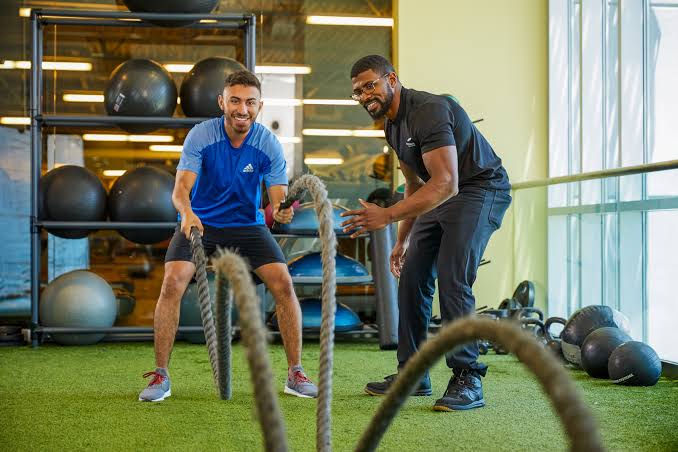
https://blog.lafitness.com/2024/08/06/the-benefits-of-having-a-personal-trainer/
The 7 Traits Of A World Class Personal Trainer
The seven traits can be summarised as follows:
- A thirst for knowledge – They continually expand their qualifications, knowledge and professional capabilities.
- Humility – They recognise their limitations and remain open to learning.
- Strong people skills – They understand clients and adapt their communication and coaching.
- Authenticity – They build trust through honesty, consistency and professional integrity.
- Knowing when to ask for help – They recognise when another professional has the appropriate expertise.
- Teaching self-sufficiency – They give clients the knowledge and skills to maintain their results.
- Accountability – They create the structure and support clients need to take ownership of their progress.
None of these traits works independently. Extensive technical knowledge without people skills limits a trainer’s ability to apply that knowledge, while strong people skills without sufficient technical competence do not provide the foundation required to coach effectively.
The highest level of personal training comes from developing both.
Become A World Class Personal Trainer
Becoming a highly capable personal trainer does not end when you receive your first qualification. That qualification provides the foundation, but reaching a genuinely high professional standard requires continued education, practical development and a commitment to becoming better at both technical coaching and working with people.
At Redefining Fitness, we focus on developing fitness professionals with the knowledge, qualifications and practical skills required to enter the industry with a strong educational foundation. Our experienced tutors support aspiring personal trainers throughout their education and towards becoming industry-ready professionals.
We are not simply a certificate provider. Our courses are designed to give aspiring personal trainers a strong foundation from which they can continue developing their knowledge, confidence and career long after graduation.
If you believe you have the potential to become a world class personal trainer, the next step is developing the education and professional skills required to make that potential a reality. Explore Redefining Fitness and find out how to start your career in personal training.